In a few hours, you will be landing in Fiumincino “Leonardo Da Vinci” Airport. This airport was named after one of the ninja turtles, who outside of fighting crime in the sewers, also created major artwork around Italy. It is very likely you will be seeing work by Leonardo, Donatello, Michelangelo and Rafael during this trip.
It sounds like you guys will be there before us, but hopefully if everything goes according to plan, we will be meeting around noon.
The signs in the airport will be Italian on top and English below, so you shouldn’t have any issue navigating the airport. I’m not sure about the bathroom signs, but it’s really important to know that Donne means women and Uomini means men.
Once we have met up, and you’ve gotten that coveted Italy passport stamp, we will move to the train station where we will be getting on our train to Florence.
Attractions
The Duomo

Everyone refers to the Cathedral of Santa Maria del Fiore as “the Duomo.” Duomo means “Cathedral” in Italian. The Duomo dominates the skyline in Florence and was completed in 1436. It is 500 feet long 295 feet wide and 295 tall to the base of the lantern.
To visit the crypt of Santa Reparata, the museum, and the baptistery, it costs 15 euros, if you add a trip to the top of a the campanile (tower 414 steps, no elevator) it’s 20 euros. To add the campanile and the top of the Duomo (463 steps, no elevator) it’s 30 euros
For more information visit: https://duomo.firenze.it/en/discover/cathedral
Naked Guys named David
In the Galleria Dell’Academia you will find the original Statue of David by Michelangelo. Other artwork in the Galleria is from the 13th century through the renaissance and contains paintings of Botticelli and statues from Michelangelo.
What is weird about David is that he appears to be uncircumcised, which is an odd choice considering King David’s history with the practice. You see, King Saul offered his daughter Michel’s hand in marriage but he wanted a dowry in exchange. The King was seeking revenge from their Philistine enemies and asked for a different sort of dowry.
He decided to send David and a group of soldiers on what is one of the weirdest scavenger hunts of all time. King Saul asked the young man to go into the Philistine camp and return with the foreskins of 100 Philistines. Being an overachiever, he returned with 200 foreskins. Unfortunately, it is unclear from the King James Version if David told Saul to “Eat a bag of dicks” when he presented Saul with the dowry. You don’t believe me, do you? Fine read it yourself!
Either way, I would assume that David was circumcised based on that Bible story. I also question my Mother’s decision to name me after a prolific penis mutilator.
Tickets to see this historically inaccurate todger cost 20 euros.

There is a replica of the Statue of David in the Piazza Della Signoria if you don’t care if you see the original.
Piazzale Michelangelo
The Piazzale Michelangelo is across the Arno from the main part of the city. It is known for being a beautiful place to view the city and see a sunset. This is probably the furthest point on my list from our Airbnb, but its still only about 2.7 km away. We might need a couple of aperol spritz stops to complete this journey.

Getting Alcohol
We will be embarking on a much more pleasant scavenger hunt. Instead of foreskins, we will be looking for wine windows.
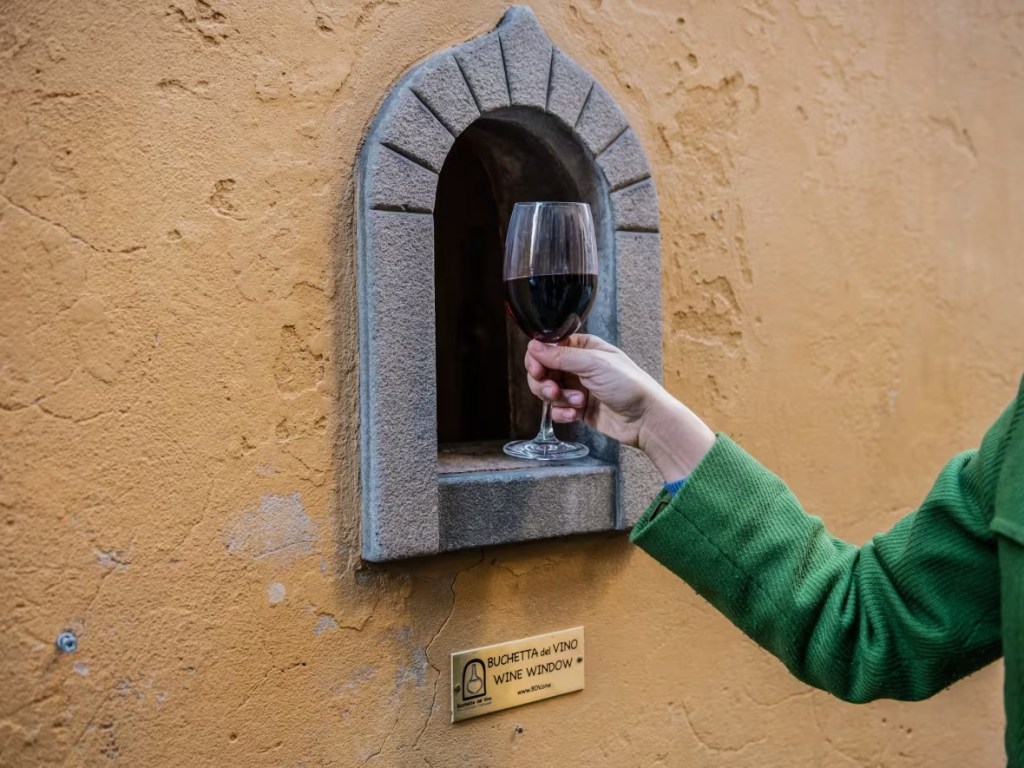
Wine windows were a result of nobles attempting to sell wine during the black plague. Selling wine through windows allowed the seller to socially distance themselves from their clients. There are over 200 of these windows throughout the city and they do allow you to purchase wine through these cute little windows.
Native Wine Varieties
- Chianti is the most famous variety from Tuscany
- Vinsanto is an Italian sweet red wine made from a high sugar must due to drying Trebbiano Toscano and Malvasia Bianca grapes
- Moscadello di Montalcino DOC is similar to Moscato
Most of the wine in Florence will be dry and most of those will be red.
Beer in Italy?
Yes, there is beer in Italy. Thank God. Most common will probably be Birra Morretti, which is an Italian Pilsner. If you can find the Birra Morretti Rossa, get it, it’s delicious. There is also Peroni Navarro Azzurro and Menabrea which are also Pilsners. Navarro Azzurro means “blue ribbon” so Italian PBR?
Also keep in mind bottiglia means bottle and al spina means on tap. Rossa means red, ambrata means amber.
There are a surprising amount of Irish bars in Florence, but if we’re looking for a craft beer bar, we can head to Alibi Craft Beer and Kitchen. 17 taps, not sure if it’s their own or purchased.
Aperitifs and Mixed Drinks
- Aperol Spritz – Aperol, Prosecco, soda and delicious
- Negroni – gin, vermouth, Campari – a classic Italian cocktail
- Lemoncello – had it, don’t remember it, sounds good
Getting Food
Panini
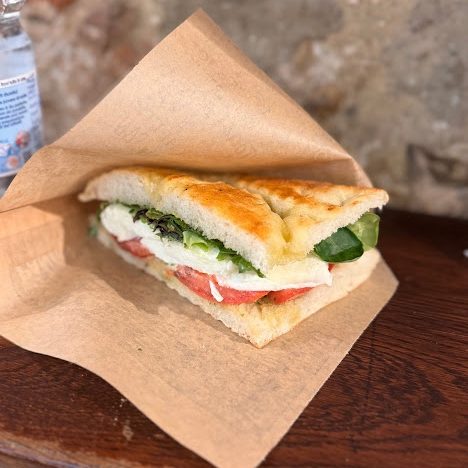
In Florence, everyone raves about the panini. It’s made with Schiacciata bread which is like focaccia but thinner and more chewy. It shouldn’t be too hard to find a sandwich shop, but if we can’t then we need to find Vinaino Fiorenza, which has some great looking sandwiches and vegetarian options.
Pizza
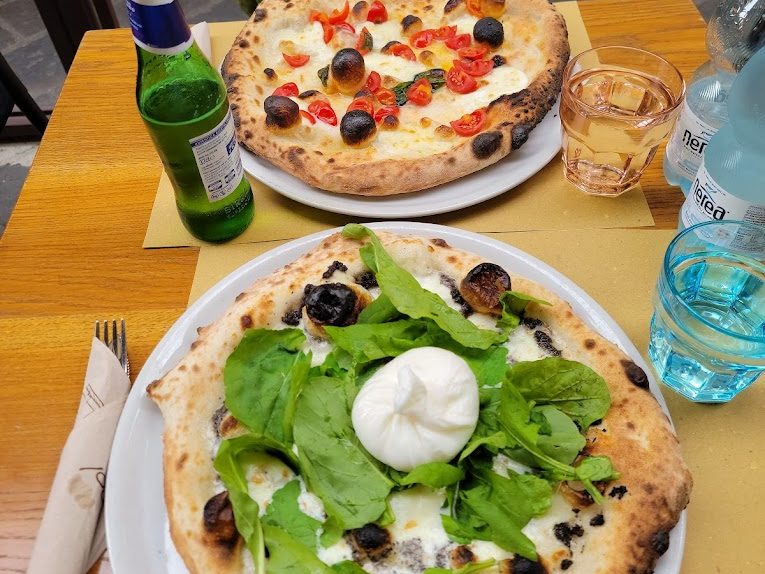
We’re going to eat pizza, this is non-negotiable. Some highly rated pizza shops include Gustapizza, Bondi Le Focaccine, and Antica Figgitoria Dell’Alberto.
Street Food
It won’t be hard to find street food, but Ará é Sicilia looks really interesting if we get a chance for a snack.

Different Kinds of Italian Restaurants
You will notice a few terms on restaurants that identify what kind of restaurant it is. These terms are semi-interchangeable but they do give an indication of what kind of experience that you are likely to have in that restaurant.
- Osterias – Simple rustic restaurants with rotating menus.
- Trattoria – Family restaurants that serve regional cuisines, typically affordable, and no-frills
- Ristorante – A little more high-end, better service, higher end wines, more curated menus
- Enoteca – Wine bar that may have evolved into a restaurant, although it would be a wine forward restaurant.
- Bar – Most bars will serve coffee in the morning, and maybe a pastry. In the afternoon and evening it switches to small bites and alcoholic beverages
For a much better and more complete explanation of this visit curiousappetitetravel.com
Reading an italian Menu
If we do end up in a Ristorante (this can also be true of some Osterias or Trattorias), you will find a little more complex menu then we are used to in the US. Most of the time, the menus will be set up the same, however. The menu will be split into sections.
- Antipasti – Appetizers (like good appetizers, not mozzarella sticks or boneless wings)
- Primi – First Course, typically pasta, risotto, or soup (although soup could be under a section called zuppa)
- Secondi – Second Course, heartier dishes, which could include beef, fish, shellfish, etc.
- Contorni – Side dishes – chances are your Primi and Secondi won’t come with any sides
- Dolci – Dessert
- Digesti – After dinner liquors such as limoncello, grappa (made from grapes), mirto (made from blueberries)
You don’t need to order from all of the sections, you aren’t required to eat a 6 course dinner. Typically I was satisfied by just eating pasta from the Primi menu, considering we eat all day on vacation, but obviously that’s up to how hungry you are. There is a good article on Italian menus at walksofitaly.com.
The Bill/Tipping
As far as tipping is concerned, there will be some fees added to the bill and that will determine whether it is customary to tip. If there is a coperto only (sitting fee), you should perhaps round up your bill, but you’ll need to tell the server that before they take your payment. If there is a servizio added, they already took your tip, and you can just pay the bill.
One other thing, a lot of restaurants will put a basket of bread on your table, don’t be surprised if it shows up on your bill. It shouldn’t if you don’t eat it, and it might be complementary, but I wouldn’t expect to eat free bread.
Pretty much at any restaurant in Europe, water isn’t free and it’s not tap water. If you ask for water, they will ask you if you want still or carbonated and they will bring you a bottle.
Oh yeah, and you might have to tackle the waiter in order to get another beer or your bill, they will pretty much leave you alone unless you want something. Once you do manage to tackle your server, don’t expect them to split the bill for us, apparently that’s not a thing in Italy. We will have to have one person pay and split it ourselves.
Special Food Terms
IGP – means Indicative of Geographic Province, which is a term indicating a product that is only produced in a specific region. You’ll see this on salamis and cheeses
DOC – means Denominazione di Origine Controllata or in English, Controlled Designation of Origin -basically the same thing as IGP, just with wines
DOCG – means Denominazione di Origine Controllata e Garantita or Controlled and Guaranteed Designation of Origin – the same as DOC only this time they’re super serious.
DOP – means Denominazione di Origine Protetta – means Protected Designation of Origin -you know how Eskimos have like 100 words for snow?
PDO – means Protective Designation of Origin – seriously why are there so many terms that mean the same thing? Dammit Italy you’re giving me a headache. Ok, so if you see any 3 letters after a wine name, it means its a unique wine from the area it says its from.
Shopping
- San Lorenzo Market – Well known for clothing and leather goods
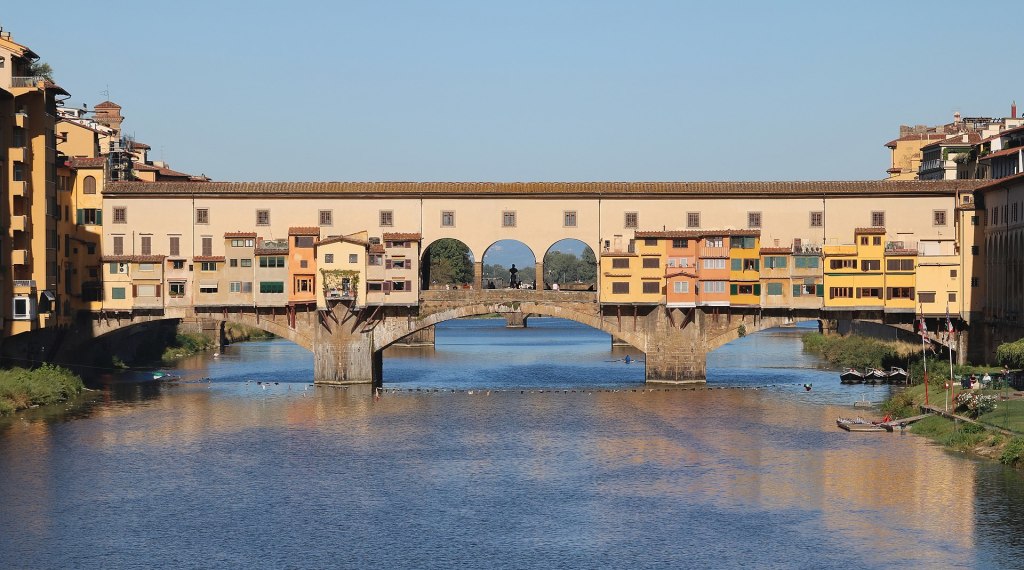
- Ponte Vecchio – Well known bridge/landmark, its a place to buy jewelry and souvenirs
- Mercato Central – World Famous Farmer’s Market
Learn A Little Italian
It shouldn’t be difficult to find someone who speaks English virtually everywhere we go. However, Italians will appreciate it if you put in a little effort to speak a little Italian. Here are few words/phrases that you might recognize but are helpful to know.
- Ciao – Hello/Goodbye
- Arrivederci – Goodbye
- Buongiorno – Good Morning
- Buonasera – Good Evening
- Buona Notte – Good Night
- Vino – Wine
- Birra – Beer
- Scusi – Excuse Me
- Non Parlo Italiano – I Don’t Speak Italian
- Parlo Inglese – I Speak English

 Newby to Expert Traveler