Rome is unique. With most historical cities, there are eras when the city was a dominant force. Venice rose to power as a merchant and military powerhouse starting around the 9th century. The art and architecture of Venice is demonstrative of that time period. Their dominance slowly faded when their status as a merchant city was lessened by the Age of Discovery beginning in the 15th Century. At that time, Europe no longer needed to send goods from Asia through the ports of Venice and instead could simply sail to where the goods were produced rather than count on a series of merchants that controlled a portion of a trade route. As a result, places like Amsterdam, with the Dutch East India Company, flourished while Venice faded.
In Florence, the history of the city revolves around the renaissance. Florence rose to prominence around the 14th century, mainly because of the wool trade, and remained a dominant force in Italy for a couple of centuries. Driven by the wealth of the powerful Medici family, the art and architecture of Florence displayed today are dominated by works from that time frame.
Rome however, rose to prominence in the 3rd century BC, more than a millennium before Venice. Rome not only became the center of a huge empire that lasted centuries, but they also later became the center of the Catholic church. Rome is also the modern capital of Italy. Because of this, Rome has layers of history, with art that goes back to the Roman Empire and continues through the Renaissance and into the modern age. There is so much history, everywhere that you just stumble across it while wandering the streets. It’s practically a museum that people live in.
Attractions
Parco Archeologico

Many of the remnants of the Roman Empire reside in one location, the Parco Archeologico del Colosseo. This includes the Colosseum, the Roman Forum and Palatine Hill. We might also be able to see the remnants of Circus Maximus which you might remember from the chariot races in Ben Hur.

According to legend, Rome was founded by twin brothers around 750 BC named Romulus and Remus. They were supposedly raised by a she-wolf who does appear in many Roman works of art. The founding of Rome was at Palatine Hill and many wealthy Romans lived there during the Republican Era (509 BC to 44 BC). It’s no surprise that so many important buildings such as the Forum, the Circus Maximus, and the Colosseum were built in and around Palatine Hill.
There are different types of tickets you can buy at Parco Archeologico, but the start at 18 Euros.
The Vatican
The Vatican is obviously the worldwide headquarters of the Catholic Church. But, in my opinion, it’s surprisingly new. St Peter’s Basilica wasn’t completed until 1626. The Sistine Chapel was built by Pope Sixtus IV and completed in 1481. Michelangelo painted the ceiling from 1508 to 1512. The Vatican didn’t even become it’s own country until 1929.
What most people visit when they go to the Vatican is the Vatican Museums and the Sistine Chapel. This is likely to be wall to wall people, but the Vatican is packed with amazing pieces of art, scientific exhibits, and maps dating back thousands of years. A lot of the exhibits are from the Renaissance to the present, but there are a surprising amount of secular pieces from the early days of Rome.
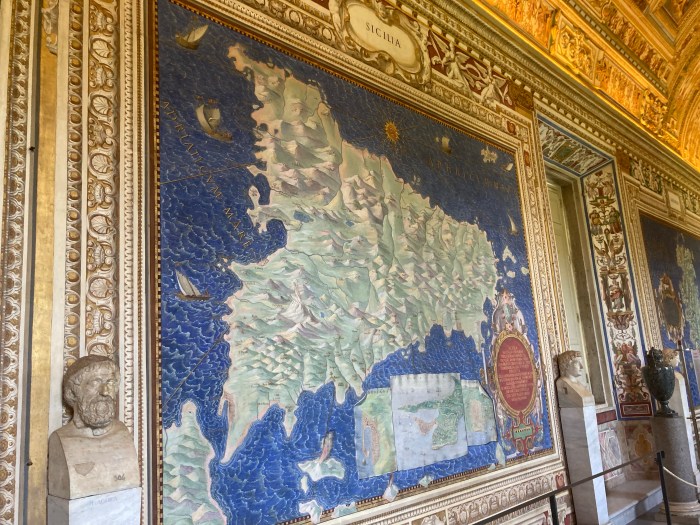
My favorite parts of the Vatican Museums was the map room and the Raphael Rooms which feature Raphael’s artwork commissioned by Pope Julius II. Raphael did some amazing work in those rooms, with one of his most famous frescoes “The School of Athens” being one of the pieces.

The Sistine Chapel is also amazing, but you aren’t allowed to take pictures and you basically have to stand in a square and stare at the ceiling, so that can be a little disappointing.
The Pantheon
The Pantheon was commissioned by the emperor Hadrian in AD 126 as a temple to all the Gods. Nearly 2 millennia after its construction, it remains the world’s largest unsupported concrete dome.
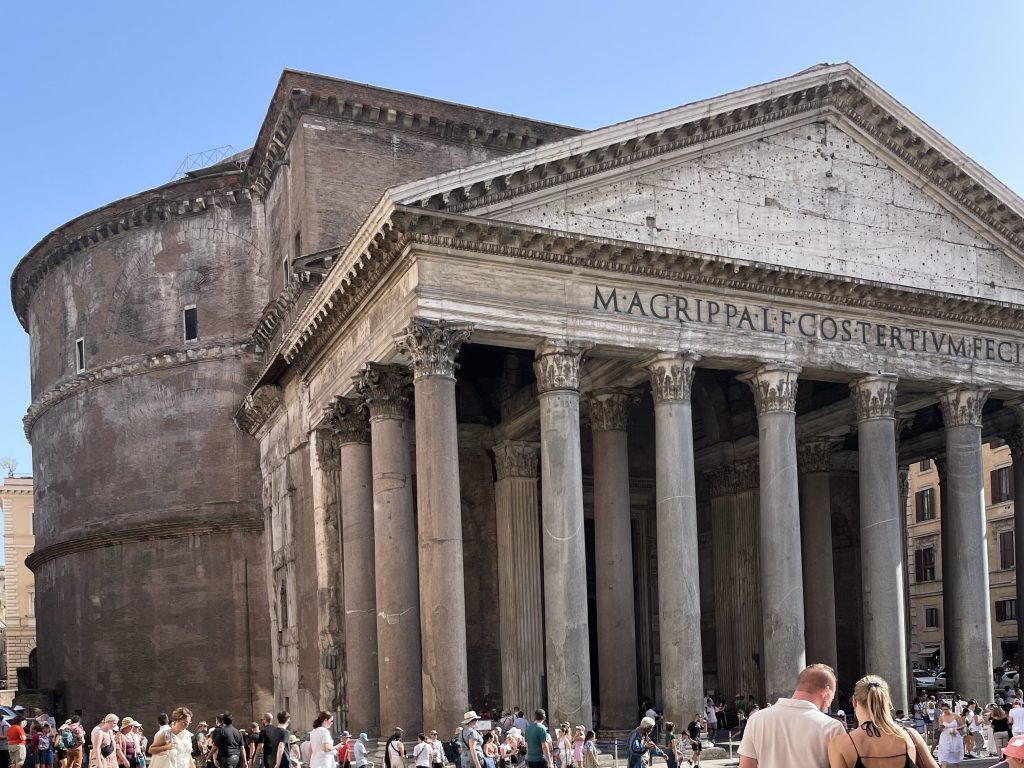
In 609 AD, the Catholic church didn’t like all those pagan gods and renovated the Pantheon into the Basilica of St Mary and the Martyrs. Tickets for the Pantheon cost 5 Euros.
Trevi Fountain
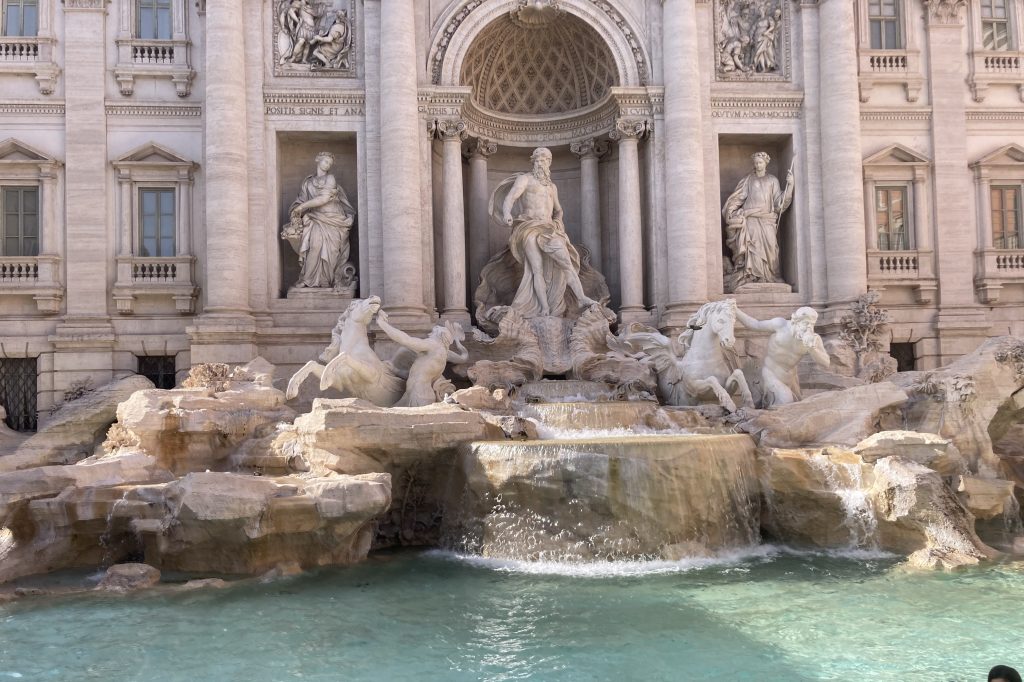
Trevi Fountain is a baroque fountain designed by Nicola Salvi and completed in 1762. You are allowed to throw coins in the fountain and the coins are collected and donated to a Catholic charity. You are absolutely not allowed to strip down and bathe in the Trevi Fountain – I won’t make that mistake twice.
Spanish Steps
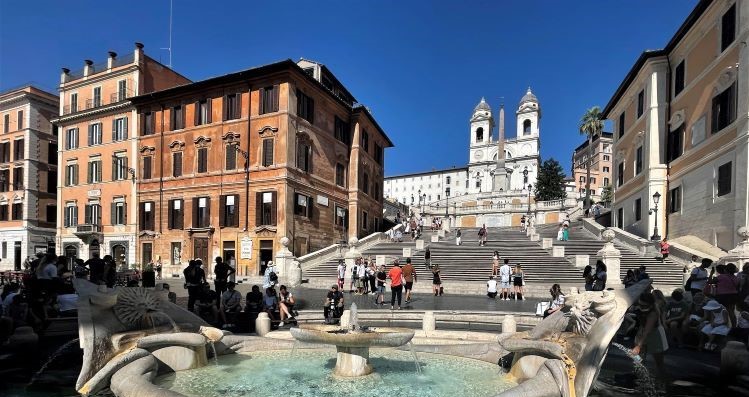
There is a lot of talk in travel blogs and videos about visiting the Spanish Steps, and I’m not sure I get it. Pope Gregory XIII first envisioned a set of stairs that connected the Piazza di Spagna to Trinita dei Monte church in the 1580s. A french diplomat left money for the construction of the stairs when he died in 1660 and the stairs were finally completed in 1725. So yeah, 145 years to build steps.
Apparently, it’s illegal with a penalty of 400 euros to sit on the steps and if you attempt it people will whistle at you to get you to stop. Anyway, it’s pretty close to our Airbnb and also close to a subway station, so we might end up going past this a few times.
Piazza Navona
Piazza Navona is a large Piazza built on the site of the Stadium of Domitian. Because of that, it is a large oval shape. It has three main fountains and a lot of restaurants. It’s just a relaxing, beautiful place. They have excavated a portion of the Stadium of Domitian under the Piazza, so you can see a little of that it was like, or you can just sit down at a cafe and enjoy a beer.

Food
Gnocchi
Gnocchi is a Thursday tradition in Rome. It’s related to the fact that Catholics don’t eat meat on Fridays during lent, so they think they need to eat something heavy the day before and gnocchi does the job. It sounds like something that should be served at a number of restaurants on Thursdays, and might not be on their regular menu. My knowledge of gnocchi ends at the dry packaged stuff at Aldi, and that’s pretty good, so I’m imagining fresh gnocchi in Rome must be amazing.
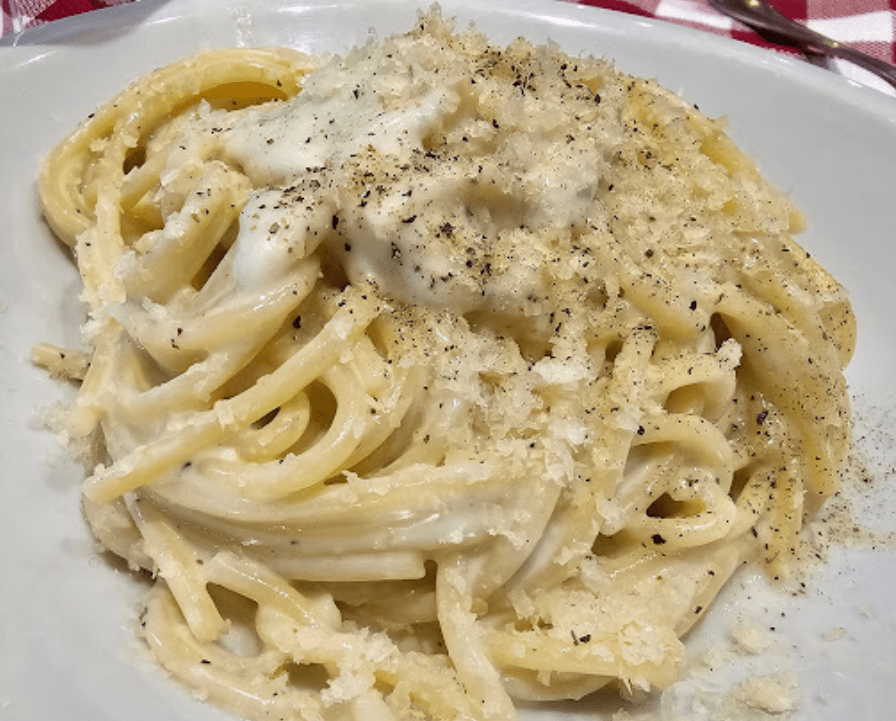
Cacio e Pepe
This is one of those dishes that’s too good to be that simple. Its pasta, pecorino cheese and pepper. That’s it. It’s also amazing.
Maritozzo con la panna
Maritozzo con la panna is a sweet brioche style bread, split and then filled with whipped cream. Apparently it’s a big deal in Rome.

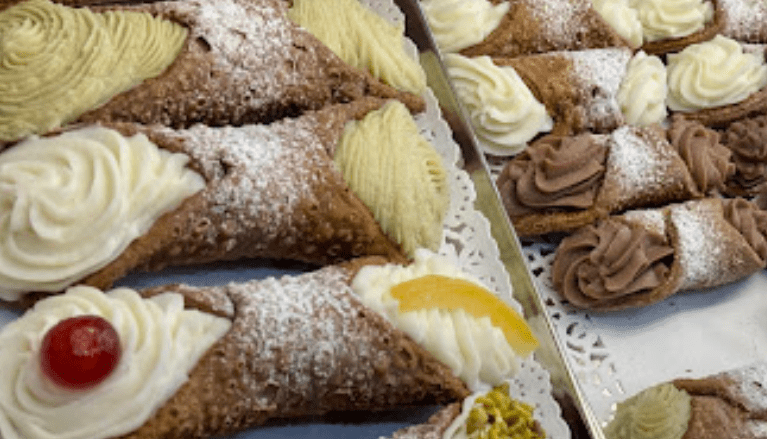
Cannoli
If you haven’t had a cannoli by this time in the trip, you’re running out of time.
Craft Beer Near the Vatican
There seem to be a number of places to get craft beer near the entrance to the Vatican, like a siren song luring folks away from the Holy See. Honestly, it’s a little weird considering the lack of real beer bars in Rome. For them all to be located near the entrance to the Vatican seems like the work of, Satan, maybe? Oh well, best not to think about it.
- Birreria Martini Esperienza Tedesca – German themed Restaurant with a very Italian name
- Be.Re. + Trapizzino – Gastropub with 24 taps, if it’s been a week or two since you’ve had a proper stout, this might be the place to get it.
- Angrypig Birretta e Porchetta – It’s really a sandwich shop, but in a photo on Google, it shows a really impressive bottle collection of hard to find beers, specifically Belgian ales.
- Aeternum Beer Shop Roma – Sandwich shop/pizza, but with a really impressive tap list.

 Newby to Expert Traveler