The first day of the Camino was hard on us. Everyone was sore. For me, it was my shoulders. I wasn’t used to my backpack. Surprisingly, a good night’s sleep healed up most of our aches and pains. The first day had tested everyone physically and mentally, but surprisingly everyone woke up refreshed and ready to take on another challenge.
We tinkered around in our hostel kitchen and made some breakfast. The English gentleman we met the previous day was also having breakfast, and we discussed his previous caminos. He had done the English way, the French Way, and the Coastal Route of the Portuguese Way. This time he was doing the Portuguese Central Route with the Spiritual Variant. Talking to him it became clear that you can hike the Camino in infinite ways. As a nearly 70-year-old man, he had truly been making the most of his retirement and was inspiring to talk to.
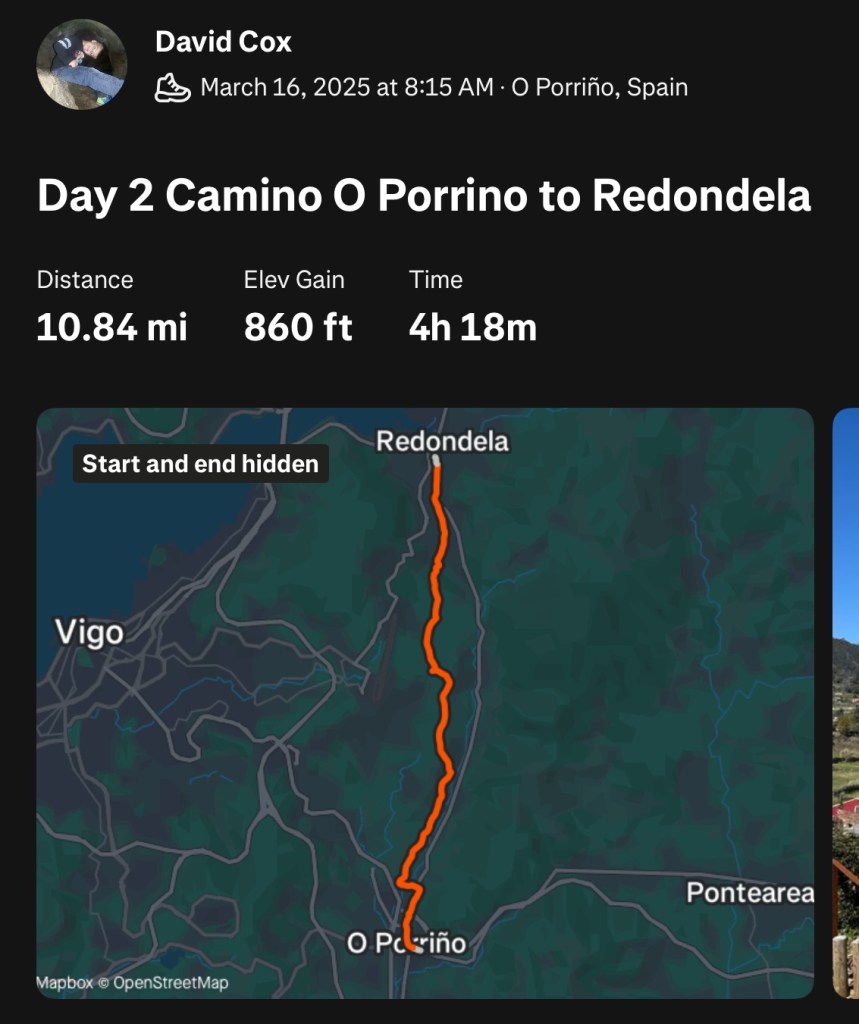
We told the gentleman goodbye and that we would see him on the trail (he’s a faster hiker than us, he was going to catch up) and started our walk toward Redondela. Most of the early part of the day was spent hiking through rural Galicia. It was on a lot of blacktop country roads weaving through farms.

In Iowa, we are used to giant factory farms where one family plows thousands of acres of one crop, either soybeans or corn. In Galicia, farms are small and have a variety of animals and crops. Almost everyone had a dozen or more chickens. There were also usually some other animals on the farms including ducks, geese, cows, sheep, and sometimes goats. There were also a lot of gardens and grapevines. My favorite thing about these little farms was that you normally saw an orange tree and a lemon tree on the property. Walking outside and picking an orange right from the tree has to be pretty amazing.

Walking among the farms, I began to realize that my anxiety about getting lost had vanished. The Camino is marked with yellow arrows that guide pilgrims to Santiago de Compostela. These arrows come in a variety of forms. Some are simply spray painted on walls, some are wooden arrows, and some are signs. There are also granite monuments and brass shells embedded into streets. These markers are at almost every intersection, ensuring pilgrims don’t take a wrong turn.
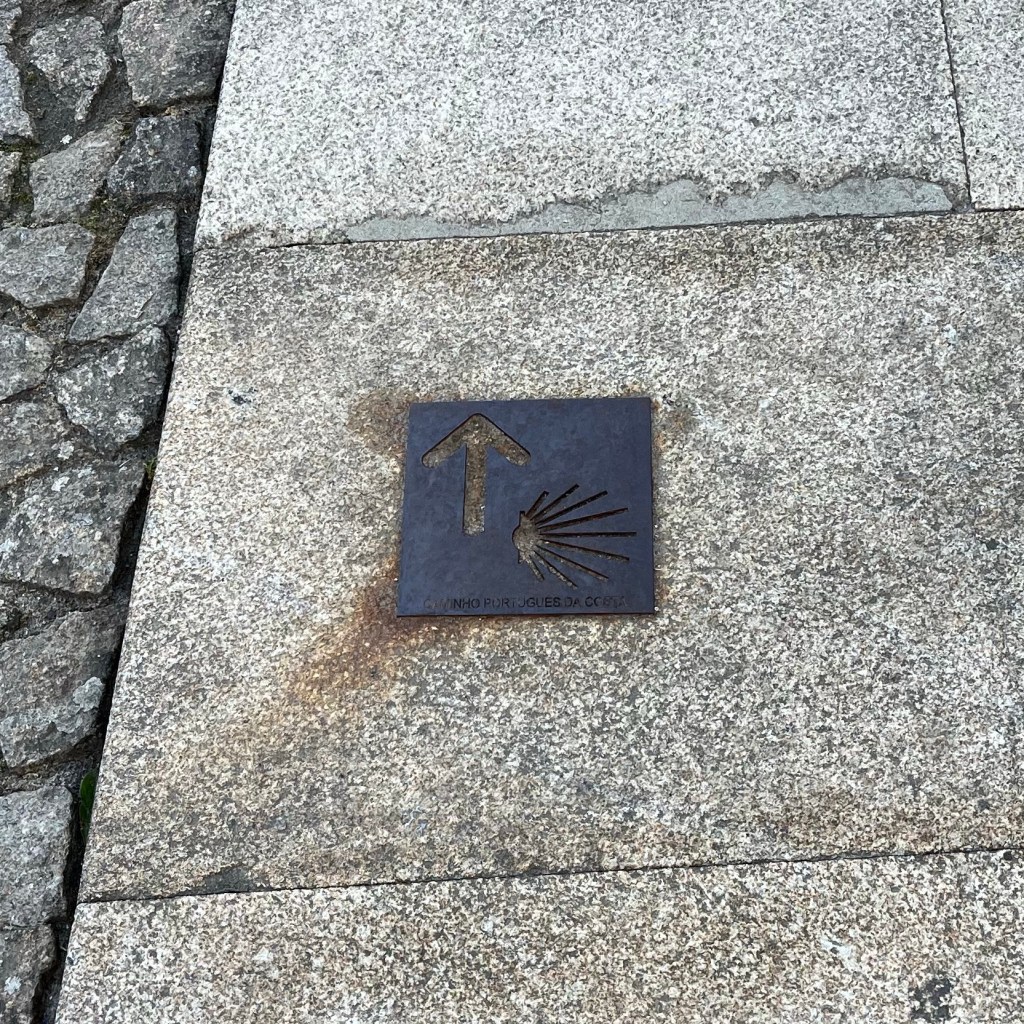
I was surprised by the frequency of these guides, especially the granite monuments. Those monuments mark the Camino and give the pilgrim the distance left, in kilometers, to Santiago de Compostela. It became clear that we weren’t going to get lost.
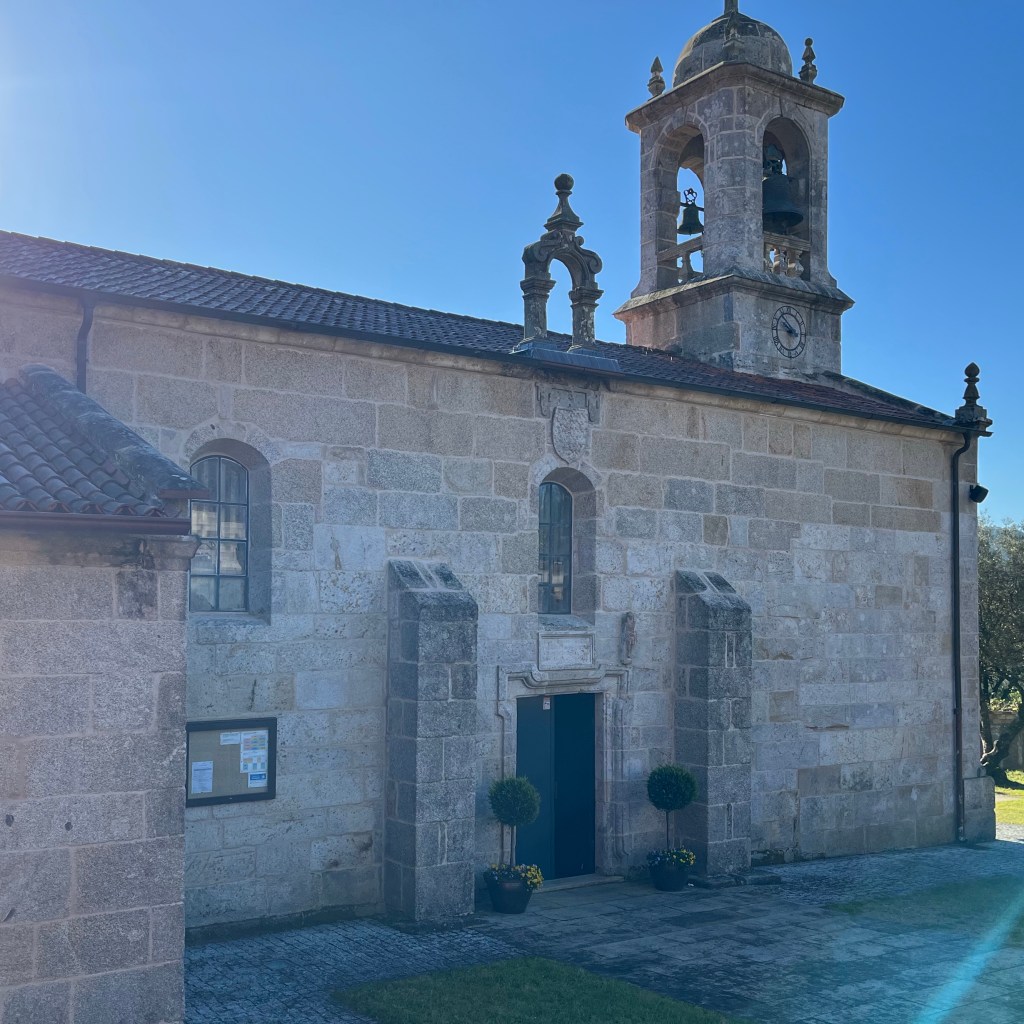
We walked among these farms until we reached Mos, a tiny but beautiful village. We stopped for coffee at a cafeteria there, which was mostly serving locals at the time. We had some café con leches and a bite to eat and prepared ourselves for a large hill we were about to climb.

The next two miles or so were hiking uphill as we gained about 600 feet of elevation. As with most climbing, the views improved as we became more tired. At the top of the hill, we stopped at Casa Veiga for a couple of beers and some bocadillos under an orange tree. Bocadillos are basic sandwiches usually made with baguette-style bread. They were available at most bars and like most sandwiches can be found with a variety of fillings. Typically, we saw things like jamon, chorizo, bacon, and cheese.

The man working at Casa Veiga didn’t speak much English, so we did our best to order in Spanish. Jenn, Emma, and I have all been trying to learn Spanish, so it was nice to try out our skills. I notice so often while in Europe, that so many people speak excellent English, that I feel like I’m annoying them when I try to speak in their language (Germans are definitely annoyed).

The odds of meeting someone who doesn’t speak English well in Galicia must be higher than in other parts of Europe. That is because the language spoken in this area is Galician which is very similar to both Spanish and Portuguese. However, the main official language of Spain is of course Spanish, which means for most people, English would be a third language not a second.

With our stomachs full of bocadillos, we continued to Redondela. Most of the hiking from Casa Veiga to Redondela was either flat or downhill, which made the rest of the day pretty easy. The views coming down the hill were really nice. There were many areas where we were on top of a hill looking out over the Galician countryside. It made for an enjoyable second half of the hike.
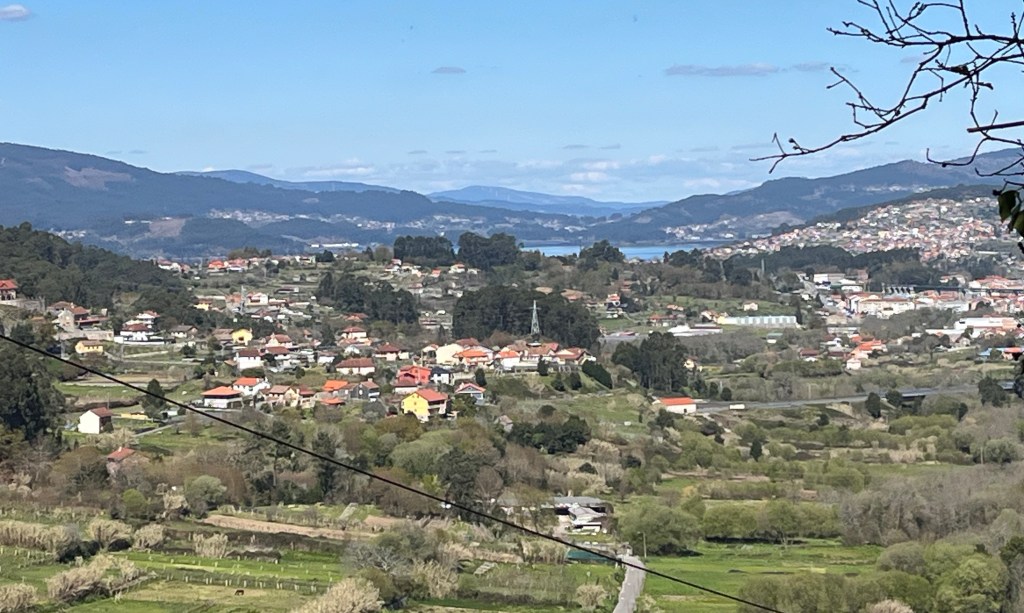
We made only one more quick stop for a drink at a café and we were in Redondela. The second day turned out to be our shortest hike, where we only logged around 11 miles. After struggling the first day, the short day was welcome and we were all feeling a bit more confident that we would finish the Camino.

We checked into Albergue A Conserveira in Redondela. Unlike the previous two stays, this hostel was nearly full. The Portuguese coastal route had now joined the Portuguese Central Route and now there were considerably more pilgrims looking for beds.
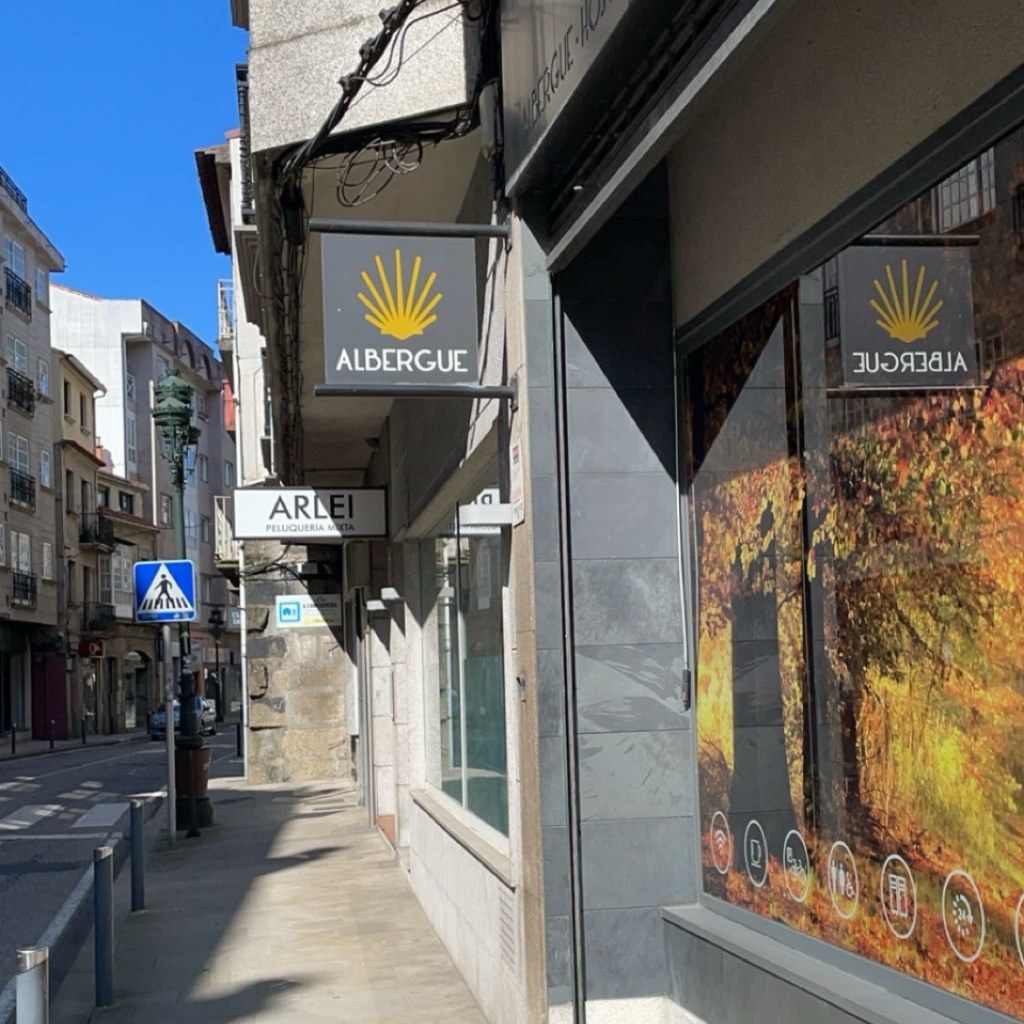
This is where things started to become more social. We ran into the English gentleman again who was staying in the same hostel. Jenn and Emma chatted with two girls from Ohio taking a gap year. They were on their second week of the Camino, having started from Porto.
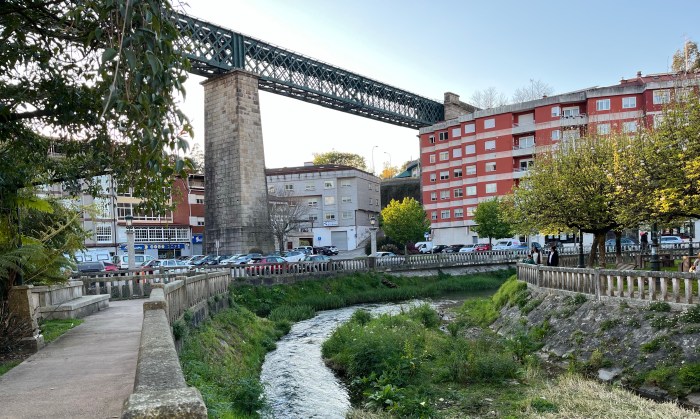
After getting situated in the hostel, we headed out to look around the town. Redondela is beautiful. There is a creek that runs through the center of town and a lattice iron train bridge that seems impossibly tall going over it.
We sat down for a couple of bottles of wine at Don Vilnius, a tapas and wine bar. Don Vilnius has an outdoor patio facing a beautiful building called Convento de Vilavella. We ordered a bottle of house white and a bottle of house red. Both were very good and it was a great night to sit outside in a beautiful setting and enjoy some wine.

Returning to the hostel after dinner, we met Carlos, a young man from Valencia. He’s one of those incredibly friendly, generous people who is just having a great time all of the time. He had done plenty of caminos in the past and because of his outgoing personality, it seemed like he knew everyone. He and his friend Herk were making spaghetti carbonara in the hostel kitchen and enjoying a couple of beers.
We sat in the kitchen for way too long talking about the Camino, differences between the US and Spain, and life in general. We eventually had to go to bed because we had another big day the next day. It had been a great day along the Camino and I was looking forward to day 3.

 Newby to Expert Traveler