Berlin is the epicenter of uncomfortable history. The city was the seat of power for Germany during World War I and World War II. During the Second World War, many crimes against humanity were directed from this city. It was also physically split during the Cold War.
20th-century German history forces people to confront the worst parts of humanity. This includes the history of concentration camps, persecution of vulnerable groups, and ethnic cleansing. It also forces people to confront totalitarianism and the stripping of basic human rights. It’s a history that confronts each and every individual who learns about it with the worst parts of the human experience.
Berlin could have decided to move on from its history and maybe built some small monuments or plaques to inform people of the past. Instead, the people of Berlin have built an impressive and thoughtful collection of monuments, allowing people to mourn the past and contemplate what it means for the present.
World War II Monuments
There are various monuments related to World War II in Berlin, and many of them recount the horrors related to the Holocaust and the Nazis’ campaigns of ethnic cleansing. There were three in particular that drew my attention related to the persecution of minorities by the Nazis from 1933 to 1945.
Memorial to the Murdered Jews of Europe
Completed in 2004, the Memorial to the Murdered Jews of Europe was designed by architect Peter Eisenman and artist Richard Serra. This memorial is built out of 2,711 concrete blocks of various sizes arranged in a grid pattern over an area of about 4 acres. The memorial is abstract, and your interpretation of its meaning is up to you.
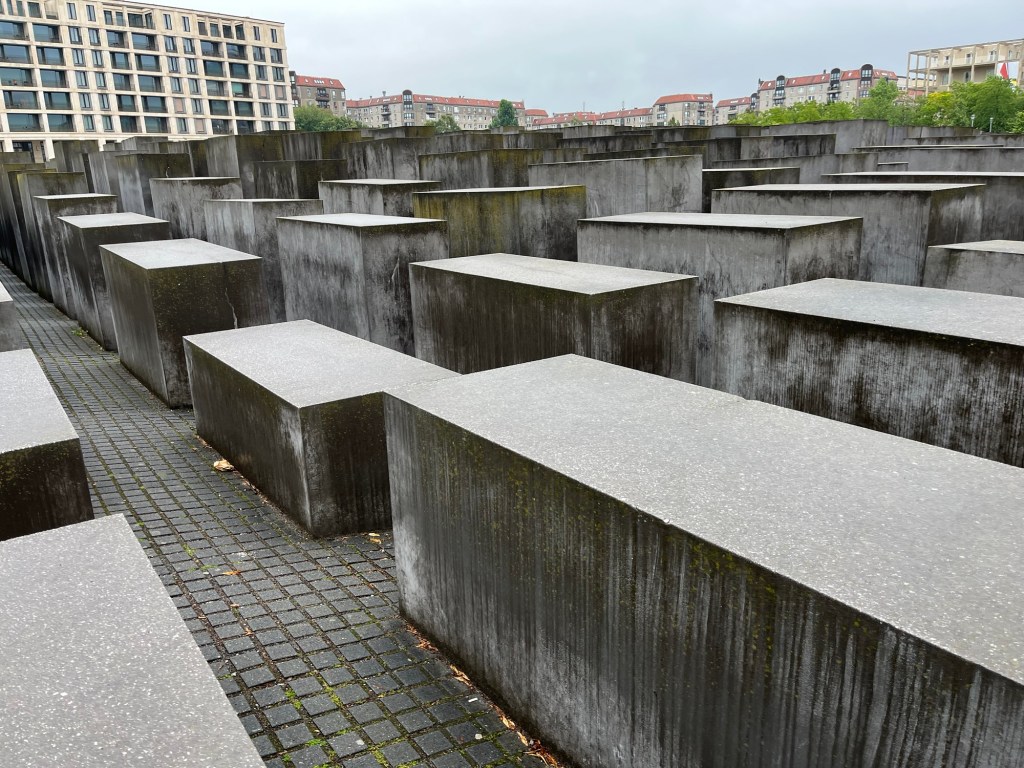
As I was walking through the memorial, it became very clear to me just how difficult it is to visualize large numbers. There were an estimated six million Jews killed during the Holocaust at the hands of the Nazis. That is a number that becomes incredibly hard to visualize. However, as I was walking among the concrete blocks, seeing 2,711 blocks, and that, if divided equally, each block would represent more than 2,000 lives lost, six million becomes an unfathomable number.
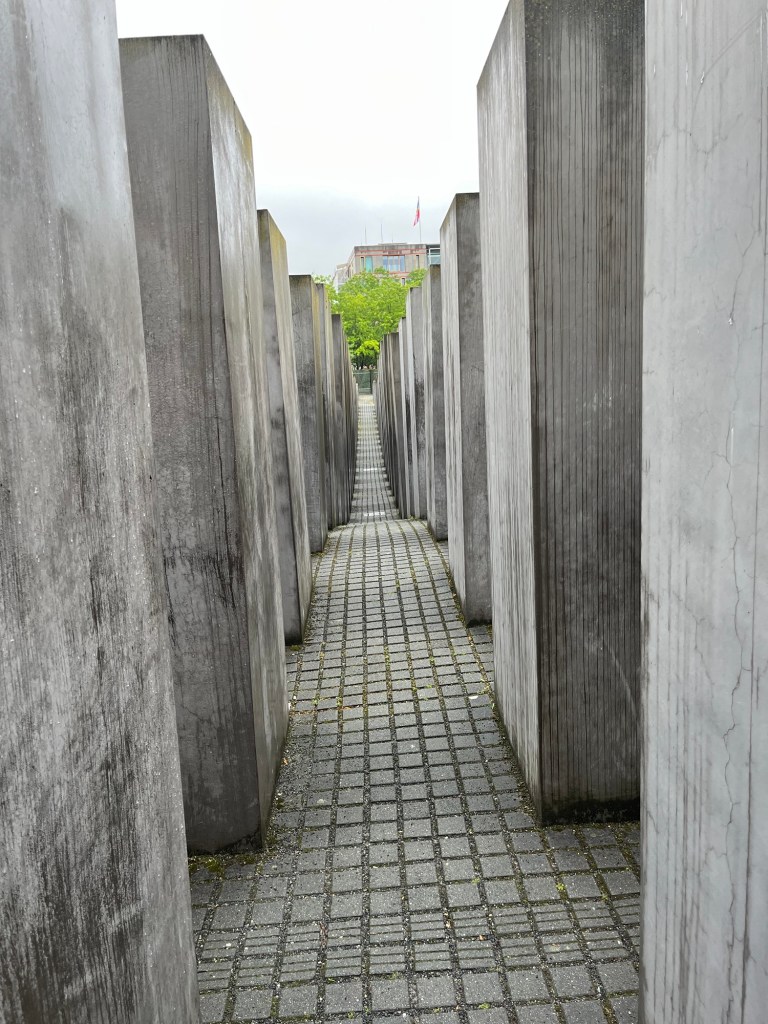
People have commented that the design is meant to be disorienting, with the varying heights of the blocks and the fact that the ground they sit on is not flat. To me, instead, it felt like a place for reflection. Once you get into the sea of concrete blocks, the distractions of the city vanish, and you are only left with your thoughts.
Monument to the Sinti and Roma Victims of National Socialism
In the Tiergarten in Berlin is the Monument to the Sinti and Roma Victims of National Socialism. It was officially opened in October 2012 and was dedicated to the estimated 250,000 to 500,000 Sinti and Roma who were killed by the Nazis.
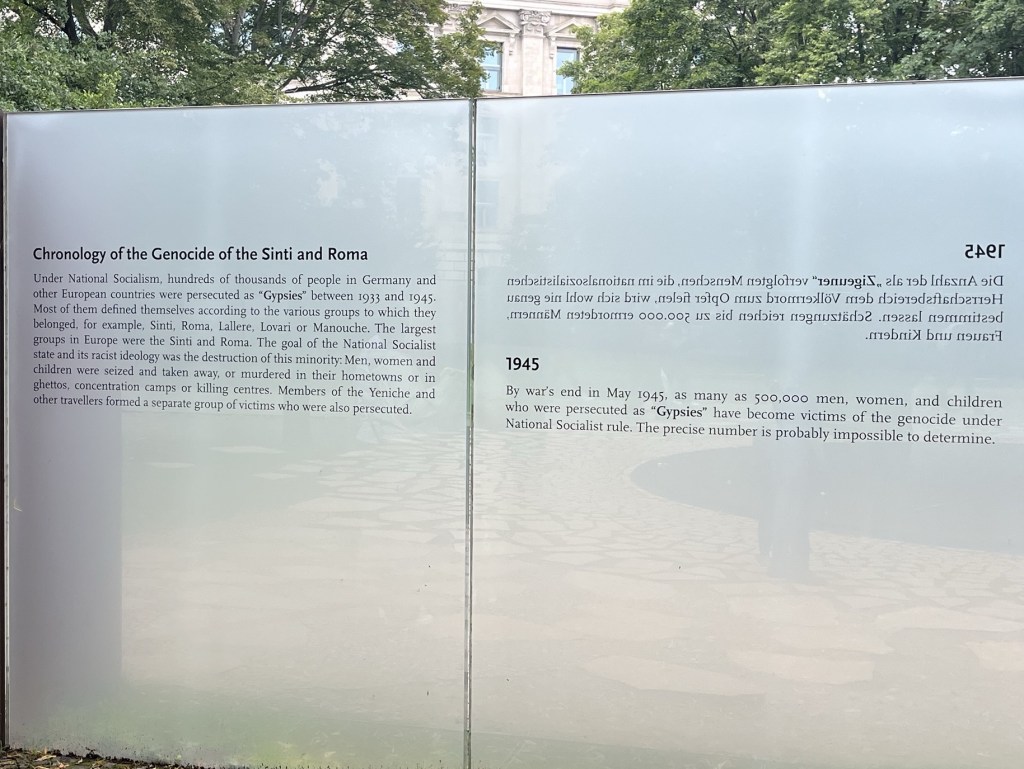
The monument consists of a dark pool with a triangular-shaped stone, which signifies the badge the Sinti and Roma were forced to wear in the concentration camps. The monument also contains a large exhibit that describes the story of the persecution and genocide of the Sinti and Roma.
Memorial to the Homosexuals Persecuted Under Nazism.
The Memorial to the Homosexuals Persecuted Under Nazism looks like a plain concrete cube, similar to the concrete cubes in the Monument to the Murdered Jews of Europe. There is, however, a window in the concrete which, when you look inside, displays a short video of two men kissing. Every two years, the video alternates between two women kissing and two men kissing.

This monument is in Berlin’s Tiergarten and was opened in May 2008. I thought the monument was a great depiction of how members of the LGBTQ+ community had to live their lives in secrecy to avoid persecution.
Monuments to the Berlin Wall
From the end of World War II in 1945 until reunification in 1990, Berlin was essentially split in half, with the western side part of West Germany and the eastern side part of East Germany. West Berlin, however, was essentially an island as it was completely surrounded by East Germany.
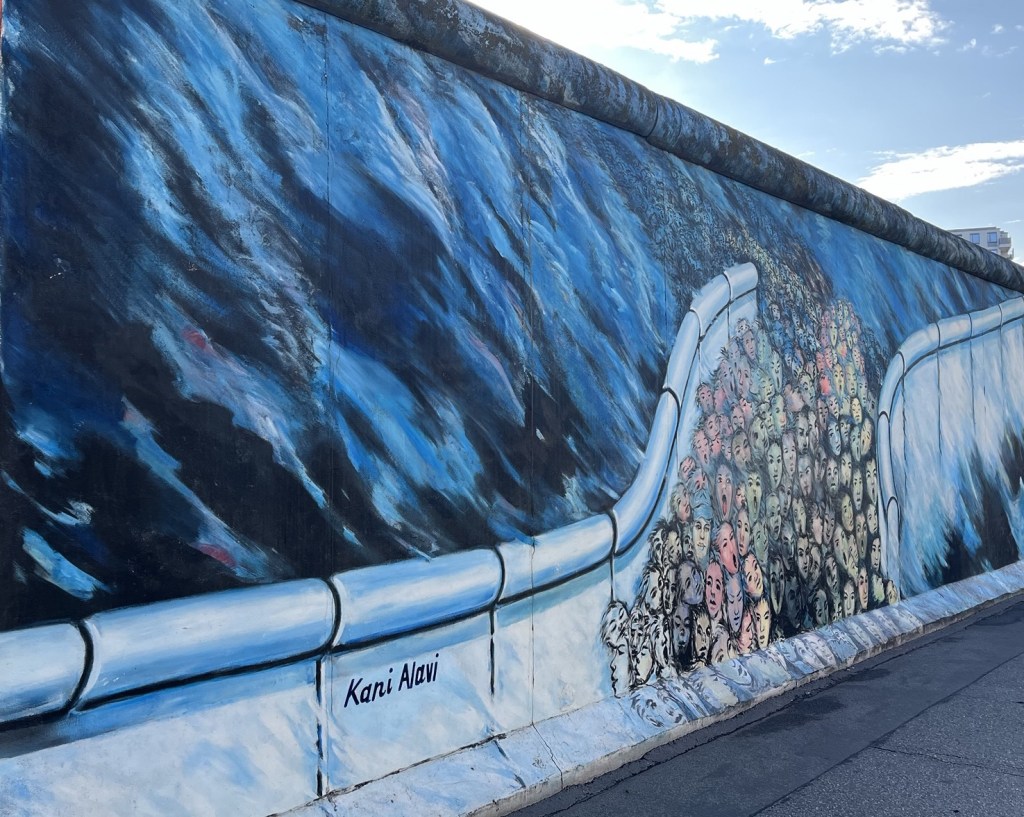
In an effort to stop people from defecting from East Berlin to West Berlin, a wall was constructed in 1961. This concrete and barbed wire wall completely encircled West Berlin. From the construction of the wall in 1961 to the fall in November 1989, a total of 171 people were killed attempting to escape East Berlin. Approximately 5,000 East Germans were successful in escaping East Berlin during that time.
East Side Gallery
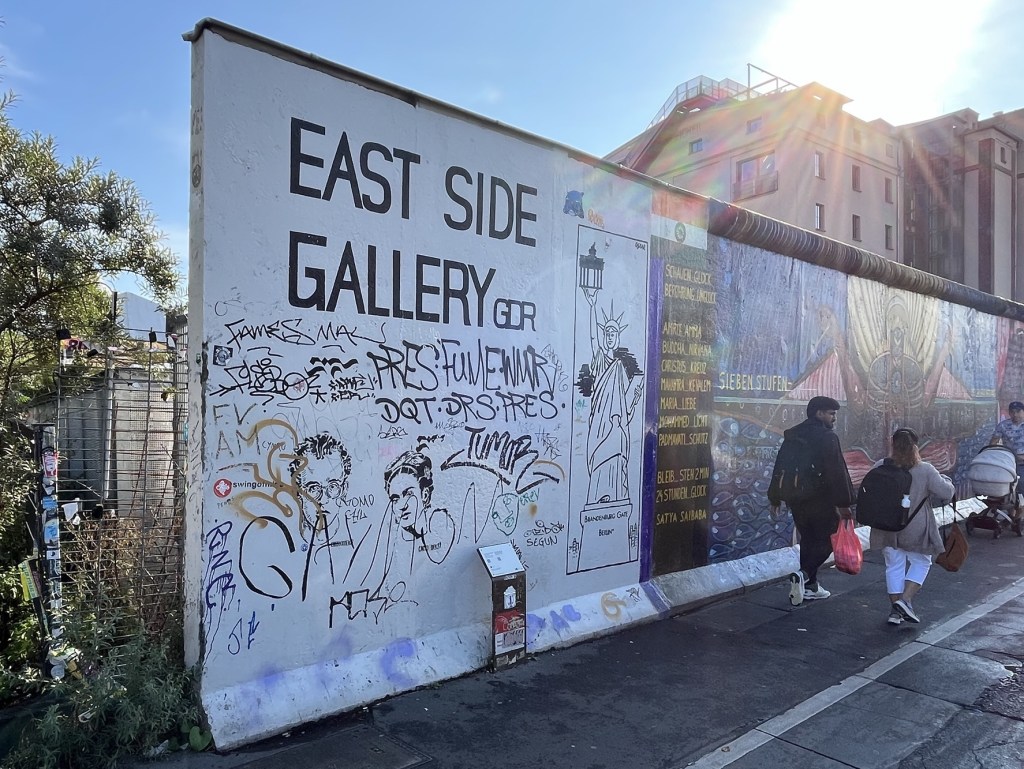
Many sections of the Berlin Wall are left standing throughout Berlin. The East Side Gallery is a large portion of the Berlin Wall painted by a series of artists. It is a large open-air art gallery with over 100 unique paintings from across the world.
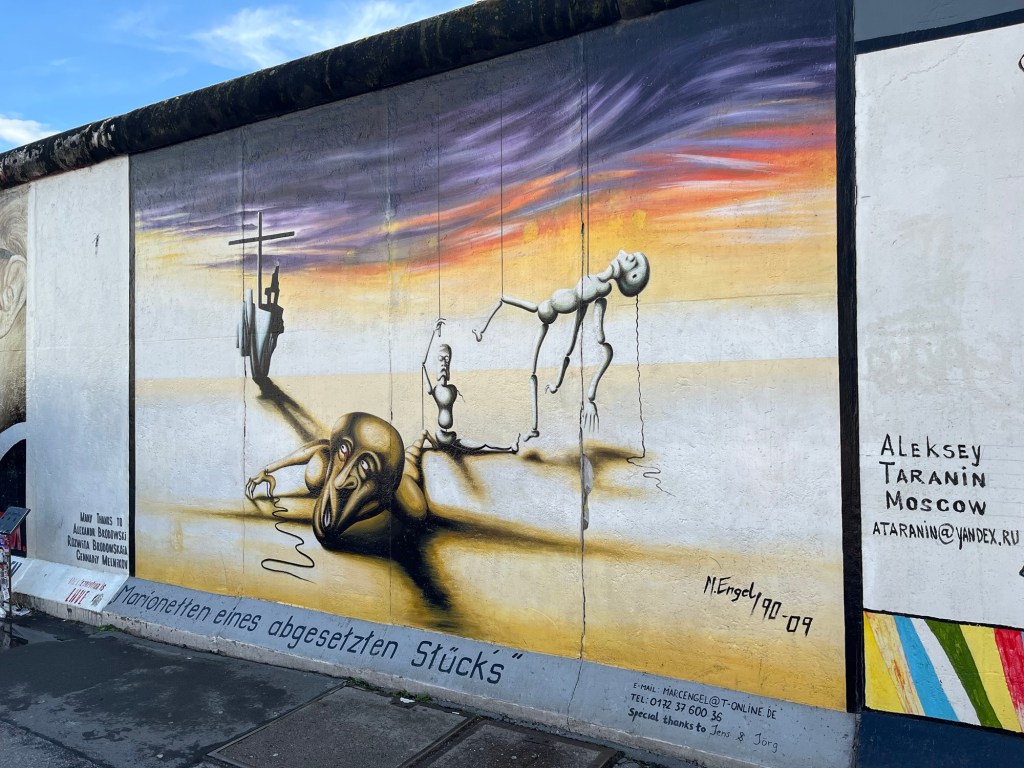
It is impressive in its size and artistic diversity. We spent a couple of hours walking along the wall, admiring the artwork.
White Crosses
Walking into the Tiergarten, we came across a series of white crosses that were placed to commemorate the people who died attempting to cross from East Berlin to West Berlin. The stories of some of the 171 East Berliners who died trying to cross the Berlin Wall are displayed on these crosses.

There were over a dozen at the location we saw at the northeast corner of the Tiergarten, but there are also 8 additional crosses along the Spree River behind the Reichstag building.
Remnants of the Berlin Wall

Throughout Berlin, you will see reminders of the location of the Berlin Wall. In some cases, it is a piece of the wall. In others, it’s a brick line in the pavement that marks where the wall had been. It is a constant reminder to the citizens of Berlin of when and where their city had been split for the duration of the Cold War.
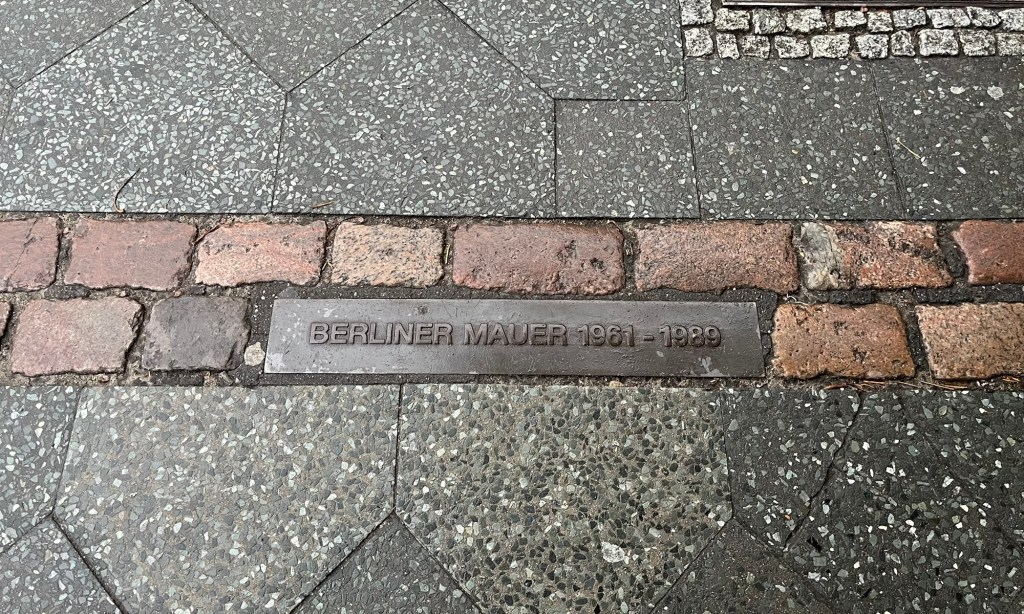
The city of Berlin could have chosen to completely remove all of the Berlin Wall and turn the page on a horrible part of its history. However, they left scars throughout the city as a reminder of the trauma of the past.
Addressing the Past with Clarity
In the United States, it has been 160 years since the end of the Civil War. Even after that much time, we lack a cohesive narrative about the end of a horrible chapter in our past.
Throughout much of the Old South in the United States, there are still countless monuments to Robert E. Lee. People still proudly wave Confederate flags. For some people, the teaching of the history of slavery, segregation, and the Civil Rights movement in America is labeled ‘Critical Race Theory’ and demonized. Even after more than a century and a half, we cannot come to terms with the sins of our past.
The city of Berlin addresses its past with clarity. You will not find statues in Berlin commemorating Hitler or any of his generals. Nazi flags are illegal in Germany, and you will not find many people who defend Nazi Germany. What you will find are thoughtful monuments to their victims. The message is clear to visitors and Berlin residents – we made horrible mistakes and are committed to not repeating those mistakes.
Germany does not hide from its past; it addresses it head-on. Unlike the United States, it does not confuse or excuse its immoral actions but instead addresses them with clarity. That is the best way for a society to move forward from its mistakes.
We should not shy away from things that make us uncomfortable. Discomfort is the fertile soil where wisdom grows. It is not our responsibility to bear the weight of the sins of our fathers. It is, however, our responsibility to not repeat those sins.

 Newby to Expert Traveler