Day 2 of the Camino – O Porrino to Redondela

This is part two of a multi-part series on our experiences doing the Portuguese Central Route of the Camino de Santiago starting in Valenca, Portugal and ending in Santiago de Compostela.

The first day of the Camino was hard on us. Everyone was sore. For me, it was my shoulders. I wasn’t used to my backpack. Surprisingly, a good night’s sleep healed up most of our aches and pains. The first day had tested everyone physically and mentally, but surprisingly everyone woke up refreshed and ready to take on another challenge.

We tinkered around in our hostel kitchen and made some breakfast. The English gentleman we met the previous day was also having breakfast, and we discussed his previous caminos. He had done the English way, the French Way, and the Coastal Route of the Portuguese Way. This time he was doing the Portuguese Central Route with the Spiritual Variant. Talking to him it became clear that you can hike the Camino in infinite ways. As a nearly 70-year-old man, he had truly been making the most of his retirement and was inspiring to talk to.
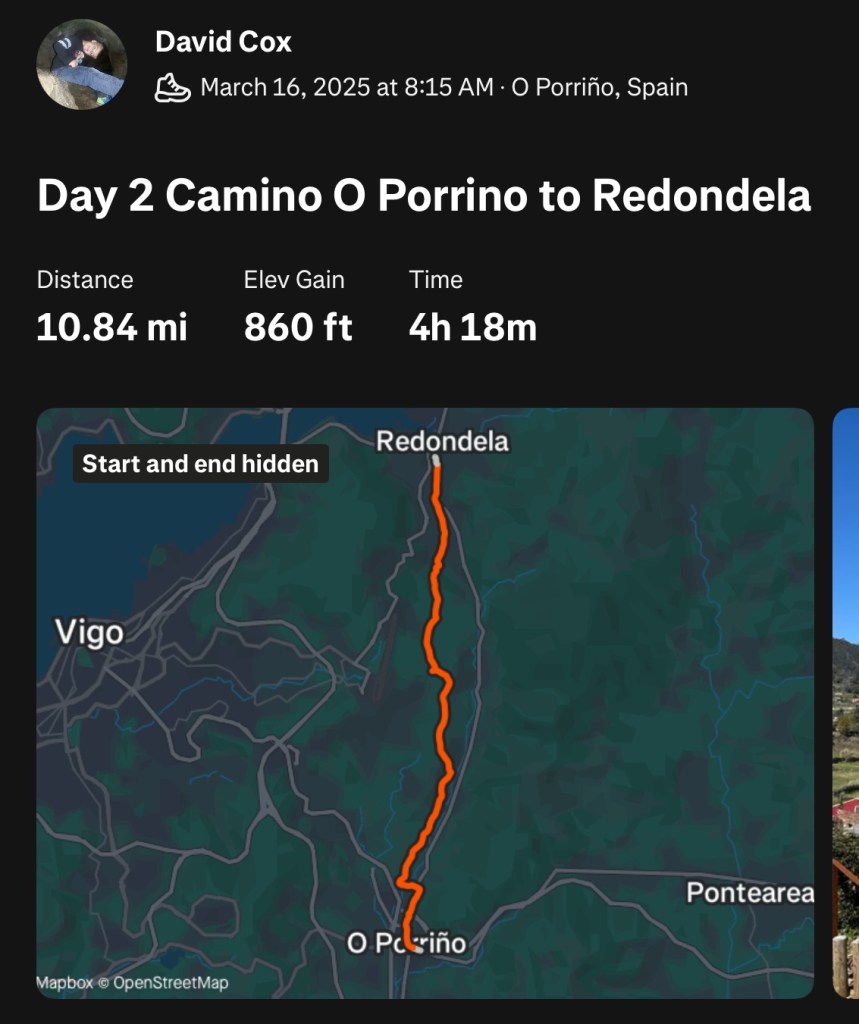
Strava activity from day 2

We told the gentleman goodbye and that we would see him on the trail (he’s a faster hiker than us, he was going to catch up) and started our walk toward Redondela. Most of the early part of the day was spent hiking through rural Galicia. It was on a lot of blacktop country roads weaving through farms.

Sheep above a wall near Mos, Spain

In Iowa, we are used to giant factory farms where one family plows thousands of acres of one crop, either soybeans or corn. In Galicia, farms are small and have a variety of animals and crops. Almost everyone had a dozen or more chickens. There were also usually some other animals on the farms including ducks, geese, cows, sheep, and sometimes goats. There were also a lot of gardens and grapevines. My favorite thing about these little farms was that you normally saw an orange tree and a lemon tree on the property. Walking outside and picking an orange right from the tree has to be pretty amazing.

Wooden arrow marking direction on the Camino

Walking among the farms, I began to realize that my anxiety about getting lost had vanished. The Camino is marked with yellow arrows that guide pilgrims to Santiago de Compostela. These arrows come in a variety of forms. Some are simply spray painted on walls, some are wooden arrows, and some are signs. There are also granite monuments and brass shells embedded into streets. These markers are at almost every intersection, ensuring pilgrims don’t take a wrong turn.
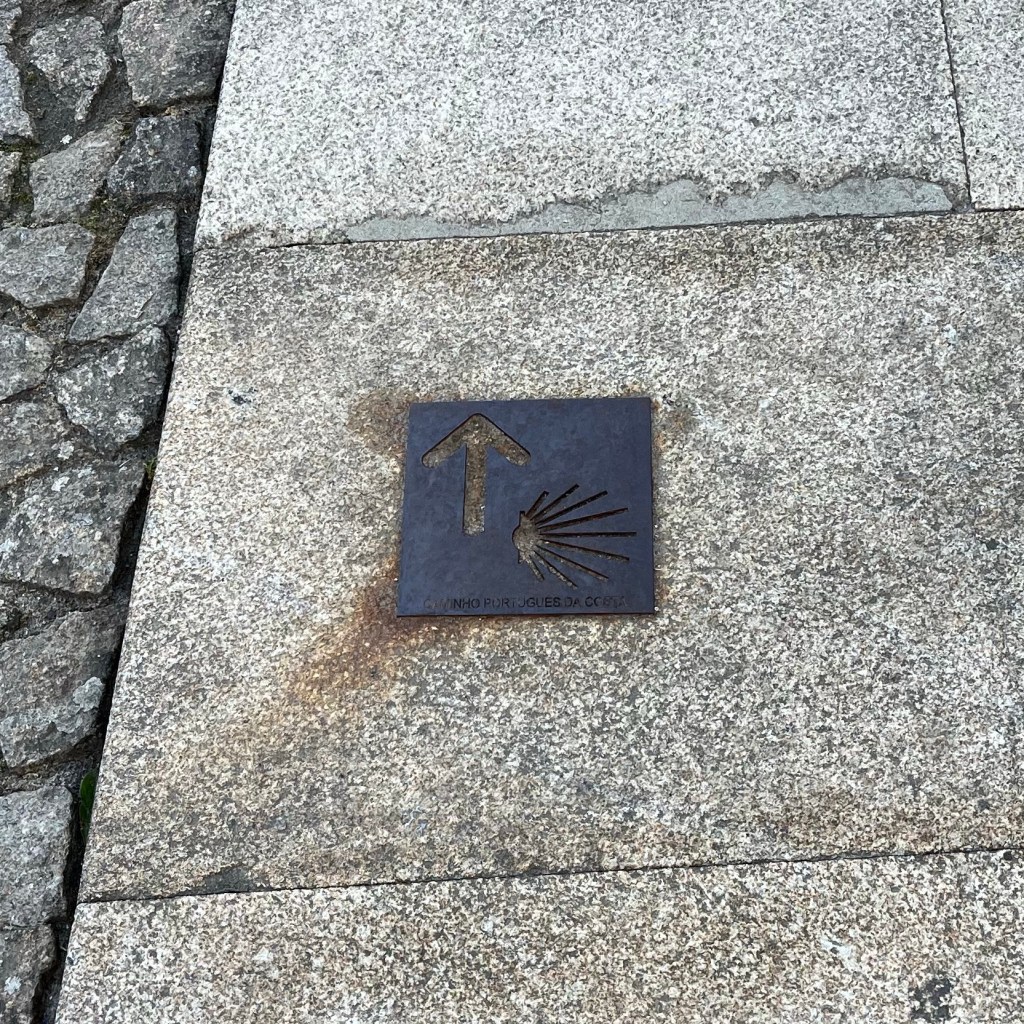
Metal marker on a sidewalk

I was surprised by the frequency of these guides, especially the granite monuments. Those monuments mark the Camino and give the pilgrim the distance left, in kilometers, to Santiago de Compostela. It became clear that we weren’t going to get lost.
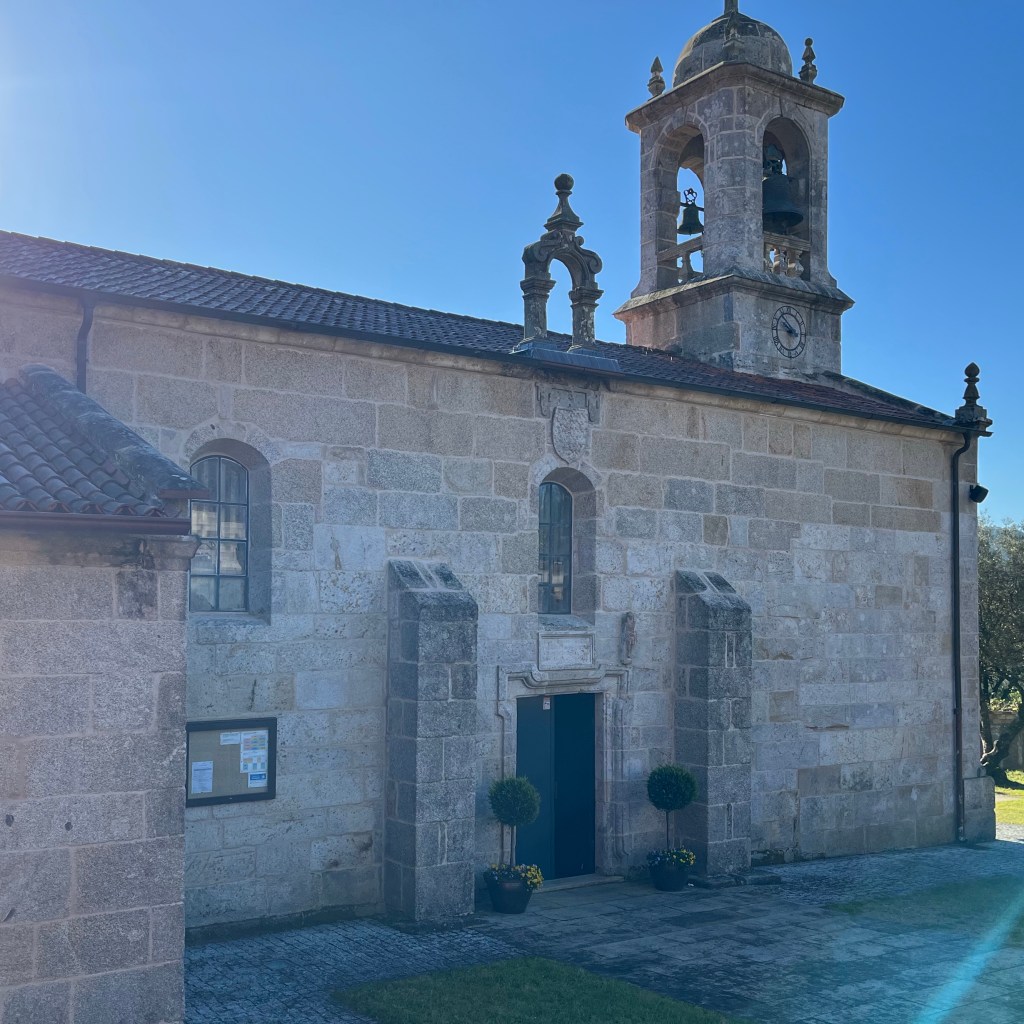
A little chapel named Igrexa de Santa Baia de Mos

We walked among these farms until we reached Mos, a tiny but beautiful village. We stopped for coffee at a cafeteria there, which was mostly serving locals at the time. We had some café con leches and a bite to eat and prepared ourselves for a large hill we were about to climb.

A small group of shops and restaurants in Mos

The next two miles or so were hiking uphill as we gained about 600 feet of elevation. As with most climbing, the views improved as we became more tired. At the top of the hill, we stopped at Casa Veiga for a couple of beers and some bocadillos under an orange tree. Bocadillos are basic sandwiches usually made with baguette-style bread. They were available at most bars and like most sandwiches can be found with a variety of fillings. Typically, we saw things like jamon, chorizo, bacon, and cheese.

Bacon and Cheese Bocadillo from Casa Veiga

The man working at Casa Veiga didn’t speak much English, so we did our best to order in Spanish. Jenn, Emma, and I have all been trying to learn Spanish, so it was nice to try out our skills. I notice so often while in Europe, that so many people speak excellent English, that I feel like I’m annoying them when I try to speak in their language (Germans are definitely annoyed).

Orange Tree at Casa Veiga

The odds of meeting someone who doesn’t speak English well in Galicia must be higher than in other parts of Europe. That is because the language spoken in this area is Galician which is very similar to both Spanish and Portuguese. However, the main official language of Spain is of course Spanish, which means for most people, English would be a third language not a second.

View from the outside dining area of Casa Veiga

With our stomachs full of bocadillos, we continued to Redondela. Most of the hiking from Casa Veiga to Redondela was either flat or downhill, which made the rest of the day pretty easy. The views coming down the hill were really nice. There were many areas where we were on top of a hill looking out over the Galician countryside. It made for an enjoyable second half of the hike.
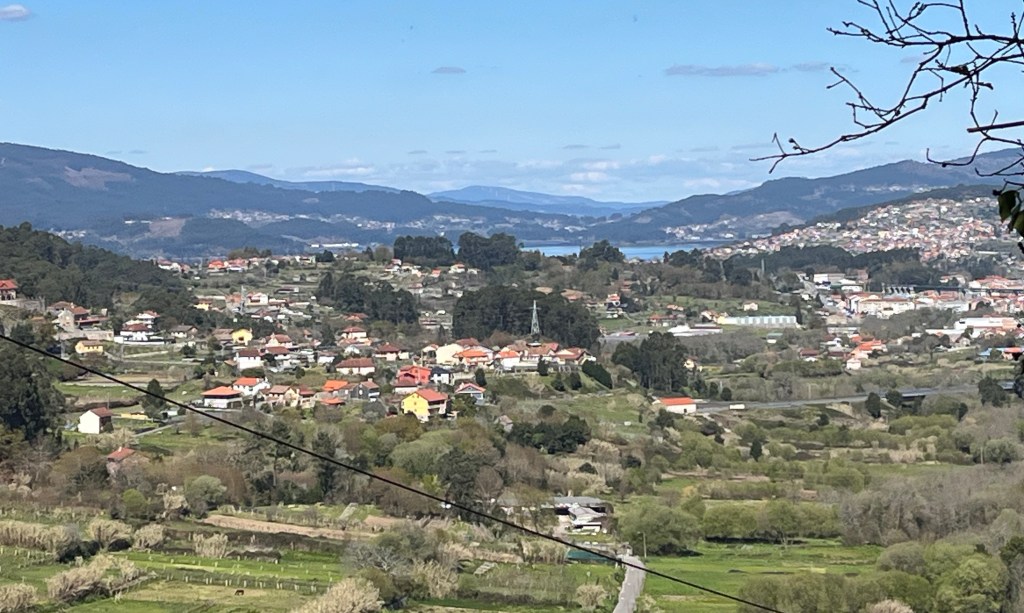
Looking down toward Redondela you can see a tiny bit of the Ria de Vigo estuary

We made only one more quick stop for a drink at a café and we were in Redondela. The second day turned out to be our shortest hike, where we only logged around 11 miles. After struggling the first day, the short day was welcome and we were all feeling a bit more confident that we would finish the Camino.

Countryside near Redondela

We checked into Albergue A Conserveira in Redondela. Unlike the previous two stays, this hostel was nearly full. The Portuguese coastal route had now joined the Portuguese Central Route and now there were considerably more pilgrims looking for beds.
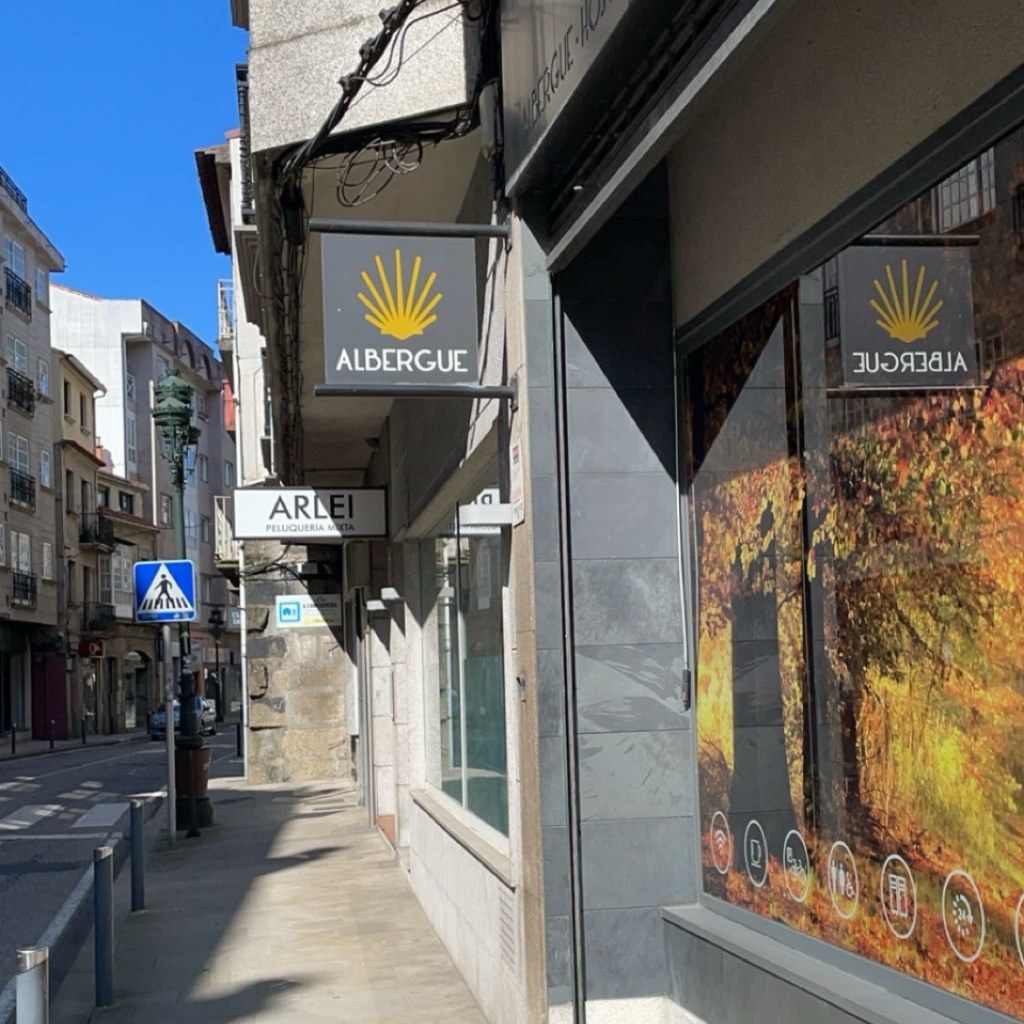
Sign in front of an Albergue in Redondela

This is where things started to become more social. We ran into the English gentleman again who was staying in the same hostel. Jenn and Emma chatted with two girls from Ohio taking a gap year. They were on their second week of the Camino, having started from Porto.

After getting situated in the hostel, we headed out to look around the town. Redondela is beautiful. There is a creek that runs through the center of town and a lattice iron train bridge that seems impossibly tall going over it.
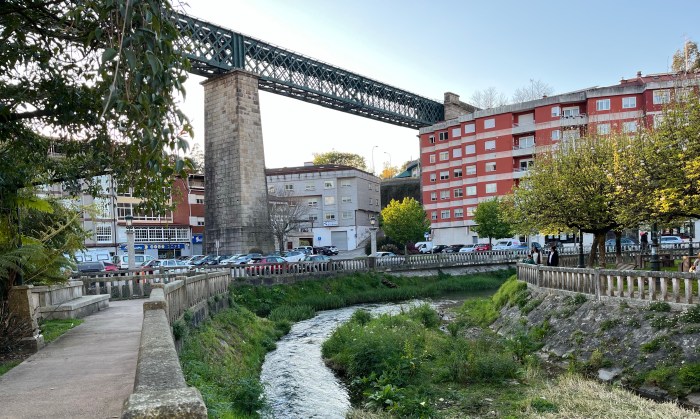
Creek running through Redondela with overhead train bridge

We sat down for a couple of bottles of wine at Don Vilnius, a tapas and wine bar. Don Vilnius has an outdoor patio facing a beautiful building called Convento de Vilavella. We ordered a bottle of house white and a bottle of house red. Both were very good and it was a great night to sit outside in a beautiful setting and enjoy some wine.

Convento de Vilavella

Returning to the hostel after dinner, we met Carlos, a young man from Valencia. He’s one of those incredibly friendly, generous people who is just having a great time all of the time. He had done plenty of caminos in the past and because of his outgoing personality, it seemed like he knew everyone. He and his friend Herk were making spaghetti carbonara in the hostel kitchen and enjoying a couple of beers.

We sat in the kitchen for way too long talking about the Camino, differences between the US and Spain, and life in general. We eventually had to go to bed because we had another big day the next day. It had been a great day along the Camino and I was looking forward to day 3.

Beginning the Camino – Valenca to O Porrino

This is part one of a multi-part series on our experiences doing the Portuguese Central Route of the Camino de Santiago starting in Valenca, Portugal and ending in Santiago de Compostela.

Walking the Portuguese Route of the Camino de Santiago was an unusual choice for a spring break trip. We could have chosen something a little more relaxing, like a beach vacation, but here we were, backpacks on, getting ready to head out for an adventurous, long hike across Galicia, in the northwest corner of Spain.

Following a night in Porto, a train ride to Valenca, and our first night in an albergue, Jenn and I and our two kids Alex and Emma were set to begin a journey of more than 120 kilometers to the Cathedral in Santiago de Compostela.

Strava recording from our first day on the Camino

We started our Camino from the Albergue Sao Teotonio in Valenca. Albergues are essentially what Americans call youth hostels – basic bunk beds stacked in rows to maximize sleeping capacity and economy not comfort.

City walls of Valenca

It cost 8 euros per bed a night, cash only, and we were given fitted sheets made of paper to sleep on. Each of us packed a sleeping bag liner for these conditions. It was uncomfortable and I didn’t sleep well. This was when I found out that my son was a snorer and I worried that we were keeping the other guests up. However, I don’t think this was the case since I was hearing snoring from the other guests as well. I probably only got a few hours of sleep between the uncomfortable conditions and the anticipation of starting the Camino.

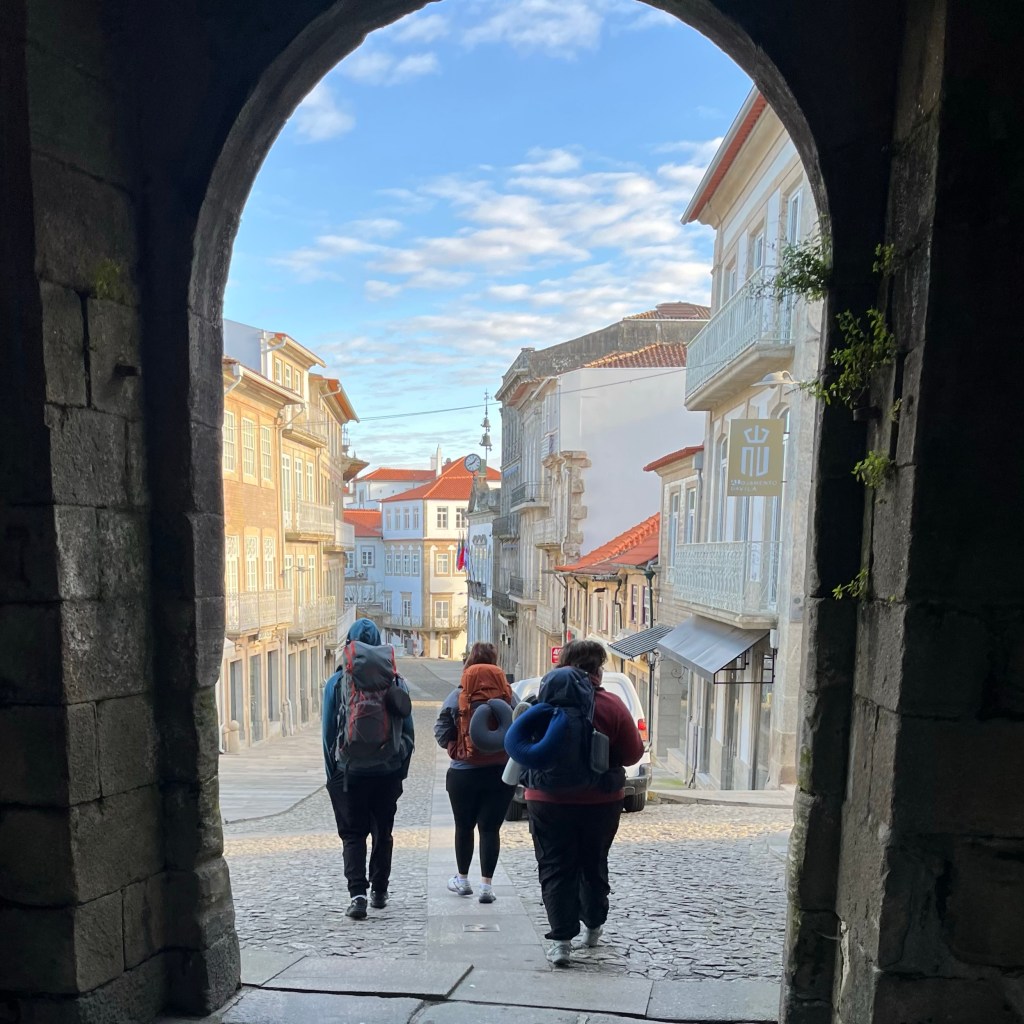
Emerging into Valenca through the castle walls

We woke up in the morning and had some coffee from the instant coffee vending machine in the common room. We readied ourselves for the first morning, made our packs as comfortable as we thought they could be, and walked out of the albergue and onto the Camino.

Building inside the city walls of Valenca

The trail from the albergue immediately winds through the Fortaleza de Valenca, the ancient fortified town of Valenca. It was first built in the 13th Century and has been improved many times, but the current walls are from the 17th and 18th centuries.

Capela do Bom Jesús with Statue of Sao Teotonio in front

The town is very well preserved but is mostly bars, restaurants, and gift shops now. We lamented the fact that most pilgrims would be coming through the town at night and would have a variety of bars and restaurants to choose from and we, unfortunately, were going through in the morning when nothing was even open yet.

Building in Valenca

Leaving the castle walls of Valenca we continued down to the Minho River where we crossed into Spain for the first time. Once in Tui, we had a couple of people greet us with a “Buen Camino”, the traditional greeting of pilgrims on the Camino. One kind gentleman showed us where to find the first marker on the Spanish portion of the Portuguese route of the Camino.

Bridge from Valenca to Tui and the border between Portugal and Spain

We wound along the Minho River and saw a Cathedral on a hill. The route took us up the hill and finally to the Tui Cathedral where we stopped to buy pilgrim shells. Scallop shells are the traditional symbol of the Camino, with pilgrims frequently hanging them from the outside of their backpacks in order to show they are on the Camino.

Cathedral in Tui

There are many explanations as to why scallop shells are the traditional symbol of the Camino but my favorite explanation is that on a scallop shells there are several lines converging into one point. This is similar to the multiple paths of the Camino converging in Santiago de Compostela.

Looking out at the Minho River from just past Tui Cathedral

In Tui, we met our first fellow pilgrim, an English gentleman who is retired and has done multiple routes of the Camino. We had a nice chat with him and he gave us some pointers on doing a Camino. He gave us some instruction on the proper use of hiking poles, which might sound basic, but using them improperly negates much of their benefit. The whole time we were chatting, we had been walking through a rural natural area.

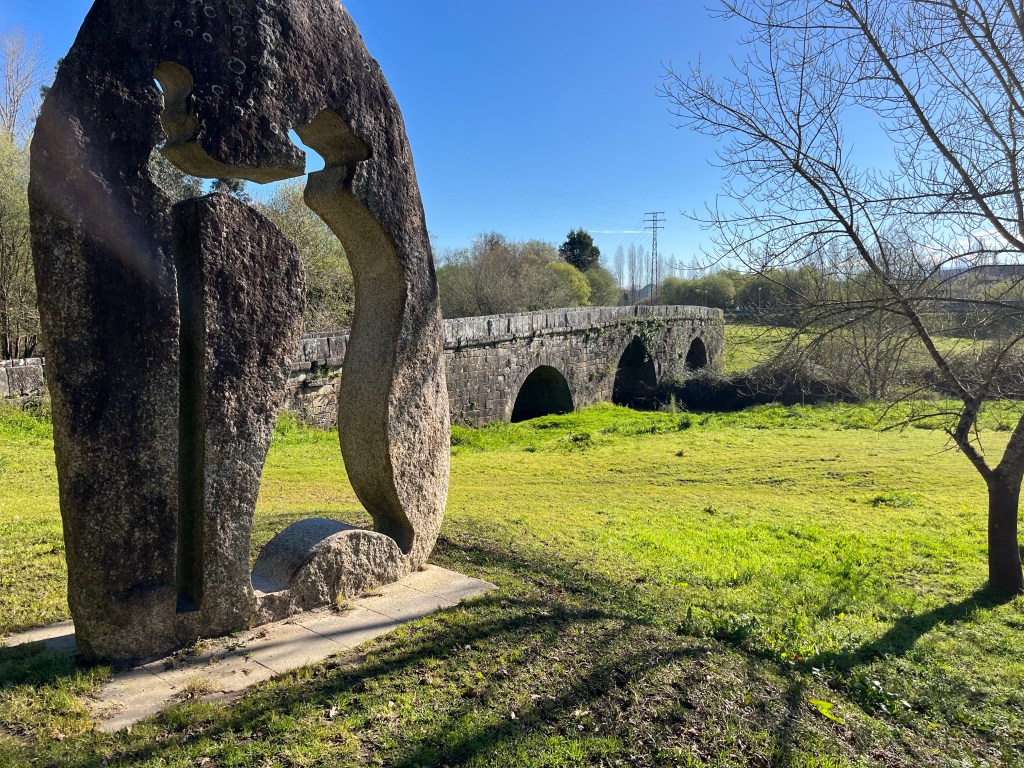
Statue at Parque Merendas Pedra Santa with Ponte Medieval do Louro in background

After a little while, he left us and where we had been enjoying a nice hike in nature, we were suddenly on the edge of a country road with infrequent but unnervingly fast traffic. This section may not have been that long, but it wasn’t pleasant so it seemed to last quite some time.

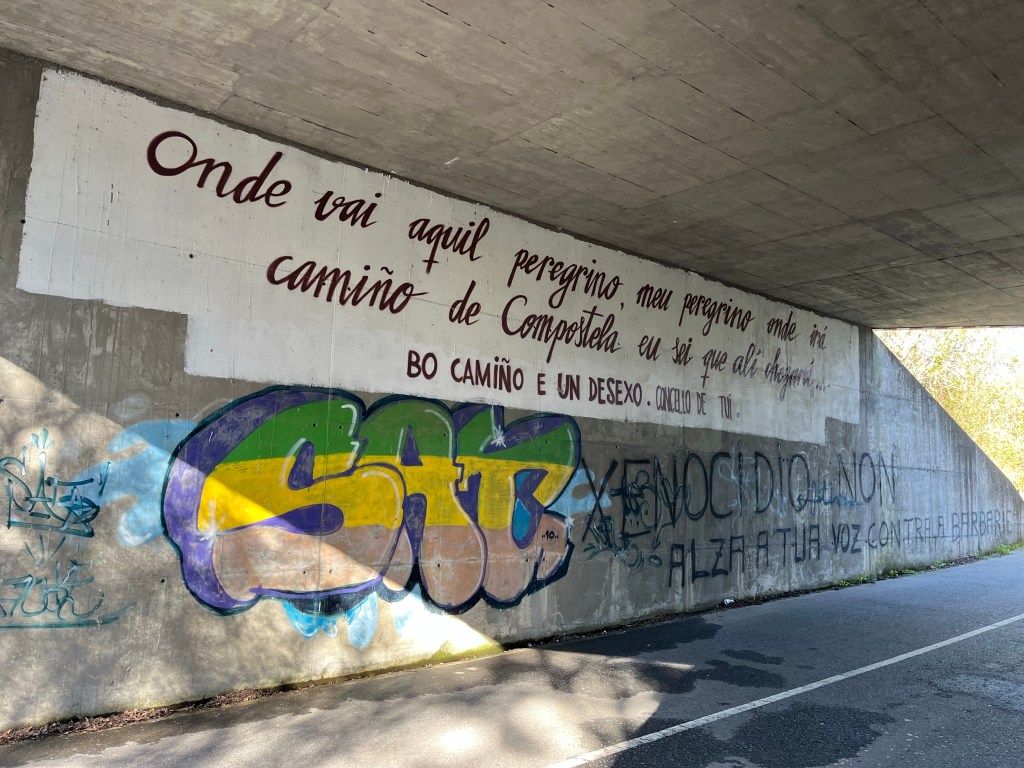
A mural on an underpass wishes pilgrims a good journey from the Municipality of Tui.

Along the road we were passed by a couple of young German women who made us feel like we were practically standing still. It was becoming clear that we were considerably slower than the other pilgrims along the route. Are we going to be able to do this? Are we in good enough shape to pull this off? The doubts were already creeping into our heads.

Wooded path before our first stop or Ponte das Febres.

This is also where the weight of the pack started to bother me. We all were struggling with trying to navigate new equipment. This was the first time doing a long hike. The weight from the pack is supposed to sit on my hips, but was instead resting on my shoulders too much. We all did some equipment adjustments and while the pack didn’t seem quite right, it did seem better.

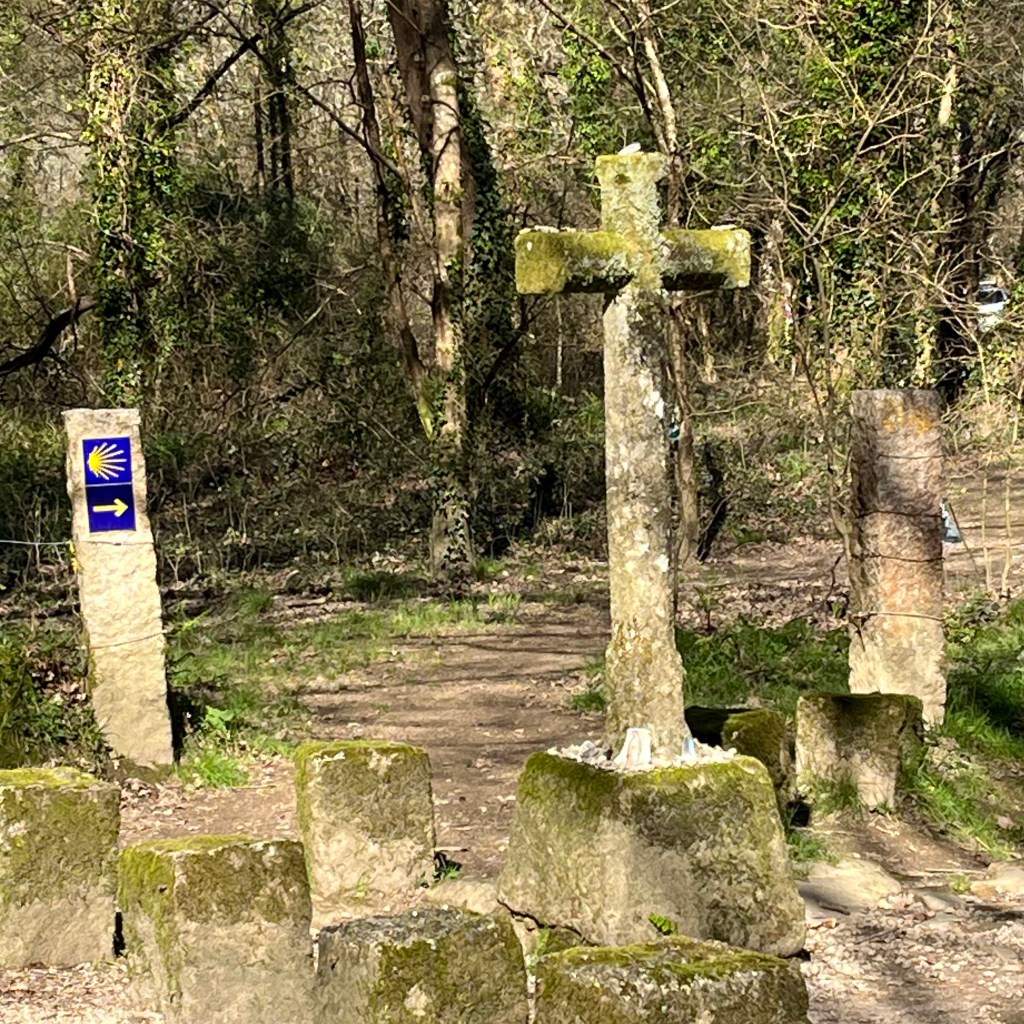
There are a lot of stone crosses along the Camino.

It seemed like forever before we were able to make our first stop of the day. It was about 7.5 miles along the route and we came by Ponte des Febres, a really cute cafe and albergue. We were greeted with “Oh no, it’s the bloody Americans!” We looked up to see the English gentleman sitting at a table, the two German women at another, and both guys from our albergue the night before.

Spanish Tortilla from Ponte des Febres

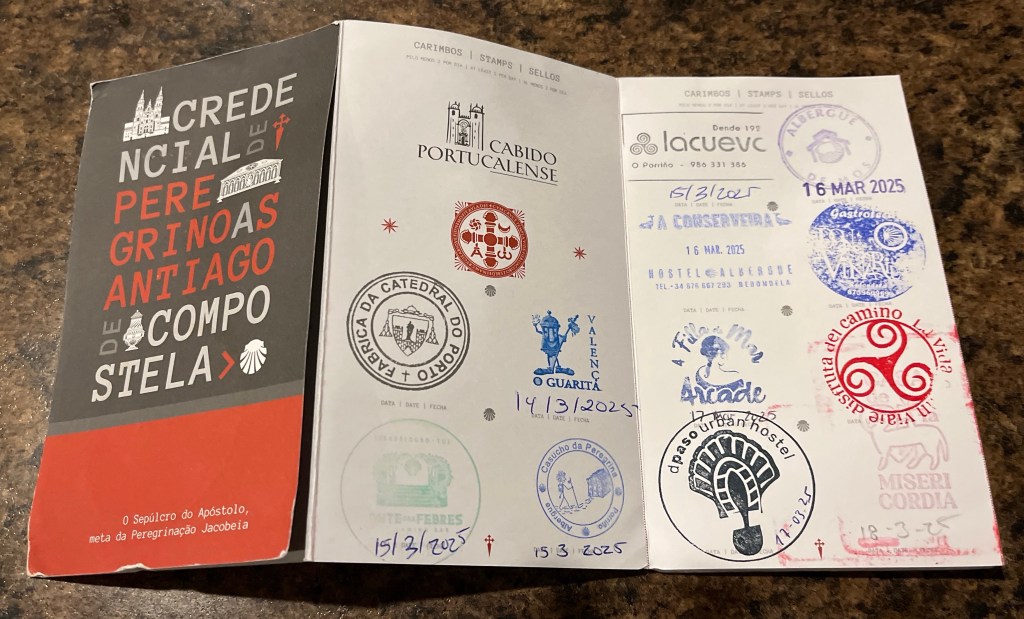
We ordered croissants and Spanish Tortilla as well as some cafés con leche. We also got our first stamp in our pilgrim passport.

Pilgrim Passport

The Pilgrim passport is a book that each pilgrim carries with them to prove that they are on the Camino. Without it, you may not get admission to an albergue. Also, if you complete a 100-kilometer pilgrimage ending in Santiago de Compostela, you are awarded a certificate. You need at least two stamps per day to qualify.

Wall near Orbanlle

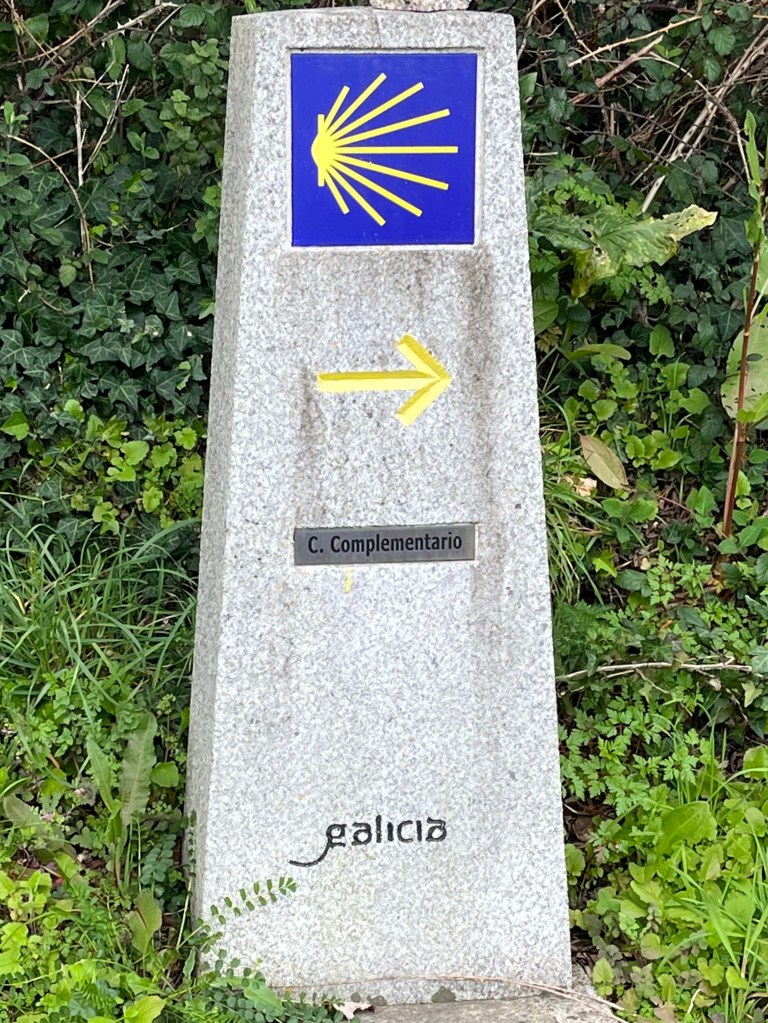
From there we went to Orbanlle where we had the opportunity to choose between a more direct route through an industrial area or a more scenic route through the country. There are routes like this one on many days, they are called complementary routes.

Complimentary route marker

That turned out to be a pretty good choice because that was a pretty relaxing route to take. Most of it was out in the country, but it did wind through a lot of small towns along the way.

Pathway along a creek on the complimentary route

Getting really tired by this point we came across San Campio, a bar and restaurant that clearly is a favorite of locals, but also caters to pilgrims. Everyone but Alex had a beer and I ordered a giant bottle of water for the table. We also shared three sandwiches and a big plate of fries. It hit the spot and gave us enough energy to finish our trek to O Porrino.

Enjoying a beer at San Campio

From San Campio to our Hostel in O Porrino was about 2.5 miles and honestly most of it wasn’t very scenic, but it felt good to finish the hike. We arrived at Casucho de Peregrina, which is a nice hostel. We paid extra to have our bunks in a private room with only 4 beds. As it turned out, that was pretty unnecessary, because there was only one other pilgrim sleeping in the hostel.

While we were getting our stuff settled in our private room, I heard a familiar voice. It was the English gentleman we met earlier on the trail. It was nice to see a friendly face. Being the only other pilgrim in the hostel, he ended up sleeping in a large room full of bunks all by himself.

It had been a challenging day and I was already beginning to question whether doing a Camino was a smart way to spend a family vacation. I underestimated how much of a physical challenge this was going to be and both hoped we would finish and that we would be able to actually enjoy it.

The accommodations at the hostel were very comfortable and after a little dinner we were out cold. I guess 15 miles of hiking will do that to you.