Day 3 Redondela to Pontevedra

This is part three of a multi-part series on our experiences doing the Portuguese Central Route of the Camino de Santiago starting in Valenca, Portugal, and ending in Santiago de Compostela.

During one of our conversations with the English Gentleman we met on our first day, he commented about this being our first Camino. I joked that it was probably our last. He told me, “No, you’ll be back—it gets in your blood.” At the time, that seemed impossible. My shoulders hurt from trying to get used to my pack, and I wasn’t exactly used to staying in hostels.

But here we were waking up in an albergue for the third straight day. We had stayed the evening in Albergue A Conserveira, a fairly large hostel with probably somewhere in the neighborhood of 40 to 50 beds. Even though they were in one large room, they had separated them into pods of two or four. Each pod had a little curtain, which at least gave some privacy if you wanted to change your clothes. They also provided sheets and a blanket, which made the experience much more comfortable.
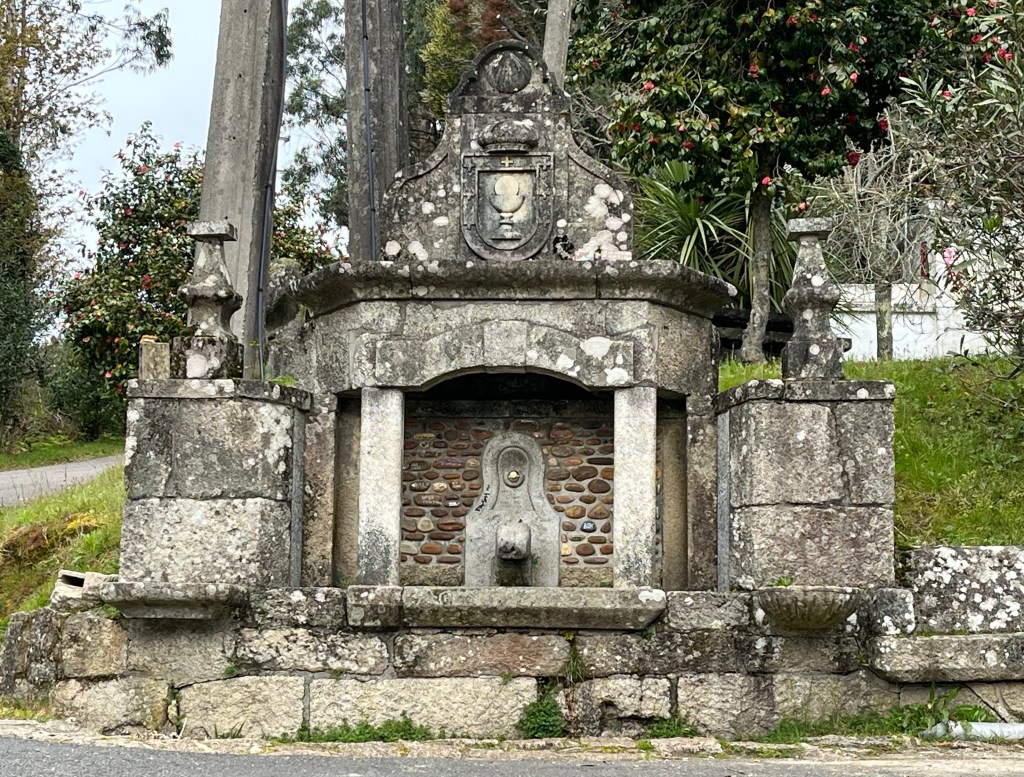
Water fountain at Parque Loureiro near Cesantes.

I didn’t notice a whole lot of noises overnight, which was surprising because of the size of the room and the number of pilgrims. The OSB board dividers between the pods did a pretty good job of blunting some of the noise. Inside the pod was a different story. Sleeping near my children revealed things I didn’t know about them. Apparently, Emma talks in her sleep, which was a surprise. What was really a surprise was that it was in Spanish.

Getting ready in the morning was a little more hectic than on previous days because the hostel was fairly full. There were quite a few pilgrims, all trying to get their packs ready and jockeying for space in the bathroom to get ready for the day. We headed out the door, saying our goodbyes to the people we met at the albergue.

Heading out down the streets of Redondela

The first kilometer of the hike was through Redondela, which is a lovely town. That was just the beginning of a gorgeous hike through Galicia from Redondela to Pontevedra.

Cross on building near Redondela

One of the main reasons was that we were in the area around the Ria de Vigo, an estuary that is 22 miles long and 7 miles wide at its widest point. Much of the early part of the hike takes place in the hills overlooking the estuary.

The Camino, just past Redondela

Leaving Redondela, we climbed into the hills on the outskirts of town. The Camino led us to a natural area with tall pines on both sides of the narrow path. The trail was covered with pine needles. We were mostly hiking uphill, and as we continued, the pine forest began to thin out a little and gave us a preview of the amazing views to come.

Ponte de Rande

Off in the distance, we could see Ponte de Rande, a striking cable-stayed bridge that crosses the narrowest point of the Ria de Vigo. The further we continued along the Camino, the higher we went, and the more spectacular the view. Now I understood what the English Gentleman told me – it gets in your blood. Every step was a blessing.

Ría de Vigo estuary

We started to descend into the town of Arcade, right where the Verdugo River meets the Ria de Vigo estuary. We stopped for a quick café con leche before crossing the Ponte Medieval de Pontesampaio, a stone arched bridge built in the 11th Century. It is an incredibly narrow bridge that allows automobile traffic to cross. Several cars inched past us on the narrow bridge while we were crossing.

Entering Arcade from the Camino

Between the ancient bridge, the wonderful buildings, and the cobblestone streets, Arcade is a pretty town. It would have been a lovely place to spend an evening, but we needed to push on to Pontevedra.

Pontesampaio

Leaving Arcade, we went into another natural area that had some technical hiking, where we were actually hiking uphill in a rocky creek for a while. I’m sure that most of the time, that creek is dry, but it had rained a little, and there was water flowing down the path.

The path after Arcade became a rocky creek.

After a while, we came to a fork in the path where we had to choose between going on what looked like a slightly longer path along a creek and a shorter one along the road. We chose the complimentary route along the creek.
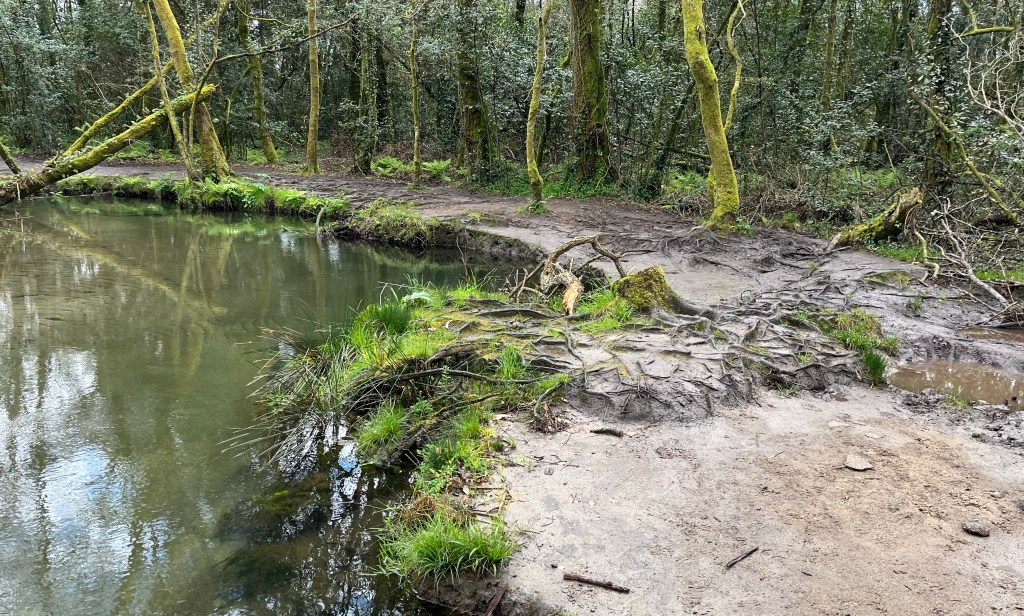
Path along the creek on the Complimentary Route.

I think we underestimated the extra time and distance needed to walk the complimentary route along the creek. I don’t know how much it added, but the path was extremely curvy. The complimentary route was a calm walk, but the extra hiking began to wear on us.

Tunnel near the end of the complimentary route

I began to notice a pattern emerging where we would start to get progressively crankier after ten miles of hiking. Emma would normally run out of gas about that time, and it also seemed like every day, Jenn would need a restroom late in the day, with nothing around. The Camino doesn’t have a ton of restroom facilities, and that can get a little stressful when you are out in the woods for a long time. Alex and I would get tired as well, but both of us get quieter when that happens.

Pontevedra sign

Just as we were about to completely run out of steam, we arrived in the beautiful town of Pontevedra.

Walking down the street in Pontevedra

We got to Dpaso Urban Hostels, which had run out of bunks in the normal area of the hostel, but they did have space in a different building that had private rooms. We were able to book a private room with four bunks, which turned out to be perfect for us.

Igrexa da Virxe Peregrina

It was a very nice room for accommodating pilgrims with plugs on every bunk and sheets, and a comforter. The big luxury was our own private bathroom with a rain showerhead. I don’t mind sleeping in a hostel, but the shared bathrooms are something I really don’t like. Having our own bathroom for an evening was amazing.
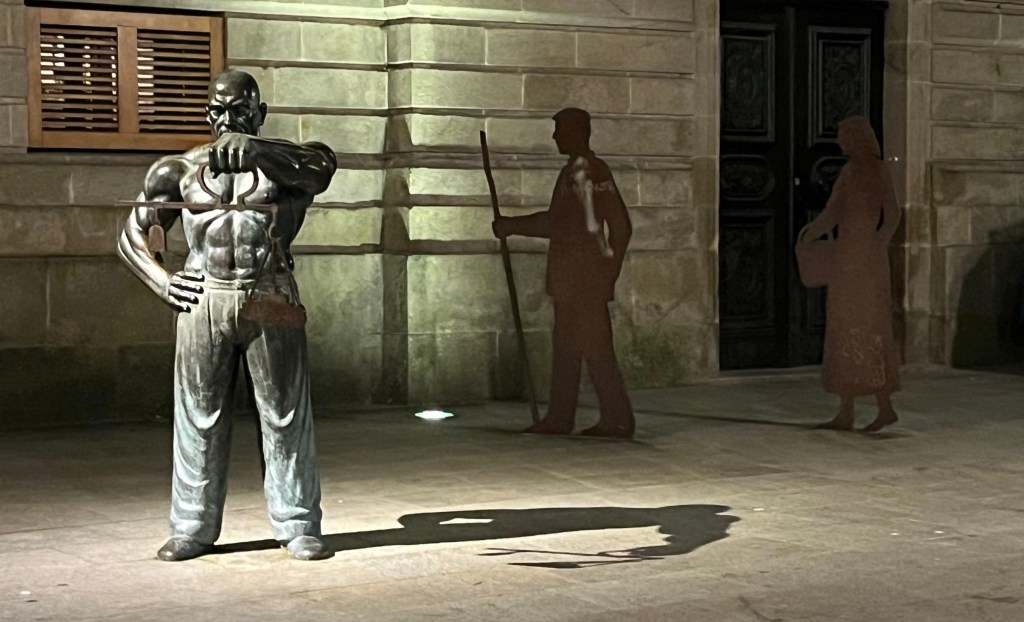
Statue in Pontevedra

We went back to the main area of the hostel to do some laundry and ran into the English gentleman, as well as Carlos, whom we talked with for about an hour while doing the laundry. At this point, there were people we were recognizing all the time, some that we never talked to other than to say buen camino. We had names for them like the German girls, the Ohio girls, the Italian couple, and the guy with his Mom. Even though we never had conversations with some of these people, our greetings became more friendly as the week went on because they were friendly faces.

One such couple was the English couple. They are a married couple who had done the entire French Way of the Camino, which normally takes around 40 days. They didn’t do it all at once. Instead, they did it a week at a time when they were on vacation. We first met them at Casa Veiga on day 2, and ran into them repeatedly the rest of the trip, since they were walking at our pace.

We ran into them again at Bar Pitillo, which had been suggested by the hostel attendant. They sat at the table across from us, and we chatted a little. Pontevedra is a fairly large town, and it seemed unlikely that we would run into familiar faces at dinner. But that’s just how the Camino seems to go; you always seem to be running into the same people.

Chorizo inferno at Bar Pitillo

Following dinner, we arrived back at the hostel where we climbed into our bunks to rest after a long and challenging day. I reflected on what a beautiful hike it had been and the wonderful people sharing our journey. It had become clear to me that the English Gentleman was correct. The Camino was in my blood now.
Day 2 of the Camino – O Porrino to Redondela

This is part two of a multi-part series on our experiences doing the Portuguese Central Route of the Camino de Santiago starting in Valenca, Portugal and ending in Santiago de Compostela.

The first day of the Camino was hard on us. Everyone was sore. For me, it was my shoulders. I wasn’t used to my backpack. Surprisingly, a good night’s sleep healed up most of our aches and pains. The first day had tested everyone physically and mentally, but surprisingly everyone woke up refreshed and ready to take on another challenge.

We tinkered around in our hostel kitchen and made some breakfast. The English gentleman we met the previous day was also having breakfast, and we discussed his previous caminos. He had done the English way, the French Way, and the Coastal Route of the Portuguese Way. This time he was doing the Portuguese Central Route with the Spiritual Variant. Talking to him it became clear that you can hike the Camino in infinite ways. As a nearly 70-year-old man, he had truly been making the most of his retirement and was inspiring to talk to.

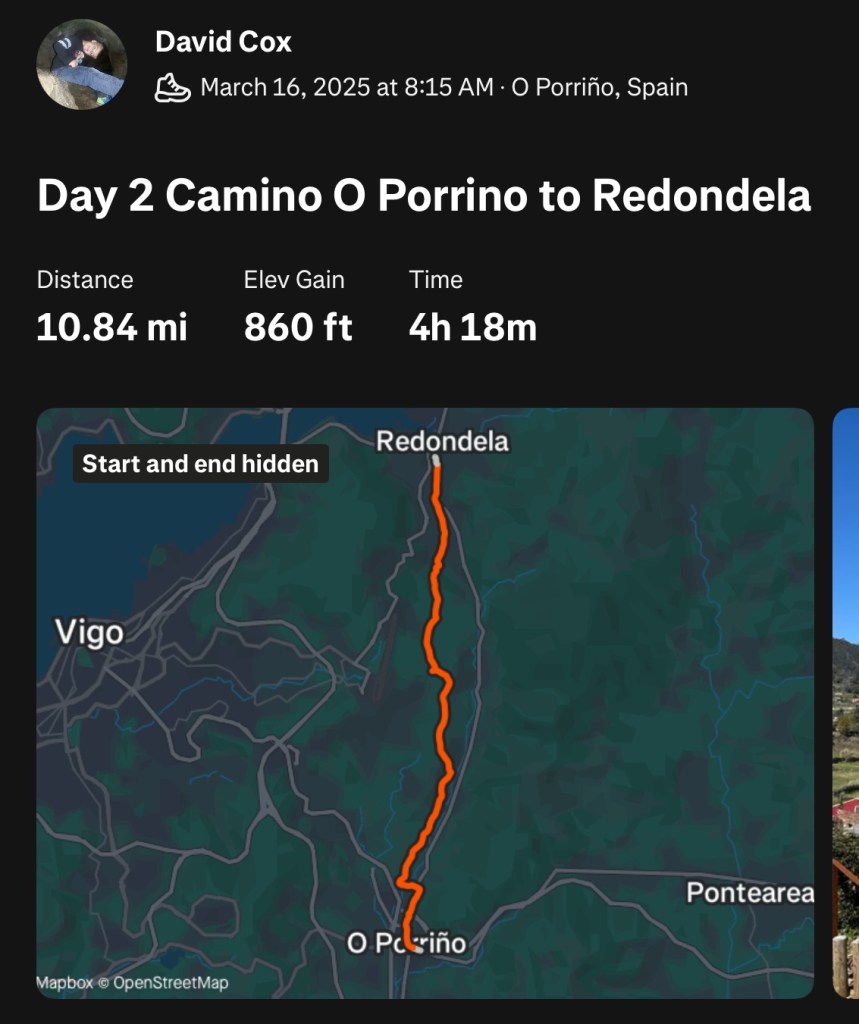
Strava activity from day 2

We told the gentleman goodbye and that we would see him on the trail (he’s a faster hiker than us, he was going to catch up) and started our walk toward Redondela. Most of the early part of the day was spent hiking through rural Galicia. It was on a lot of blacktop country roads weaving through farms.

Sheep above a wall near Mos, Spain

In Iowa, we are used to giant factory farms where one family plows thousands of acres of one crop, either soybeans or corn. In Galicia, farms are small and have a variety of animals and crops. Almost everyone had a dozen or more chickens. There were also usually some other animals on the farms including ducks, geese, cows, sheep, and sometimes goats. There were also a lot of gardens and grapevines. My favorite thing about these little farms was that you normally saw an orange tree and a lemon tree on the property. Walking outside and picking an orange right from the tree has to be pretty amazing.

Wooden arrow marking direction on the Camino

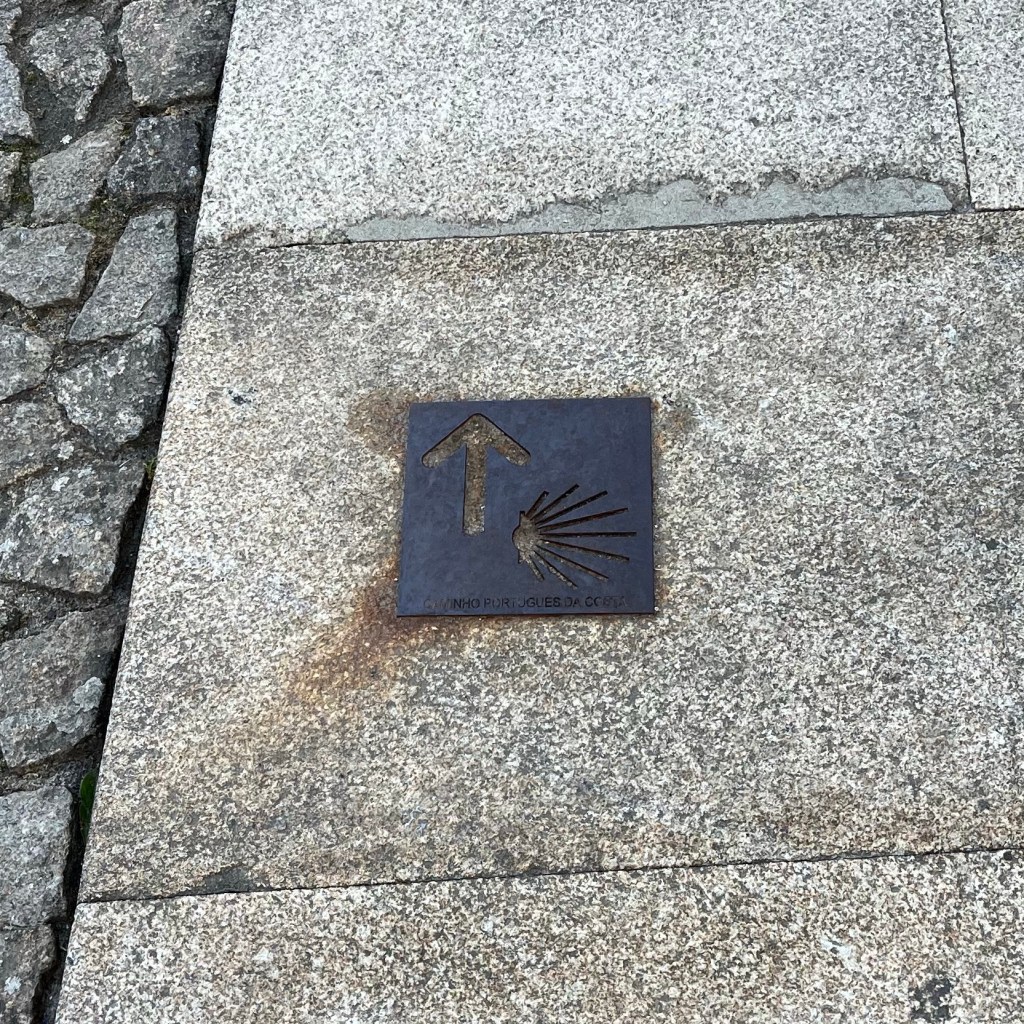
Walking among the farms, I began to realize that my anxiety about getting lost had vanished. The Camino is marked with yellow arrows that guide pilgrims to Santiago de Compostela. These arrows come in a variety of forms. Some are simply spray painted on walls, some are wooden arrows, and some are signs. There are also granite monuments and brass shells embedded into streets. These markers are at almost every intersection, ensuring pilgrims don’t take a wrong turn.

Metal marker on a sidewalk

I was surprised by the frequency of these guides, especially the granite monuments. Those monuments mark the Camino and give the pilgrim the distance left, in kilometers, to Santiago de Compostela. It became clear that we weren’t going to get lost.

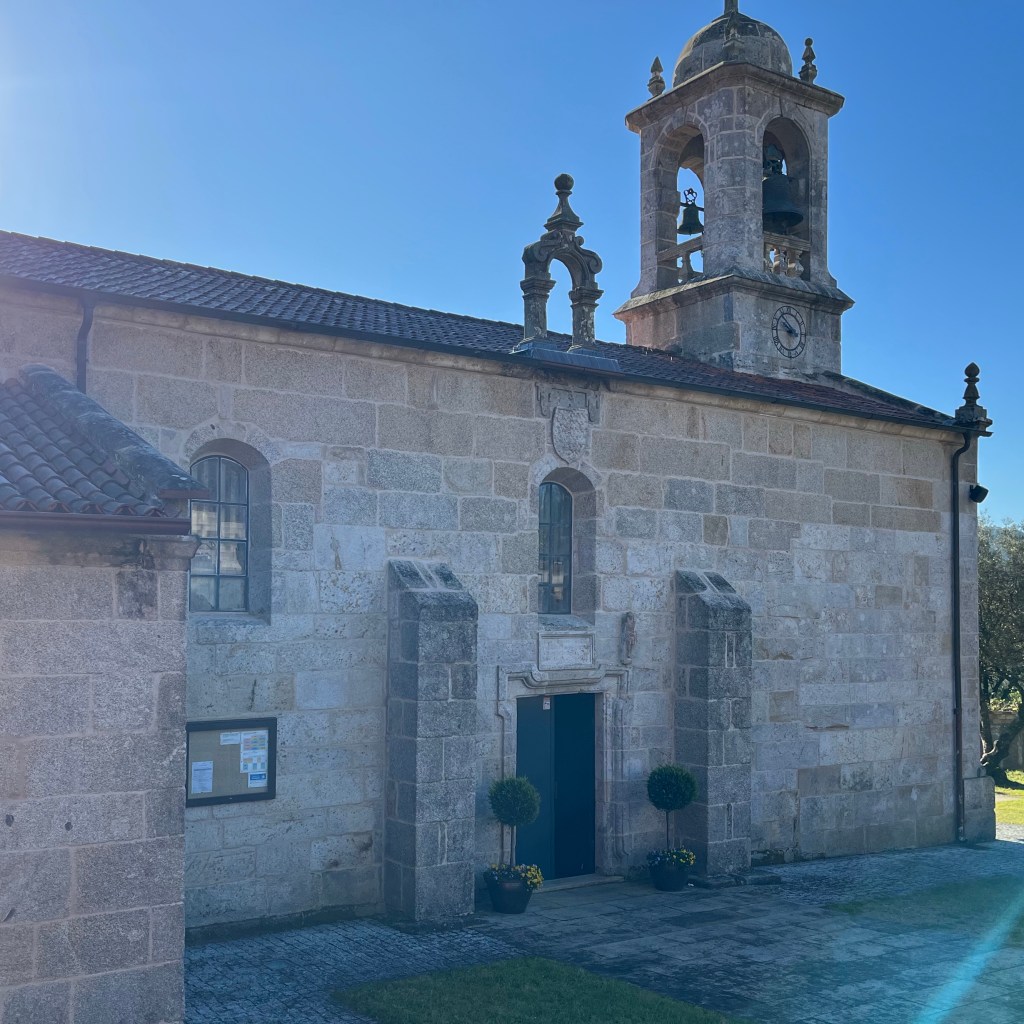
A little chapel named Igrexa de Santa Baia de Mos

We walked among these farms until we reached Mos, a tiny but beautiful village. We stopped for coffee at a cafeteria there, which was mostly serving locals at the time. We had some café con leches and a bite to eat and prepared ourselves for a large hill we were about to climb.

A small group of shops and restaurants in Mos

The next two miles or so were hiking uphill as we gained about 600 feet of elevation. As with most climbing, the views improved as we became more tired. At the top of the hill, we stopped at Casa Veiga for a couple of beers and some bocadillos under an orange tree. Bocadillos are basic sandwiches usually made with baguette-style bread. They were available at most bars and like most sandwiches can be found with a variety of fillings. Typically, we saw things like jamon, chorizo, bacon, and cheese.

Bacon and Cheese Bocadillo from Casa Veiga

The man working at Casa Veiga didn’t speak much English, so we did our best to order in Spanish. Jenn, Emma, and I have all been trying to learn Spanish, so it was nice to try out our skills. I notice so often while in Europe, that so many people speak excellent English, that I feel like I’m annoying them when I try to speak in their language (Germans are definitely annoyed).

Orange Tree at Casa Veiga

The odds of meeting someone who doesn’t speak English well in Galicia must be higher than in other parts of Europe. That is because the language spoken in this area is Galician which is very similar to both Spanish and Portuguese. However, the main official language of Spain is of course Spanish, which means for most people, English would be a third language not a second.

View from the outside dining area of Casa Veiga

With our stomachs full of bocadillos, we continued to Redondela. Most of the hiking from Casa Veiga to Redondela was either flat or downhill, which made the rest of the day pretty easy. The views coming down the hill were really nice. There were many areas where we were on top of a hill looking out over the Galician countryside. It made for an enjoyable second half of the hike.

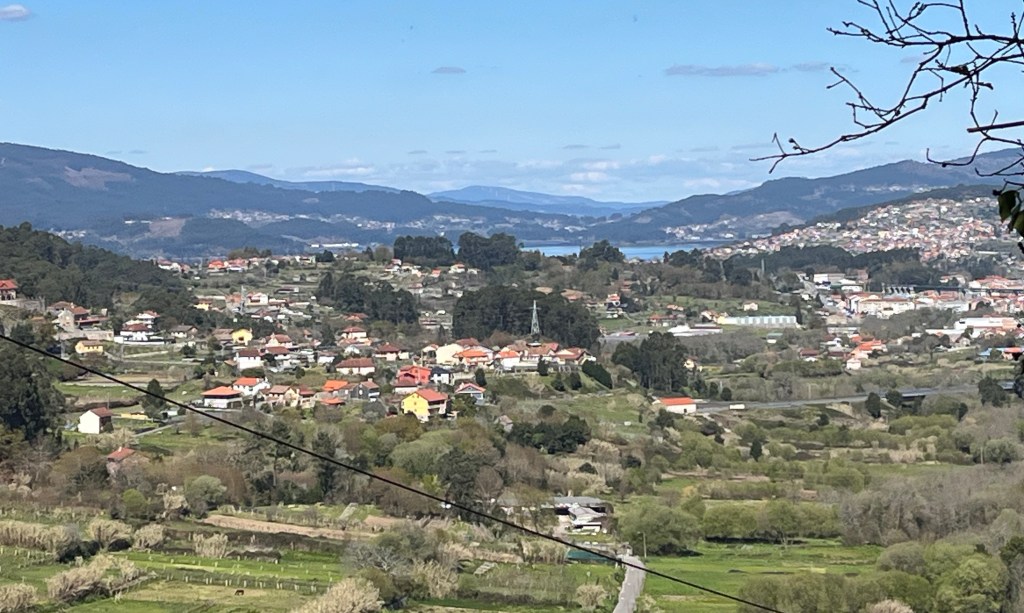
Looking down toward Redondela you can see a tiny bit of the Ria de Vigo estuary

We made only one more quick stop for a drink at a café and we were in Redondela. The second day turned out to be our shortest hike, where we only logged around 11 miles. After struggling the first day, the short day was welcome and we were all feeling a bit more confident that we would finish the Camino.

Countryside near Redondela

We checked into Albergue A Conserveira in Redondela. Unlike the previous two stays, this hostel was nearly full. The Portuguese coastal route had now joined the Portuguese Central Route and now there were considerably more pilgrims looking for beds.

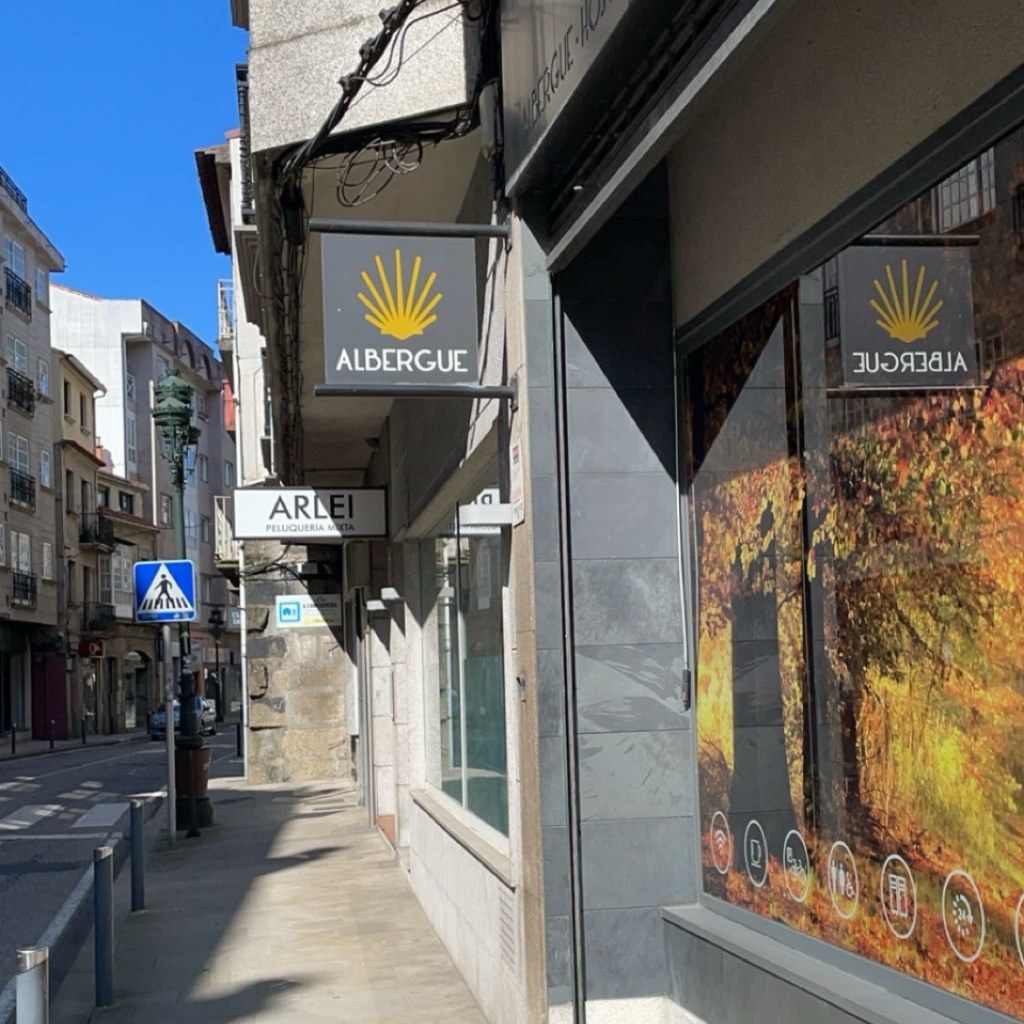
Sign in front of an Albergue in Redondela

This is where things started to become more social. We ran into the English gentleman again who was staying in the same hostel. Jenn and Emma chatted with two girls from Ohio taking a gap year. They were on their second week of the Camino, having started from Porto.

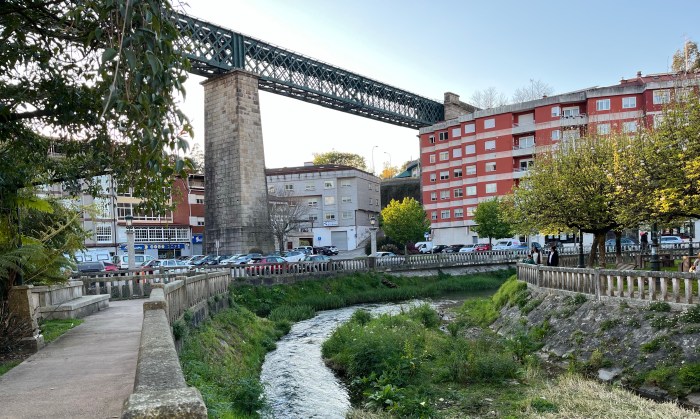
After getting situated in the hostel, we headed out to look around the town. Redondela is beautiful. There is a creek that runs through the center of town and a lattice iron train bridge that seems impossibly tall going over it.

Creek running through Redondela with overhead train bridge

We sat down for a couple of bottles of wine at Don Vilnius, a tapas and wine bar. Don Vilnius has an outdoor patio facing a beautiful building called Convento de Vilavella. We ordered a bottle of house white and a bottle of house red. Both were very good and it was a great night to sit outside in a beautiful setting and enjoy some wine.

Convento de Vilavella

Returning to the hostel after dinner, we met Carlos, a young man from Valencia. He’s one of those incredibly friendly, generous people who is just having a great time all of the time. He had done plenty of caminos in the past and because of his outgoing personality, it seemed like he knew everyone. He and his friend Herk were making spaghetti carbonara in the hostel kitchen and enjoying a couple of beers.

We sat in the kitchen for way too long talking about the Camino, differences between the US and Spain, and life in general. We eventually had to go to bed because we had another big day the next day. It had been a great day along the Camino and I was looking forward to day 3.