
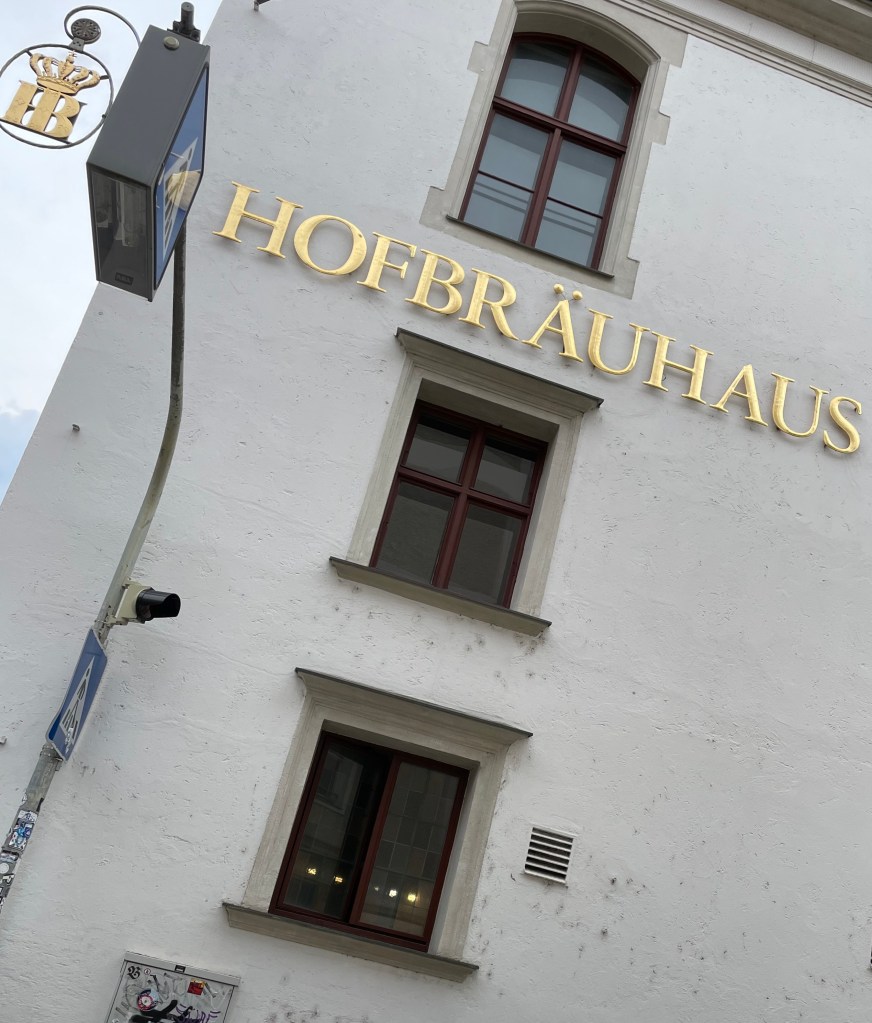
I’m not going to lie, I wasn’t that excited about going to Hofbräuhaus. It just seemed like something that we had to do to check it off our Munich to do list. I just assumed that it was going to be crowded, kitschy and most likely mediocre. Being a bit of a beer aficionado (perhaps a beer snob), going to Munich and not visiting what is essentially the cathedral of Munich beer culture is almost criminal, so of course, we went.
Germans take their beer seriously. During the Middle Ages, beer was made from any number of ingredients. Beer basically needs 4 things – water, a source of sugar (to ferment into alcohol), something to balance sweetness, and yeast for fermentation. In the middle ages, the source of sugar could be fruit, beets, malted barley or wheat. That sweetness from the sugar would be normally balanced by some kind of bittering herb or flower. I imagine that with brewers using all kinds of ingredients (especially in an unscientific age), beer was probably wildly inconsistent and perhaps even poisonous if the wrong herb was used.

William IV, Duke of Bavaria adopted Reinheitsbebot (German Purity Law) in 1516 which regulated beer production to water, barley and hops. Yeast was an unknown ingredient in 1516, since microorganisms were unknown at that time, but was later added to the law once it was discovered to be the engine of fermentation. So why am I mentioning this? Well Germans take their beer so seriously that they have a law regulating the ingredients – they’re not messing around. To be fair, if you violated the law you wouldn’t be executed or anything, but your beer would be confiscated and presumably destroyed.

I’ve been a home brewer for over 20 years. I also visit at least one brewery every week, without fail. Many of the beers I drink and many of the beers I have brewed, violate this law. Sometimes, the beers I’ve brewed completely ignore it. Some of my favorite beers contain coffee, vanilla, fruit, chocolate and even chili peppers. American microbrewers treat Reinheitsgebot like a lame suggestion by their parents. They brew big, strong flavored beers pushing the envelope at every turn, squeezing as much flavor into one glass as they possibly can. The results are aggressive, bold and normally not very “sessionable” beers. You will not get any beer like this at Hofbräuhaus, or for the most part, in any typical beer garden in Munich.
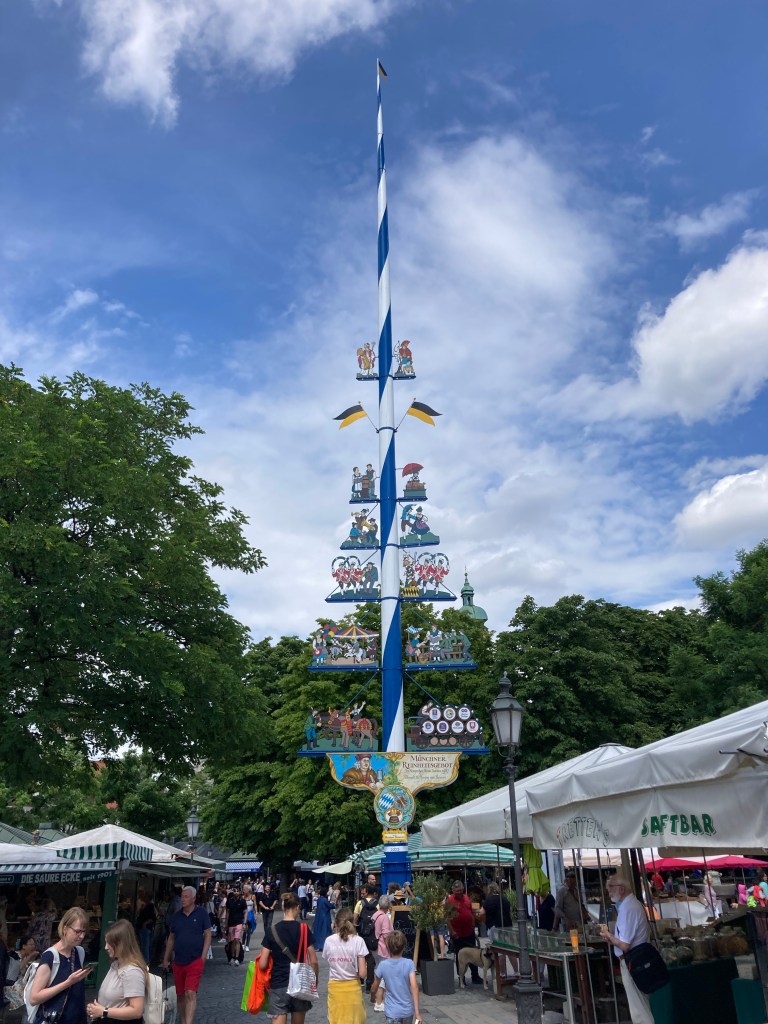
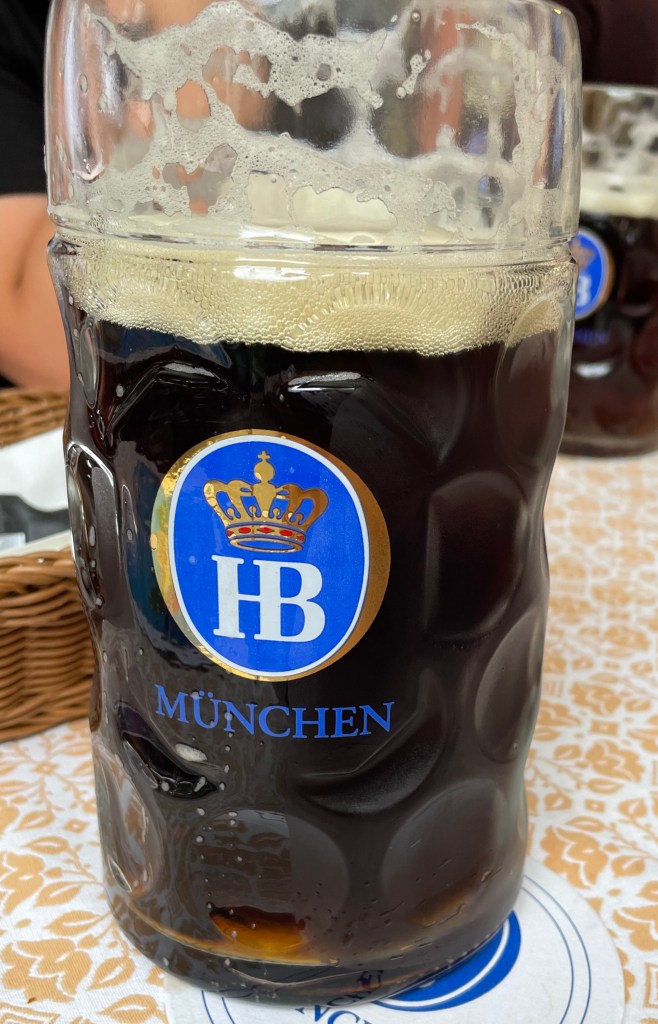
Instead, Munich lagers are delicate, balanced and crystal clear. They are the result of centuries of perfecting just a handful of styles and getting it precisely right, every single time. The traditional Munich Lager is a golden colored and slightly on the malty side of balanced with a hint of floral hops. The Munich Dunkel is similar, except they use some roasted malt to add a dark color and caramel flavor to the beer. Both of these styles were available for our visit to Hofbräuhaus as well as Radler and Dark Radlers, which are when you take the Munich Lager or Munich Dunkel and mix it 50/50 with lemon soda or lemonade (a great way to keep your wits when drinking from a 1 liter mug). There was also a Weissbier on the menu, which is made from wheat, and violates Reinheitsgebot, but for some reason everyone gives wheat beer a pass on the law.
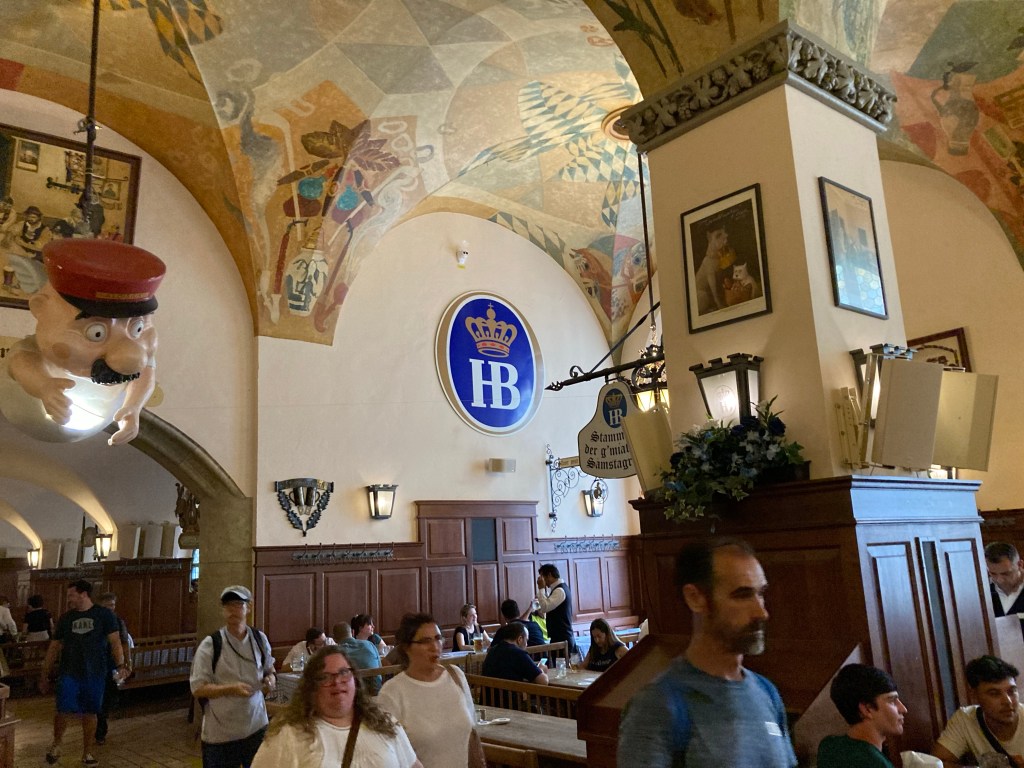
When you walk in, it’s impossible not to notice that it is an absolutely gorgeous, and enormous beer hall. Traditional wood tables in rows everywhere, obviously meant to maximize attendance. We were lucky enough to be able to get a table outside in the beer garden, which is essentially a huge courtyard. They sat us down at a table for 8 next to a group of 3. This is something, that as an American, is weird. It’s not unpleasant, but if you go to a restaurant in America and there is an open table for 8 and you walk in with 4, normally they’ll wait to sit you until a table for 4 is cleared. You don’t share tables, ever. In Germany, this happened to us multiple times, and frankly, it was fine, I could get used to it.
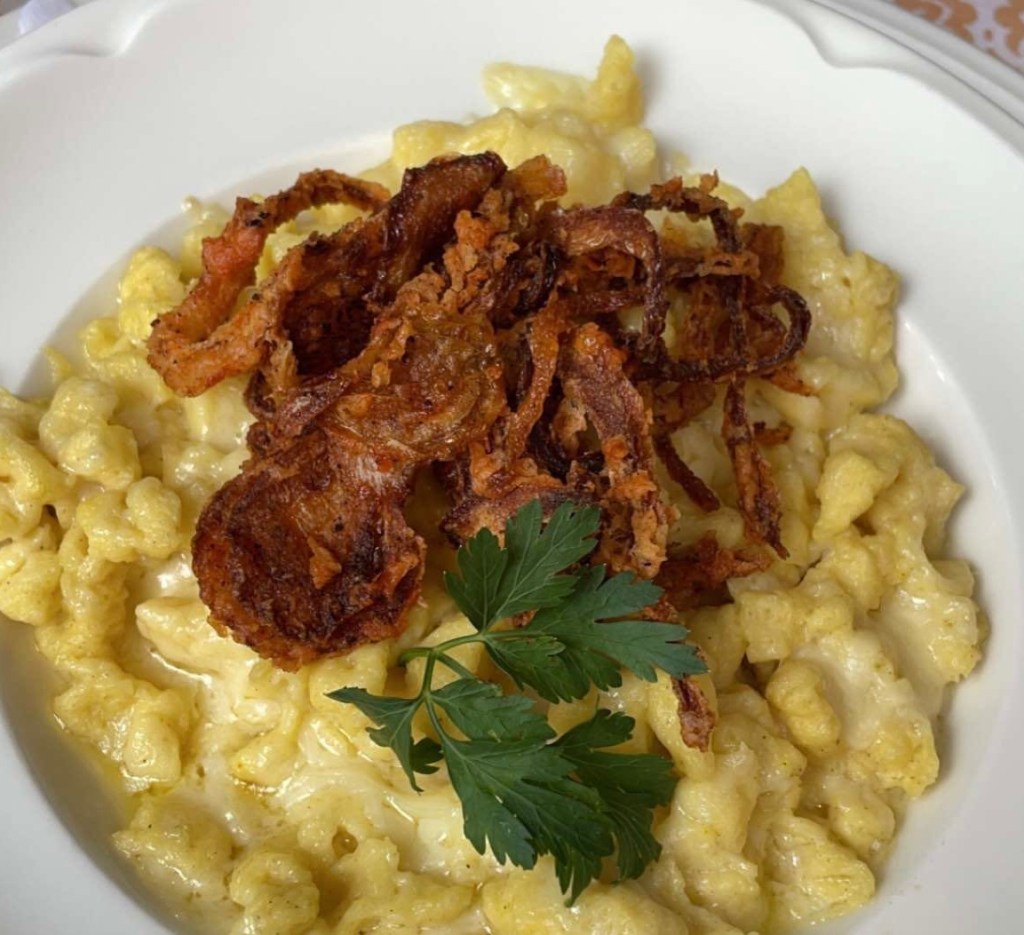
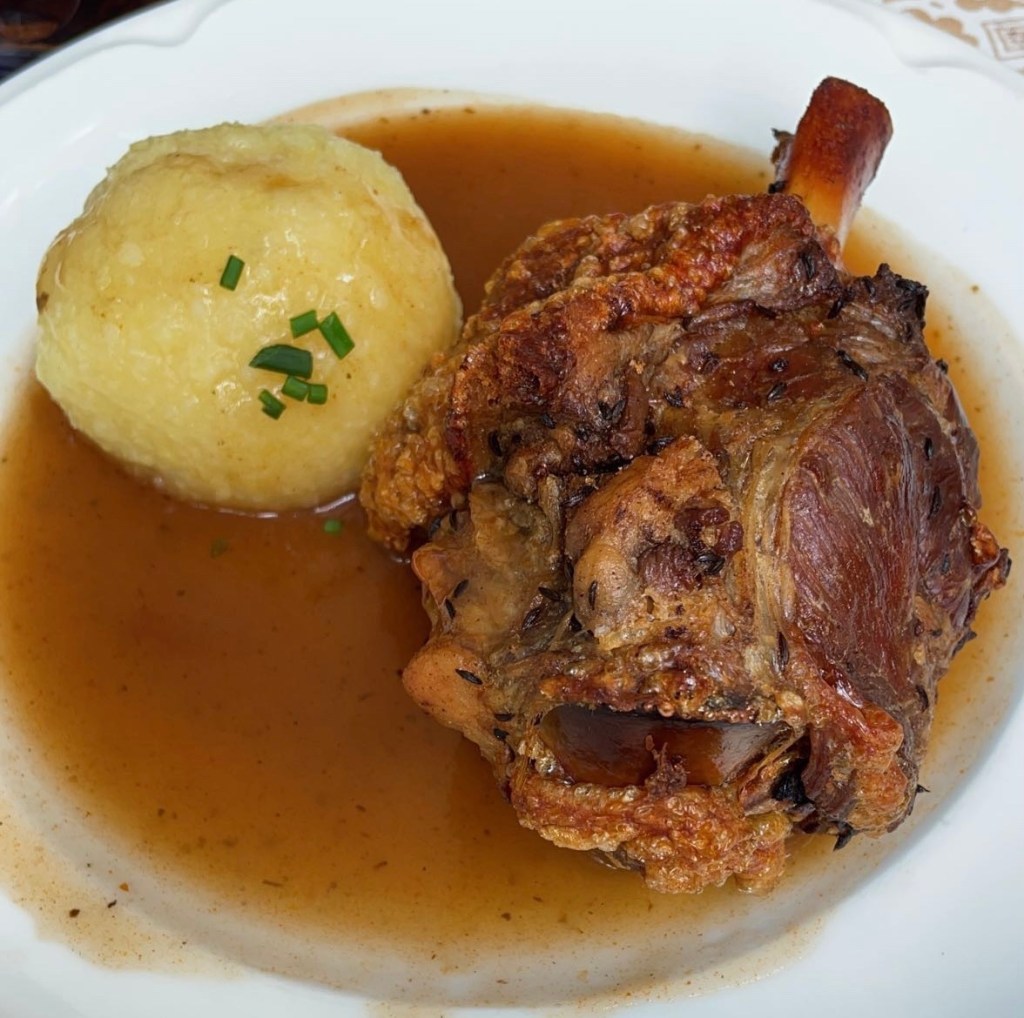
We ordered a lot of the traditional German dishes, Käsespätzel, Pork Knuckle and some fried Perch. Both Jenn and Emma got the Käsespätzel, which is sort of like German mac and cheese. They both thought it was pretty good, not spectacular. I had the Pork Knuckle, which I really liked. It had a super crispy skin, the meat inside was tender and the gravy was rich. The side for that was a potato dumpling, which I believe was probably cooked perfectly, but I didn’t care for it. It was just bland with a strangely dense and sticky texture. I asked Alex about his perch and he just gave me a thumbs up and kept eating, which is about as descriptive as he ever gets.
We, of course, ordered the 1 liter beer, because it’s almost required at Hofbräuhaus. The enormous mugs they serve these in are unique in beer culture. Nearly all beer glasses are designed to highlight a style, whether it be a tall glass for a Pilsner to highlight the clarity of a Pilsner or a fluted glass for a Belgian Dubbel to hold in aroma, glasses are designed to enhance the experience of the drinker. Not the 1 liter beer steins for Munich Lagers and Munich Dunkels. They are designed to be carried, in bulk. They are built for Oktoberfest, when servers are feverishly serving mug after mug after mug of freshly poured beer. If you are at Hofbräuhaus long enough, you will see a server carrying an obscene amount of beer to a table. In all honesty, liter beer mugs are insane, they are heavy and unless you are on a bit of a bender, that beer is going to get warm before you finish it. It is, however, super cool and that’s why everyone orders their beer that way. I mean, who wants to be the loser who only drinks a half liter of beer, right?
So is it really worth it to visit Hofbräuhaus? Well, the beer was really good and were perfect examples of Bavarian beer styles. we also enjoyed the food which from what I can tell were great examples of Bavarian cuisine. However, the real secret here to the success here is the beer hall itself. It’s an absolutely beautiful beer hall with a great beer garden. Even though I was apprehensive about the visit, we enjoyed it so much that we skipped a visit to a different beer garden in order to come back a couple of days later for a liter of beer and pretzel. Its definitely a place you have to visit when you visit Munich.
 Newby to Expert Traveler