I have a long-term goal to be multilingual. I would like to travel as much as I can and I don’t want to depend on people speaking English to me. In general, I think if you roll into a country and speak the native language you’re going to have a better experience than you will if you rely on people to speak English. The problem is I’m horrible at learning languages and I’m not exactly young. This is going to take a lot of work.
Why become Multilingual?
Certainly you can travel to countries without learning their language, people do it all the time. English is the most commonly spoken second language in the world. That’s great since I’m a native English speaker! However, just because someone can speak to you in English doesn’t mean they want to and I bet if you venture away from touristy cities, the likelihood you’ll find a person who speaks English decreases dramatically. So if you want to get off the beaten path a little, you might want to speak the native language, at least a little.
Why Duolingo?
My wife introduced me to Duolingo a couple of years ago. We were planning a trip to Germany and my idea to learn German was basically to watch German TV with English subtitles. Honestly, I’m not sure how long that would take, but I’m guessing it would have been a significant amount of time. It didn’t feel like I was getting anywhere at all.
She suggested it because she was using it to learn Spanish and she said it felt like a game. I tried it and I would definitely agree with her – they’ve gamified language learning in a way that keeps you learning, which is probably the most important part of learning a language.
Duolingo is Essentially a Game
Duolingo does a great job of tricking you into staying engaged with the app. With social media that’s a bad thing, but when you’re learning a language you need to stay engaged to actually learn it. Like a lot of games, there are hearts that you get on a time basis. In Duolingo, you earn 1 heart every 5 hours, capping at 5 hearts. When you make a mistake while you’re learning, you lose a heart. When you are out of hearts, you can practice to earn more hearts or you can quit and wait long enough that you’ve gained more hearts (the paid version of Duolingo doesn’t use hearts and you can do as many lessons as you want and make unlimited mistakes) There are gems that you earn for accomplishing certain goals, which can be used for buying additional hearts as well.

They also use leagues to keep you engaged. You earn points when you complete lessons. Every week you are placed in a league with 30 other “players” and the top 7 move up a league and the bottom 5 move down. This tricks you into staying engaged because you want to win your league, right? I’m honestly embarrassed to admit how much this little trick works on me.

And then there are streaks. As you progress, the app will keep reminding you how many days in a row you’ve completed at least one lesson. This basically guilts you into logging in. – and Duo (the cute Owl mascot of Duolingo) will remind you in a notification on your phone that you don’t want to break your streak. You are granted freezes that will automatically pause your streak if you for some reason miss a day, but you only get so many of them.

This is all to say that what Duolingo absolutely excels at is keeping their users engaged which is probably the most important thing when learning a language because learning a language requires a lot of time and repetition.
How does Duolingo Work?
For the most part, Duolingo’s lessons are quizzes. Sometimes you will be asked to translate using blocks and sometimes you’ll have to actually write translations out (while using correct spelling). Other times you will be asked to speak something out loud into your phone or listen to someone else speaking and write it down. Duolingo does offer quite a few clues along the way, such as being allowed to tap on any underlined word to find the translation.
What are the advantages of Duolingo?
In my experience, Duolingo is very good at helping you learn grammar rules and building vocabulary. When learning new words the app uses that word over and over again to try to get it to stick in your memory, and then will return to remind you of that new word later on, just to make sure it stays with you. The same pattern is generally true for grammar rules, where Duolingo may introduce a concept like gendered adjectives and might spend a series of lessons working on that concept, and then return to it later.

In my experience, so far, what I think Duolingo excels at is teaching people how to translate from one language to another. That’s really important, of course, because as I’ve discovered when you’re standing in a subway station trying to figure out which word means arrivals and which means departures, translation ability does help.
What are the disadvantages of Duolingo?
What Duolingo seems to lack is the ability to get the user to feel comfortable speaking to others. But this makes sense, right? You don’t practice having conversations on the app, you are primarily practicing translation. From what I’ve seen, this is a common complaint about Duolingo and a number of other language learning products use that in their advertising. While I’ve never seen them use Duolingo’s name specifically, it’s pretty obvious who they are targeting with their criticism. It’s an entirely valid criticism, but I don’t think that should stop you from using the app.
Is Duolingo really worth it?
In my opinion, the most important thing you can do to learn a language is expose yourself to it. The best feature of Duolingo is that it keeps you engaged while you are learning the language. Also, by gamifying language learning, it seems like less of a chore. That is really important in keeping you engaged long enough to actually learn the language and not quit because it’s too hard. I really think the best strategy is to use Duolingo for what it’s good for – vocabulary and learning grammar and fill in the gaps with other methods. I have a couple of podcasts that I listen to in order to get more acquainted with the sound of language. I like Coffee Break language series as well as the Easy Languages series. Those you can find by going to your favorite podcast app and searching for Coffee Break German or Easy Spanish, etc. What I haven’t done yet, and I’ve considered it, is to use a language tutor to practice speaking a language with. Italki.com is one service that connects learners with tutors and I’m sure there are many others. Of course, the best method is to move somewhere for a while and immerse yourself in that language, but for obvious reasons that’s not an option for most people.
How much does Duolingo cost?
I’ve been doing the free version of Duolingo which limits the number of hearts you receive and you can do this, but you will be forced to watch a lot of ads. That doesn’t bother me, but if it bothers you then you might want to pay for the service. The paid service is Super Duolingo and it does offer additional features like personalized practice. It provides unlimited hearts and no ads. Super Duolingo costs $7 per month for individuals or $10 for a family of up to 6.
How is it working for me?
One thing that I had a hard time finding online is what I could expect if I got to a certain milestone in Duolingo. I could see I was making progress in the app and thought “I should be able to make it to Unit 75 by the time I go to Germany” but I didn’t know what that would do for me. Would I be able to order food at a restaurant or talk to the person at the hotel desk in German? Below I plan to update my language progress with my travel experiences to show what to expect when learning languages.
Cabo San Lucas – January 2023 (8 Spanish units and around 5000 XP)
I took a little Spanish in High School but that was many, many years ago. I think Americans in general get at least a little exposure to Spanish on a regular basis. Because of that Spanish feels more natural to me than German. I pretty much flew through the first 8 units of Spanish, it all felt like review to me. That being said, when we got to Mexico I really struggled trying to speak it. I wasn’t surprised at all, I was barely into the program – there is 230 units and I had completed 8. That being said, just having some basics at top of mind, like gracias, de nada, por favor, etc. was really important. One thing that I learned really quickly was that I wish I had learned more food vocabulary before we left. When you’re on vacation, food is a pretty big part of your concerns and you want to try the best foods while you’re in a different country. At restaurants in Cabo San Lucas, menus are typically in both English and Spanish but not necessarily at the grocery store, so we probably missed out on trying something really good by skipping over certain things that we couldn’t translate.
Stockholm – July 2023 (2 Units – 1500 XP)
Ok, I basically never used any Swedish while were in Sweden. In the short amount of time that I did spend on Swedish I did start to notice some similarities between German and Swedish as well as English and Swedish. That’s one of those reminders that as you learn languages, other languages get easier to learn.
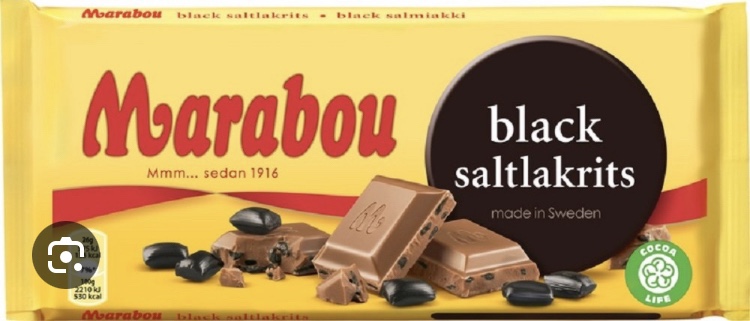
I’m probably not ever going to really learn Swedish for a couple of reasons. The first is that almost all Swedes are really proficient in English. The second is that I’ll probably never spend a significant amount of time there. The climate is not to my liking and frankly it’s a little pricey. It’s a beautiful country and I’m sure we’ll visit, but there is very little incentive for me to spend much energy on learning Swedish. That being said, it would have been helpful when shopping for chocolates as Jenn picked up what she thought was chocolate with coffee and bought black saltlakrits, which is chocolate with salty black licorice. She had saved this chocolate bar for at least a week after we got back from Sweden, she sat down to enjoy it and quickly learned it was black licorice and she was pissed.
Italy – July 2023 (5 Units – 3,000 XP)
I really thought Italian was easier to at least get the basics of. The pronunciation seems fairly predictable and I just love how Italian feels musical. It’s really a beautiful language and it’s definitely a place I would love to live and truly learn the language. That being said, I don’t think Duolingo will get you anywhere near fluent unless they expand this curriculum. There are only 57 units total. I got through only 5, but I did find myself saying some of the basics when we were in Italy, like per favore, grazie, and scuzzi. Much of the vocabulary overlaps Spanish so I had the ability to guess at some words. I hope Duolingo expands the Italian curriculum, because I’ll probably work through it.
German – Zurich and Munich (July 2023 – 77 Units – 65,000 points)
Ok, I put a ton of effort into learning German – to a point where it annoys Jenn. Honestly German is hard. It just doesn’t seem right to me. The word order is odd for an English speaker and it feels like I’m always one step behind when listening to German because of it.

I had made it through 77 of the 137 available units with around 65,000 XP. I was really hoping that I would be able to have basic conversations with people in Germany but that didn’t really happen. The biggest issue was that I wasn’t prepared for how fast Germans speak. While my vocabulary isn’t terrible, it does take a while for my brain to translate what people are saying, not to mention the time it takes to formulate a response. I was able to speak in situations where I was able to anticipate the conversation, such as when ordering food at a restaurant.
Where I found my limited knowledge useful was translating signs, packaging, menus, etc. We visited grocery stores in every place we went in Europe and I definitely was more comfortable shopping in Munich and Zurich. Also, when we were in the Viktualienmarkt in Munich, being able to quickly scan the signs and pick out the butcher shops, cheese shops and bakeries by the signs made the visit easier.
I did notice that the lessons I did immediately after leaving Germany were way easier, which demonstrates to me how much you learn just from visiting a country on a short trip.
Overall Impression of Duolingo
I definitely think there are better ways of learning a language. The fact you’re not having real conversations while learning is a detriment. However, the convenience of being able to work on a lesson or two while waiting virtually anywhere is huge. It essentially allows a user to do some language learning while they’re wasting time and in the end, isn’t that better then doom scrolling Facebook or playing Candy Crush? Yes, you’ll probably need to do something else in conjunction with Duolingo in order to develop true fluency, but at least the knowledge you learn from the app will make it much easier. I’m planning to continue to use Duolingo and I know that it will further me along in my goal to be multilingual.
 Newby to Expert Traveler