Stage four of the Malerweg starts in Altendorf and finishes in Neumannmühle. It is part of the Malerweg Trail (Painter’s Way), which is a series of eight point-to-point trails through Saxon Switzerland National Park in Germany. It roughly follows the path of German landscape painters who frequented the area in the 18th Century.
Building in Bad Schandau
My Son Alex and I had only planned four days of hiking while in Dresden, but because of the amount of rain that fell while we were there, we were only able to hike two days. Having read blog posts of people who had done all eight stages, stage four seemed to be one of the favorites of the eight stages.
Our day started with a train ride from Dresden to Bad Schandau. From there, we needed to take a bus from Bad Schandau to Altendorf. Once we got off the bus in Altendorf, it only took a few minutes to find the sign directing us to the Malerweg trail.
We followed the signs, and it wasn’t long before we came across a sign that said the path was under repair and that we needed to turn around to go to an alternative path. That forced us to turn around and eventually led us down a fairly steep trail with a lot of switchbacks that descended from Altendorf.
At the bottom of the hill was a campground where we missed a sign and walked another quarter mile or so before I thought that the trail didn’t seem right. My instincts told me we weren’t on the Malerweg, so we turned around and returned to the campground, where we saw the sign pointing to the Malerweg, which we had missed the first time. We had barely even started hiking, and we had already come across a closed trail and taken a wrong turn – not a great way to start.
Walking beside the sandstone pillars
From there, we started an approximately 1,000-ft ascent over the next four miles. The first part of the ascent was through prairie and woods until we reached the sandstone mountains. The early parts of the hike weren’t that scenic, but as we approached those stone cliffs, we were treated to amazing views.
Sandstone pillars next to the trail
The trail took us around a series of sandstone pillars for about 15 to 20 minutes before leading us uphill. This area has a large sandstone bluff, and the Malerweg trail continues on top of the bluff for a few miles. However, first we needed to climb from the trail up onto the sandstone bluffs.
Metal stairs on the sandstone ridge
On the ascent, the trail was varied. Often there would be metal stairs with handrails, other times, wooden steps, and sometimes you would need to climb on the rocks themselves. There were spots that I thought were fairly dangerous, and the footing was tricky, but after a while, we made it to the top of the bluffs, where we were treated to some spectacular views.
Looking down on the trail after climbing onto a bluff.
I was baffled by how dangerous the trail felt in parts. At one point, I was completely stretched out, holding onto the base of a metal railing, with my feet desperately trying to grip onto a large boulder, which was slick from the sand on top of the stone. This was precariously over what would be a fall of at least fifty feet.
View from the top of the sandstone bluffs
The baffling part, though, wasn’t the fact that I perceived it to be so dangerous; it was the number of much older Germans and German children doing this hike. Alex and I are in pretty good shape, and these German hikers were treating this trail like it’s a walk along a gentle river. As I learned on the Camino de Santiago earlier this year, when it comes to hiking, Germans are pretty hardcore.
Off in the distance, you can see the channel carved by the Elbe River and across it, a plateau with farmland atop it.
For about an hour, we walked along the top of the sandstone ridge, with phenomenal views of Saxon Switzerland National Park. On occasion, we would have to climb on top of rocks formations, and sometimes we would need to descend. However, the whole time, we were enjoying breathtaking views of the Elbe River and the Elbe Sandstone Mountains.
Metal stairs poke up between rocks on the bluff
Finally, we began our descent out of the ridge and down along the edge of the sandstone pillars. We were in a pine forest, with the sandstone cliffs next to us. We were starting to get hungry and hoped to find civilization so we could stop for some food and a drink.
A railing along the edge of a steep drop-off.
While the hike had provided us with spectacular views, it hadn’t yet passed through any towns that had restaurants. This was unlike Stage Two of the Malerweg, which had plenty of opportunities to stop for a drink and a bite to eat. After about four hours and ten miles of hiking, we finally stopped at Lichtenhainer Wasserfall.
After the descent, we found this amazing tree and formation
Lichtenhainer Wasserfall is a waterfall with a beer garden and restaurant nearby. We both ordered sausages and potato salad, and enjoyed some rest by the waterfall. The food tasted great, but I couldn’t tell if it was because it was actually great or because the hiking had made me extremely hungry.
A section of the trail perched on the edge of a cliff
I had a couple of beers, including a dunkel made by Sachsisches Schmuggler, which is made in nearby Sebnitz. It hit the spot, and we were ready to head off into the woods again.
Biergarten at Lichtenhainer Wasserfall
We only had two or three miles left, so with food in our bellies, we were feeling pretty good. Unfortunately, it was only a matter of about 10 minutes before it started to completely downpour. At first, we put on our raincoats and continued on, thinking that the rain would have to break up eventually.
Lichtenhainer Wasserfall
The rain was so heavy that the raincoats were powerless to stop us from getting wet. We walked about a mile away from Lichtenhainer Wasserfall before giving up and walking back in the other direction. We really wanted to finish, but without really knowing how much further we needed to go and being completely soaked to the bone, we decided to return to Lichtenhainer Wasserfall and take the train back to Bad Schandau.
It was disappointing not to finish the rest of Malerweg Stage Four; however, I felt pretty sure that we had experienced most of the beauty of the stage, with all of the amazing views at the top of the ridge of the Elbe Sandstone Mountains. It was an absolutely amazing hike, and while I wish we had finished it, I was glad that we were able to do the parts that we did.
If you are thinking about hiking some of the Malerweg, I would highly recommend doing stage four. You should, however, keep in mind that there are parts of the trail that are very technical and sometimes dangerous. Just don’t be surprised if you get passed by a German family with a couple of grandparents and a four-year-old.
The Malerweg is a famous hiking path through Saxon Switzerland National Park in Germany. It has eight stages, each starting in one town and ending in another. For an avid hiker of average endurance, each stage takes a day to complete. Anyone who hikes the full eight days will be treated to a variety of landscapes, spectacular viewpoints, and quaint German villages.
I knew we would not have enough time to hike the entire Malerweg, so I chose a few stages I wanted to hike. Stage two was at the top of my list because of the Bastei Bridge. As I’ve learned, if there is something that you really want to do, do it on the first day that has good weather.
We were treated to fantastic weather. It was an absolutely fabulous day with mostly clear skies and temperatures hovering around 70 degrees Fahrenheit.
View from the trail over Stadt Wehlen
The day started with a train ride from our Airbnb in Dresden, followed by a ferry ride across the Elbe from the train station in Stadt Wehlen to the town itself. From the Radfahrerkirche, the church in the main square of Stadt Wehlen, the trail starts on stairs that switchback up a steep hill overlooking the town.
From there, we followed the signs along the Malerweg through the woods. This section involved about a 600-foot climb, which was fairly gradual but strenuous nonetheless. As I’ve learned, though, if you want a great view, you need to climb a hill. In fact, the more you climb, the better the view.
The path between Stadt Wehlen and Bastei was wooded and full of large stones
After about an hour of hiking, we arrived in Bastei. Bastei is probably the most scenic and most visited part of Saxon Switzerland National Park. We immediately stopped at the Panorama Biergarten for a couple of pretzels and drinks.
There are two sides to Bastei: one facing the Elbe River and one facing the sandstone mountains. From the Panorama Biergarten, we saw the side with the sweeping views of the Elbe. Even though the views from this biergarten are amazing, this side of Bastei is less impressive than the other.
View from Panorama Biergarten in Bastei
We finished our snack in the biergarten and walked over to the other side of Bastei, and were immediately struck by the amazing views of the sandstone mountains. Spreading off into the horizon was a sea of gray sandstone columns smoothed from millions of years of erosion.
We continued walking along the path until we saw the Bastei Bridge. This sandstone bridge was built in 1851 to link multiple sandstone columns. It is a major tourist attraction and is a man-made object that complements nature rather than detracts from it.
Bastei Bridge
Most of the time we spent on the trail was by ourselves. That was not the case in Bastei. There are many ways to get to Bastei without hiking the Malerweg. There are parking lots near Bastei for people who drive, there is a bus that goes to Bastei, or you can take a much shorter 1-kilometer hike from Rathen.
Outlook stretching off the Bastei Bridge
This meant that while we were in Bastei, the trails were very crowded as people jockeyed for position to see the Elbe Sandstone Mountains and the Bastei Bridge. The crowds were fairly thick for at least a kilometer from the Bridge itself. There is a great reason for this, though—the views are tremendous.
Elbe River taken from the outlook near the Bastei Bridge
Continuing on the Malerweg past the Bastei Bridge, multiple viewpoints of the Elbe River valley and the Sandstone Mountains are simply amazing. We spent a lot of time in this area taking pictures and just looking out over the breathtaking landscape.
Viewing platform overlooking the Elbe River
Eventually, we reached the end of the sandstone bluffs at Bastei and had to start heading downhill on the trail. There were a decent number of hikers still on the trail, but they were starting to thin out.
Descending from Bastei
When we finished our descent, we were treated to a man-made lake, as the creek that ran through the area had been dammed up. People were enjoying the lake with paddle boats and kayaks, while others hiked around the lake. It was a beautiful location.
Walking along the Amelsee
That path continued until we reached Rathwalde and stopped for a little lunch. Rathwalde is a cute little village with a few restaurants. It was a nice place to stop for a little while and rest.
After stopping in Rothwalde, we got off the correct Malerweg path. I’m not sure if we missed a sign or if we misinterpreted one, but we ended up going the wrong way and had to use Google Maps to try to get us to Hohnstein, which was the end town of Malerweg stage two. That took us on a narrow blacktopped road, which wasn’t particularly fun or scenic to walk.
View from Hocksteinaussicht
Eventually, we made it back onto the Malerweg and ended up in a place called Hocksteinaussicht, a rocky lookout with a view of the village of Hohnstein. After taking in the views from Hocksteinaussicht, we descended from the rock down a set of metal stairs between the rocks. Finally making it to the bottom of the hill, we found ourselves at a road where we could go left or right. We chose to go left, which was, again, the incorrect choice.
Metal stairs through a break in the sandstone descend from Hocksteinaussicht.
Had we chosen the path to the right, we would have been treated to a pleasant walk through the woods ending in Hohnstein. Much of that path would have been along a gentle creek. Unfortunately, since we chose the other direction, we ended up on another road walking the long way into Hohnstein.
Walking into Hohnstein
When we finally did make it into Hohnstein, we were greeted by a beautiful German village with a castle on top of the highest point. It dates back to at least the 14th Century and is now a hotel.
Hohnstein
We wandered a little around the town and finally caught a bus back to the Pirna train station to catch the train back to our Airbnb in Dresden.
Between the sweeping views of the Elbe valley, the Elbe Sandstone Mountains, the Bastei Bridge, and all of the beautiful forests, creeks, and ponds, this is by far the most scenic hike I’ve ever been on. Even though the last couple of hours had been frustrating with our wrong turns along the Malerweg, we had an absolutely tremendous hike on the second stage of the Malerweg.
As soon as we arrived in Dresden, we went directly to the Frauenkirche (The Church of Our Lady). I wanted to see this beautiful church for myself. Gorgeous churches are everywhere in Europe. What makes this church special is its history and how perfectly it dovetails with modern German and world history.
Statue of Martin Luther in front of the Frauenkirche
Frauenkirche is a Lutheran Church built in the Baroque style and originally completed in 1743. Its distinctive architecture and 220-foot-tall dome define the Neumarkt area of Dresden. However, the story of Frauenkirche is defined by the history of Germany in the 20th Century.
The Firebombing of Dresden
On February 13th, 1945, as Allied forces were advancing on German-held territory, and the war was nearing its end, US and British forces began firebombing Dresden. Over the next three days, Allied forces dropped thousands of tons of incendiary bombs. The intense heat from the bombing killed an estimated 25,000 people and reduced much of Dresden to rubble. Part of that was the destruction of the Frauenkirche.
Following the war, Dresden was on the Soviet side of the Iron Curtain. While Dresden was being rebuilt, Frauenkirche was left as a pile of rubble in the Neumarkt neighborhood. It remained this way throughout the entire history of the German Democratic Republic, also known as East Germany. The rubble was declared a monument against war and remained that way until after German reunification.
Following reunification, funding for rebuilding the church was raised, and a plan was created for the reconstruction. Construction began in 1994 and was completed in 2005. They removed as much as they could from the rubble pile and reused around 3,800 stones. The remaining stones necessary for rebuilding the church were harvested from nearby sandstone quarries. Due to weathering and the fire damage, the salvaged stones have a darker patina than the newer stones.
The reused stones are dark gray, while the newly quarried stones are a lighter tan. Over time, the newer stones will darken as the type of stone used will patina.
On this beautiful July day, with people enjoying Neumarkt and tourists crowding the Statue of Martin Luther for selfies, it’s easy to forget about the destruction and rebirth of the Neumarkt area. The dark stones, which serve as a reminder of the firebombing, are scattered throughout the building, but two sections have a heavy concentration of the old stones.
The Rise of Nationalism
In the 19th Century, nationalism was on the rise in Europe. This movement wanted to define a country’s borders based on the ethnic, racial, and linguistic characteristics of the people inside those borders. This was in contrast to centuries of European borders defined by the marriage alliances and the conquests of monarchs.
Statue of Martin Luther in front of the Frauenkirche
While the formation of countries with borders based on ethnic similarities made sense, it also made unassimilated groups vulnerable. There were over 9 million Jews and around 1 million Roma, otherwise known as Gypsies, living in Europe before World War II. These groups lived among the various ethnic/national groups throughout Europe and didn’t have a specific nation state to call their own. In addition, nationalistic fervor left anyone who wasn’t living within their own nation’s borders vulnerable, like the 1.7 million Poles who lived within German borders before World War 2.
We walked around the church, admiring the Baroque architecture. We decided to take a look inside. My first reaction was that it was incredibly airy and bright, with many intricate Baroque elements and multiple balconies. It’s breathtaking.
Nationalism in the United States
Nationalism wasn’t a strictly European phenomenon. Fear of unassimilated ethnic groups has persisted throughout American history, typically when large numbers of immigrants arrived and formed their own communities. This includes Italians, Irish, Polish, Chinese, and other groups who created their communities within American cities.
In Germany, however, the Nationalist movement was taken to extremes as the Nazis sought to expand their borders while eliminating anything that was not exclusively German. The objective was to create a completely homogeneous German nation with expansive borders. This obviously could not be accomplished without war and ethnic cleansing, and led to World War II and the horrors of the Holocaust.
The altar in Frauenkirche
In America, World War II stoked fear of Japanese and German immigrants. Japanese-Americans were moved into internment camps, and Germans were viewed with suspicion.
Multiple levels of seating have clear views of the altar in Frauenkirche.
After walking around the inside of the church, we headed down to the basement. The basement contains an altar and seating for additional services. It also contains multiple alcoves for private prayer and reflection.
Who Sows Fear, Reaps Weapons
The story is always the same: fear leads to hate, and hate leads to violence. Fear and hatred work by dehumanizing the perceived enemy and justifying violence against that group.
Under the church, there is an altar where additional services can be performed
For the Germans during World War II, that fear justified the war and the campaigns of ethnic cleansing. For Americans, it meant justifying the bombing of civilian populations, like the ones in Nagasaki, Hiroshima, and Dresden.
Monument under Frauenkirche depicting the 10 commandments
Following World War II, enemies became allies as Western Europe began working together in military alliances and as trading partners. America and Japan, once mortal enemies, became valued trading partners and close friends. Instead, a new enemy had emerged, with the world split by the Cold War, and Dresden was on the Soviet side of the Iron Curtain, separated from their brothers and sisters in West Germany.
Visitors gather in Frauenkirche throughout the day to see this amazing church and to pray.
The Cold War defined the next 45 years of human history. There was a space race, nuclear proliferation, and the Cuban Missile Crisis – everything seemed to be defined as a competition between the West and the East, Communist and Capitalist. The entire time, Frauenkirche sat as a pile of rubble in Neumarkt, a daily reminder to the citizens of Dresden of the dangers of Nationalism.
We decided to buy tickets to climb up into the dome. For 10 Euros, you can see a different perspective of the church. As you go up, you see the paintings on the inner dome. Ascending further, you can look through windows at the main dome and down through an oculus at the inner dome and the rest of the church.
Europe Unites as Frauenkirche is Rebuilt
The collapse of the Soviet Union and the fall of the Berlin Wall ushered in a new era for Europe and for the Frauenkirche. In the late 1980s and early 1990s, as Germany was going through Reunification, an aggressive fundraising campaign was conducted to raise the 180 million euros necessary to rebuild the church.
Paintings on the inner dome
In 1993, a rubble-sorting event marked the beginning of the efforts to reconstruct the Frauenkirche. As the church’s cornerstone was stabilized in 1995, the European Union added Austria, Sweden, and Finland to raise its membership to 14 members.
Reconstruction of the Frauenkirche was completed in 2005. During the eleven years of Reconstruction, the Euro was developed and established in 11 countries. The Schengen Zone went into effect in many of the EU countries, allowing freedom of movement without border controls. By the time the Frauenkirche was completed, the European Union had expanded to 25 countries.
Room above the oculus in the inner dome
Nationalism had divided the continent and led to the destruction of the church. In the 60 years from rubble to reconstruction, the continent became defined by its cooperation and connections.
Since 2005, three more members have joined the European Union, and one, Great Britain, has left. Nine countries are currently listed as candidates to join the European Union. This interconnection has ended all wars between these countries, which have fought each other for centuries. The fear is gone, and with it the hatred and the violence.
Sloped walkway between the outside wall and the inside wall of the dome
We climbed all the way to the top of the dome and walked out onto the observation deck. From the top, you could see most of Dresden. The neighborhood around Frauenkirche has also been reconstructed with shops, apartments, hotels, and restaurants. The plaza in front of the church was lively with visitors and shoppers. Neumarkt is whole again.
Tension in North America
While Europe becomes a more unified continent, North America has become more divided. A tariff war has made Canada and the United States, longtime allies and friends, suspicious of one another. In addition, statements by Donald Trump indicating that he would like Canada to be the 51st state, however unserious that sounds, have to be taken seriously by Canada because of the power imbalance between the two countries.
A view of the Elbe River from the observation deck above the dome
The relationship between the US and Mexico continues to be complicated, with the US both relying upon Mexican immigrants for cheap labor and vilifying their presence within the country.
Recently, the immigration debate has turned extremely dark as a detention center has been constructed on swampland in Florida. Known by its supporters as Alligator Alcatraz, its goal is to house illegal immigrants until they can be deported.
However, some of the supporters of this plan have expressed more extreme ideas. Laura Loomer, who traveled with President Trump during the 2024 campaign, recently tweeted, “The good news is, the alligators are guaranteed at least 65 million meals, if we get started now.” 65 million is the total population of all Hispanics in the US, most of whom are citizens. So, as you can see, for the most extreme members of the Republican Party, the issue of protecting the border has now moved toward ethnic cleansing.
Fear also affects the LGBTQ+ community. The LGBTQ+ community has been the target of many ridiculous accusations over the years, including the idea that same-sex marriage destroys the sanctity of straight marriage and the idea that homosexuals groom children for pedophilia. These are accusations meant to paint all LGBTQ+ individuals as a danger to society.
A pride flag hangs from a balcony of an art museum that faces the Frauenkirche
Another persistent fear among right-wing communities is that transgender women will use women’s restrooms to rape cisgender women. I’ve never heard of a real case where this happened, but the fear persists nonetheless. The idea is ridiculous, of course, because anyone willing to commit rape would not be deterred by laws that limit access to restrooms based on biological gender.
Lessons from the Past
Much like the lies told in the Protocols of the Elders of Zion in the early 20th Century, these lies persist in the early 21st Century. These lies are told to marginalize communities within the United States in the same way that communities were marginalized in Germany before World War II. They spread fear. Fear leads to hate, hate leads to violence.
Europe has shown what is possible when people put their fears aside and work together. They have lived through the horrors of war and chosen to work together towards a peaceful and more prosperous future.
We ended our visit to Frauenkirche, standing in front of the last remaining piece of rubble from what was the pile that lay in Dresden for decades. It was a large piece of the dome recovered from the pile, placed as a monument with a plaque containing the account of a survivor of the firebombing.
The remaining piece of rubble from the dome was left as a monument to the destruction of Frauenkirche.
Standing in front of the monument, I was reminded of the vulnerable communities within my country and the lies and slurs they endure daily. We live in a precarious time when we must decide whether to listen to the sounds of fear and hate or embrace empathy, kindness, and love. I hoped that one day, a curious traveler wouldn’t be standing in front of a similar monument in the United States.
People should be treated with empathy and kindness regardless of their immigration status, sexual orientation, gender identity, race, religion, or disability. People are people, and love is love.
April was about the only breather we could take for a while. March consisted of a trip to Spain and Portugal to do a week on the Camino de Santiago. In July, Jenn is taking our daughter Emma, as well as her sister and niece, to Munich and Dublin. Meanwhile, I will be taking our Son Alex to Berlin and Dresden as well as doing a little hiking in Bohemian Switzerland National Park. In September, we will be going to Nice, France, to participate in the UTMB Nice Côte d’Azur. It’s almost a little too much traveling in too short a time, but I’m willing to take this challenge head-on.
A Decent Deal on a Delta Flight?
I had been looking for months for a decent price on a flight for Alex and me to go to Europe, preferably Germany. For a while, I was getting frustrated because I could get flights to Europe for a decent number of points, but the prices for getting home were more than I wanted to spend. I was patient, and finally, Delta came through with round-trip flights for 40,800 Delta miles and $132 each. The price was 48,000, but Jenn has a Delta Gold Card, so the redemption was 15% off.
That meant Alex and I were set to go to Berlin in July for 81,600 Delta Miles and $264. That’s a pretty good price, but the downside was that it was the price for Basic Economy. In other words, we don’t get to choose our seats, so Alex and I may not be sitting together. I’m sure he’ll survive; he is 16 after all.
Those points came from a small amount of Delta miles that Jenn had, but she also had to transfer 76,000 American Express Membership Rewards points to Delta to cover the rest. Those flights would have cost around $1,000 each, so the redemption came to around 2.1 cents per point, which isn’t bad.
This was the last of the redemptions that we have planned for flights this year. It’s honestly difficult for me to believe it, but we booked 12 flights to Europe this year on points as well as a flight to San Antonio. Those flights weren’t “free” because they always come with taxes and sometimes come with fuel surcharges, but they have always been at severely discounted prices.
There is no way I would have paid cash for all of those flights, so I’m glad that we were able to use points to get to these amazing destinations. This year alone, I will have visited Portugal, Spain, France, Monaco, Ireland, Germany, and the Czech Republic. That’s pretty amazing, and I’m very thankful that I’m able to take these trips.
Sign Up Bonuses
In January, I signed up for the Alaska Airlines Visa Signature Card, which had a signup bonus of 75,000 Alaska miles and a companion fare after $3,000 spend in 3 months. In April, I finally completed my spending and received the bonus. The companion fare is essentially a $122 fare that you can use on any Alaskan flight if you purchase a second flight. It’s only good for a year, and I don’t think I’ll get an opportunity to use it. The Alaska Air miles, though, will definitely come in handy, especially when there are a lot of chances to use 4,500 Alaska miles to fly American Airlines on short flights. For us, they are especially useful for flying from our home airport in Moline to Chicago O’Hare.
Jenn got her 75,000 Membership Reward Points bonus for spending $6,000 in 6 months on her American Express Gold Card. That came just in time to replenish the points I used to book the Berlin flights for Alex and me. Membership Reward points are very valuable, and it’s always nice to have a little stash of those.
100K on Chase Sapphire Preferred
It doesn’t happen very often, but Chase occasionally offers a 100,000 point bonus on the Chase Sapphire Preferred card. When it does happen, every points and miles enthusiast checks to see if they’re eligible to receive the bonus. The basic requirements are that you have signed up for less than five personal credit cards in the last 24 months, you haven’t received the bonus in the last 48 months, and you currently don’t have a Sapphire Card.
Chase Ultimate Rewards points are the most coveted points in travel rewards outside of Bilt points. Getting 100,000 Ultimate Rewards points with one signup bonus is phenomenal, but the card itself is an excellent travel credit card. This card earns 5x on travel through the Chase Travel portal and 2x on all other travel purchases. It also earns 3x on dining, online groceries, and streaming services, and 1x on everything else. There is also a $50 hotel credit per year that you can receive if you book a hotel through the Chase Travel Portal.
What makes the points valuable, however, is their transfer partners. They have some great Airline transfer partners such as United, Southwest, Air France/KLM Flying Blue, Aer Lingus/Iberia/British Airways Avios, Air Canada, and Virgin Atlantic. A lot of people, however, love their Chase Ultimate Rewards points because they transfer to Hyatt at a 1:1 ratio. Hyatt has the most valuable hotel points, with most people valuing their points at around twice the value of Marriott points and about triple the value of Hilton points.
Jenn referred me to the Chase Sapphire Preferred card, so she will receive 10,000 points, and I will receive 100,000 points. I need to spend $5,000 in three months to receive the bonus. She also referred another friend, so she will be getting an additional 10,000 for that signup. I think I know five people who jumped on this deal, because it was so good.
On to the Point Check!
Most of our spending in April was on cards for which we were working on signup bonuses, so the spending below is almost entirely recurring charges. That being said, a 7.1 percent return on those charges is phenomenal, so I feel good about how I have our recurring charges set up.
Card Used
Spend
Points Earned
Point Value
Points Per $
Return on Spend
Amex Gold
$552
2,130
$42.60
3.9
7.7%
Ink Cash
$445
2,224
$45.59
5.0
10.2%
Wyndham Business Earner
$347
1,736
$19.10
5.0
5.5%
Venture
$345
690
$12.77
2.0
3.7%
Total
$1,689
6,780
$120.05
4.0
7.1%
This month’s spending not devoted to earning a signup bonus
On top of the spending listed above, I spent a little over $1,000 on my Alaska Airlines Card, earning over 1,500 Alaska miles as well as the 75,000 Alaska mile bonus. Jenn spent a whopping $8,500, a good portion of which was our annual taxes, nailing down her 75,000 point bonus as well as an additional 12,000 Membership Reward points. After all of that, we ended the month with:
126,900 Chase Ultimate Rewards Points
122,600 Amex Membership Rewards Points
93,000 American Airlines Miles
85,000 IHG points
79,100 Alaska Miles
60,000 Marriott Bonvoy Points
58,900 Wyndham Points
32,100 Citi Thank You Points
15,900 United Miles
6,500 Hyatt Points
1,100 Delta Miles
$109 in Cash Back
When you add everything up, the total value of points and miles, using the valuations from The Points Guy, comes to over $10,400. That is a $1,300 increase over last month. I don’t anticipate us booking very much for a while, since our trips for the year are pretty much planned. That means our point totals should be growing for the rest of the year and hopefully leave us with enough points to make some fun decisions for trips in 2026.
I didn’t get more than a couple of hours of sleep. The wind slamming the shutters on the windows was a constant reminder of the massive challenge ahead. At this point, we were all struggling with nagging pain. The hike from Padrón to Santiago de Compostela would be our most challenging to date. In addition, the weather looked horrible. The weather app called for sustained winds of 20 miles per hour with gusts up to 40 miles per hour. The forecast also called for rain all day.
All I could think was, do we really want to spend eight or nine hours hiking in the wind and rain, limping in pain? Jenn and I decided to ask the kids what they wanted to do.
We walked into their room, told them about the weather, and asked them what they thought. Emma was conflicted and said she wanted to finish, but that it sounded terrible. She said she’d leave it up to Alex. He took one look at us and said, “I’m done,” and then he rolled over and tried to go back to sleep.
So there it was, after five days hiking the Camino, we were quitting just 17 miles from the end.
I was conflicted about it, because after all, this was supposed to be a vacation, and I felt like I spent the better part of a week torturing my family. On the other hand, there is value to completing something so physically demanding.
The Camino is a hard physical challenge that is achievable by normal people. Jenn and I have both completed these types of challenges before. Jenn has done two RAGBRAIs (a week-long 400-mile bike ride across Iowa) and a couple of half marathons. I’ve done a RAGBRAI, about ten half marathons, and a couple of full marathons.
The kids hadn’t experienced what it’s like to complete a challenge like that, and I was a little sad they wouldn’t finish. For me, those challenges are important because they build confidence and character. I hoped that quitting that close to the end didn’t invalidate any personal growth that resulted from the first five days of the Camino.
We took our time getting ready, then took the walk of shame through the rain and wind down to the train station and bought a ticket to Santiago de Compostela. We shared the complex feelings of regret for not finishing the Camino as well as the relief of not having to hike that day. I was happy, however, to have a little more time to visit with my friend Nate.
While on the train, I texted Nate to tell him we quit and we would be in Santiago de Compostela in a little bit. He said he would meet me at the Pilgrim House, which is the community center where he works.
Building in Santiago de Compostela
When we met, he introduced us to the staff at the Pilgrim House and even pointed out someone from our hometown who volunteers with the organization. She was talking with Jenn and mentioned that she also works with the youth symphony orchestra in our hometown. Alex happens to be a viola player in that orchestra, so she took a picture of her and Alex and texted it to his conductor with a message: “Guess who I ran into in Spain?” It’s a small world.
Santiago de Compostela Archcathedral Basilica
We talked with them about our experiences on the Camino and what we would do differently. They have a different perspective as veterans of the Camino themselves and as people who listen to thousands of Camino stories each year. They chucked a little and said, “You spend your first Camino learning how to do a Camino.”
Nate gave us a tour of Santiago de Compostela, showing us his favorite coffee shop, the Cathedral, and the wonderful architecture of the city. We talked about the old days and what happened to our old friends. He talked about his family and what it was like for them to raise kids in Spain.
The organ is decorated in a baroque style
It was wonderful catching up with him after all these years, and if there was one blessing from having quit the Camino, it was the ability to spend a couple of hours with an old friend, thousands of miles away from where we grew up.
A dome in the Cathedral
We said our goodbyes to Nate and headed to our hostel at Albergue Alda O Fogar de Teodomino. We were able to get a private room with four beds. The hostel was nearly empty. I think most people didn’t hike that day because of the weather. I assume that most people who would have finished in Santiago de Compostela that day were instead taking an off day and would finish the next day.
We checked into the hostel, and I said that I wanted to tour the Cathedral. Emma wanted to join me, while Alex and Jenn stayed back to take a nap.
The full name of the cathedral is the Santiago de Compostela Archcathedral Basilica. Construction began in the late eleventh century, lasted well over a hundred years, and was finally completed in 1211. It was built to house the supposed remains of St James, which were discovered in the 9th Century near modern-day Padrón.
I definitely question the validity of the claims that the body of St James was discovered more than 800 years after his death, thousands of miles away from where he died. However, this discovery led to millions of pilgrims over the centuries walking the Camino to this cathedral in Santiago de Compostela.
Seeing the Cathedral is the goal of every pilgrim who embarks on the Camino. As is the case with so many Cathedrals, it is lavish, with statues and artwork everywhere. The altar of the church is done in a baroque style, with gold and silver elements everywhere. There are countless golden pillars and a group of angels holding up a golden ceiling over the altar. It’s so ornate that I couldn’t really discern what the artwork was supposed to symbolize, but it is beautiful.
Right side of the altar in the Cathedral
My favorite thing in the Cathedral was a giant incense burner called the botafumiero, which is about 5 feet tall and weighs around 180 lbs. Traditionally, it took a team of eight men with ropes to swing the burner over worshipers. The purpose of this was to cover the smell of the pilgrims who had spent the day on a long hike to the Cathedral. They now only do this on special occasions, since it’s so labor-intensive. Presumably, because of modern deodorants, it’s also not as necessary.
Altar with botafumiero hanging in front.
We also walked down to visit the crypt, the supposed final resting place of St James. Behind an iron gate, you can see a silver ossuary. There it is – a beautiful, yet simple box containing the remains of someone, who may or may not be St James. It is the inspiration of millions of pilgrims over centuries to take time out of their busy lives to hike for days or weeks.
Silver Ossuary in the crypt of the Cathedral
I don’t buy it. I think people do it for so many reasons, but seeing a silver box can’t be the motivation for most people. For some, it’s the drive to complete a physical challenge. For others, it’s the opportunity to hike through towns, villages, farms, and forests. Some are taking time for introspection, and others are there for the camaraderie and fellowship with their fellow pilgrims.
I was there for a combination of those things, and I think that’s probably true for most pilgrims. I was also drawn by the opportunity to participate in something that draws people from around the world. According to the official pilgrim website, which keeps statistics on the number of people who complete the Camino, so far in 2025, about 37% of pilgrims were Spanish, 8% American, 7% Portuguese, and 6% were German. The remaining 42% were from various countries around the globe. It’s an amazing opportunity to spend time with a lot of wonderful, diverse people who are all working toward the same difficult goal.
The opportunities to connect with people at cafes, along the Camino, or at an albergue are endless. Those conversations also don’t feel forced. People who come to do the Camino are generally friendly.
Walking around the Cathedral, however, felt a little hollow. We hadn’t finished, and it felt like I didn’t deserve to be there. Visiting the Cathedral is a rite of passage for people who complete the Camino, and we hadn’t. Jenn and Alex didn’t even want to visit the Cathedral.
We finished up our trip to the Cathedral and met up with Jenn and Alex for dinner. At dinner, we discussed the disappointment of not finishing.
With everyone still dealing with being somewhere between sore and injured, I asked if they would like to try this again. Jenn laughed and said that she thinks we owe the kids a beach vacation for the next Spring Break trip. To my surprise, however, everyone said that they would like to do it again, but with some optional off days.
There isn’t an experience like doing a Camino. It’s real. It’s authentic. It’s a tremendous physical challenge. It’s the opportunity to meet people from around the world, as well as the chance to experience Spain in a non-touristy way. I would love to give it another try, but I definitely want to do it when I can hike for at least a couple of weeks. I definitely think it would go better the next time, now that I’ve spent my first Camino learning how to do a Camino.
At seven o’clock, we woke up in Caldas de Reis at Hotel O Cruciero. We told the kids to pack up and meet us in the cafe downstairs for coffee. Jenn and I grabbed a table, ordered everyone a café con leche, and questioned whether we were hiking today or if our Camino was finished.
Emma and Alex had their own room, so we hadn’t yet had a chance to talk with Emma about her ankle. She had used some topical cream to ease her pain, but I didn’t know if that would be enough to get her on the trail. Emma complained about pain in her Achilles tendon, which had started early in the week but was worsening daily.
Caldas de Reis to Padron is a fairly flat and rural stage of the Camino de Santiago
Emma played basketball for eight years and learned to play through pain, so when she complains, I know she’s not exaggerating. When we asked how she was feeling, she said she wanted to give it a try. We told her that she needed to rely heavily on her trekking poles to take the pressure off her ankle.
We didn’t hurry out of the cafe. The coffee was great, and they served little pieces of cake with it. We had a couple of rounds of coffee, trying to prepare ourselves for the hike. I was sincerely worried. I saw her play basketball with ankle pain and shin splints in High School, and I was afraid she was legitimately hurt and was just pushing through the pain.
Fountain in Caldas de Reis
I trusted her judgment, though, and once we got started, things were pretty good. The weather was lovely. Emma was leaning on her trekking poles, which kept the pressure away from her ankle and helped with the pain.
Igrexa de Santa Mariña de Carracedo
Since Caldas de Reis was fairly small, it didn’t take long for us to hike through it and into the countryside. Once we left town, most of the Camino between Caldas de Reis and Padrón was rural, which made for really peaceful hiking.
Crosses at Igrexa de Santa Mariña de Carracedo
Early in the day, we arrived at Igrexa de Santa Mariña de Carracedo, a beautiful stone church. It is typical of the churches we saw in the area, with a gorgeous stone bell tower.
Iglesia de Santa Mariña de Carracedo
From there, we continued through the countryside, walking between farms and forests. The trail roughly followed the path of the small river.
White cow near O Gorgullón
We stopped for an early lunch at Bar Pardal around eleven o’clock. They were extremely busy, and it was difficult to get service. The main reason why it was so busy was that The Boys were there.
Just like during the previous day, the fact that there were around 30 in that group made it difficult for the staff to handle all the customers simultaneously. This made for chaos and slow service, but we got our breakfast sandwiches and drinks and enjoyed them in the covered patio.
Trees form a tunnel over the trail.
While at Bar Pardal, we saw many familiar faces, including The German Girls, The Boys, and The British Couple. We enjoyed our brunch and then hurried out to get in front of The Boys, knowing it would take them a while to finish their meal and return to the trail.
On a Bridge over Rio Valga
We continued along the Camino, walking through the Galician countryside among farms and forests. We crossed Rio Valga and stopped for a drink and a snack at Buen Camino, a cafe across from Iglesia de San Miguel.
Iglesia de San Miguel
Buen Camino is a cute little cafe in a beautiful location next to Iglesia de San Miguel. That church is constructed in the same style as the other churches we saw in Galicia. Next to the church was a large cemetery. The cafe sits elevated over the cemetery with a fantastic view of the church and the hills on the horizon.
Cemetery at Iglesia de San Miguel
Once again, we ran into The English Couple who had also stopped for a quick drink. They were sitting on the patio overlooking the church, and we chatted with them while finishing our drinks, and then went back to hiking.
Galician Countryside past San Miguel
We were getting close to finishing our hike for the day, but as was becoming almost routine at this point, we were starting to hurt. Emma was still struggling with her Achilles tendon, Jenn was starting to limp as the hot spot in her foot got worse, and Alex was complaining about a bruise on his hip that was getting worse as the week went on.
Fountain along Camino
The fact that we didn’t schedule an off day was beginning to look like a mistake. I was certain that our discomfort would have improved with an off day, and it was a mistake not to schedule one.
View of Rio Ulla from Pontecesures
The options for lodging in Padrón were limited, so we booked an Airbnb for the evening. We stopped for another drink at Cafe Bar Galicia in Pontecesures and to contact the Airbnb. We finished the remainder of our hike and met with the host of the Airbnb in Padrón. After dropping off our backpacks, we ventured out to explore Padrón and get some dinner.
Padrón was a lovely town, but it was nearly impossible to get food before seven o’clock. Since the Spanish like to eat dinner fairly late, we had to check four or five restaurants before we found a restaurant serving dinner. While eating, we discussed the final day of the Camino. We were going to have our longest hike to date, about 17 miles, with about twice as much elevation change as our hilliest day so far. The forecast also called for rain.
Igrexa de San Xulian de Requeixo
No one was excited about hiking the last day between Padrón and Santiago de Compostela. Between the injuries, the difficulty of the final day, and the weather, the final day felt impossible.
In addition, I had planned to meet my friend Nate in Santiago de Compostela. Nate was an old friend that I hadn’t talked to in years, mainly because he had moved to Santiago de Compostela years ago to work in a community center. He was the main reason I had heard about the Camino, and I was looking forward to seeing him after all these years.
Paseo do Espolón in Padrón
But everything seemed a little bleak. How were we going to arrive in Santiago de Compostela with enough time to spare to see Nate and Santiago itself? Especially when, at this point, we were barely capable of hiking, let alone at a faster pace on our most challenging day.
Rio Ulla
We decided that we should get up an hour early, and hopefully we would make decent time. After dinner, I settled into bed for the evening. I started to hear rain and then strong winds as they began to shake the shutters on the windows. I checked the Weather Channel app, and it was calling for rain tomorrow with gusting winds of up to 40 miles per hour.
What I wouldn’t do for an off day, I thought. A single day off would allow us to avoid the bad weather and get valuable rest for our aching bodies. I closed my eyes and tried to ignore the banging of the shutters on the windows and all of my anxiety about the upcoming day.
We woke up refreshed in Pontevedra at Dpaso Urban Hostels. We had a private room with only 4 bunks and a private bathroom, which made the experience seem luxurious by Camino hostel standards.
Day 4 was a considerably flatter day with about half of the elevation change of Day 3
Much of the beginning of the day was spent walking through Pontevedra. Pontevedra was the largest of the towns that we had stopped in, with nearly 83,000 residents. Going forward, we would be staying in towns much smaller than Pontevedra, and Carlos warned us that we should consider booking our accommodations ahead of time, because the hostels fill up fast. We were also slow hikers, so we were coming into town later than most pilgrims, which made finding a hostel a little more difficult.
Sign marking 64,500 meters to Santiago de Compostela
With Carlos’s advice in our mind, we put Emma in charge of finding us a hostel, and she used a Camino app to find one in Caldas de Reis. Knowing where we were going, there was the small matter of hiking the 15 miles to get there.
Igrexa da Virxe Peregrina
The first and most important thing to do every morning was to find coffee. Having been in Spain for a few days, I was getting used to starting each day with a café con leche and a small snack, which is a wonderful habit.
Fountain in Pontevedra
We started hiking through the middle of town, crossing the Lerez River at Ponte do Burgo while keeping an eye out for a cafe. Following the bridge, we continued the hike uphill through the middle of town. Finally, we stopped for a coffee and some really delicious breakfast sandwiches that fueled us for the hike.
Streets of Pontevedra in the early morning
After breakfast, we left Pontevedra, and we were once again treated to amazing views of the Galician countryside. It was a bright, clear morning, and the temperatures were cool but not cold. It was absolutely perfect weather for hiking.
Hiking in the Galician Countryside
We stopped by Igrexa de Santa Maria to stamp our pilgrims’ passports and use the restroom. It’s a little church that caters to the pilgrims passing through. Next to the church is a cemetery with rows of mausoleums. We noticed a lot of cemeteries set up this way in Spain, with mausoleums next to a small church.
Chickens at Igrexa de Santa Maria
The church itself had a large yard in the entrance, where fairly tame chickens seemed unbothered by our presence. Outside, a man with a guitar and an amp played a Bruce Springsteen song, which seemed a little strange for rural Spain. We got our pilgrim passports stamped and moved on our way.
The next hour was spent walking on a wooded path next to a creek. The hike was peaceful with the creek flowing on one side, shade throughout, and an ancient stone path to walk upon. Several brooks crossed the path, and every time, there was a cute little stone bridge to help cross the brook.
A creek with a little stone bridge
This was about as calm and quiet a hike as you can imagine, but that serenity was about to end. Shortly after leaving the peace of the wooded area, we started to hear music, singing, and a group of young men lined up with their packs. The Camino was about to become much more crowded.
A path with drainage running over it and a stone bridge on the side
We were taking the main route of the Portuguese Camino, but starting at Pontevedra, there is an important split. Many pilgrims leave the main route of the Portuguese Camino at Pontevedra to hike the Spiritual Variant. It is a longer route that heads towards the Atlantic Ocean and then rejoins the main route at Padrón. It’s normally hiked in 3 days, while the main route, Pontevedra to Padrón, only takes 2 days.
Many of the pilgrims we were getting used to seeing, including the English Gentleman, decided to take this route. In many ways, the Camino is like life, where people enter your life and leave, often without fanfare or even a goodbye, and all you are left with are memories.
But as some have left the trail, we were joined by others. One such group was The Boys. The Boys were a group of high school students from the Boston area. They were there on an optional school trip during their spring break, and we had missed them in previous days because they were hiking the Coastal Route of the Portuguese Camino while we were on the Central Route.
They were well-behaved and polite young men, but they were unmissable. There were about thirty of them, and even though they were courteous, the sheer number of them was a disturbance. We met them shortly after the wooded area, presumably when they were taking a break.
We passed them while they were stopped, but since they were faster hikers than us, they had to pass us. Because there were so many of them, it took over a kilometer for the whole group to pass us. They finally passed us completely along the trail in the middle of the day, by a sculpture garden called Carballeira con Esculturas de Madeira.
We hiked another hour and a half before we found some lunch. We stopped at A Cabaza Cafe Bar, a little restaurant along the camino with sandwiches, pizza, and beer. It was a welcome sight, as we were getting tired and hungry. It looked a little busy from the outside, so we had the kids claim a seat on the patio. Then we went inside and realized why it was so busy.
The Boys were there. This was March, in the low time for the Camino, when only about half of the services like albergues and restaurants are open. When a large group pops into a cafe during low season, it can create problems for the folks running the cafe. The woman working the bar did a wonderful job of handling the unexpected business, and we enjoyed a couple of pizzas and some beer out on the patio.
Appropriate sign on the Camino
While we were enjoying our pizza, Emma was complaining about her Achilles tendon. This was getting progressively worse for her, and it was beginning to get concerning. She was not looking forward to the rest of the hike that day and was getting a little cranky about it. Jenn and I, being the wonderfully understanding parents that we are teased her a little about it and told her to suck it up. She was getting pretty annoyed by the teasing.
We finished our lunch and went back to the trail, leaving A Cabaza before The Boys had finished their meal. This meant that they were going to have to pass us on the trail again. Emma was noticeably limping and was becoming more agitated as the hike continued.
Vineyards were common late in the day, approaching Caldas de Reis.
As we walked through vineyards, The Boys caught up with us and started the long process of the whole group passing us, one by one. As soon as The Boys were past us, Emma and Alex left us in the dust. Jenn and I figured that our teasing Emma had upset her, and she wanted some time by herself. Alex followed behind her, probably because we had been hiking too slowly for him the whole time.
Estrella Galicia mural along Camino near Caldas de Reis
We had no desire to try to keep up with them, and they clearly wanted a little space from us, which really wasn’t surprising given the amount of time we had spent with them. We just texted them that we would meet them at the hostel.
We made one last stop on our way to Caldas de Reis, at Albergue Vintecatro for a quick beer and a bathroom break. Sitting outside was the English Couple enjoying a late lunch. We chatted with them a little bit about how we had apparently made Emma mad, and she left us. They had become familiar faces along the trail, and we enjoyed our short chats with them.
We finally made it to Caldas de Reis around 4 PM. Alex and Emma had beaten us by about half an hour and were waiting by Hotel O Cruciero for us to show up. We walked into the lobby, and there were The Boys, all of them, crammed into the lobby trying to check in. The staff was feverishly trying to get the passport information from each of them and get them checked into their rooms. Jenn and I exchanged glances that silently said, “Are you sure you want to spend the night in the same hotel as The Boys?”
Park and Mural in Caldas de Reis
One of the staff members noticed us, and realizing how long it was going to be to check in all of them, graciously helped us book a couple of rooms. The rooms were only 55 euros per night, but they were also pretty basic. However, I was just happy to have a private shower. I was worried that with that many high school-aged boys in the hotel that it would be noisy, but after the check-in, we barely noticed them.
Igrexa de San Tomé Becket
We spent the evening in Caldas de Reis walking around town. I especially loved Igrexa de San Tomé Becket, a stone church surrounded by palm trees.
We had some dinner and then went to a pharmacy to find some pain cream to help with Emma’s Achilles tendon. As it turns out, she was walking faster than us, not because she was angry with us, but because walking fast was less painful. We were starting to question whether we should hike the next day. I really didn’t want her to injure herself.
Small Plaza with Cross in Caldas de Reis
During the last couple of hours of our hike, Jenn had developed a hot spot on her foot that she mistook for a pebble in her shoe. It was becoming clear that physically we were beginning to break down, and we could use a day off. Unfortunately, our schedule didn’t allow it. We couldn’t finish the Camino with an off day; there wasn’t enough time. We went to bed that night, unsure if we would be hiking in the morning and hoping that some sleep would alleviate some of our pain.
Oh, that’s an ugly chart. For several months, the value of our points and miles has been tanking. There is a very good reason for this. We have been planning a lot of vacations, and we’ve been using those points and miles to book those trips.
This year, we’ve had a ton of flights to book and quite a few hotel rooms to book as well. We are taking full advantage of the points and miles that we’ve accumulated over the past couple of years, and we will enjoy our trips. We just got back from Spain and Portugal, where we spent a week hiking the Portuguese route of the Camino de Santiago. This summer, Jenn and Emma, along with Jenn’s sister Misty and our Niece Zoey, will be going to Munich for five days and Dublin for four days. At the same time, my son Alex and I will be hiking the Malerweg on the border of the Czech Republic and Germany. In the fall, Jenn and I will be joining our friends Bill and Theresa when we participate in the Nice Côte d’Azur UTMB trail running event in Nice, France.
In addition to that, Jenn will be flying with me on a business trip to San Antonio in May. After hiking in Spain and Portugal, she is very excited to relax by the pool and read while I’m in day-long seminars.
That makes for a very packed schedule and declining point values. That’s okay, though – that’s what those points are for!
Redemptions
We used 12,000 Marriott Bonvoy points to book a night at the Courtyard by Marriott in Wood Dale/Itasca near O’Hare airport. This was really more about parking than anything else. On our way to O’Hare to fly to Porto, we parked at the Courtyard and took the hotel shuttle to the airport. Then we stayed at the hotel when we returned eleven days later.
Before we left, Jenn was trying to figure out how much the Courtyard charged for parking, since we would be staying one night and parking (without a hotel room) for ten nights. Before we booked the room, Jenn called the front desk to ask about the cost of parking. They told her that parking is always free for guests. She reiterated what we were doing, and he repeated that parking was always free. We didn’t believe him, but we showed up anyway.
When we went to the front desk, the day of our flight out of O’Hare, we found out that parking was $15 per day. Jenn told the attendant that we were told it was free, and she said that she needed to have another conversation with the guy who answered the phone. Apparently, this is an ongoing problem for them. We pretty much expected to pay the $150 for the parking anyway, since we didn’t really believe the guy who answered the phone. It’s fine, but if you work at a hotel with an airport shuttle, maybe you should know how much parking costs – just saying.
We also booked the missing leg of Jenn’s summer trip. We had already booked the flights to Munich and the flights out of Dublin, but had no way to get from Munich to Dublin. Using the 20% transfer bonus from Chase Ultimate Rewards to Aer Lingus, we transferred 25,000 Chase points to get 30,000 Aer Lingus Avios. From there, we booked four flights from Munich to Dublin for 7,500 Avios and $56 each. The four flights cost a total of 30,000 Avios and $224, which isn’t too bad. The Airbnb they booked in Dublin is right in the middle of town, by the Temple Bar District and Trinity College. I’m excited for them, I think they will love Dublin.
Confusion with Points Pooling on United
We booked Jenn a flight on United to join me on a business trip to San Antonio. I was able to find her a seat on the same flight I was going on for 12,900 United miles from Moline to San Antonio. We transferred 11,000 Chase Ultimate Reward points to United and added them to the United points pool we had set up months ago. To my surprise, I wasn’t able to book the flight with the pooled miles. At the time, I wrongly assumed that it was because one of the legs of the flight was using a SkyWest plane flying as United Express. I couldn’t reverse adding those miles to the pool. The only way to reverse it seemed to be to dissolve the pool, which I didn’t want to do.
Instead, I decided to transfer another 13,000 Ultimate Reward points to United, so that we could book it directly from Jenn’s United account. That means we stranded the first 11,000 point transfer to United.
I found out later that the reason we couldn’t book with the pooled miles had nothing to do with the flight being SkyWest operating as United Express. Instead, there is a 24-hour hold on pooled miles, so you can choose to reverse adding miles to the pool. I don’t know how to reverse that action, though, because I couldn’t find that option anywhere. Suffice it to say, be careful with United mileage pooling.
The return trip from San Antonio to Moline was booked on American Airlines for 7,000 American Airlines miles, $5.60, and zero drama.
On To The Points Check!
Card Used
Spend
Points Earned
Point Value
Points Per $
Return on Spend
Citi Premier
$678
892
16.06
1.3
2.4%
World of Hyatt
$623
3,114
$52.94
5.0
8.5%
Wyndham Business Earner
$501
2,944
$32.38
5.8
6.5%
Ink Cash
$444
2,224
$45.59
5.0
10.3%
Venture
$345
690
$12.77
2.0
3.7%
Citibusiness AAdvantage
$283
283
$4.67
1.0
1.7%
Blue Business Plus
$67
134
$2.68
2.0
4.0%
Total
$2,941
10,281
$167.03
3.5
5.7%
This month’s spending not devoted to earning a signup bonus
Once again, we managed to achieve over a 5% return on our spending not devoted to earning a signup bonus, so I’m happy about that. Besides that spending, I spent a little over $1,000 on my Alaska Airlines card and earned a little over 1,000 Alaska miles. Jenn spent a little over $1,100 on her American Express Gold Card, earning her just under 2,600 Amex Membership Rewards points. That left us with:
124,700 Chase Ultimate Reward Points
108,600 Amex Membership Reward Points
93,000 American Airlines Miles
85,000 IHG Points
60,000 Marriott Bonvoy Points
57,200 Wyndham Points
32,100 Citi Thank You Points
16,600 United Miles
15,500 Hyatt Points
6,300 Delta Miles
2,500 Alaska Airlines Miles
$109 in Cash Back
We’ve been redeeming points at a feverish pace, but that’s why we have the points. Even with all of the points that we’ve redeemed so far this year, we still finished the month with a total valuation, according to the Points Guy, of $9,100, and that’s really not that bad. The most important thing to me is that we have three great trips to Europe this year, and I couldn’t be more excited about that.
During one of our conversations with the English Gentleman we met on our first day, he commented about this being our first Camino. I joked that it was probably our last. He told me, “No, you’ll be back—it gets in your blood.” At the time, that seemed impossible. My shoulders hurt from trying to get used to my pack, and I wasn’t exactly used to staying in hostels.
But here we were waking up in an albergue for the third straight day. We had stayed the evening in Albergue A Conserveira, a fairly large hostel with probably somewhere in the neighborhood of 40 to 50 beds. Even though they were in one large room, they had separated them into pods of two or four. Each pod had a little curtain, which at least gave some privacy if you wanted to change your clothes. They also provided sheets and a blanket, which made the experience much more comfortable.
Water fountain at Parque Loureiro near Cesantes.
I didn’t notice a whole lot of noises overnight, which was surprising because of the size of the room and the number of pilgrims. The OSB board dividers between the pods did a pretty good job of blunting some of the noise. Inside the pod was a different story. Sleeping near my children revealed things I didn’t know about them. Apparently, Emma talks in her sleep, which was a surprise. What was really a surprise was that it was in Spanish.
Getting ready in the morning was a little more hectic than on previous days because the hostel was fairly full. There were quite a few pilgrims, all trying to get their packs ready and jockeying for space in the bathroom to get ready for the day. We headed out the door, saying our goodbyes to the people we met at the albergue.
Heading out down the streets of Redondela
The first kilometer of the hike was through Redondela, which is a lovely town. That was just the beginning of a gorgeous hike through Galicia from Redondela to Pontevedra.
Cross on building near Redondela
One of the main reasons was that we were in the area around the Ria de Vigo, an estuary that is 22 miles long and 7 miles wide at its widest point. Much of the early part of the hike takes place in the hills overlooking the estuary.
The Camino, just past Redondela
Leaving Redondela, we climbed into the hills on the outskirts of town. The Camino led us to a natural area with tall pines on both sides of the narrow path. The trail was covered with pine needles. We were mostly hiking uphill, and as we continued, the pine forest began to thin out a little and gave us a preview of the amazing views to come.
Ponte de Rande
Off in the distance, we could see Ponte de Rande, a striking cable-stayed bridge that crosses the narrowest point of the Ria de Vigo. The further we continued along the Camino, the higher we went, and the more spectacular the view. Now I understood what the English Gentleman told me – it gets in your blood. Every step was a blessing.
Ría de Vigo estuary
We started to descend into the town of Arcade, right where the Verdugo River meets the Ria de Vigo estuary. We stopped for a quick café con leche before crossing the Ponte Medieval de Pontesampaio, a stone arched bridge built in the 11th Century. It is an incredibly narrow bridge that allows automobile traffic to cross. Several cars inched past us on the narrow bridge while we were crossing.
Entering Arcade from the Camino
Between the ancient bridge, the wonderful buildings, and the cobblestone streets, Arcade is a pretty town. It would have been a lovely place to spend an evening, but we needed to push on to Pontevedra.
Pontesampaio
Leaving Arcade, we went into another natural area that had some technical hiking, where we were actually hiking uphill in a rocky creek for a while. I’m sure that most of the time, that creek is dry, but it had rained a little, and there was water flowing down the path.
The path after Arcade became a rocky creek.
After a while, we came to a fork in the path where we had to choose between going on what looked like a slightly longer path along a creek and a shorter one along the road. We chose the complimentary route along the creek.
Path along the creek on the Complimentary Route.
I think we underestimated the extra time and distance needed to walk the complimentary route along the creek. I don’t know how much it added, but the path was extremely curvy. The complimentary route was a calm walk, but the extra hiking began to wear on us.
Tunnel near the end of the complimentary route
I began to notice a pattern emerging where we would start to get progressively crankier after ten miles of hiking. Emma would normally run out of gas about that time, and it also seemed like every day, Jenn would need a restroom late in the day, with nothing around. The Camino doesn’t have a ton of restroom facilities, and that can get a little stressful when you are out in the woods for a long time. Alex and I would get tired as well, but both of us get quieter when that happens.
Pontevedra sign
Just as we were about to completely run out of steam, we arrived in the beautiful town of Pontevedra.
Walking down the street in Pontevedra
We got to Dpaso Urban Hostels, which had run out of bunks in the normal area of the hostel, but they did have space in a different building that had private rooms. We were able to book a private room with four bunks, which turned out to be perfect for us.
Igrexa da Virxe Peregrina
It was a very nice room for accommodating pilgrims with plugs on every bunk and sheets, and a comforter. The big luxury was our own private bathroom with a rain showerhead. I don’t mind sleeping in a hostel, but the shared bathrooms are something I really don’t like. Having our own bathroom for an evening was amazing.
Statue in Pontevedra
We went back to the main area of the hostel to do some laundry and ran into the English gentleman, as well as Carlos, whom we talked with for about an hour while doing the laundry. At this point, there were people we were recognizing all the time, some that we never talked to other than to say buen camino. We had names for them like the German girls, the Ohio girls, the Italian couple, and the guy with his Mom. Even though we never had conversations with some of these people, our greetings became more friendly as the week went on because they were friendly faces.
One such couple was the English couple. They are a married couple who had done the entire French Way of the Camino, which normally takes around 40 days. They didn’t do it all at once. Instead, they did it a week at a time when they were on vacation. We first met them at Casa Veiga on day 2, and ran into them repeatedly the rest of the trip, since they were walking at our pace.
We ran into them again at Bar Pitillo, which had been suggested by the hostel attendant. They sat at the table across from us, and we chatted a little. Pontevedra is a fairly large town, and it seemed unlikely that we would run into familiar faces at dinner. But that’s just how the Camino seems to go; you always seem to be running into the same people.
Chorizo inferno at Bar Pitillo
Following dinner, we arrived back at the hostel where we climbed into our bunks to rest after a long and challenging day. I reflected on what a beautiful hike it had been and the wonderful people sharing our journey. It had become clear to me that the English Gentleman was correct. The Camino was in my blood now.
The first day of the Camino was hard on us. Everyone was sore. For me, it was my shoulders. I wasn’t used to my backpack. Surprisingly, a good night’s sleep healed up most of our aches and pains. The first day had tested everyone physically and mentally, but surprisingly everyone woke up refreshed and ready to take on another challenge.
We tinkered around in our hostel kitchen and made some breakfast. The English gentleman we met the previous day was also having breakfast, and we discussed his previous caminos. He had done the English way, the French Way, and the Coastal Route of the Portuguese Way. This time he was doing the Portuguese Central Route with the Spiritual Variant. Talking to him it became clear that you can hike the Camino in infinite ways. As a nearly 70-year-old man, he had truly been making the most of his retirement and was inspiring to talk to.
Strava activity from day 2
We told the gentleman goodbye and that we would see him on the trail (he’s a faster hiker than us, he was going to catch up) and started our walk toward Redondela. Most of the early part of the day was spent hiking through rural Galicia. It was on a lot of blacktop country roads weaving through farms.
Sheep above a wall near Mos, Spain
In Iowa, we are used to giant factory farms where one family plows thousands of acres of one crop, either soybeans or corn. In Galicia, farms are small and have a variety of animals and crops. Almost everyone had a dozen or more chickens. There were also usually some other animals on the farms including ducks, geese, cows, sheep, and sometimes goats. There were also a lot of gardens and grapevines. My favorite thing about these little farms was that you normally saw an orange tree and a lemon tree on the property. Walking outside and picking an orange right from the tree has to be pretty amazing.
Wooden arrow marking direction on the Camino
Walking among the farms, I began to realize that my anxiety about getting lost had vanished. The Camino is marked with yellow arrows that guide pilgrims to Santiago de Compostela. These arrows come in a variety of forms. Some are simply spray painted on walls, some are wooden arrows, and some are signs. There are also granite monuments and brass shells embedded into streets. These markers are at almost every intersection, ensuring pilgrims don’t take a wrong turn.
Metal marker on a sidewalk
I was surprised by the frequency of these guides, especially the granite monuments. Those monuments mark the Camino and give the pilgrim the distance left, in kilometers, to Santiago de Compostela. It became clear that we weren’t going to get lost.
A little chapel named Igrexa de Santa Baia de Mos
We walked among these farms until we reached Mos, a tiny but beautiful village. We stopped for coffee at a cafeteria there, which was mostly serving locals at the time. We had some café con leches and a bite to eat and prepared ourselves for a large hill we were about to climb.
A small group of shops and restaurants in Mos
The next two miles or so were hiking uphill as we gained about 600 feet of elevation. As with most climbing, the views improved as we became more tired. At the top of the hill, we stopped at Casa Veiga for a couple of beers and some bocadillos under an orange tree. Bocadillos are basic sandwiches usually made with baguette-style bread. They were available at most bars and like most sandwiches can be found with a variety of fillings. Typically, we saw things like jamon, chorizo, bacon, and cheese.
Bacon and Cheese Bocadillo from Casa Veiga
The man working at Casa Veiga didn’t speak much English, so we did our best to order in Spanish. Jenn, Emma, and I have all been trying to learn Spanish, so it was nice to try out our skills. I notice so often while in Europe, that so many people speak excellent English, that I feel like I’m annoying them when I try to speak in their language (Germans are definitely annoyed).
Orange Tree at Casa Veiga
The odds of meeting someone who doesn’t speak English well in Galicia must be higher than in other parts of Europe. That is because the language spoken in this area is Galician which is very similar to both Spanish and Portuguese. However, the main official language of Spain is of course Spanish, which means for most people, English would be a third language not a second.
View from the outside dining area of Casa Veiga
With our stomachs full of bocadillos, we continued to Redondela. Most of the hiking from Casa Veiga to Redondela was either flat or downhill, which made the rest of the day pretty easy. The views coming down the hill were really nice. There were many areas where we were on top of a hill looking out over the Galician countryside. It made for an enjoyable second half of the hike.
Looking down toward Redondela you can see a tiny bit of the Ria de Vigo estuary
We made only one more quick stop for a drink at a café and we were in Redondela. The second day turned out to be our shortest hike, where we only logged around 11 miles. After struggling the first day, the short day was welcome and we were all feeling a bit more confident that we would finish the Camino.
Countryside near Redondela
We checked into Albergue A Conserveira in Redondela. Unlike the previous two stays, this hostel was nearly full. The Portuguese coastal route had now joined the Portuguese Central Route and now there were considerably more pilgrims looking for beds.
Sign in front of an Albergue in Redondela
This is where things started to become more social. We ran into the English gentleman again who was staying in the same hostel. Jenn and Emma chatted with two girls from Ohio taking a gap year. They were on their second week of the Camino, having started from Porto.
After getting situated in the hostel, we headed out to look around the town. Redondela is beautiful. There is a creek that runs through the center of town and a lattice iron train bridge that seems impossibly tall going over it.
Creek running through Redondela with overhead train bridge
We sat down for a couple of bottles of wine at Don Vilnius, a tapas and wine bar. Don Vilnius has an outdoor patio facing a beautiful building called Convento de Vilavella. We ordered a bottle of house white and a bottle of house red. Both were very good and it was a great night to sit outside in a beautiful setting and enjoy some wine.
Convento de Vilavella
Returning to the hostel after dinner, we met Carlos, a young man from Valencia. He’s one of those incredibly friendly, generous people who is just having a great time all of the time. He had done plenty of caminos in the past and because of his outgoing personality, it seemed like he knew everyone. He and his friend Herk were making spaghetti carbonara in the hostel kitchen and enjoying a couple of beers.
We sat in the kitchen for way too long talking about the Camino, differences between the US and Spain, and life in general. We eventually had to go to bed because we had another big day the next day. It had been a great day along the Camino and I was looking forward to day 3.
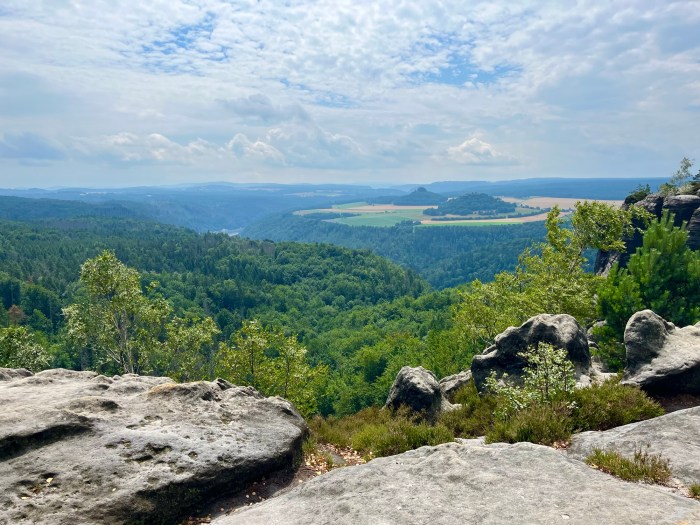

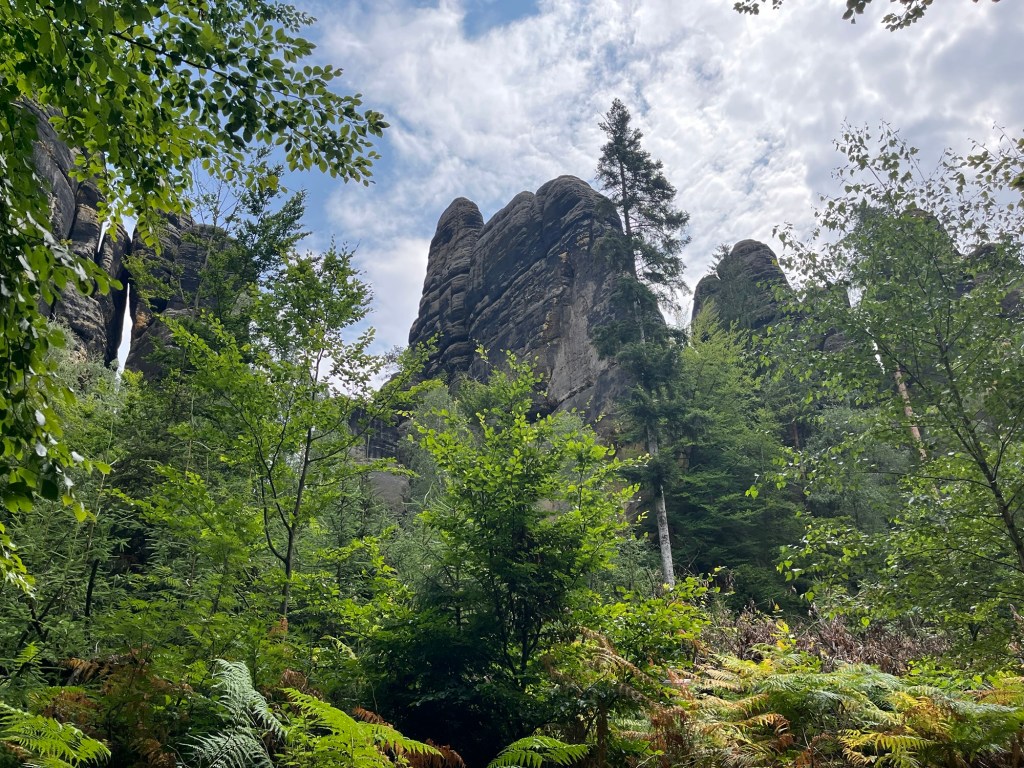
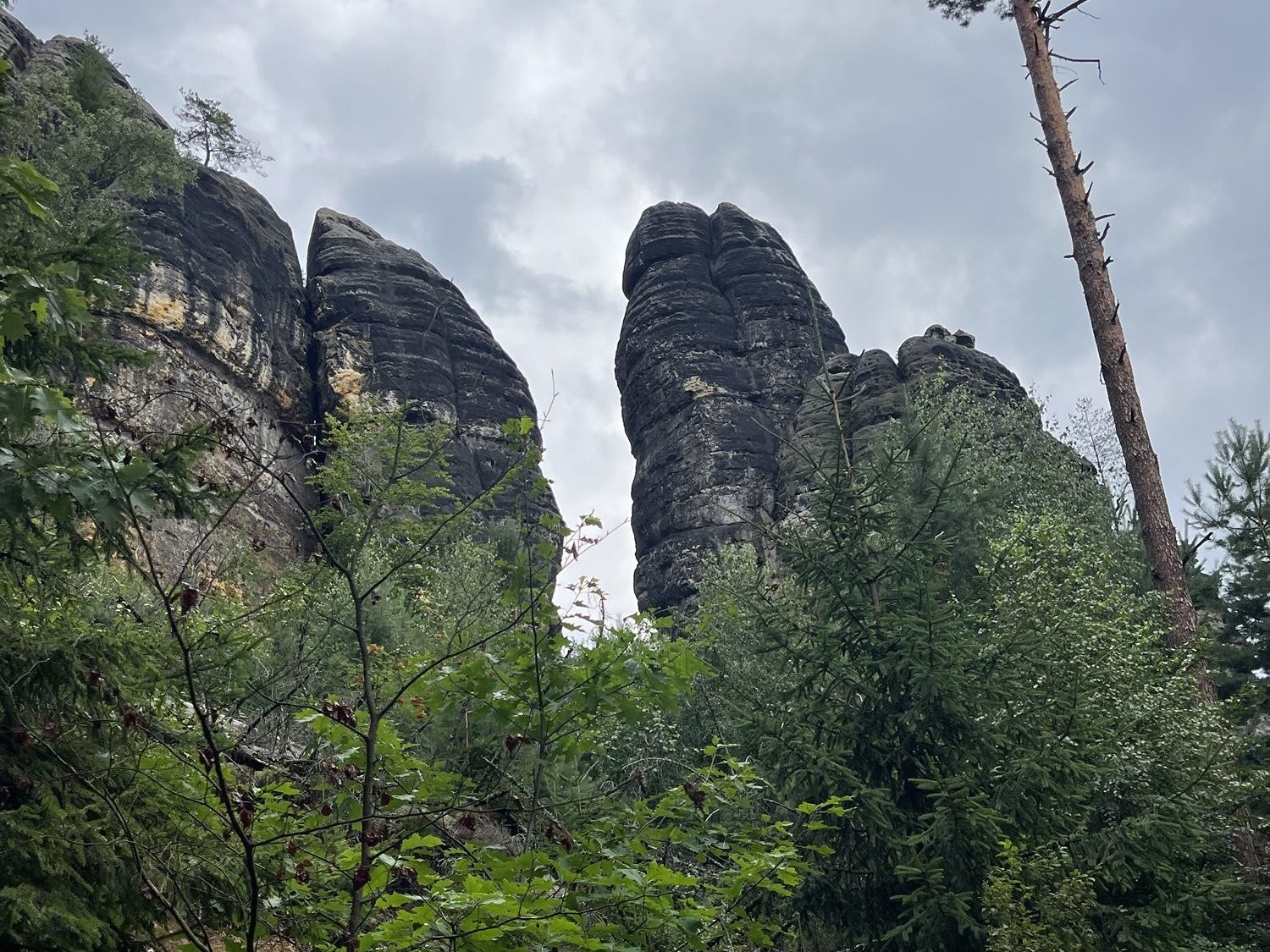
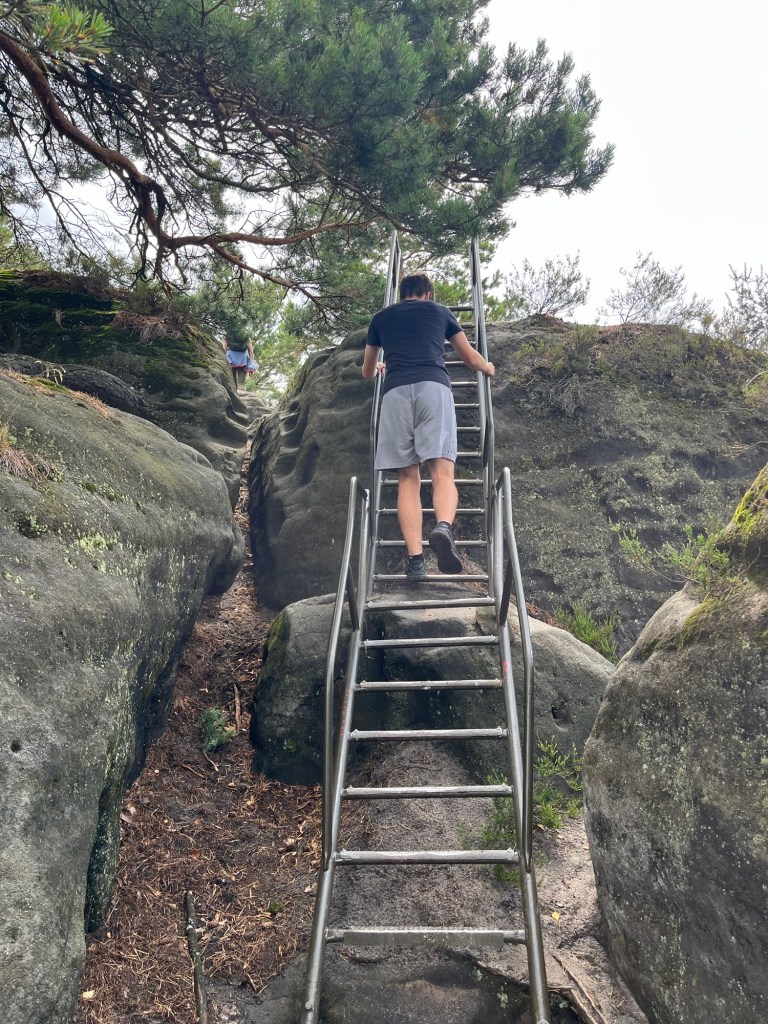

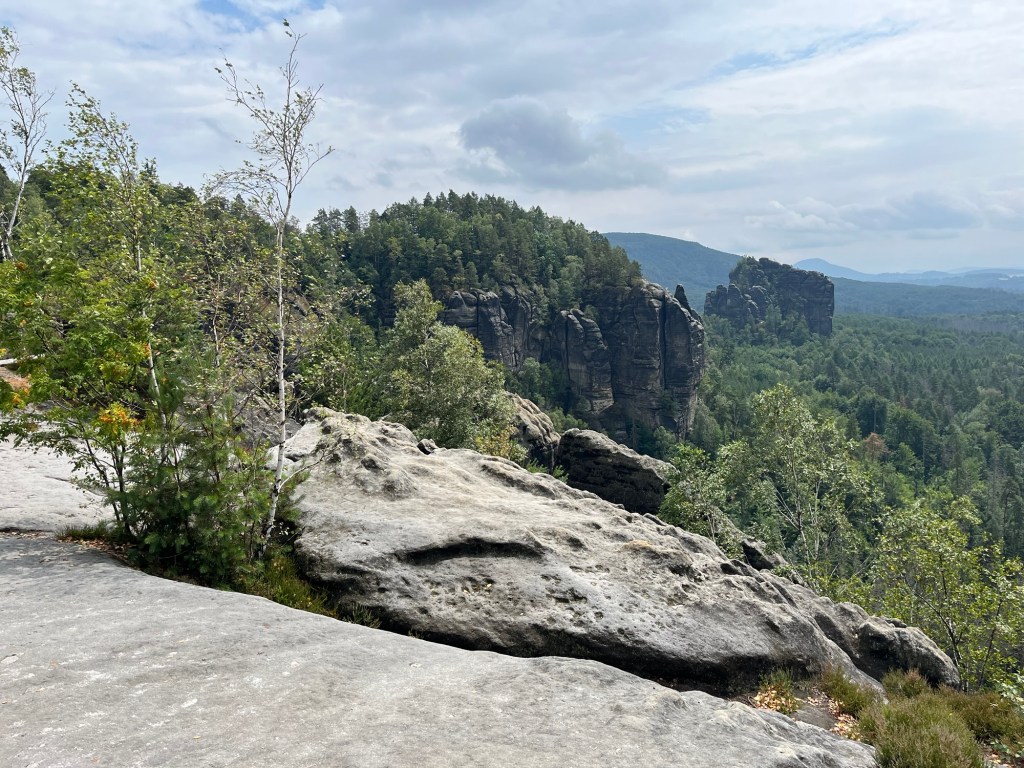
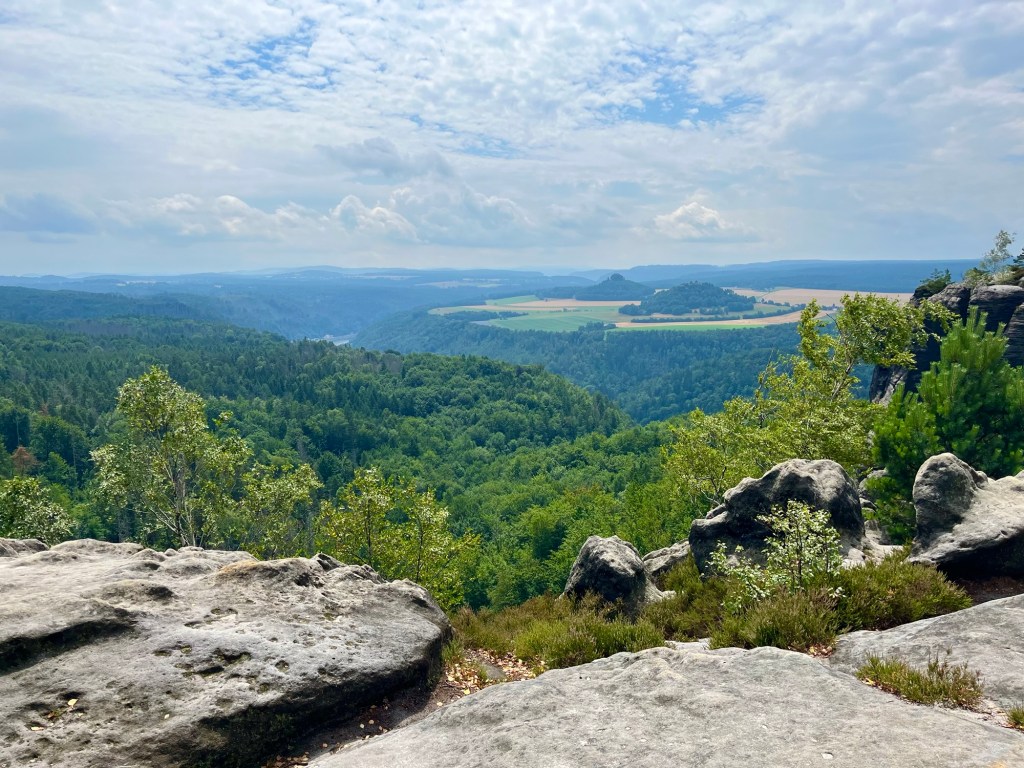

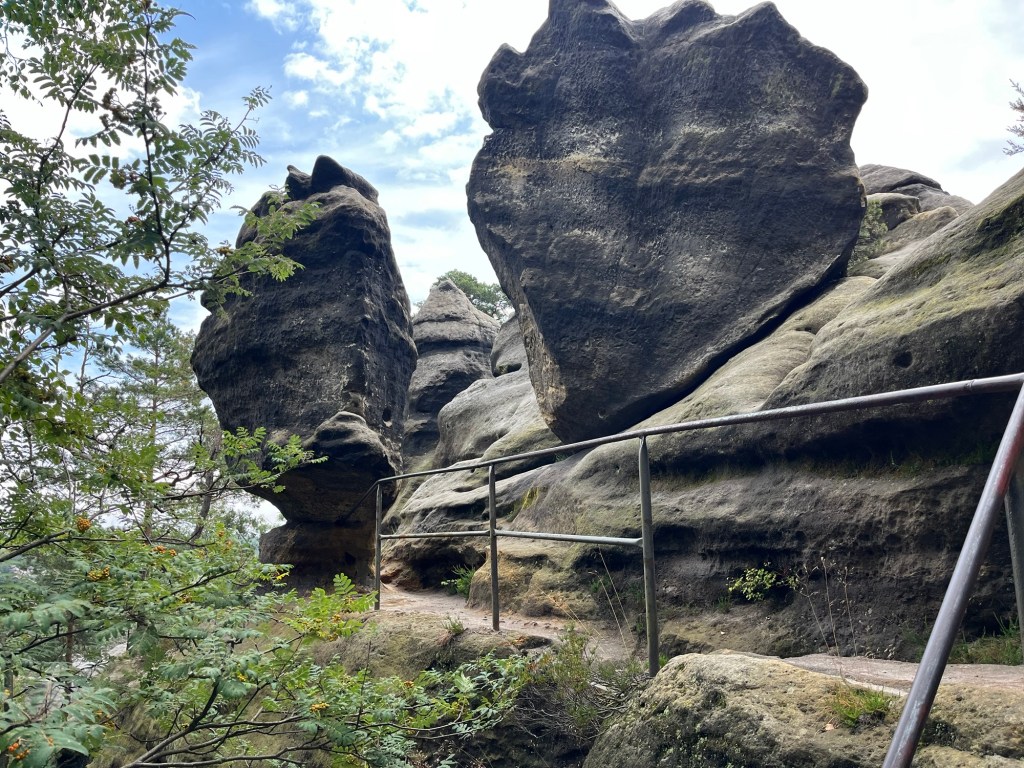
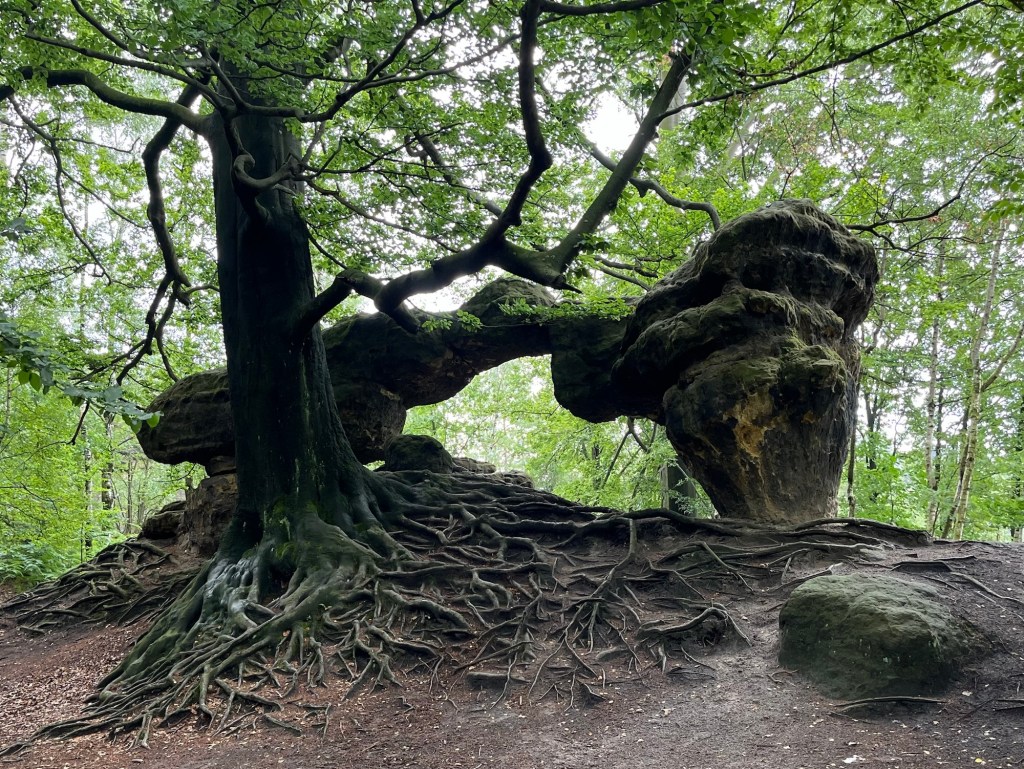

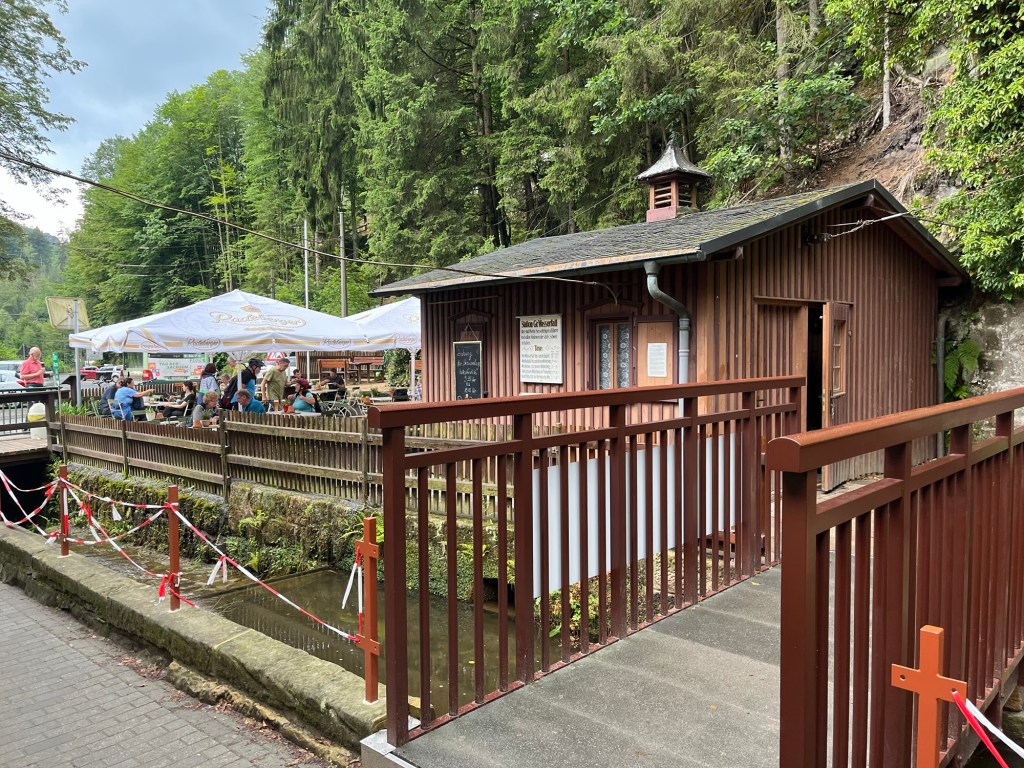
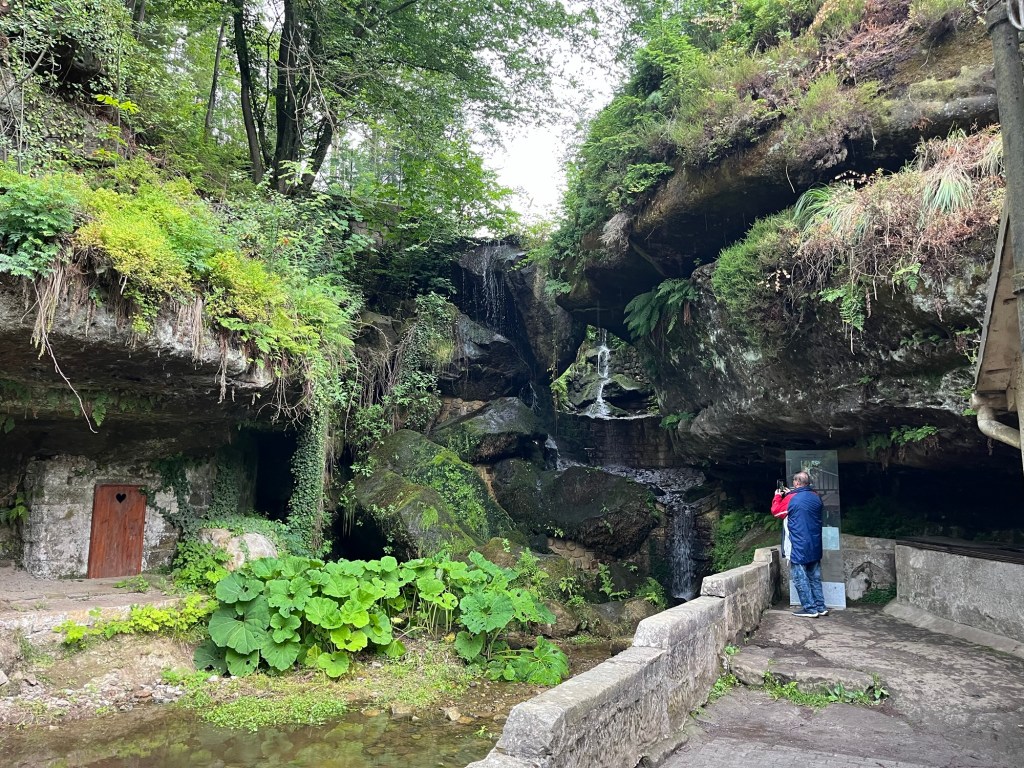


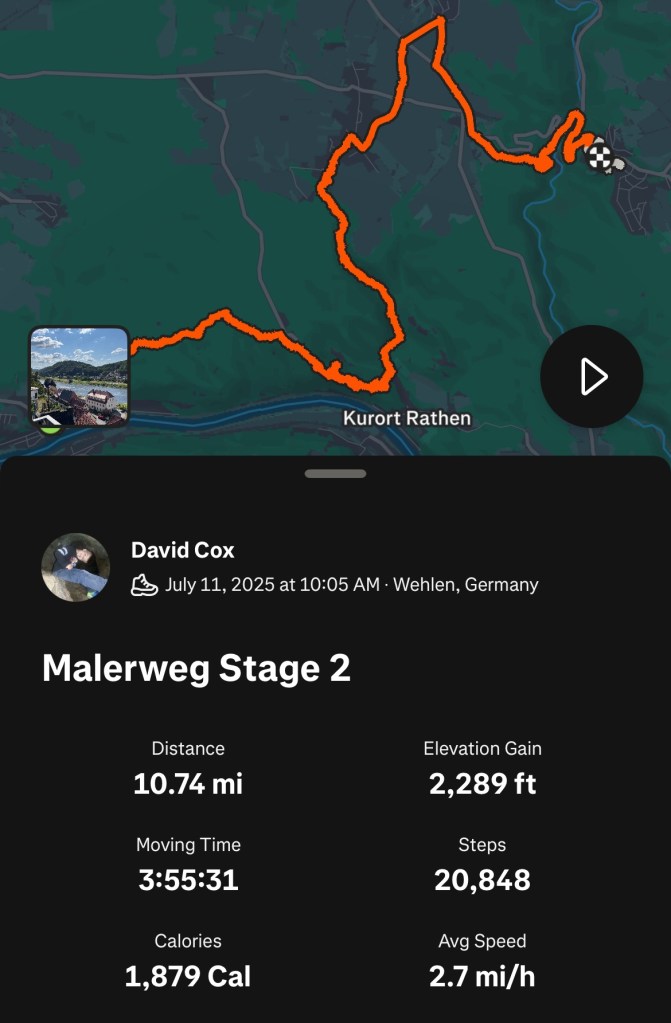
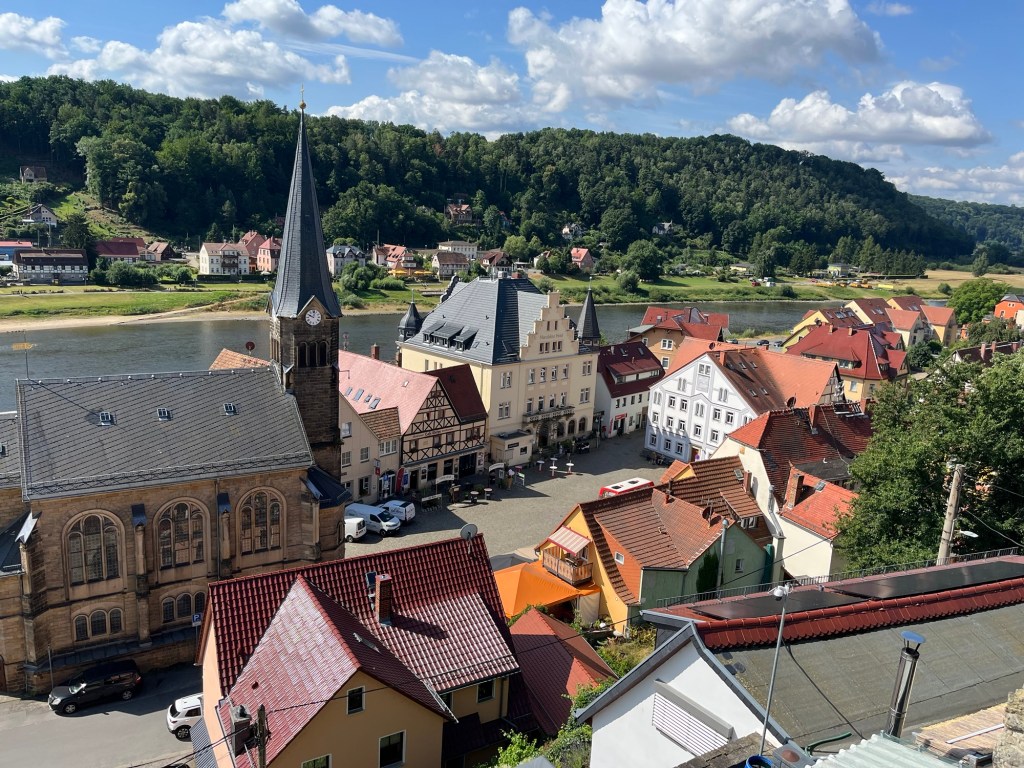
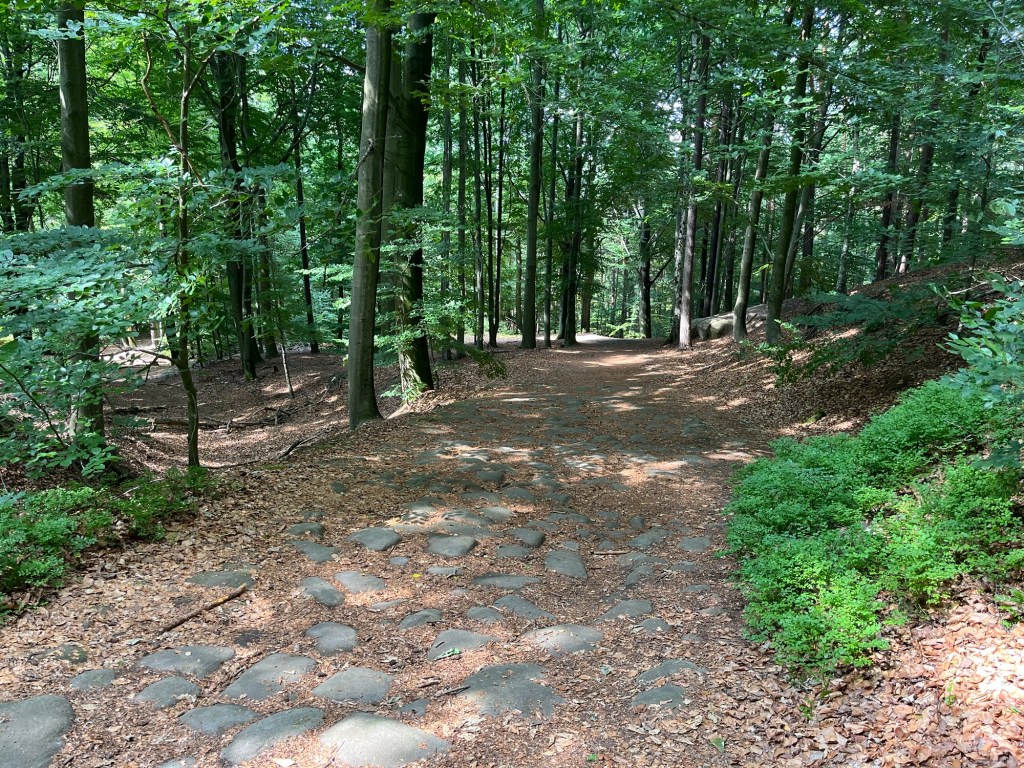


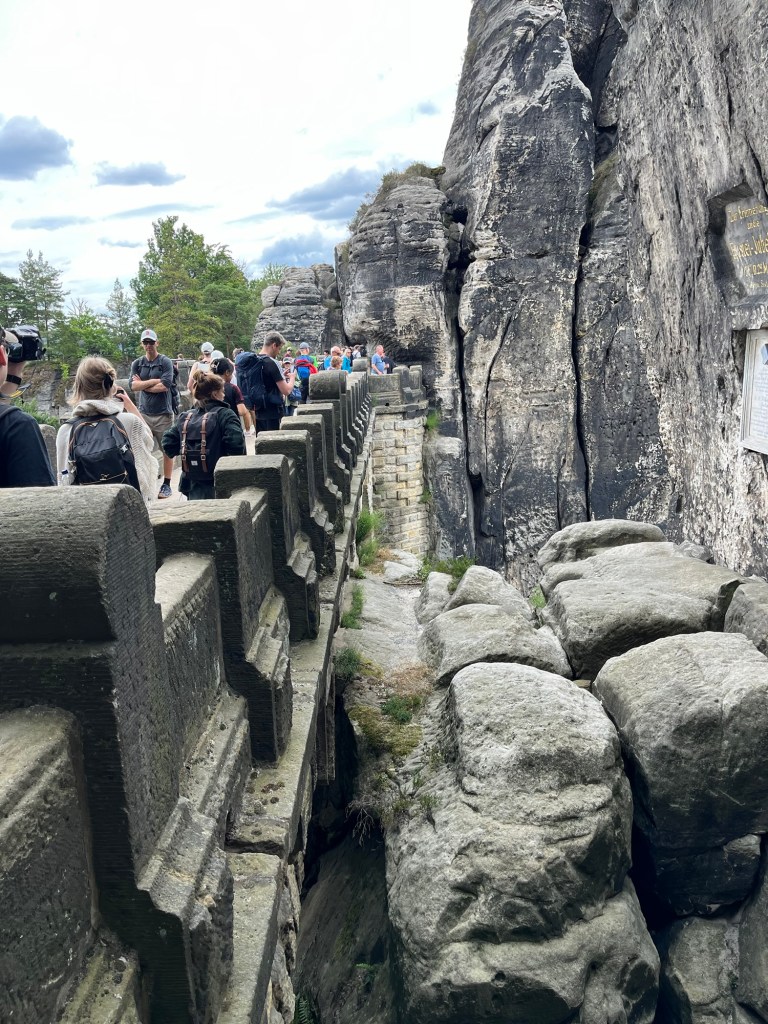
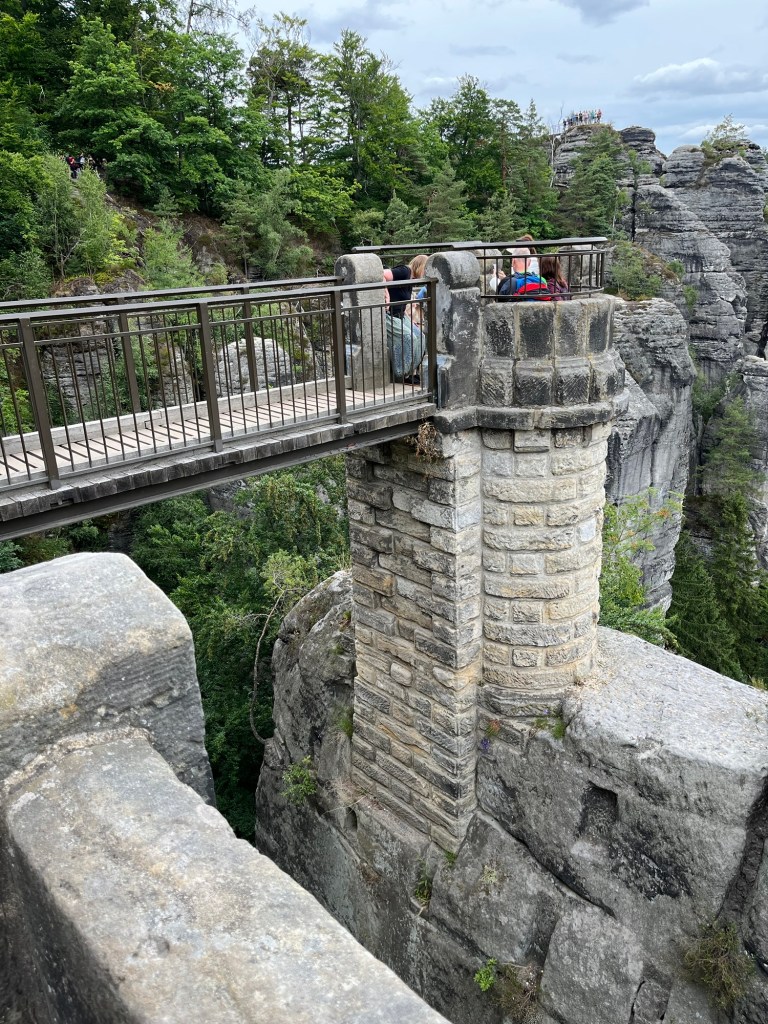
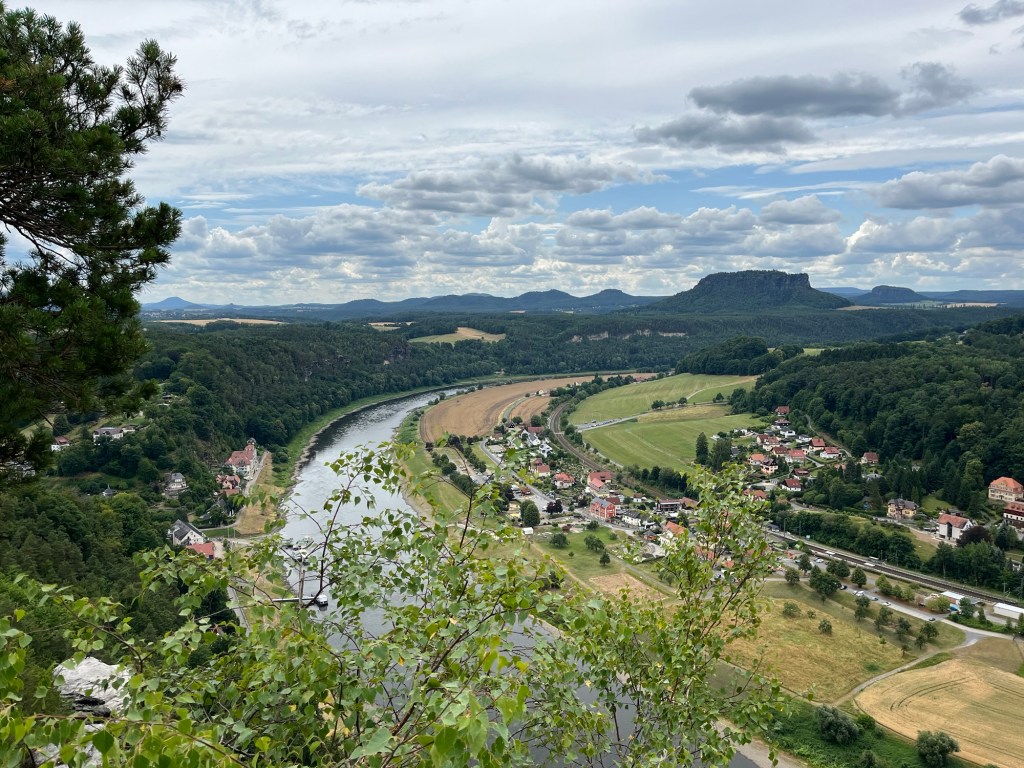
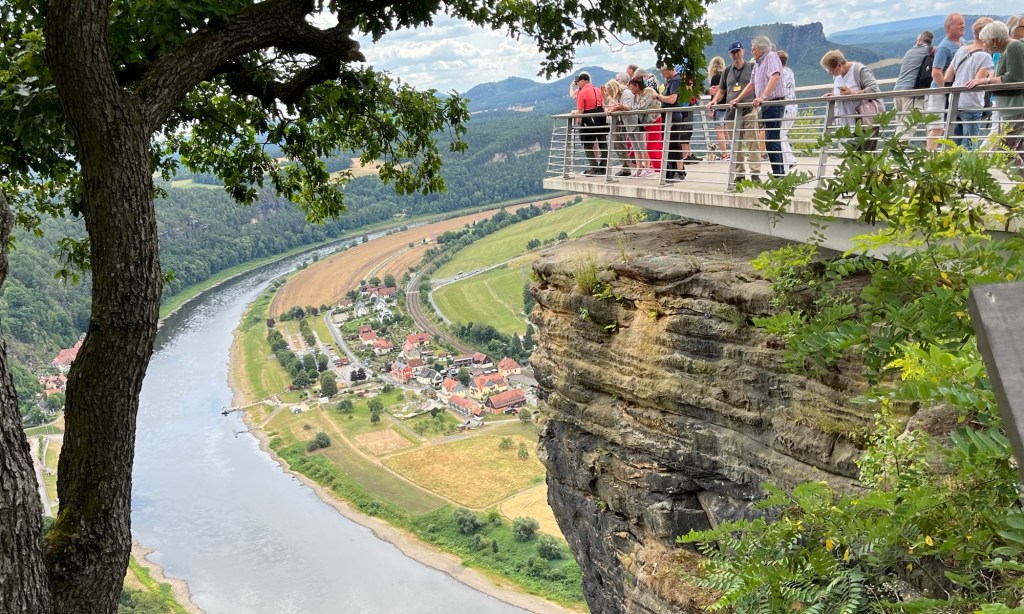
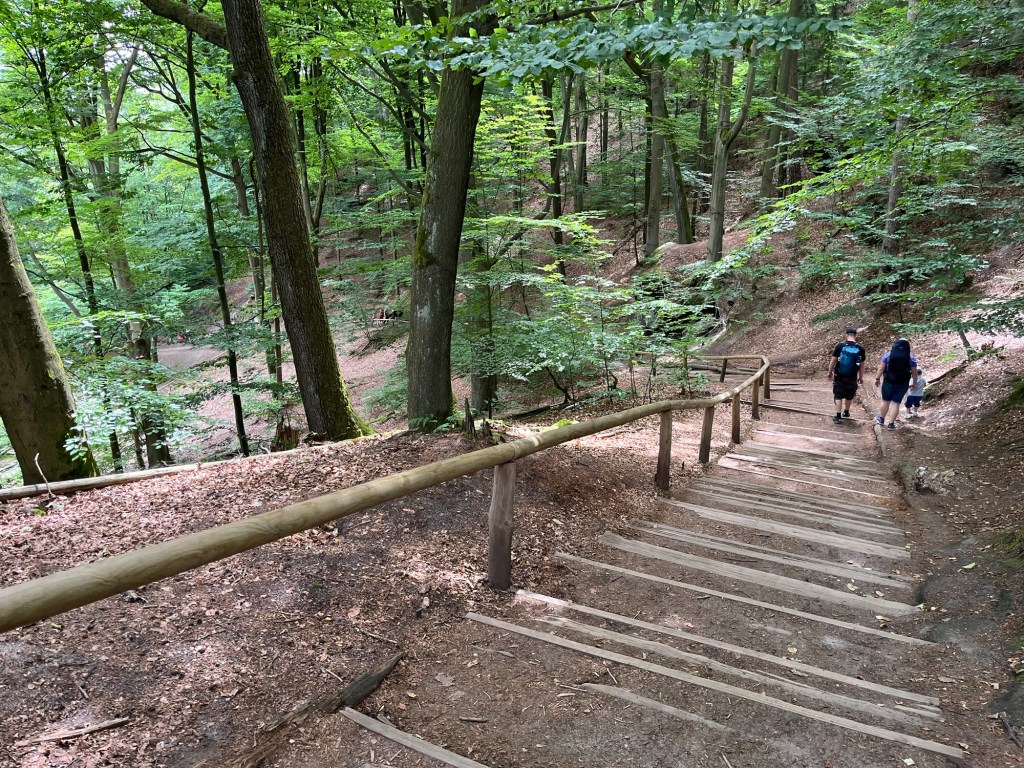

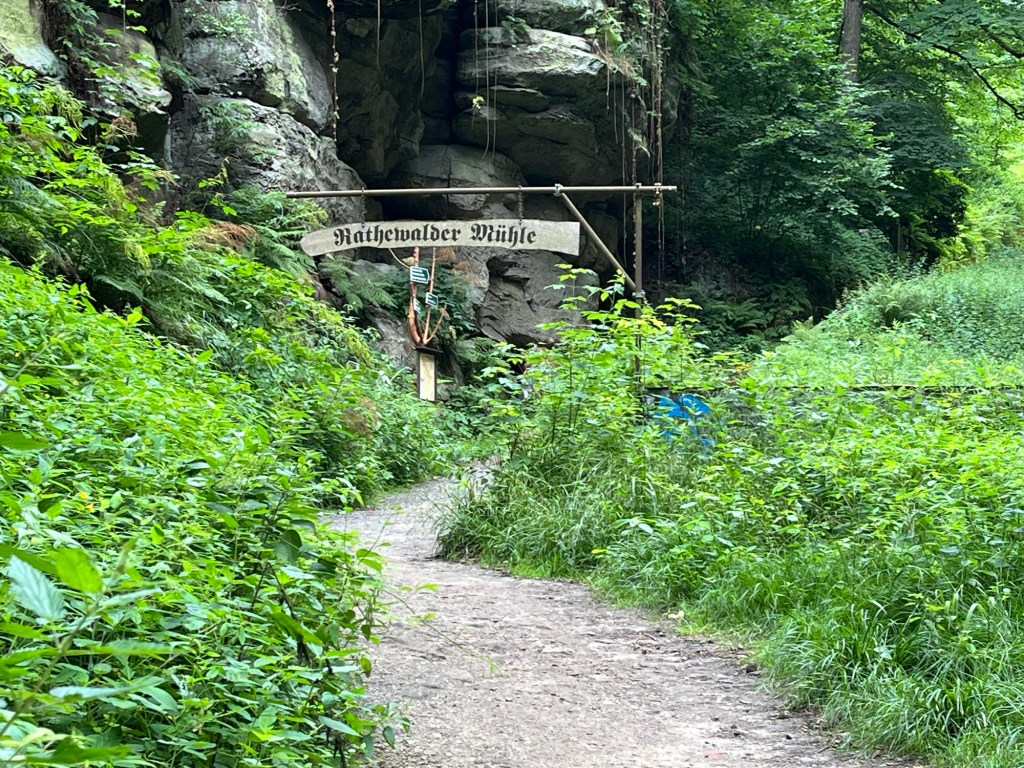
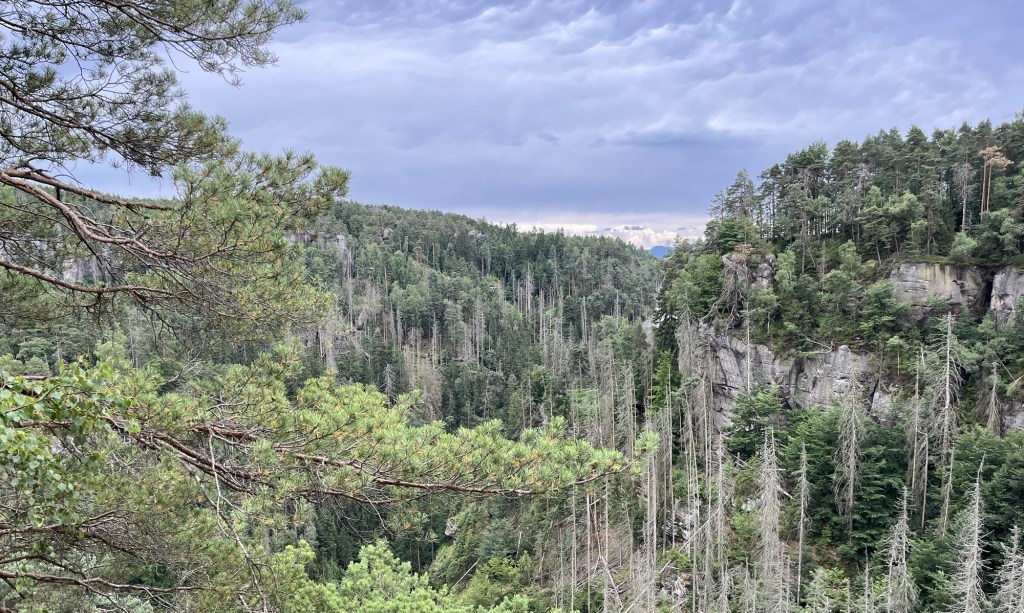
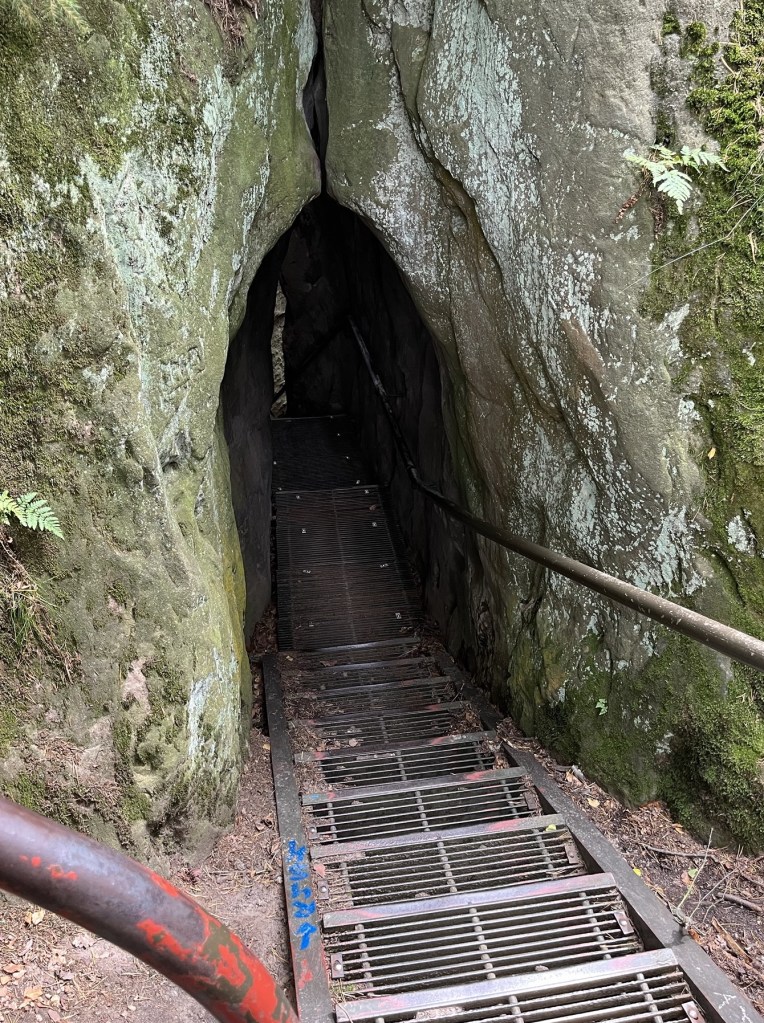

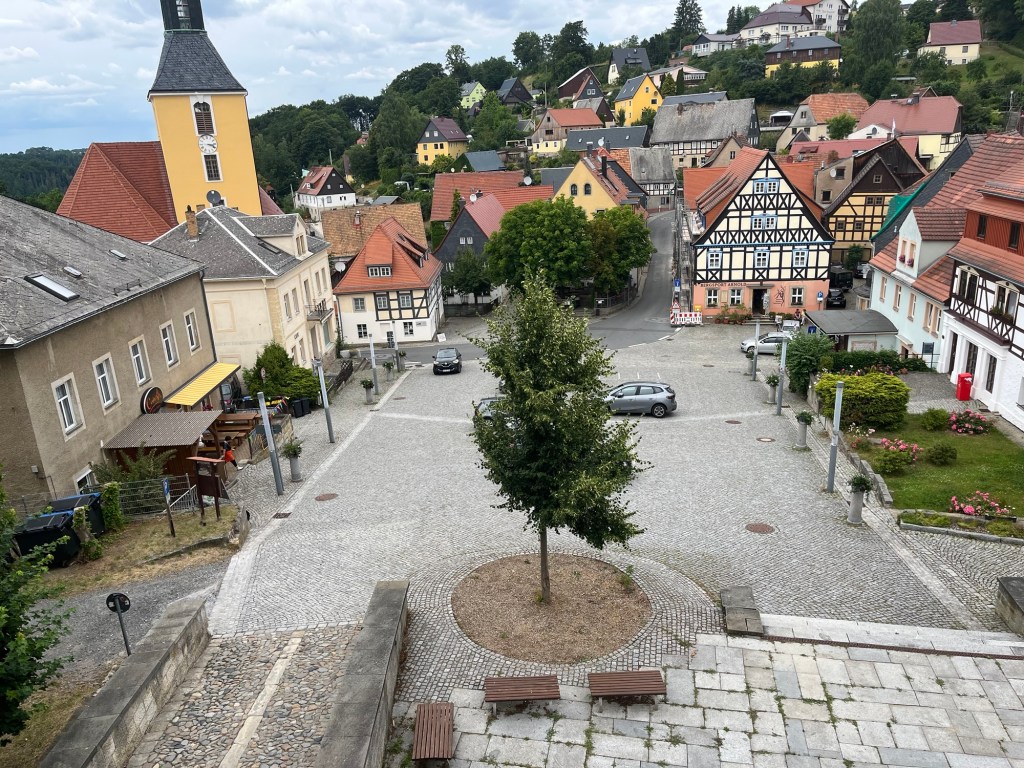


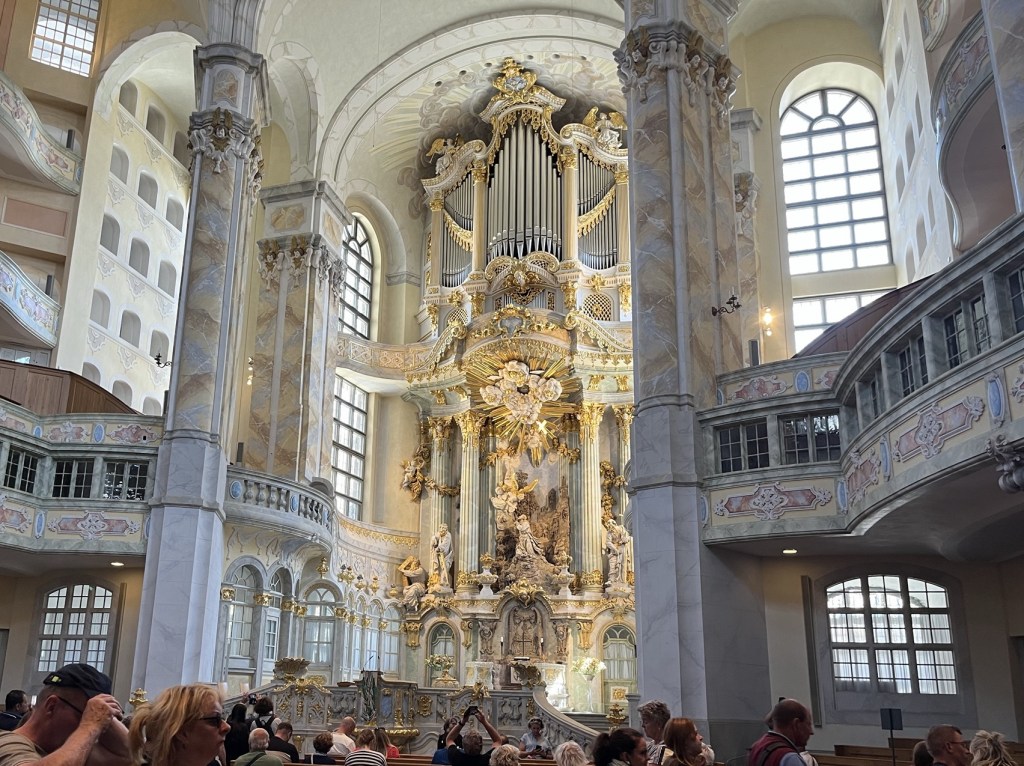


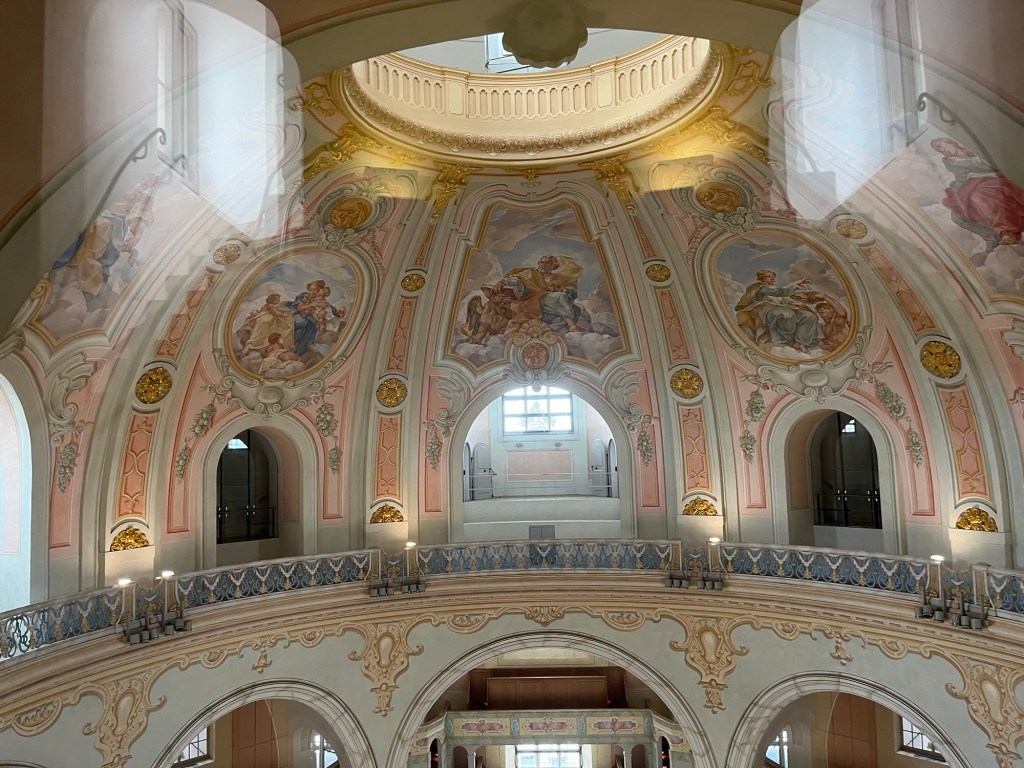


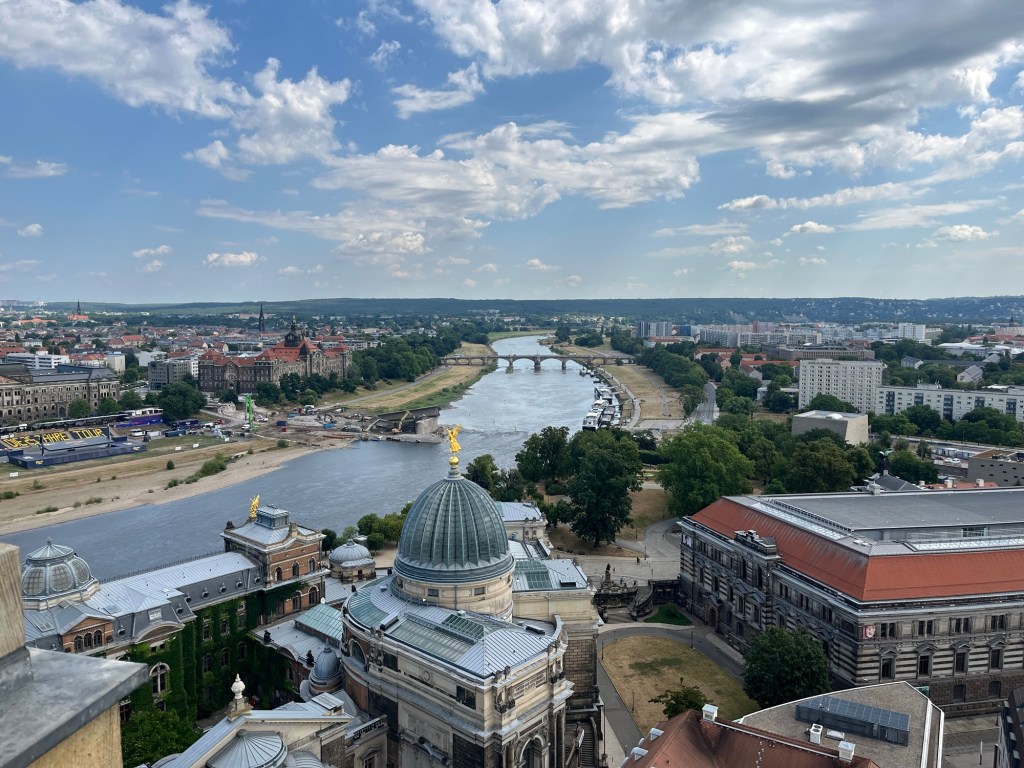


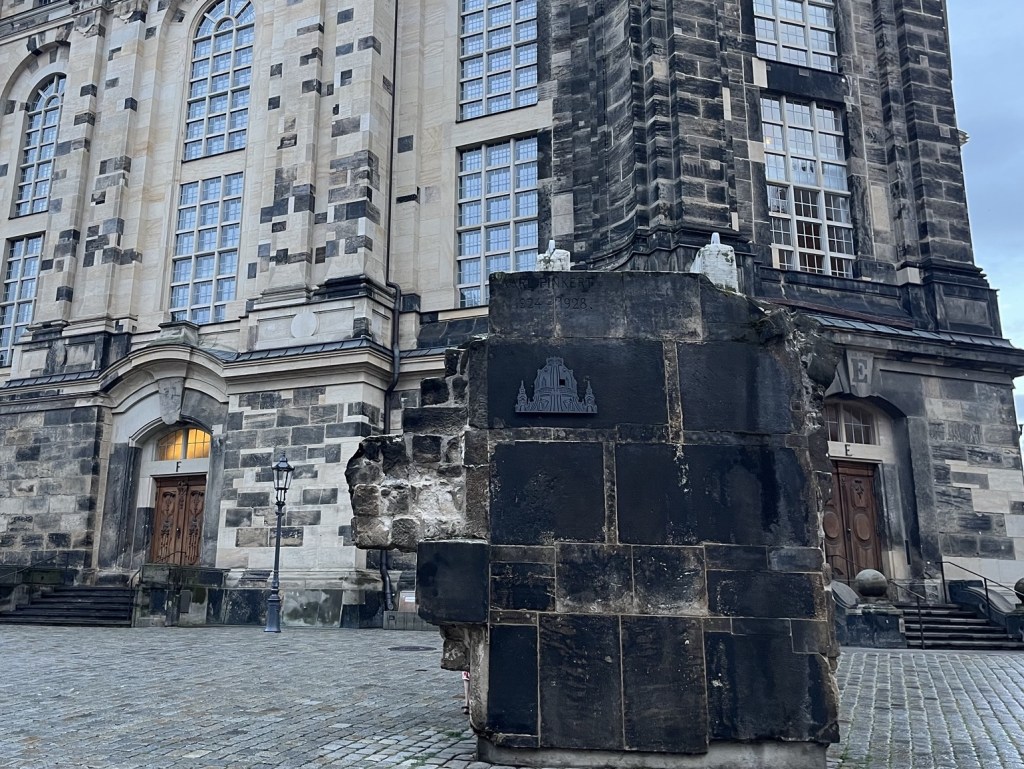

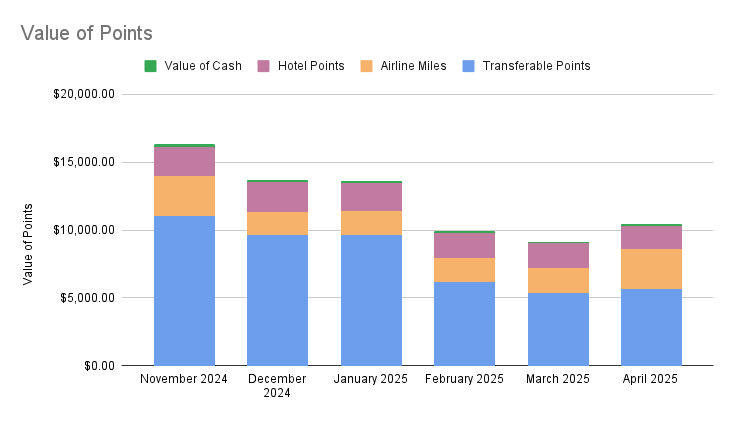

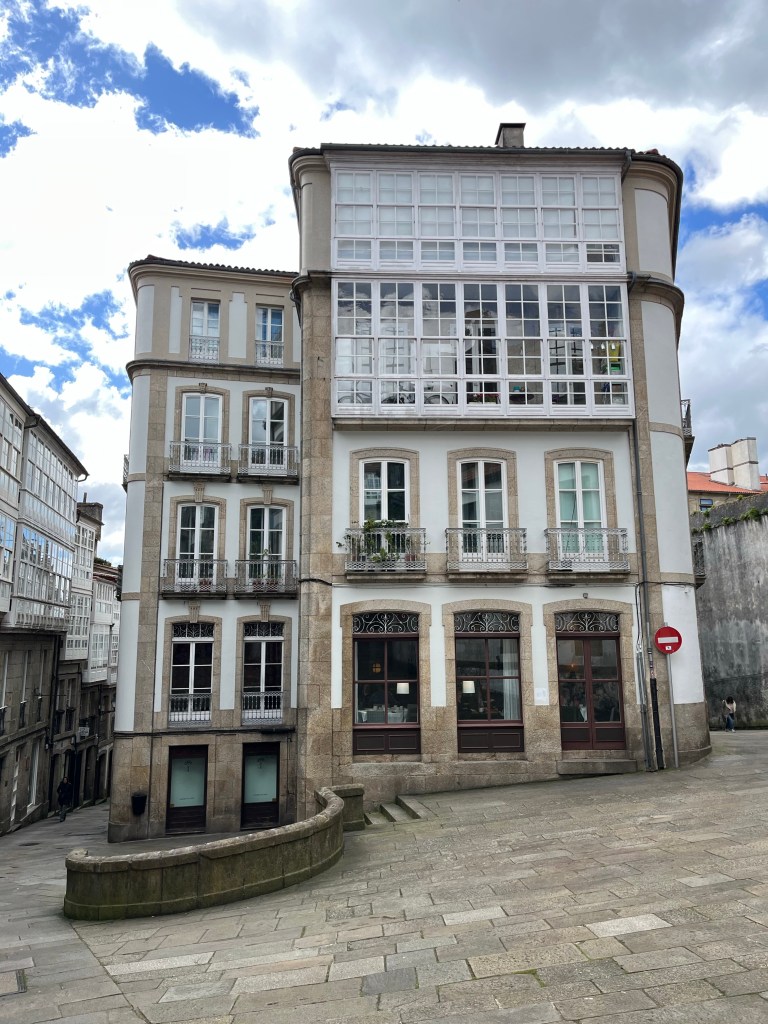
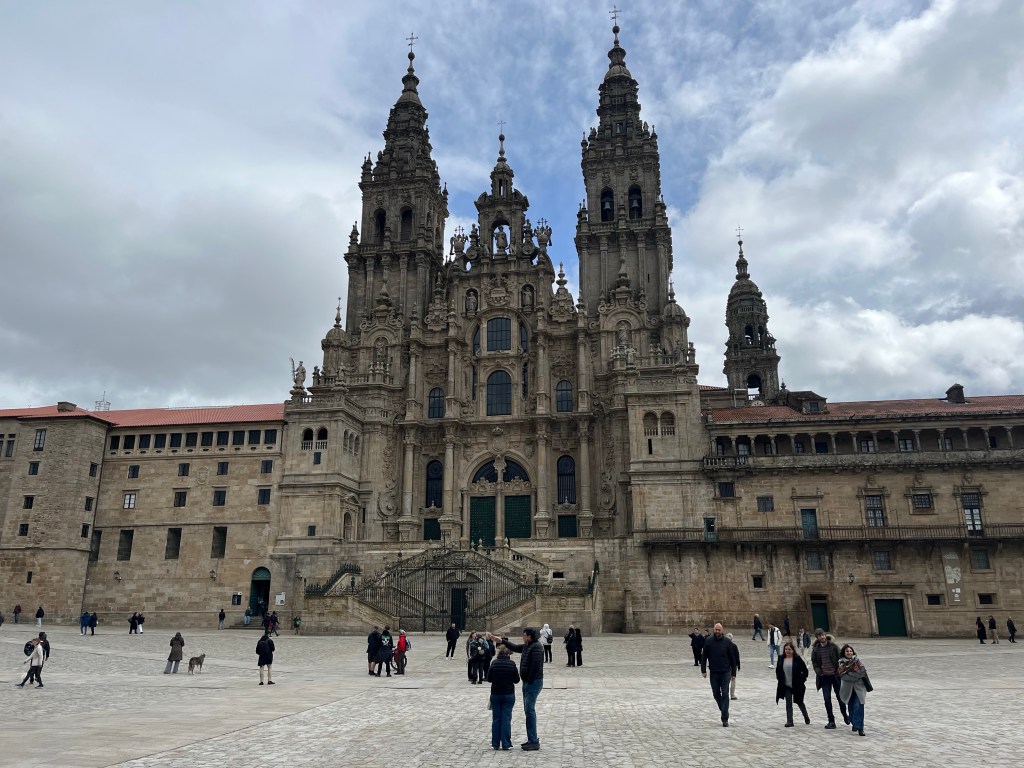
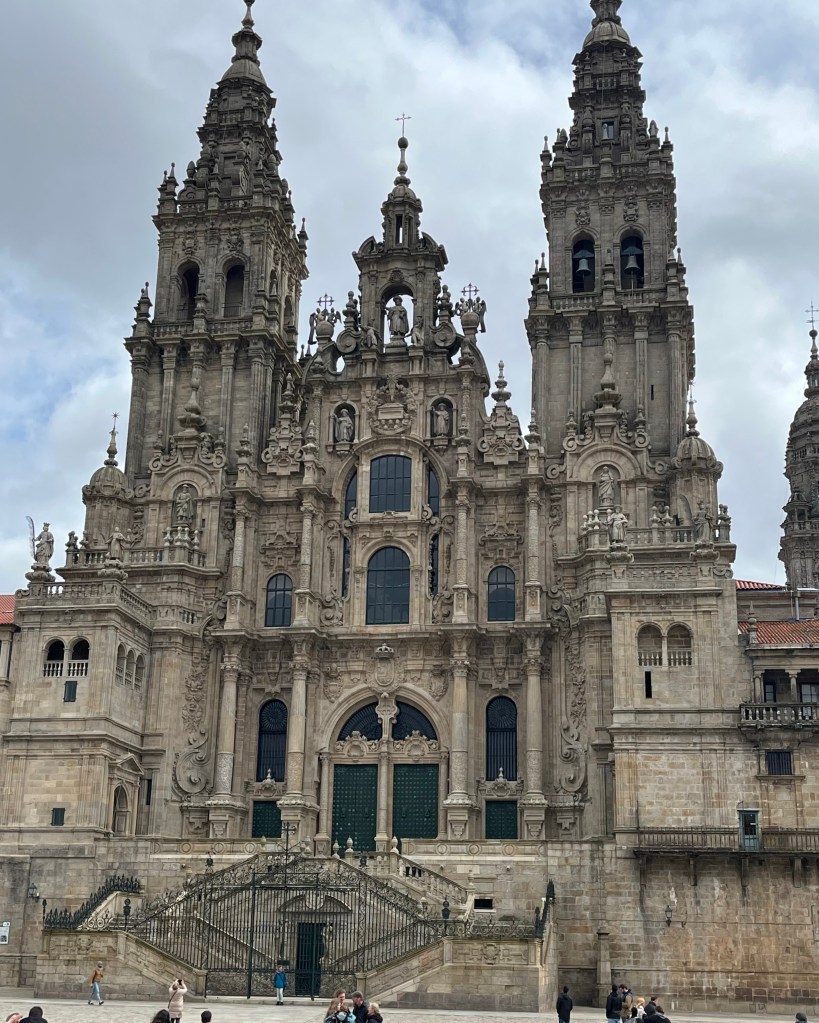
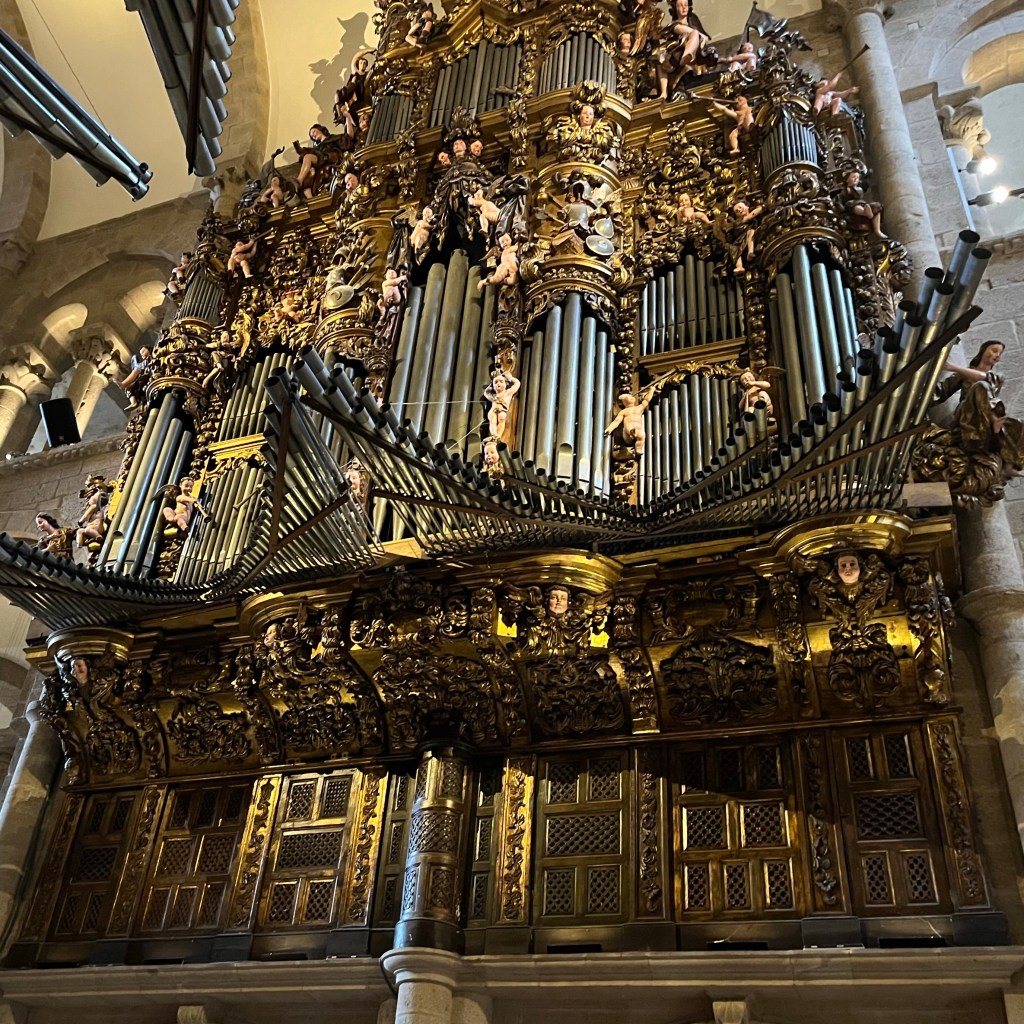
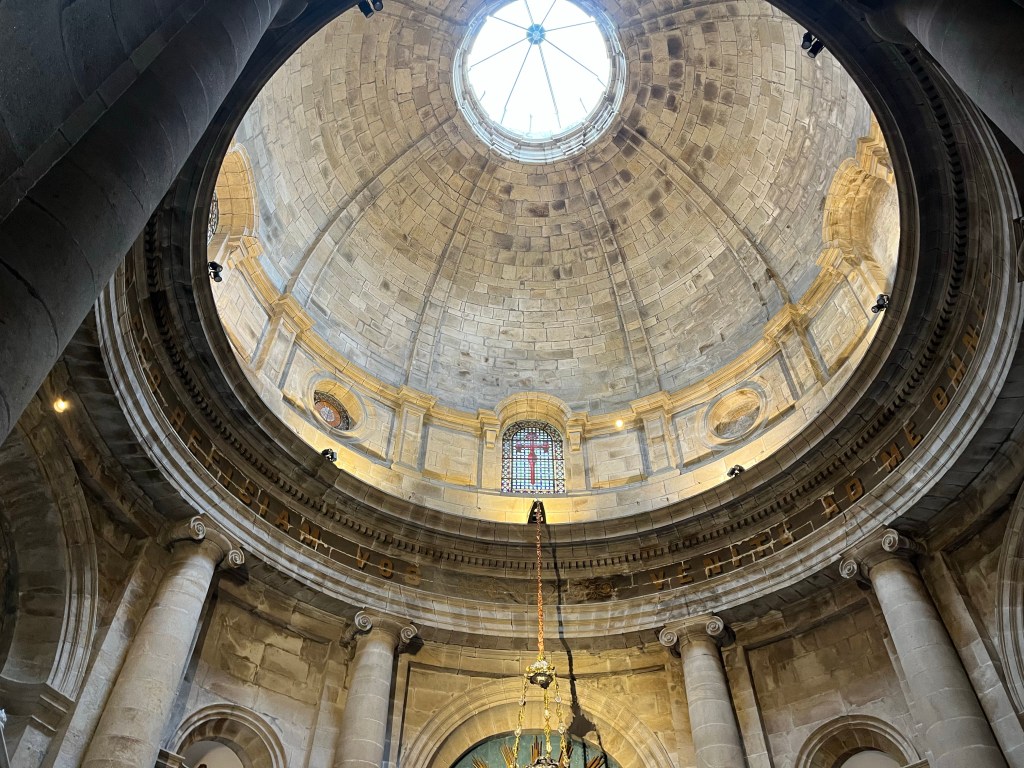


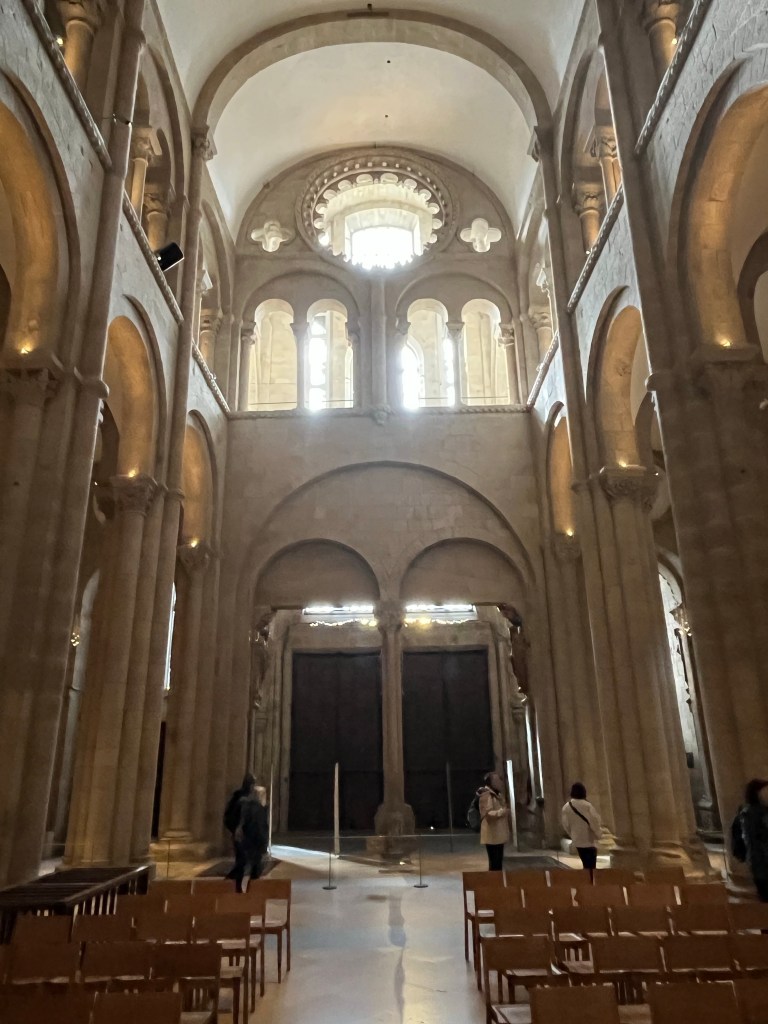

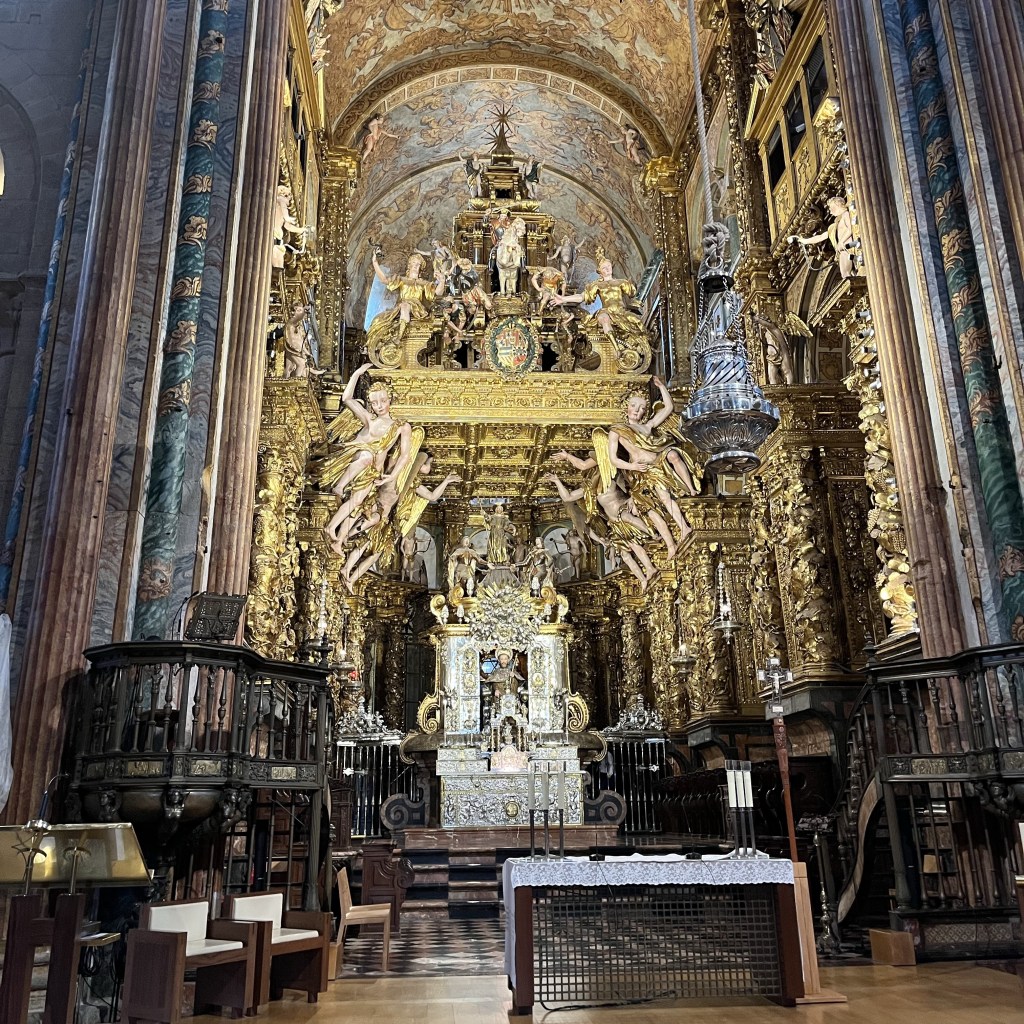
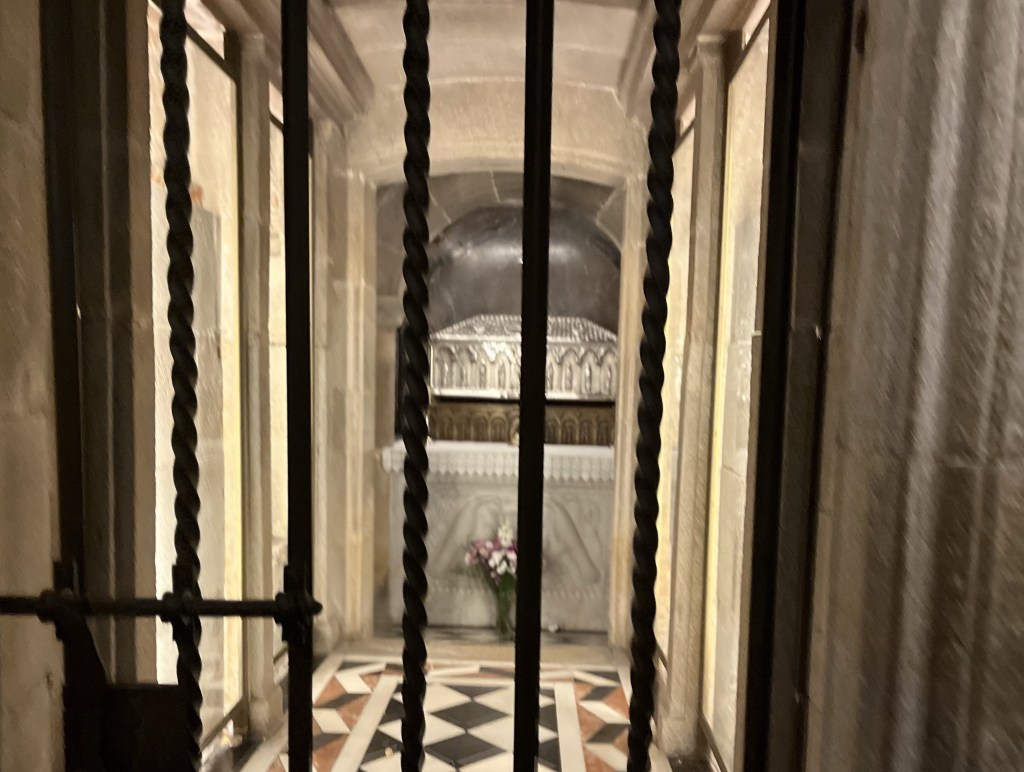


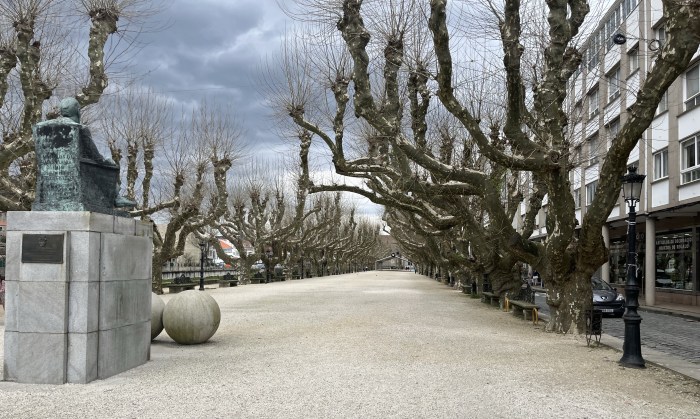
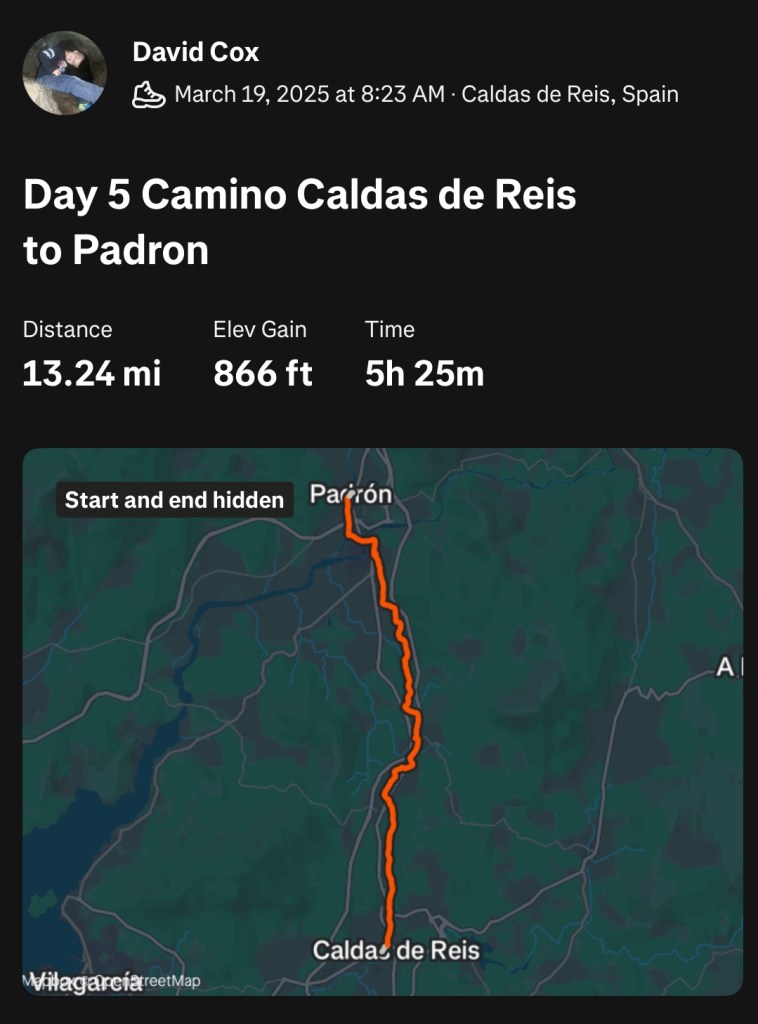

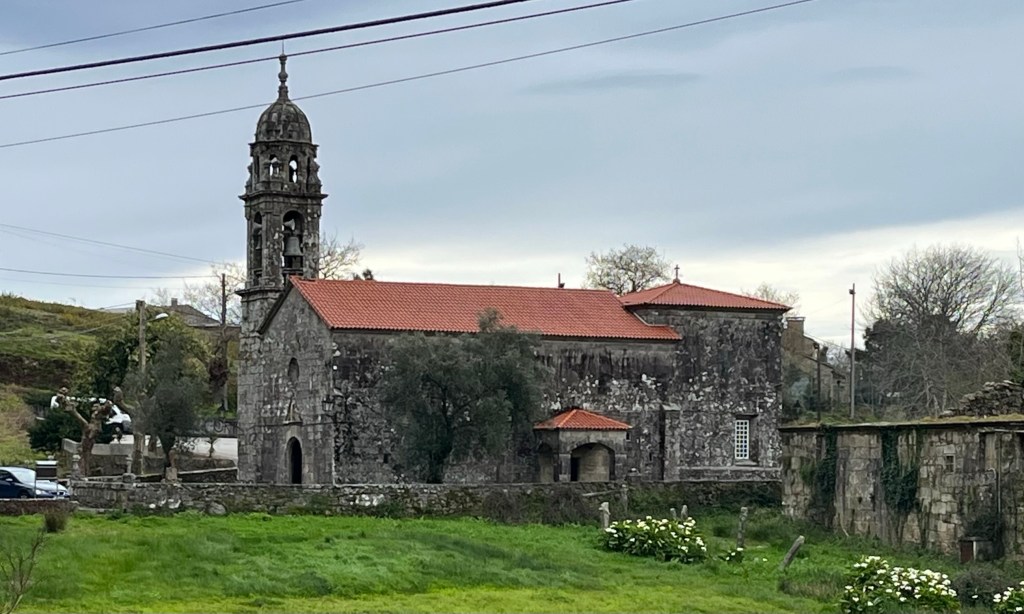


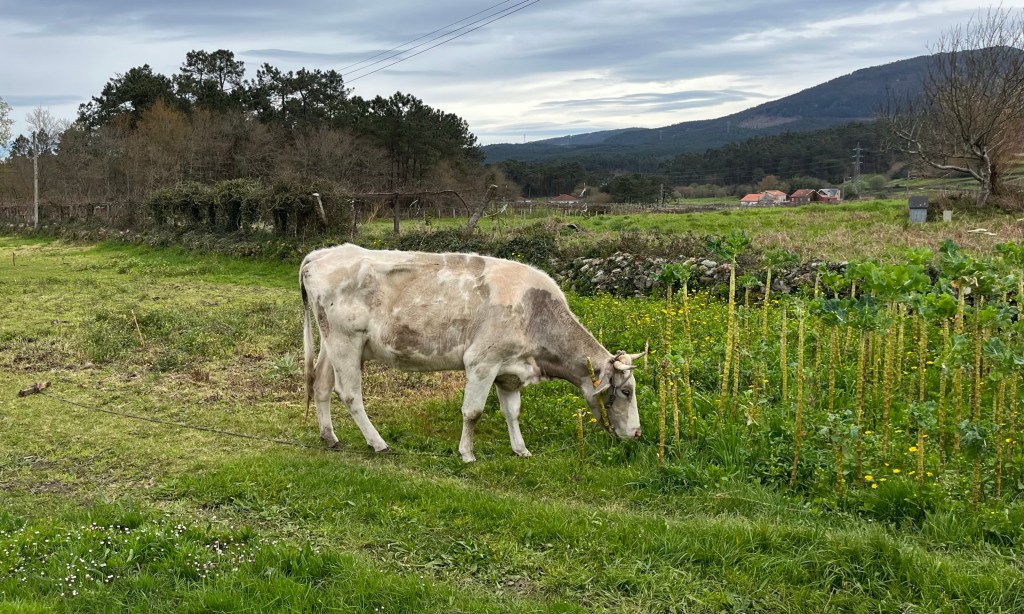
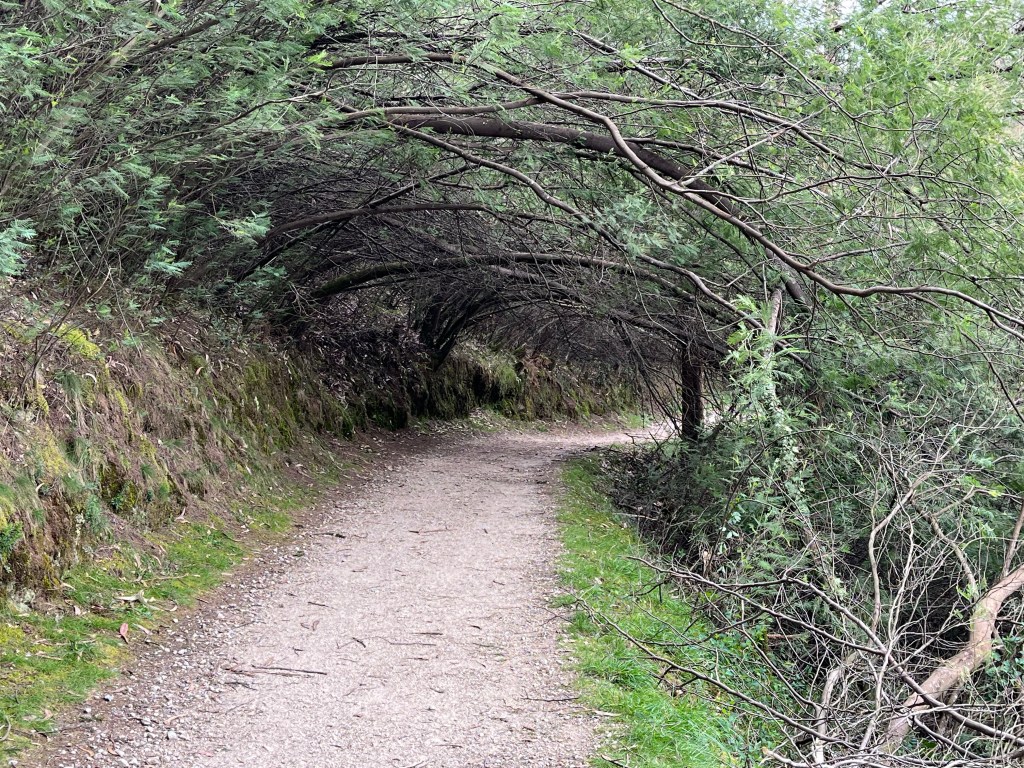
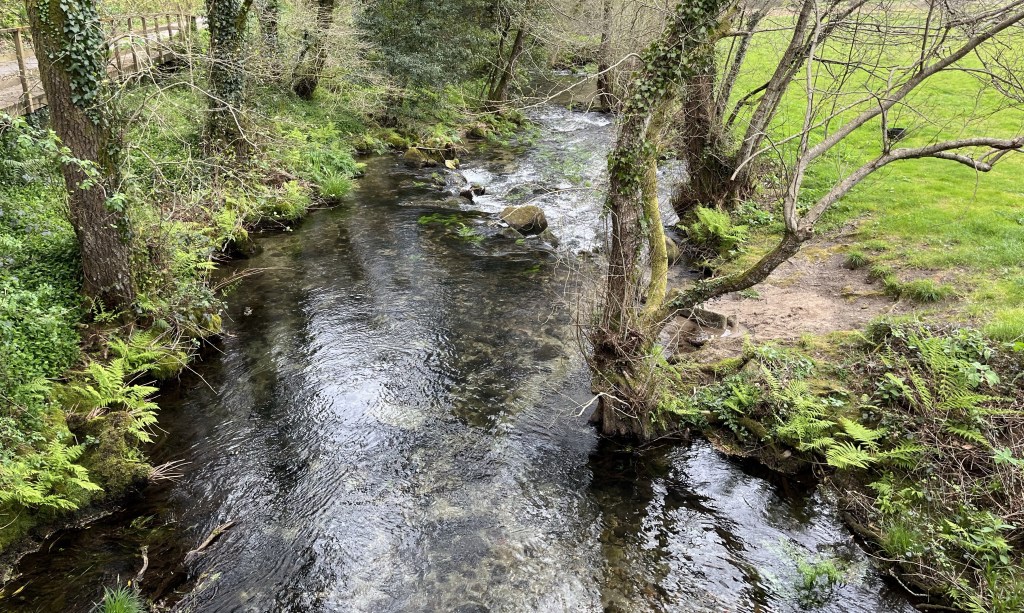
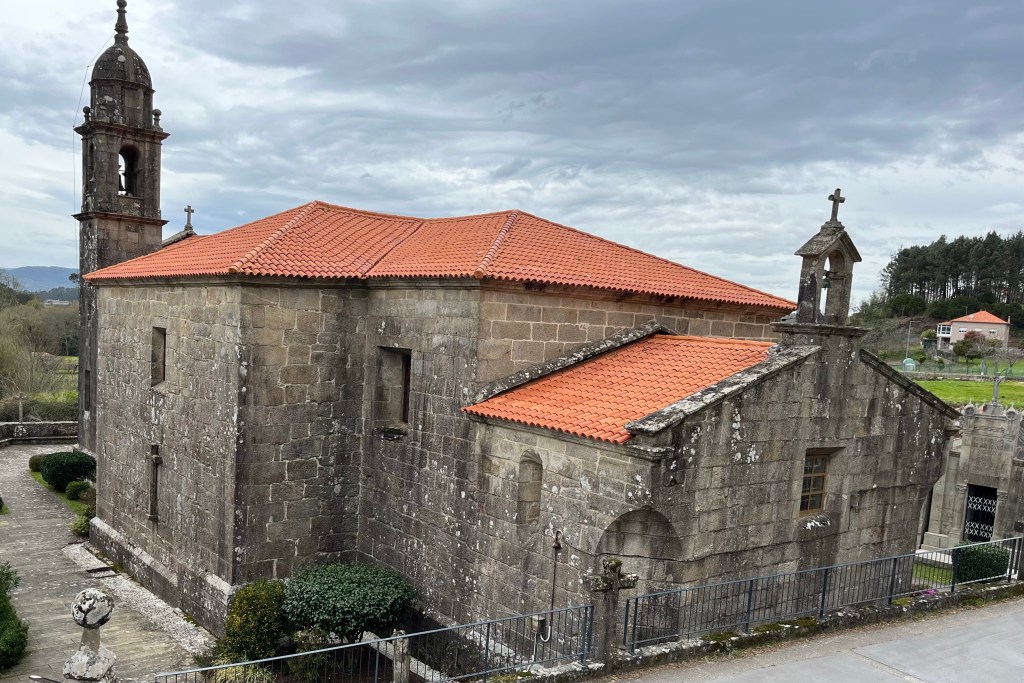

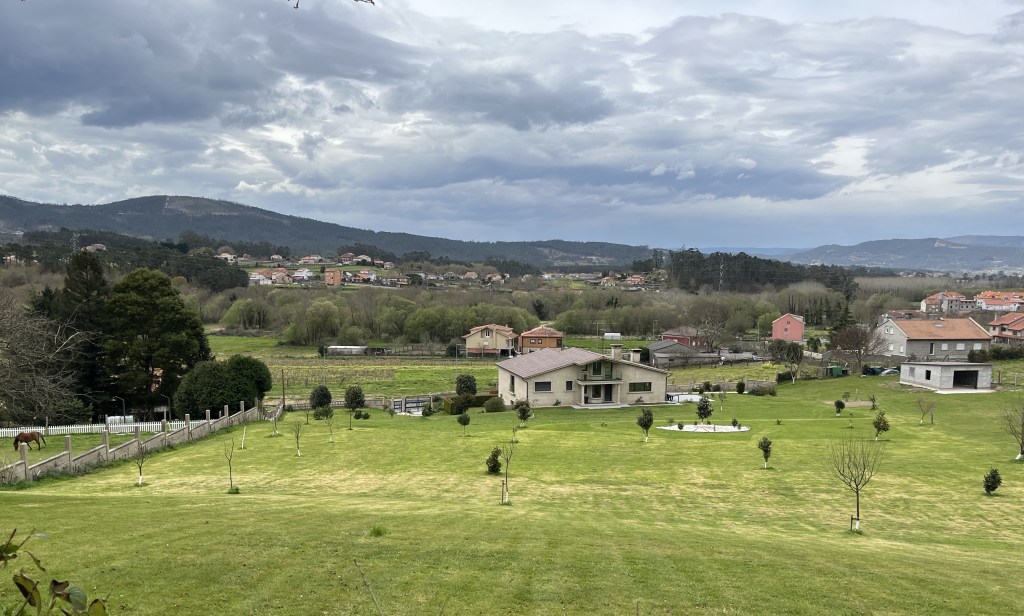

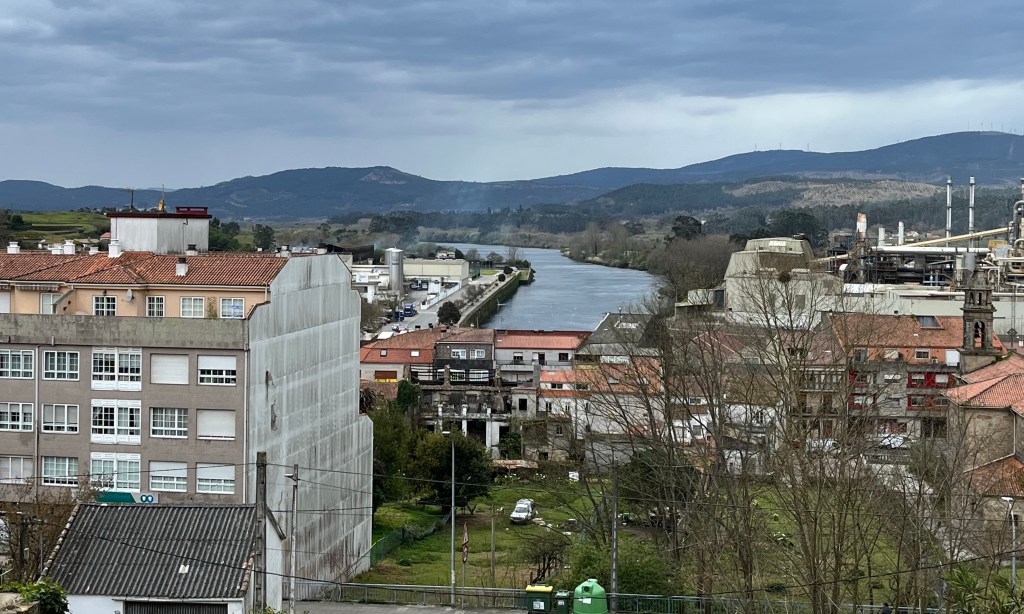

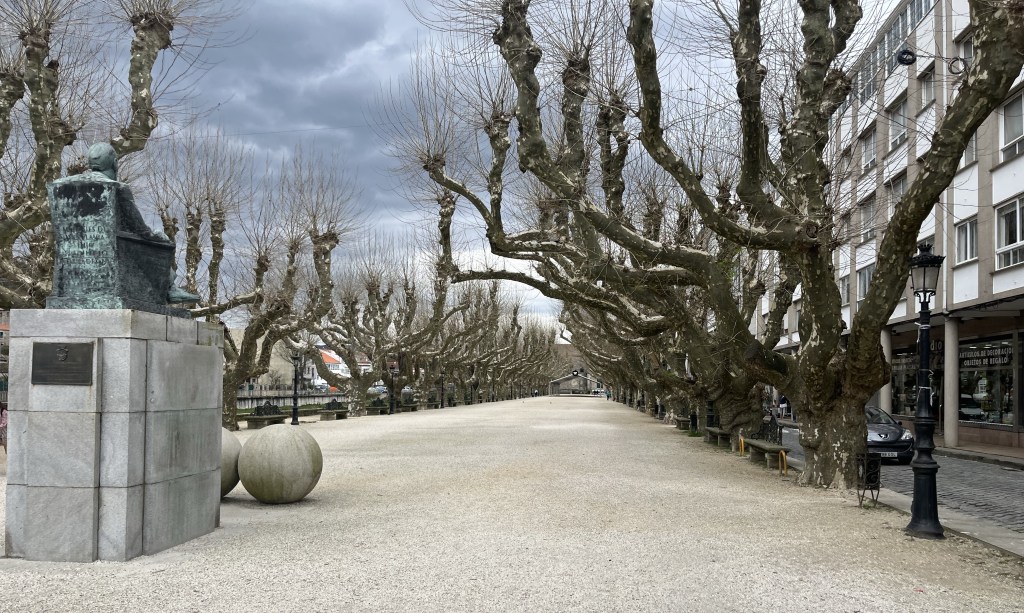


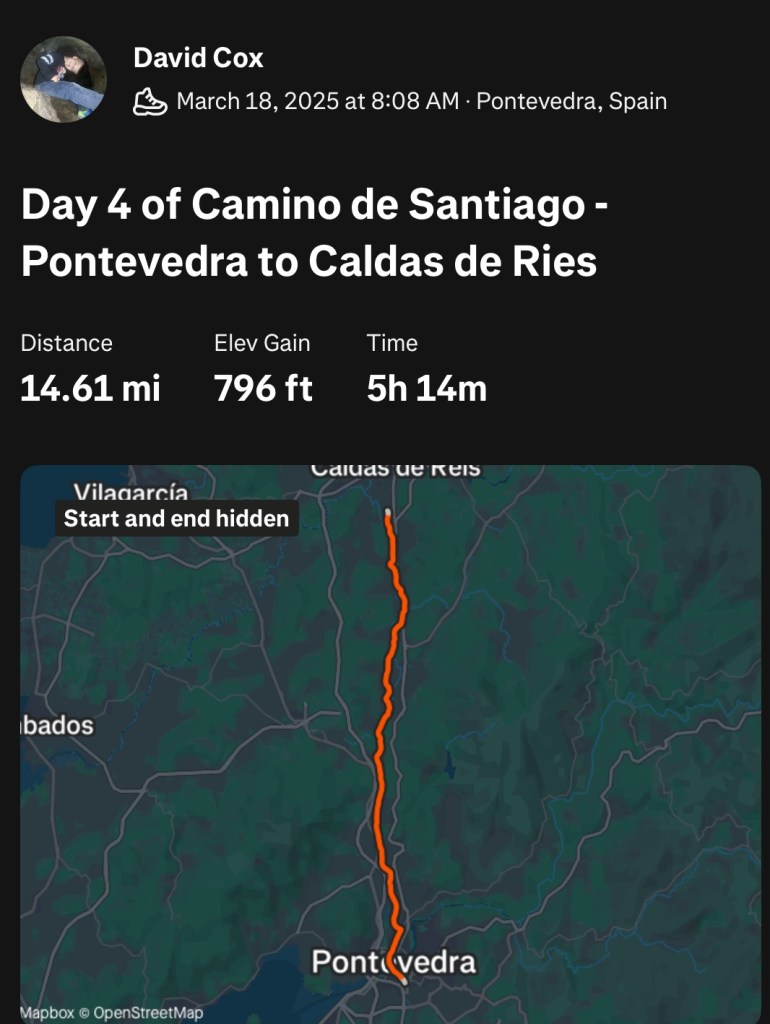
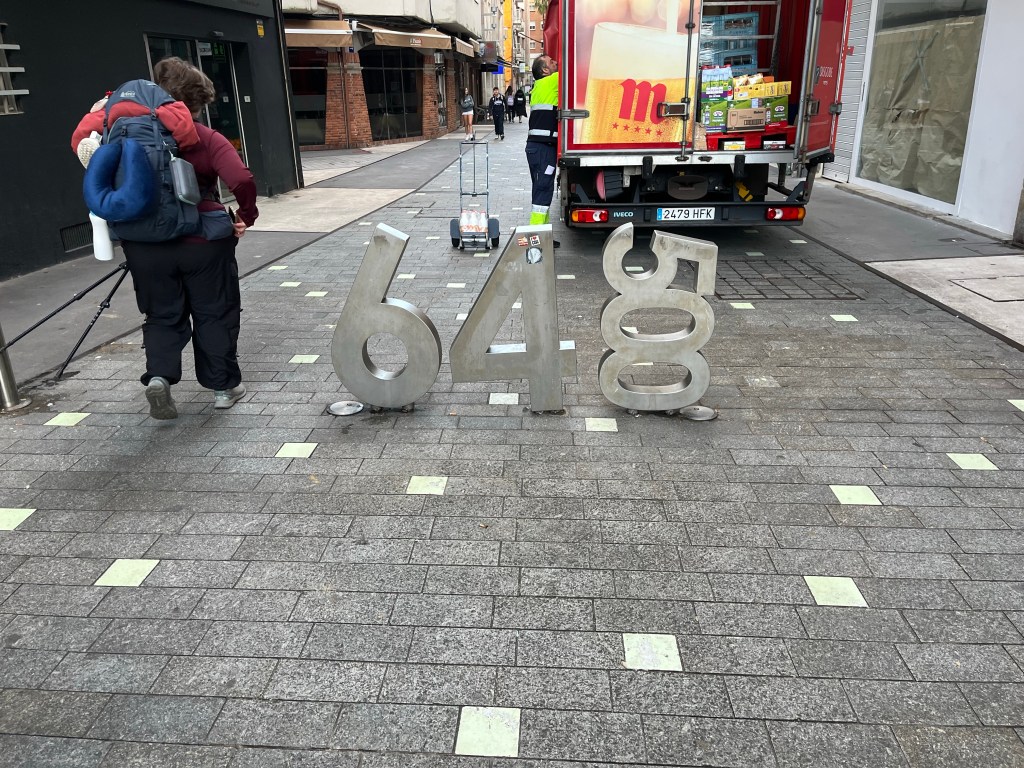

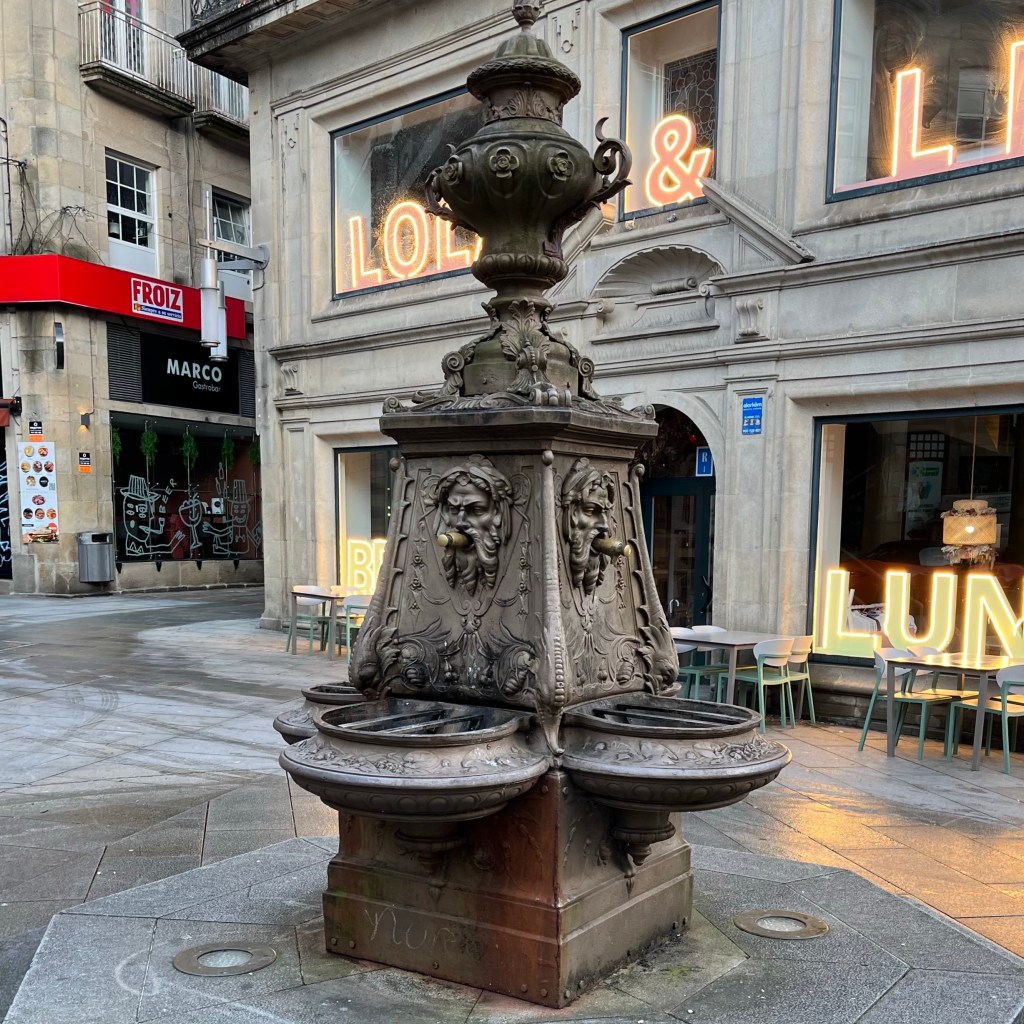
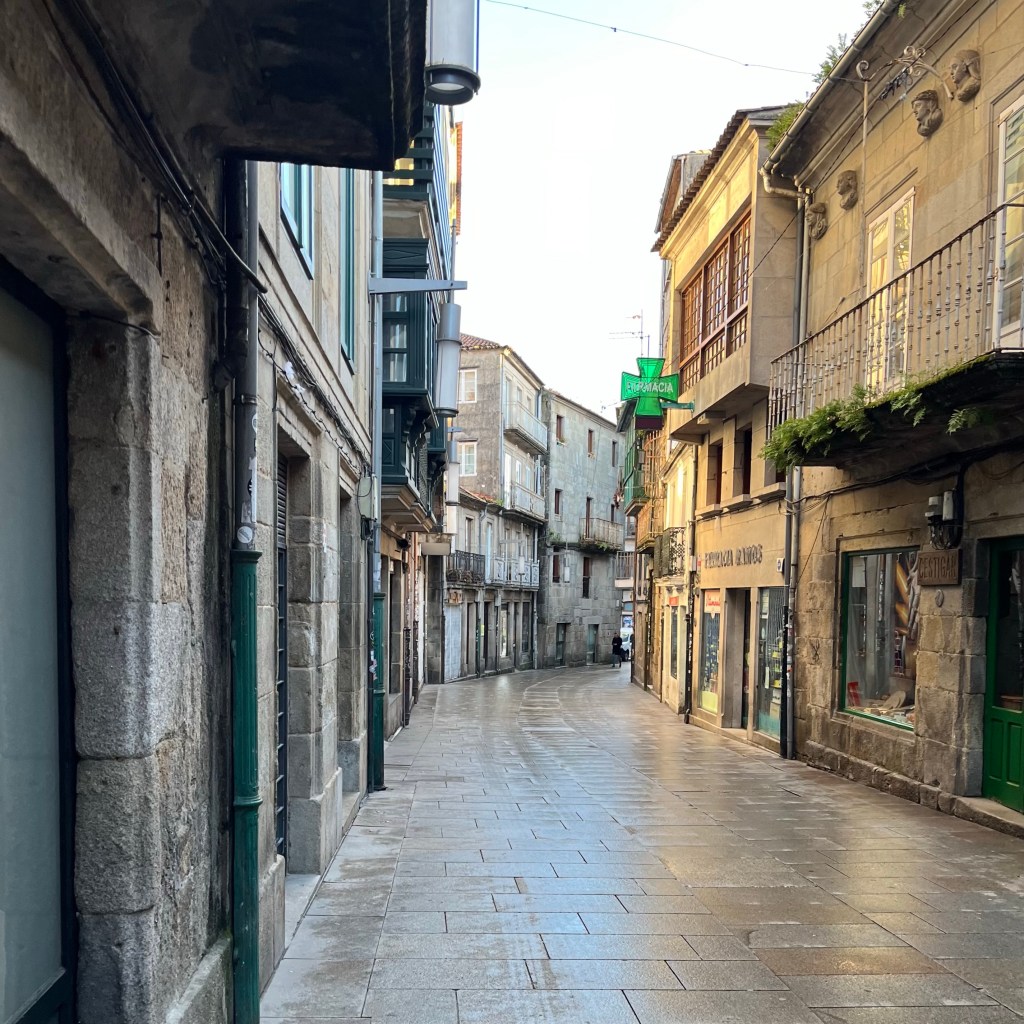

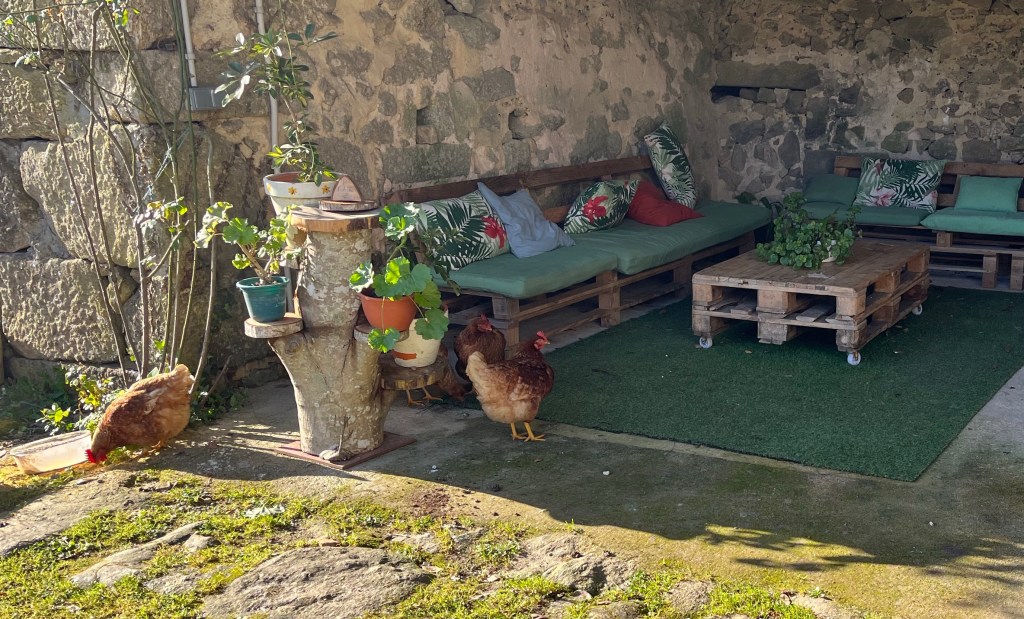
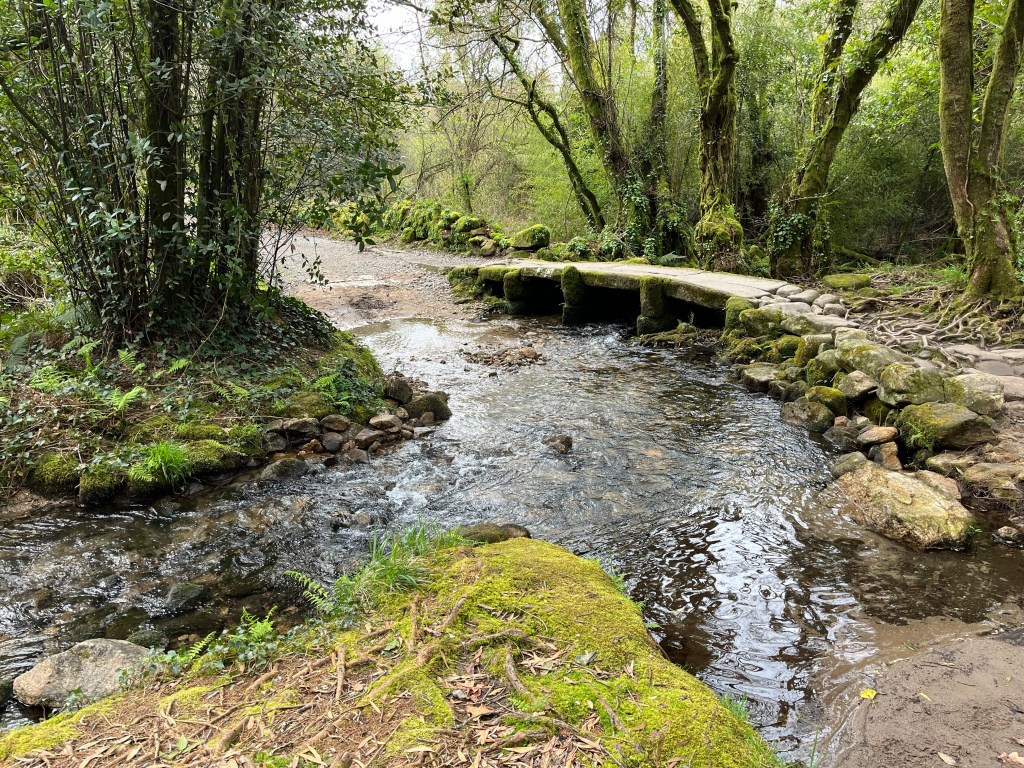
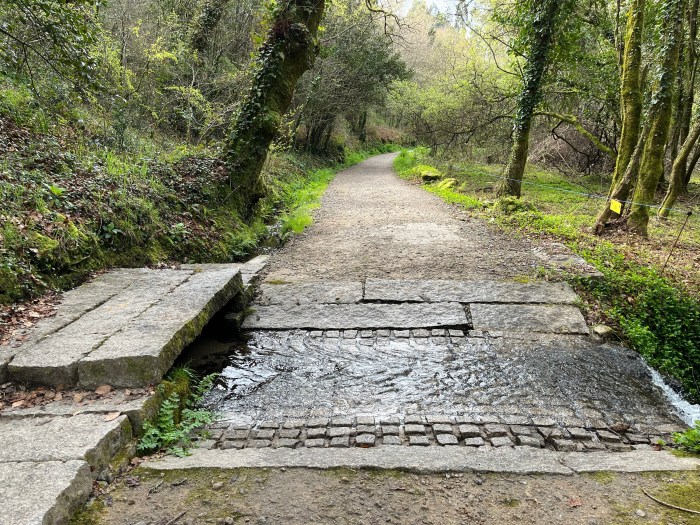
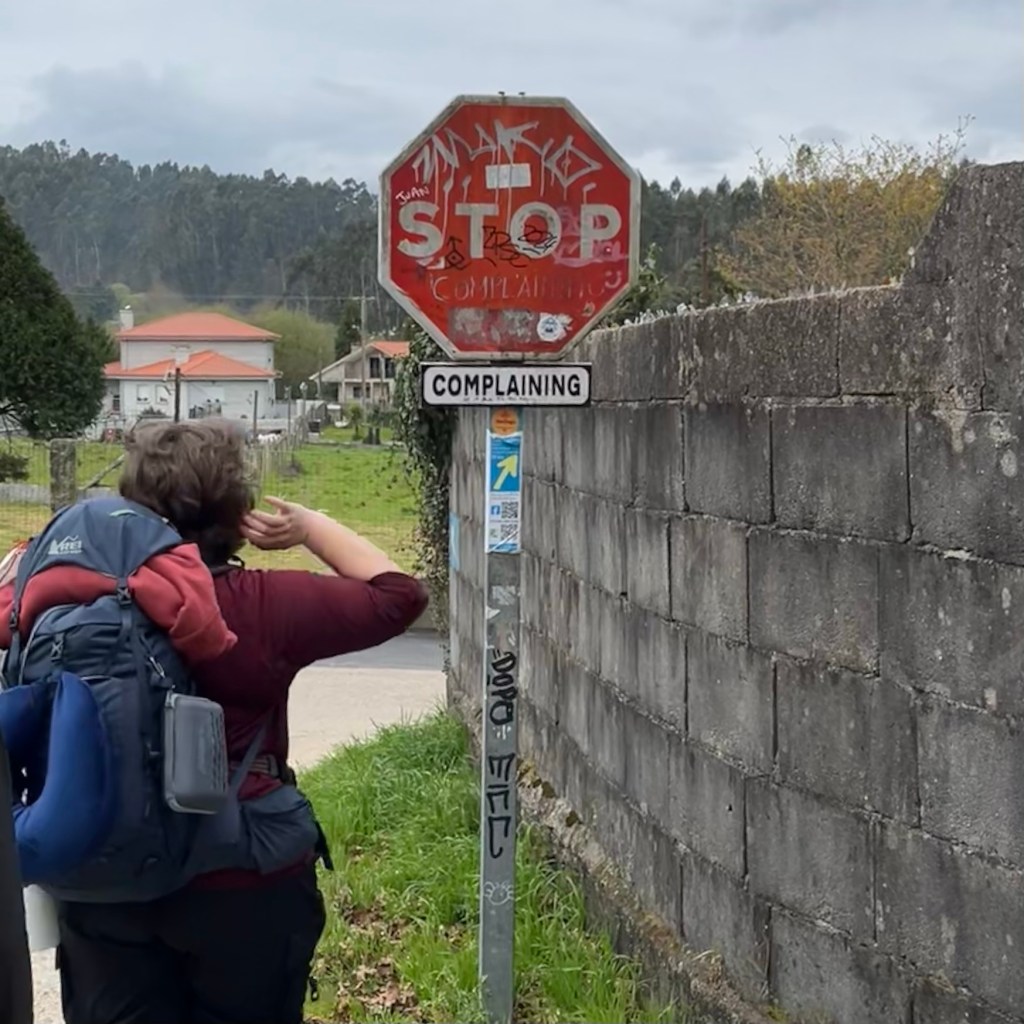
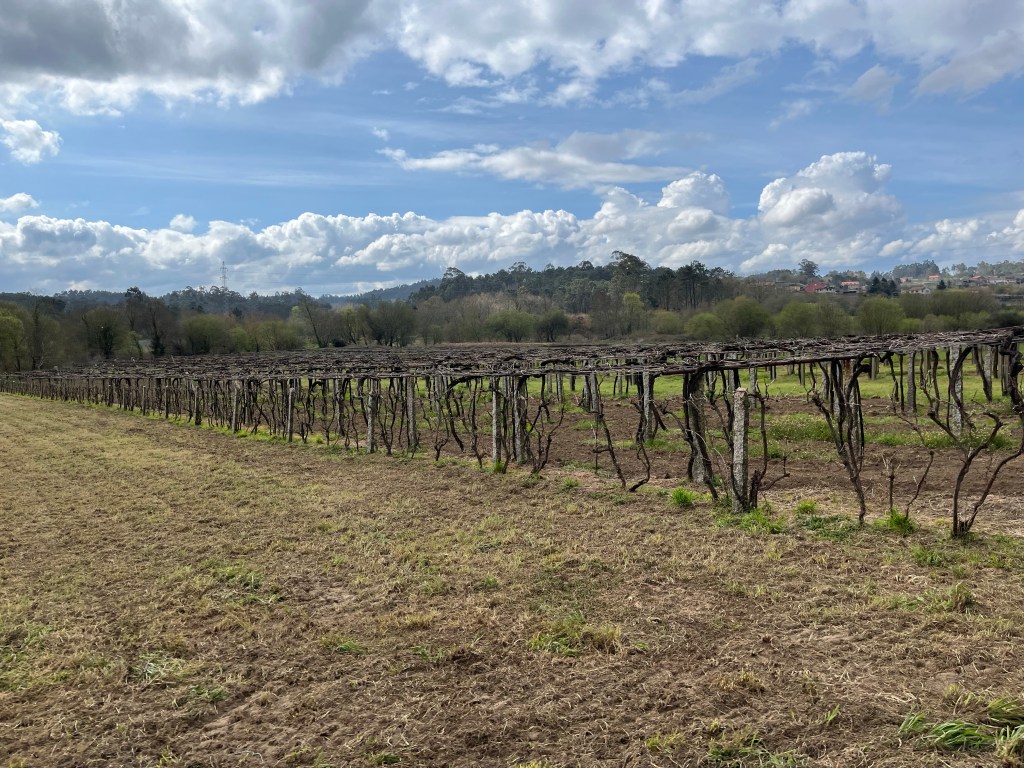
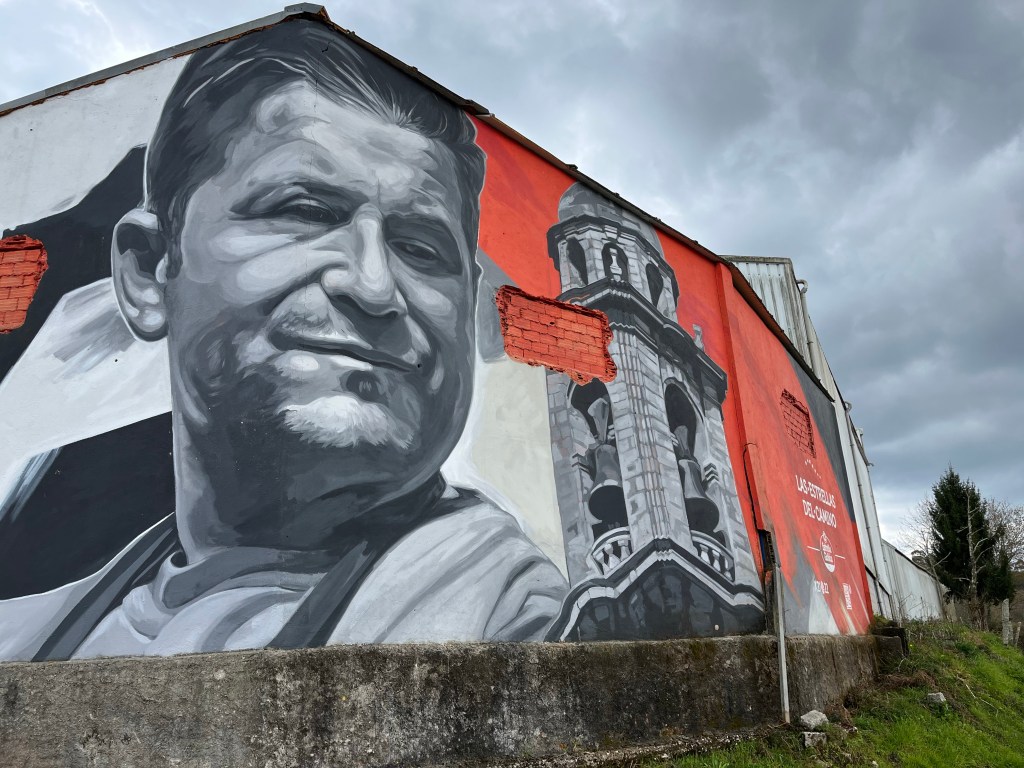

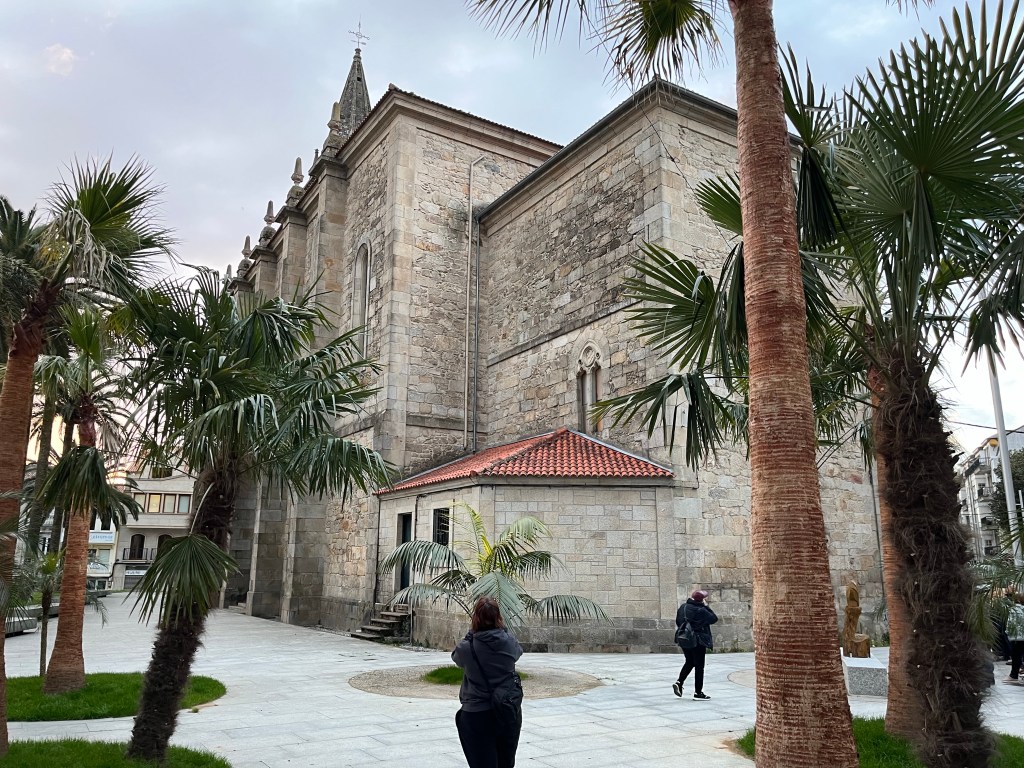
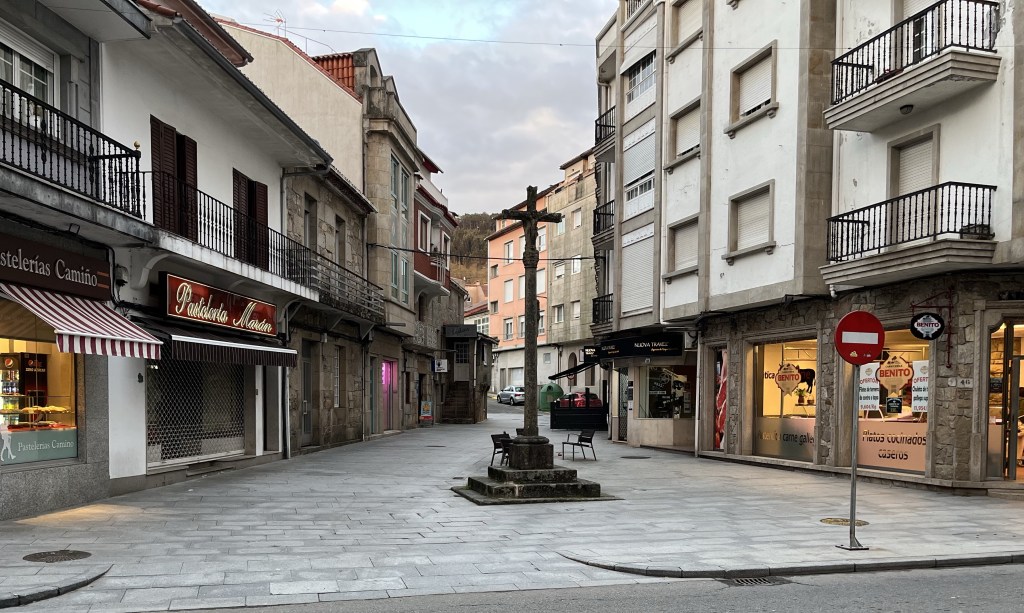
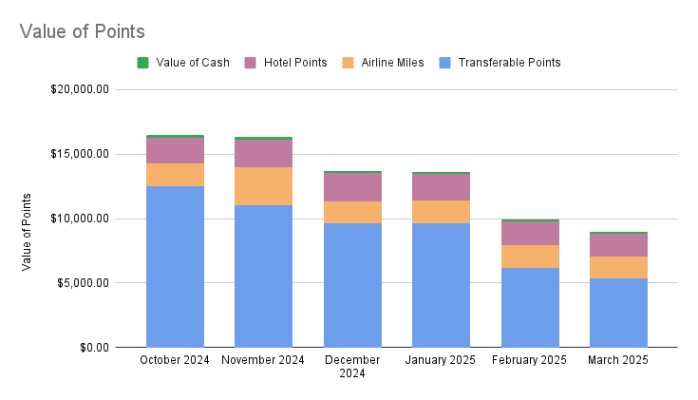


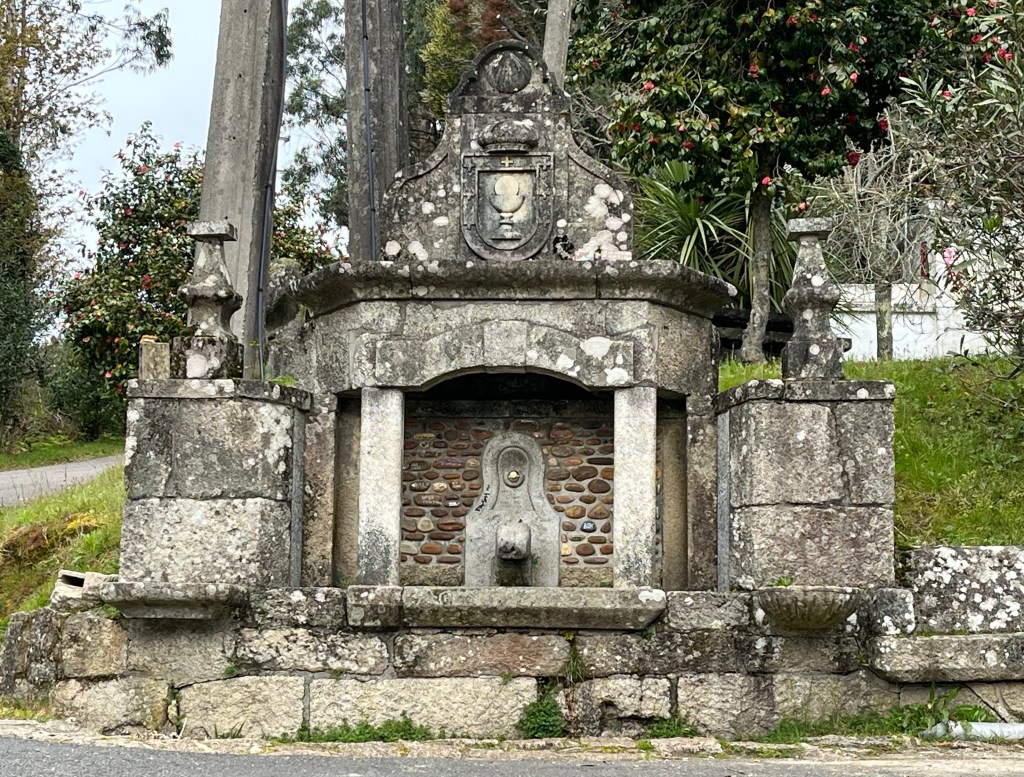




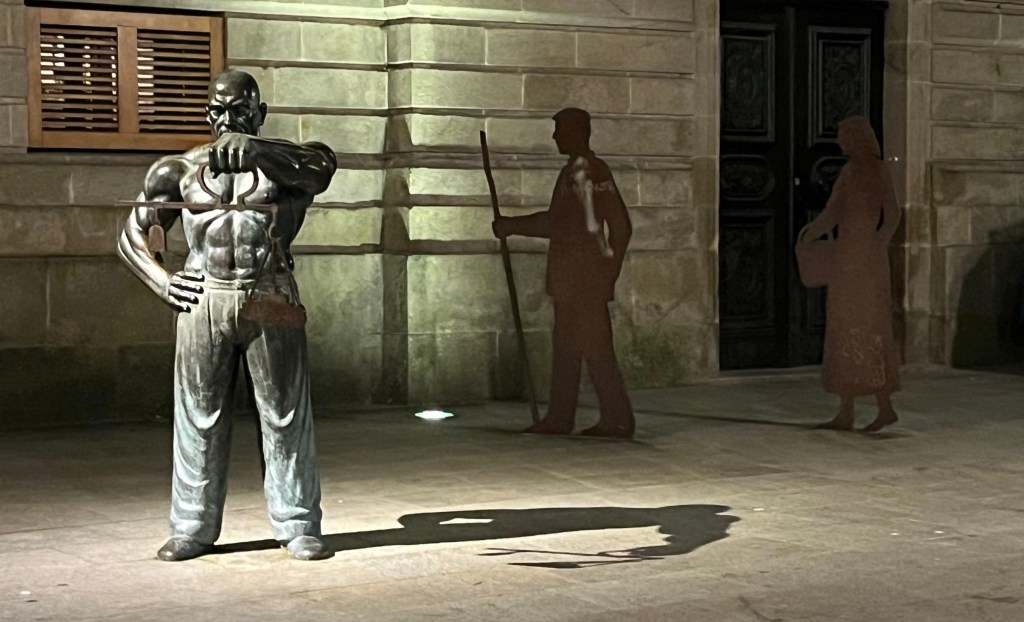

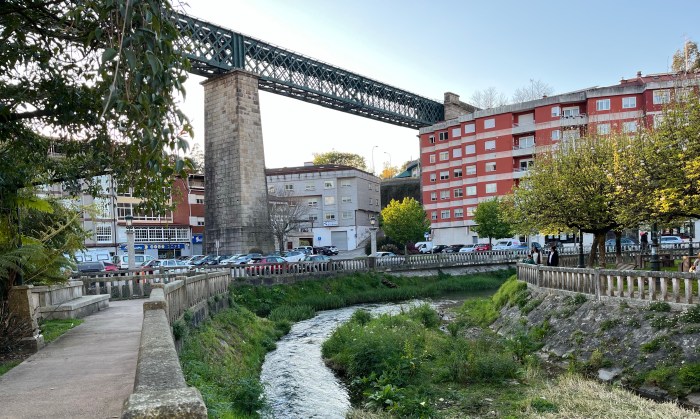
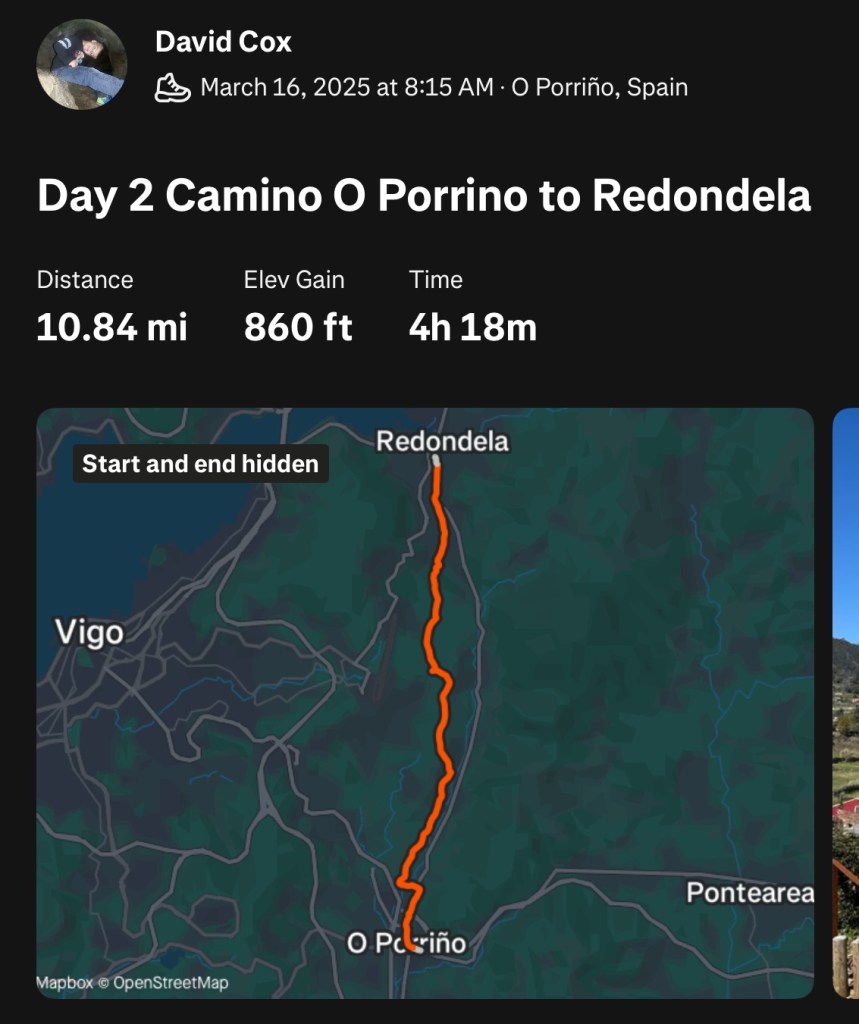


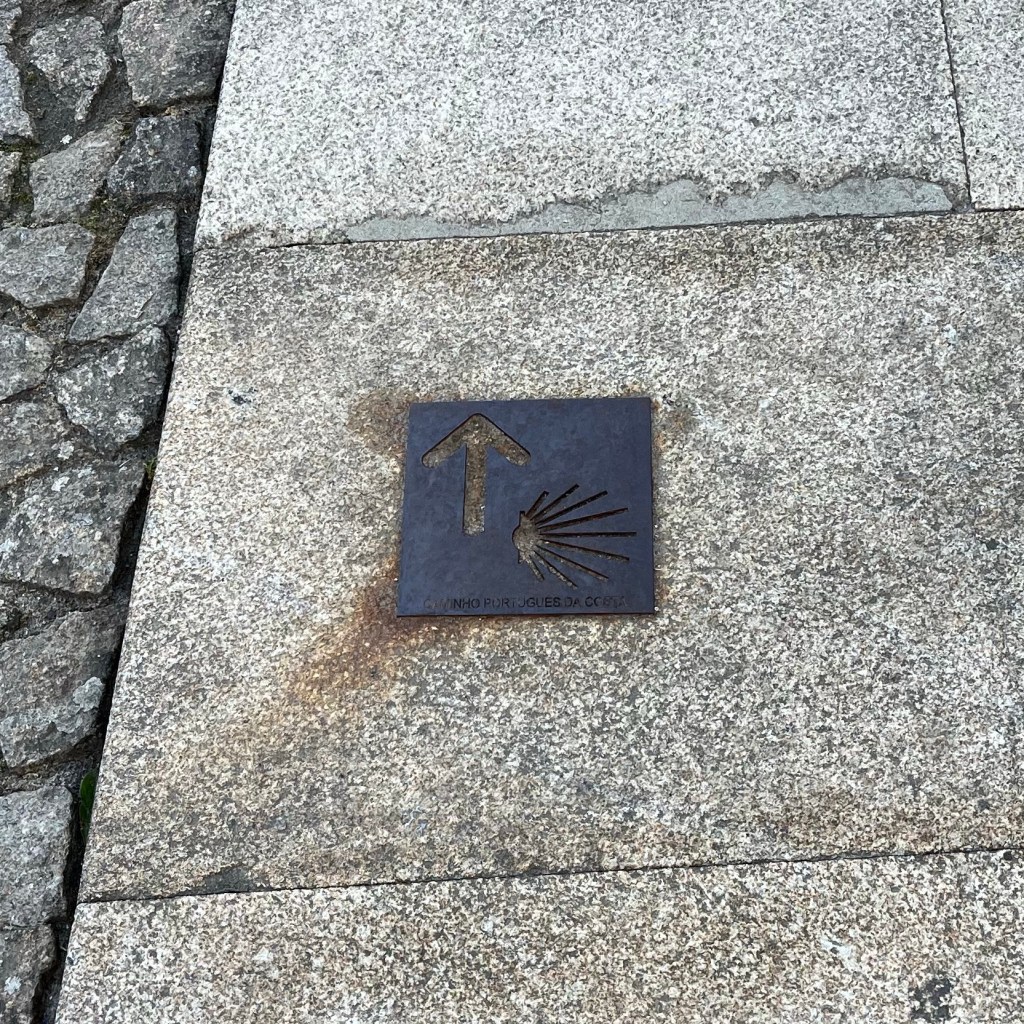
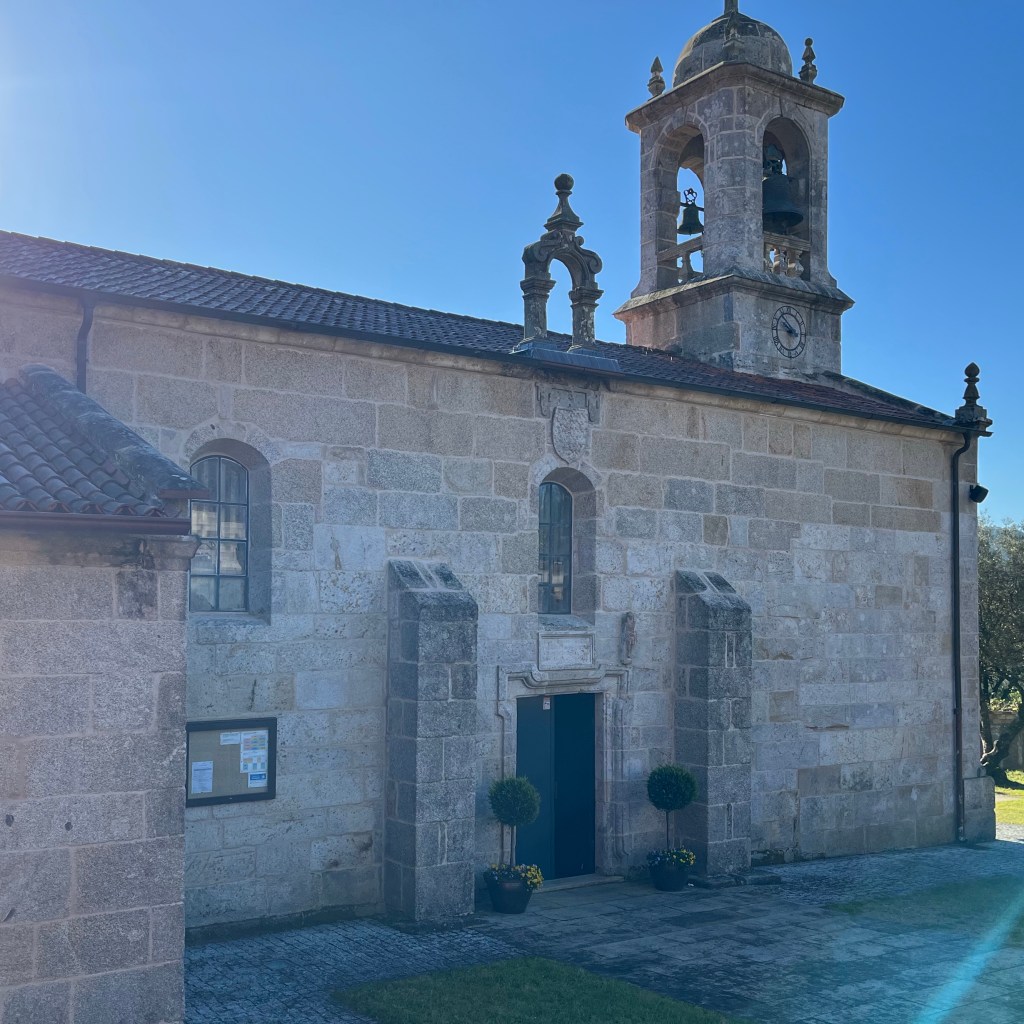


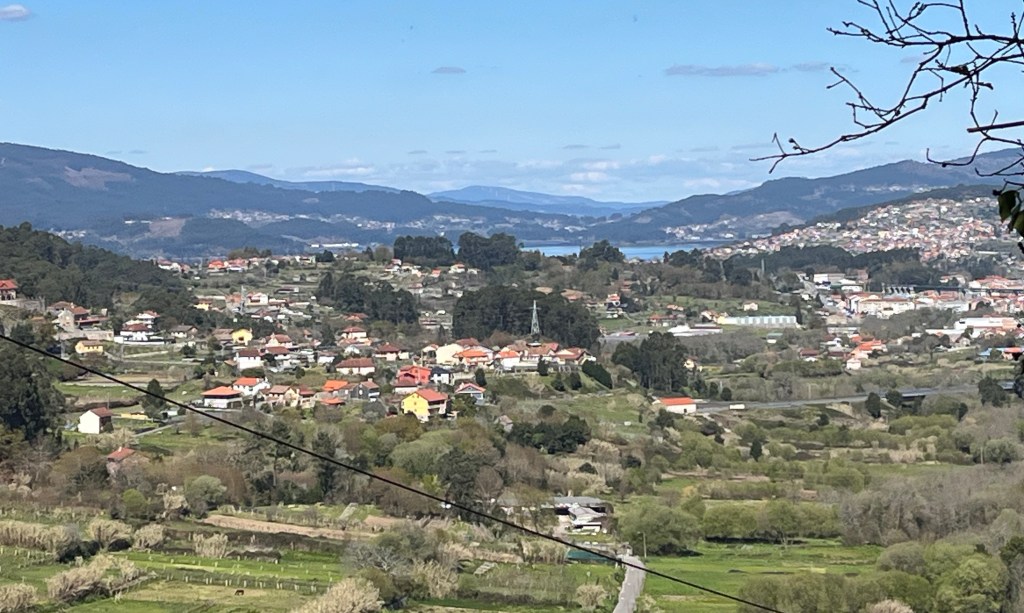

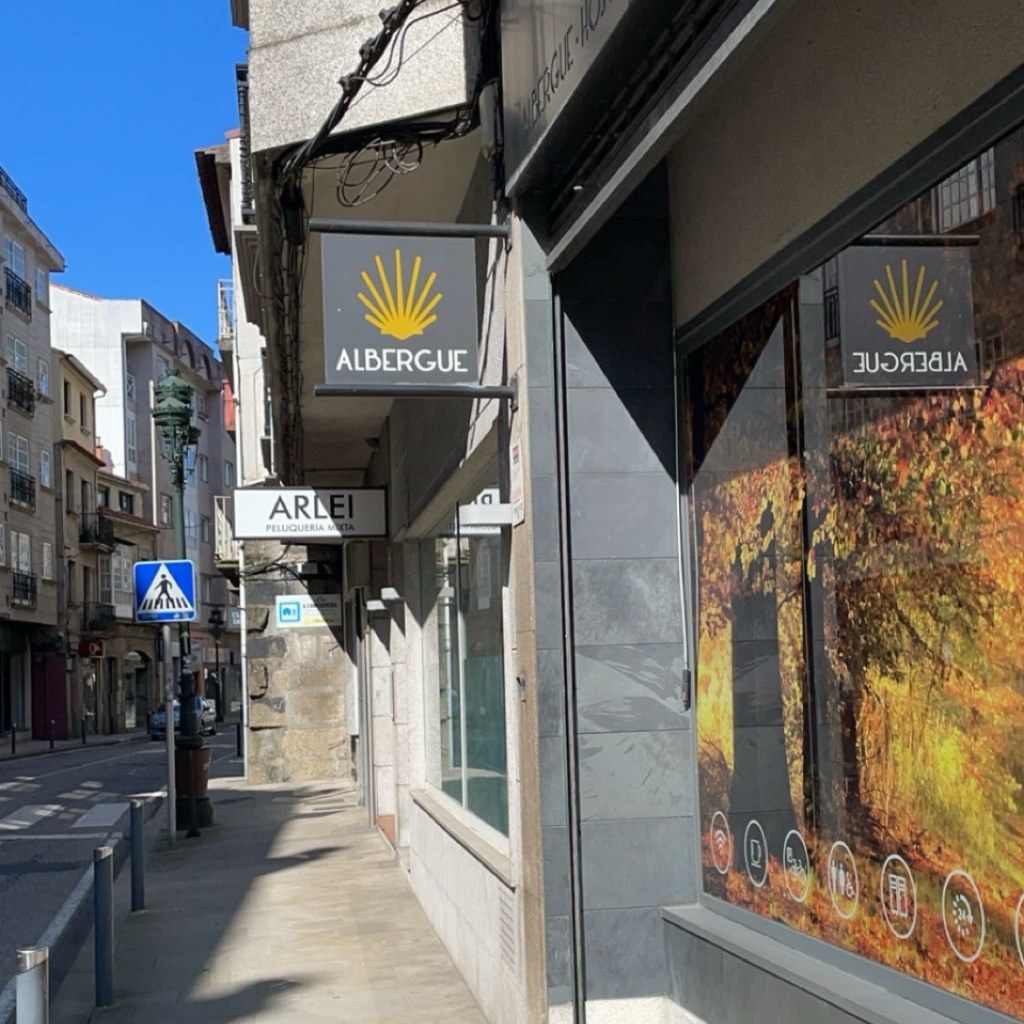

 Newby to Expert Traveler