July has been another month where we haven’t been traveling. It’s a little funny – for the last few years, we seemed to spend all of our time either traveling or planning for our next trip. We haven’t been thinking about that very much right now. I think we’re going to finish 2026 having only traveled once. In March, we did a spring break trip where we visited London, Madrid and Tenerife. Years ago, this would have seemed like a once in a lifetime trip but now its pretty normal.
This is a little boring, but its by design. We are only a year away from being empty nesters and we don’t want to miss anything with Alex’s last year in school. We also are making sure that we have enough points for us to do his graduation trip. In what is now a family tradition, we will be taking Alex on a trip to celebrate his graduation from high school, and we are in the process of negotiating locations. He originally wanted to do Finland and Iceland, and we had to tell him that those are two of the most expensive places on earth; maybe we can go to one, not both. Since then, we’ve discussed cities like Barcelona, Dubrovnik, Bari, Copenhagen, Brussels, Paris, Prague, etc. In reality, we tend to let the points determine where we go, but having a menu of cities we want to visit is always a good start.
New American Airlines Cards
There is a current offer for 80K AAdvantage miles to sign up for the American Airlines Platinum Select card issued by Citibank. This offer requires $3,500 in spending in the first 120 days of opening the card. Since this was such a good deal and we could always use more AAdvantage miles, especially while we are planning a trip to Europe next year, Jenn and I both signed up for the card.
The card only earns 1x on most purchases, but does earn 2x on gas, dining, and American Airlines purchases. It’s a little light on benefits, but it does offer free checked bags on American Airlines domestic flights (for you and 4 companions). I’m not sure why they don’t offer free checked bags on international flights – seems like a weird distinction to make. The annual fee is $99 but that is waived for the first year.
Cardholders also earn loyalty points on the American Airlines Platinum Select card. For every point earned through spending on the card, you earn a loyalty point. This does not include points earned through signup bonuses. This could be interesting to people who fly a lot of paid flights on American Airlines and use this card exclusively, since card spending could move you up in status with the airline. For us, I don’t think we could reach meaningful status by spending on the cards and paying for American Airlines flights, so it’s not something we will be pursuing.
On to the Points Check
While we both have new American Airlines cards, neither of us had managed to use them in July, so all of our spending was on cards that we’ve already earned signup bonuses. We did a pretty good job using our cards strategically finishing the month with a total return on spend of 6.7%. Currently the one irritation I have is that our son Alex keeps using the Amex Gold, that he is an authorized user on, for his Amazon habits. Seriously Dude, we don’t do 1x in this house – use the Bilt Palladium!
Card Used
Spend
Points Earned
Point Value
Points Per $
Return on Spend
Bilt Palladium
$2899
9,232
$203.10
3.2
7.0%
Custom Cash
$602
2,604
$49.48
4.3
8.2%
Ink Cash
$460
2,302
$47.19
5.0
10.3%
Amex Gold
$449
674
$13.48
1.5
3.0%
Wyndham Business Earner
$378
1,890
$13.23
5.0
3.3%
Ink Unlimited
$77
116
$2.32
1.5
3.1%
Blue Business Plus
$68
136
$2.72
2.0
4.0%
Total
$4,933
16,954
$331.52
3.4
6.7%
This month’s spending not devoted to earning a signup bonus
After all of the spend on the above cards, we are left with:
266,900 Chase Ultimate Reward Points
230,700 IHG Points
156,600 Alaska/Hawaiian Airlines Atmos Miles
125,700 Wyndham Points
97,700 Bilt Points
95,700 Amex Membership Rewards Points
92,600 American Airlines Miles
81,800 Avios
33,700 Marriott Bonvoy Points
30,200 Citi Thank You Points
19,300 United Miles
1,500 Delta Miles
300 Hyatt Points
$133 Cash Back
According to the Points Guy the total value of these points are just over $18,000. This should provide us with enough points to plan out at least a couple of great vacations for 2027. We do have to keep earning though. We’re going to be empty nesters soon, and I can’t wait to do some traveling outside of spring and summer school breaks!
In the Points and Miles community, most of the discussions are based around how you can use points and miles to maximize epic trips. This can be done by redeeming those points and miles for luxury hotels and business-class lie-flat seats to exotic destinations. But what if you travel mostly by staying in exotic hotels like the Comfort Inn in Kokomo, Indiana, or the Holiday Inn Express in Bettendorf, Iowa?
I’m talking about travel sports parents, the utterly exhausted parents who drove hours to sit in the sun all day and watch game after game at some regional youth sports tournament. I remember when my daughter played on a club basketball team, and while their team didn’t travel too much, I was constantly having conversations with other team parents whose kids were in other sports and were traveling seemingly every weekend. They were exhausted and broke.
How could using points and miles save them money on all of those hotel stays? Typically, I would suggest getting a Hyatt or Marriott credit card, which could give you free nights through points or free night certificates. The problem with that is, travel sports parents don’t get to choose the hotel, well, at least if you don’t want your kid to hate you. Usually, the team stays at the same hotel since the kids want to hang out together after the games. This means you are probably going to need to be more flexible, and this could mean earning points that can be used in a travel portal as well as using hotel credits in those portals.
Bilt has three credit cards that not only earn Bilt Points that can be used in their travel portal but also Bilt Cash, which can be used for hotel credits (although it’s limited). You can use Bilt Cash and Bilt Points in combination to book hotel rooms on the Bilt Travel Portal. Using Bilt Cash for long stays isn’t too exciting because, depending on your Bilt Status, you can only use $50 or $100 per month. However, if you’re only staying two nights, which is the minimum stay to use those credits, they really cut down on your hotel bill. The Bilt system works best for people who have a lot of short hotel stays, like travel sports parents.
Here is how it works: the 2-night stay shown below runs $362.50. Because I have the Bilt Palladium Card, I have an available semi-annual $200 hotel credit. Since I have Gold Status, I can use $100 in Bilt Cash. I can also use points at 1.25 cents per point or pay with cash. I can also use multiple options together. For example, I could use the $200 hotel credit, $100 in Bilt Cash, and 5,000 Bilt Points to wipe out the hotel bill.
I’m going to run some scenarios that show how much a travel sports parent can save on hotel stays, using the various Bilt credit cards, and I will compare it to another good option, the Chase Sapphire Preferred card. But to understand the scenarios, I need to explain a few things about Bilt.
Bilt Status Matters
There are 4 tiers of Bilt Status: Blue, Silver, Gold, and Platinum. While you can earn your status by earning Bilt points, the easiest way is by spending on a Bilt Card. Each tier of status has different benefits, but for this discussion, I’m focusing on the fact that Blue and Silver status members can use $50 in Bilt Cash per month for hotel credits, and Gold and Platinum status members can use $100 in Bilt Cash for hotel credits. Since Gold Status is the tier where the hotel credit jumps from $50 to $100 per month, it is the important tier for this discussion. That status is earned by spending $25,000 in a year on a Bilt credit card and is good for the rest of the year and the next calendar year. Also, as part of the signup bonus for the Bilt Palladium card, Gold Status is automatically given to the new cardholder for the rest of the year and the next year.
What Bilt Cards Earn
Between the three Bilt credit cards, each has a different earning structure. Each has elevated earnings for some travel categories, but for this discussion, we will ignore that. The only bonus category worth mentioning is the 3X on either groceries or dining on the Bilt Obsidian Card. For the comparisons below, I assumed that, since we are talking about parents with athletes, they will spend $1,000 per month on groceries, and they will choose the grocery option on that card. The Bilt Obsidian Card earns 1X on everything else. The Bilt Blue card earns 1X on everything, and the Bilt Palladium Card earns 2X on everything.
Using Bilt Cash to Boost Points Earning
On each of these credit cards, the cardholder will earn 4 cents of Bilt Cash per dollar spent (in addition to Bilt Points earned). That means that if, in a month, the cardholder spends $2,000 on the card, they will earn $80 in Bilt Cash. If the cardholder has only Blue or Silver Status, they can use only $50 of Bilt Cash toward a hotel credit. That leaves an extra $30. But if you use the Bilt ACH to pay your rent or mortgage, you can earn points on your housing payments as well. You can earn points on rent or mortgage payments by paying a 3% fee in Bilt Cash. In other words, $30 in Bilt Cash can unlock points for $1,000 in rent or mortgage, which is 1,000 Bilt Points.
So in the above example with the Bilt Blue Card, the cardholder spends $2,000 and earns 2,000 Bilt Points and $80 in Bilt Cash. They use $50 in Bilt Cash for a $50 hotel credit and the other $30 in Bilt Cash to unlock an additional 1,000 Bilt Points by running their rent or mortgage through the Bilt ACH. The cardholder ends up with 3,000 Bilt Points and $50 in hotel credit.
If you still have additional Bilt Cash after using the Bilt ACH for housing credits with the Bilt Obsidian or Palladium Cards, you can use $200 in Bilt Cash on the Points Accelerator to earn an additional 1X on all purchases for the next $5,000 in spend. In other words, you can convert $200 in Bilt Cash to 5,000 Bilt Points by spending on the card.
On all of the below examples, I assume that the example person has a rent or mortgage of $2,000 per month, so they use the ACH for up to that amount and then use the points accelerator on any Bilt Cash left over after that.
Card Benefits and Annual Fees
Any signup bonuses or perks of the cards also have to be taken into consideration. The annual fee is subtracted from the amount saved, since that is an expense. Here are a few other things listed below that will affect the analysis of these cards:
Bilt Blue Card has $100 Bilt Cash Signup Bonus
Bilt Obsidian Card has $200 Bilt Cash Signup Bonus
Bilt Obsidian Card has $100 in Bilt Travel Credit ($50 every 6 months, min 2-night stay)
Bilt Obsidian Card has a $95 annual fee
Bilt Palladium Card signup bonus includes Gold Status for rest of this year and all of the next year
Bilt Palladium Card signup bonus has 50,000 points and $300 in Bilt Cash
Bilt Palladium Card has $400 annual hotel credits ($200 every 6 months, min 2-night stay)
Bilt Palladium Card has $200 Bilt Cash annually on the anniversary date
Chase Sapphire Preferred Card has $100 hotel benefit
Chase Sapphire Preferred Card has a $95 annual fee
Chase Travel Portal vs Bilt Travel Portal
In the Chase Travel Portal, you can redeem Chase Ultimate Rewards points for 1 cent per point toward a hotel stay. Sometimes, Chase does have a points boost that can make those points worth up to 1.5 cents per point, but you can’t really count on that. For this discussion we will assume a 1 cent per point redemption on the Chase Travel Portal.
For the Bilt Travel Portal, points can be used at 1.25 cents per Bilt point. Bilt allows you to combine credits and points as well, which means that if you had a $225 hotel stay, you could combine $100 in Bilt Cash and 10,000 Bilt points to pay for the room.
Scenario 1 – Cardholder Spends $25,000 per Year
For most parents who have kids in travel sports, $2,100 per month on a card will be a little on the light side, especially if you are using your credit card for utilities, insurance, gas, etc. I can’t imagine that any parent with children in youth sports isn’t spending at least $1,000 per month on groceries. So, for the comparison below, I’m assuming that $1,000 is on groceries and the rest is in other categories. Since the Chase Sapphire Preferred card has 3X categories such as gas, dining, and streaming services, but is only 1X on groceries, I’m going to assume the average will be 1.5X on everything.
The reason I chose $25,000 per year is that if you spend that amount on a Bilt card, you will earn Bilt Gold status, which will bump the amount of Bilt Cash that can be used for hotel credits from $50 per month to $100 per month. Having that dramatically changes the amount that you can save on hotel stays.
The examples below are based on the assumption that the cardholder will have hotel stays in 9 different months a year. The number of months affects how much Bilt Cash can be used for the analysis, since it’s $50 or $100 per month, depending on Bilt Status.
Card
Points Earned
Bilt Cash for Hotel Credit
Hotel Credit as Benefit
Annual Fee
Total Saved on Hotel Stays
Bilt Blue Yr 1
43,330
$450
$0
($0)
$991
Bilt Blue Yr 2
28,330
$900
$0
($0)
$1,254
Bilt Obsidian Yr 1
67,330
$450
$100
($95)
$1,296
Bilt Obsidian Yr 2
52,330
$900
$100
($95)
$1,559
Bilt Palladium Yr 1
103,330
$900
$400
($495)
$2,096
Bilt Palladium Yr 2
53,330
$900
$400
($495)
$1,471
Chase Sapphire Preferred Yr 1
137,500
$0
$100
($95)
$1,380
Chase Sapphire Preferred Yr 2
37,500
$0
$100
($95)
$380
This shocked me; I was honestly surprised by how much better the Bilt cards were for booking repeated short stays than the Chase Sapphire Preferred card. First of all, the Chase Sapphire Preferred card is really good, and it currently has a huge 100,000-point sign-up bonus. However, even the Bilt Blue card outperforms it for the first two years, with the Bilt Blue card saving $2,245 and the Sapphire Preferred only saving $1,760.
The Bilt Obsidian and Palladium cards really show how well the Bilt program can work for repeated short stays. The Obsidian Card saves $2,855 over two years and the Palladium Card saves a whopping $3,567 over two years.
Scenerio 2 – $40K Annual Spend Example
Most travel sports parents will spend much more than $25,000 per year on things like groceries, gas, utilities, dining, etc. It’s expensive being a parent in general, but when you add in the cost of those basketball shoes or that bat they just had to have, let’s face it, you’re swiping that card more than that. Below is a more realistic example of $40,000 per year or a little above $3,300 per month. This still assumes a $1,000 per month spent on groceries, for the 3X points on groceries for the Bilt Obsidian card.
Card
Points Earned
Bilt Cash for Hotel Credit
Hotel Credit as Benefit
Annual Fee
Total Saved on Hotel Stays
Bilt Blue Yr 1
74,000
$450
$0
($0)
$1,375
Bilt Blue Yr 2
63,330
$900
$0
($0)
$1,691
Bilt Obsidian Yr 1
106,000
$450
$100
($95)
$1,780
Bilt Obsidian Yr 2
95,330
$900
$100
($95)
$2,186
Bilt Palladium Yr 1
153,330
$900
$400
($495)
$3,121
Bilt Palladium Yr 2
103,330
$900
$400
($495)
$2,096
Chase Sapphire Preferred Yr 1
160,000
$0
$100
($95)
$1,605
Chase Sapphire Preferred Yr 2
60,000
$0
$100
($95)
$605
In this example, the Bilt Blue starts to look way better than the Chase Sapphire Preferred. In two years the Chase Sapphire saves travel parents $2,210 on hotel stays while the Bilt Blue card saves $3,066 on hotel stays. This is crazy to me, since the Bilt Blue card was almost universally hated by critics when it came out and the Sapphire card is well regarded. Obviously, the reason why is the use of Bilt Cash for hotel credits.
What I was truly surprised by in this analysis was the Bilt Obsidian and Palladium cards. The Obsidian card saves the travel sports family $3,966 over two years, and the Palladium card saves $5,217 over two years! Typically in the points and miles space, you need to maximize multiple cards to get this kind of savings.
Scenario 3 – Supermarket Madness
There is a third method here for people who like to really maximize point earning. It occurred to me that by getting a Bilt Obsidian Card, choosing the 3x on grocery option, and spending $25,000 per year on groceries, you can maximize that card. This involves spending at least $333 at grocery stores on the first of the month, to earn double points up to a maximum of 1,000 bonus points and spending over $2,000 per month total at grocery stores. That sounds like a lot, but child athletes eat a lot, and groceries aren’t exactly cheap. Our family of four spends close to $15,000 a year, and we shop at Aldi. A larger family that shops at more traditional grocery stores should get close to that number. Also, keep in mind that many grocery stores also sell gift cards for things like Amazon or restaurants, if you want to extend those 3x categories to online shopping or dining. Any excess Bilt Cash, not used for hotel credit is used to unlock points earned by running housing payments through the Bilt ACH.
Card
Points Earned
Bilt Cash for Hotel Credit
Hotel Credit as Benefit
Annual Fee
Total Saved on Hotel Stays
Bilt Obsidian Yr 1
111,000
$450
$100
($95)
$1,842
Bilt Obsidian Yr 2
90,330
$900
$100
($95)
$2,146
In the above example, the Bilt Obsidian Card saves a total of $3,988 over two years. That beats the Bilt Obsidian card in the first example by $1,133 and the Bilt Palladium in Scenario #1 by $421. It also works out to an incredible 8% back on that spend. That sure beats a 1% or 2% cash back card. Also, since this example only uses grocery store spend, there’s really nothing stopping you from adding on the Chase Sapphire Preferred for additional points in other categories.
The Sweet Spot is Short Inexpensive Stays
A sweet spot is any unintended great deal in a loyalty program. My favorite example of this was when Turkish Airlines Miles and Smiles put together a partner award chart for Star Alliance flights. To keep things simple, they made all economy-class domestic flights 7,500 miles one-way. That’s a pretty good deal for Chicago to New York, but it’s an insanely good deal on a flight from New York to Honolulu. Unfortunately, that deal doesn’t exist anymore.
What Bilt wanted was to give people an incentive to book through their travel portal, where they earn a nice commission based on a percentage of the sale. That works great for them on expensive stays, but it’s probably not great for them when people book cheap hotels for short stays – the kind of thing you would book for a youth sports tournament. These types of stays are a sweet spot in the Bilt program.
It also doesn’t necessarily need to be just for sports travel. This also works well for couples who like to go on weekend getaways where a two-night stay is perfect. Regardless of why you stay in hotels, if you do it frequently and for short stays of at least two nights, using Bilt credit cards, and the Bilt Travel portal will save you a lot of money.
Coming off the recent devaluation of the World of Hyatt program and a change to the transfer ratio from Chase Ultimate Rewards to the World of Hyatt program, I think it’s time to ask a pointed question. Does it make sense to transfer points from any transferable points program to any hotel program?
In 2023, we stayed two nights at the Hyatt Ziva Los Cabos for a total of 43,000. For the same dates in 2027, it’s now 100,000 Hyatt points.
I’m not talking about situations where you need some points to top off your Marriott account to use the rest of your Marriott Bonvoy points on a hotel stay. I’m talking about situations where all of the points that you need to book a hotel stay are coming from a transferable points program. For the purposes of this discussion, let’s assume that the person booking the hotel never flies, since, generally, the best use of those points would be for airline tickets. In other words, they have points, and they are going to use them to book hotel rooms.
For each of these transferable programs, there is an option to use points on the travel portal to book a stay, rather than transferring those points to the hotel program and booking directly with the hotel.
American Express Membership Reward Points
According to The Points Guy, the value of an American Express Membership Rewards point is 2 cents. The chances of getting 2 cents per point value on a hotel stay using Amex points are extremely low, however. Amex has a laughably low redemption rate of 0.7 cents per point for hotels through their Amex travel portal. That becomes the baseline that you would have to beat to make a transfer make sense.
Program
Transfer From
Points Worth (TPC Valuations) in CPP
Transfer Value
Choice Privileges
Amex MR (1:1)
0.6
0.6
Hilton Honors
Amex MR (1:2)
0.35
0.7
Marriott Bonvoy
Amex MR (1:1)
0.8
0.8
In the case of Amex, I would probably transfer to Hilton or Marriott, simply because I would prefer to book with the hotel itself, because if something were to go wrong, you’d be better off having to deal with the hotel program itself, instead of dealing with the customer service from the Amex travel portal. But still, none of these options would even get you 1 cent per point. At these rates, if I’m not ever going to fly, I don’t think I’m even considering earning Amex points.
Bilt Rewards
Bilt Rewards is still a fairly new program, but they have grown to be, in my opinion, the best points program. One great aspect of the program is that, if you book a hotel through the Bilt Travel Portal, your points are redeemed at a 1.25 cents per point rate. In other words, a hotel that costs $125 per night would be bookable for 10,000 Bilt points. That is actually a really good rate by itself, but they also have six hotel transfer partners: All Accor, IHG Rewards, Hilton Honors, World of Hyatt, Marriott Bonvoy, and Wyndham.
Program
Transfer From
Points Worth (TPC Valuations) in CPP
Transfer Value
All Accor
Bilt (3:2)
2
1.5
IHG Rewards
Bilt (1:1)
0.55
0.55
Hilton Honors
Bilt (1:1)
0.35
0.35
World of Hyatt
Bilt (1:1)
1.55
1.55
Marriott Bonvoy
Bilt (1:1)
0.8
0.8
Wyndham
Bilt (1:1)
0.7
0.7
Of the six transfer partners, only two, All Accor and World of Hyatt, redeem at an average rate higher than the 1.25 cents per point that you can get through the travel portal. Points transferred to IHG, Hilton, Marriott, and Wyndham would essentially be burning those points, compared to just booking those hotels through the travel portal. The only good reason to transfer to one of those programs is to top off an account to use points that are already in one of those programs.
Capital One
Using Capital One Travel, Capital One Venture Miles are worth 1 cent per point when redeemed for hotels. Aside from booking on Capital One Travel, Venture Miles can be transferred to ALL Accor, Choice Privileges, I Prefer, and Wyndham.
Program
Transfer From
Points Worth (TPC Valuations) in CPP
Transfer Value
ALL Accor
Capital One (2:1)
2
1
Choice Privileges
Capital One (1:1)
0.6
0.6
I Prefer
Capital One (1:2)
0.5
1
Wyndham
Capital One (1:1)
0.7
0.7
All Accor and I Prefer end up with a value of 1 cent per point when transferring from Capital One Venture Miles. That’s the same value as booking through the travel portal, so it’s really just a matter of how you prefer to book the hotel. Wyndham and Choice provide very low value when transferring Venture Miles.
Citi Thank You Points
Citi Thank You Points are worth 1 cent per point for hotels through the Citi Travel Portal. Besides, what they are worth through the travel portal, Thank You Points can be transferred to several hotel programs. There are two different rates, but to get the highest transfer ratio, you will need to be a cardholder of either Citi Strata Premier or Citi Strata Elite. You can transfer if you are a cardholder of the Citi Custom Cash, Citi Strata, or Citi Double Cash, but the transfer ratios are so bad that I wouldn’t consider it. Below are the transfer rates if you hold a Strata Premier or Strata Elite card.
Program
Transfer From
Points Worth (TPC Valuations) in CPP
Transfer Value
Accor Live Limited
Citi Thank You (2:1)
2.0
1.0
Choice Privileges
Citi Thank You (2:3)
0.6
0.9
Leading Hotels of the World
Citi Thank You (5:1)
8
1.6
I Prefer
Citi Thank You (1:2)
0.5
1
Wyndham
Citi Thank You (1:1)
0.7
0.7
Actually with Citi, the transfer ratios are decent. With Accor and I Prefer, points transferred are worth a cent per point. With Leading Hotels of the World the value you get from a transferred Thank You point is 1.6 cents. That’s pretty good, unfortunately, it’s a small program with really expensive hotel rooms. If you want a really unique hotel stay, this is a good use of Citi Thank You Points.
Chase Ultimate Rewards
On the Chase Travel Portal, Chase Ultimate Rewards are worth 1 cent per point for hotels. On the portal, a points boost can yield up to 2x on hotels, however, that is up to Chase to determine what multiple you receive. For this discussion, we will assume no points boost.
Chase Ultimate Rewards has four transfer partners: Hyatt, IHG, Marriott Bonvoy, and Wyndham. Thanks to a new change in the Chase Sapphire Preferred, points are transferred at different rates depending on which card you hold.
Program
Transfer From
Points Worth (TPC Valuations) in CPP
Transfer Value
Wyndham
Chase Ultimate Rewards (1:1)
0.7
0.7
Marriott Bonvoy
Chase Ultimate Rewards (1:1)
0.8
0.8
IHG Rewards
Chase UR (1:1)
0.55
0.55
World of Hyatt
Chase UR w Sapphire Preferred (4:3)
1.55
1.16
World of Hyatt
Chase UR w/ Sapphire Reserve (1:1)
1.55
1.55
When transferring to Wyndham, Marriott Bonvoy, or IHG, you will get, on average, less than one cent per point. If you have the Sapphire Preferred, you will get slightly above 1 cent per point and with the Sapphire Reserve you will get over 1.5 cents per point, on average.
Always Check the Hotel Program First
The value of these points, with the exception of ALL Accor, are not set. Accor points are worth 2 Euro cents per point, meaning that a €200 per night hotel will always be 10,000 ALL Accor points. For the other hotel programs, the number of points per night to book a hotel could vary wildly. If you have a hotel in mind, check the hotel program’s website or app and see how many points they are charging. Then compare it with a travel portal and see which one will cost less in points.
Check for Transfer Bonuses
All of the math that I’ve included above does not include transfer bonuses. Hotel programs frequently offer transfer bonuses, that allow you to move points at a higher transfer rate and boost the value of your transferrable points. They change constantly, but a great resources is to use Frequent Miler’s Current Transfer Bonus page to quickly check for a transfer bonus before you book that hotel.
Where to Earn Points
If we ignore transfer partners for a second and assume you will only redeem your points through the travel portal for hotels, then it does become important where you earn them. At 0.7 cents per point for hotels through the American Express Travel Portal, I wouldn’t even bother earning Amex points for hotel stays. Capital One, Citibank, and Chase all offer redemptions at 1 cent per point, which isn’t too bad; however, Chase occasionally offers a points boost, and I would lean toward earning Chase points because of that. Bilt has them all beat with a redemption rate of 1.25 cents per point, so all things being equal, I would lean toward earning Bilt points when possible.
Conclusion
By default, I always lean toward transferring points to a hotel or airline program. I always assumed that I would get a better deal when doing it that way. Over time, I started to really narrow down that focus, and I found myself only looking at Hyatt properties when I was trying to transfer points from a transferable points program, because most other programs provided such weak value for those points.
Unfortunately, Hyatt appears to be hell-bent on devaluing their points, and since their changes to their award chart earlier this year, the value of Hyatt points has fallen from 1.7 cents per point to 1.55. I actually think it will continue to fall for the rest of this year, and then level off. To make matters worse, the transfer ratio from the popular Chase Sapphire Preferred card has fallen from 1:1 to 4:3. This makes these points barely better than going through the Chase Travel Portal.
Of the examples that I went through here, American Express Membership Rewards points are the worst for using on hotels. Their portal only gets 0.7 cents per point for hotels, and transferring points to their partners is a bad value as well.
Capital One, Citibank, and Chase all allow 1 cent per point redemptions on their travel portal, but other than a few examples, you can’t do much better than that. Capital One and Citibank get 1 cent per point to All Accor and I Prefer. Citi Thank You Points does better at 1.6 cents per point to Leading Hotels of the World, and Chase gets either 1.16 cents per point or 1.55 cents per point to Hyatt. Of those, Hyatt is the only one of those programs that isn’t pretty niche.
Bilt is slightly different. They offer 1.25 cents per point through their travel portal, and they only beat that with 1.5 cents per point to All Accor (again, pretty niche) and 1.55 cents per point to Hyatt. Bilt, in my opinion, is the clearly the best way to earn points for hotel programs, and if that’s your goal, I would earn as many Bilt points as possible.
At the end of the day, with only a few exceptions, you’ll do better booking through the transfer portals than transferring points. There is an advantage to booking directly through the hotel programs, in that if you do, it should be easier to deal with any issues that arise, since you will be dealing directly with that hotel program and not a third-party booking site. Also, not all programs will allow you to earn elite nights or use your elite benefits when you book through a third-party platform. If that is important to you, you may wish to use more points and transfer your points to the hotel program to book there.
But all things being equal, if you are someone who doesn’t stay enough in hotels to earn elite benefits or status and you just want the most economical way to book hotels using points, you’re probably better off booking through a travel portal. That is unfortunate, in my opinion. I would really like to see these banks work with hotel programs to boost the value of these points, because the value of transferrable points when transferring to hotel programs is laughably low.
On June 10th, 2026, Chase announced changes to the Chase Sapphire Preferred card that will go into effect on June 15th. Some of these changes were positive, improving earning rates on the card and increasing the value of the annual hotel credit. Unfortunately, one negative change could affect how people view Chase Ultimate Rewards and ultimately Chase Bank as a whole.
Chase Ultimate Rewards was the Standard
Chase has a special place in the hearts and minds of travel hackers. Starting in 2009, Chase launched the Chase Sapphire Preferred card, which introduced Ultimate Rewards points and allowed the transfer of those points to airline and hotel partners. Chase became a favorite because the earning rates on Chase Cards were lucrative and the transfer partners were great.
Before Chase Ultimate Rewards, Amex had Membership Rewards points. Later, Citibank introduced its own transferable points program, Citi Thank You Points, and Capital One created Venture Miles. Competition in the travel rewards space was fierce, but Chase kept one major advantage: 1-to-1 transfers to the most valuable hotel point program, World of Hyatt. It was such a strong partnership that people often referred to their Chase points as Hyatt points.
World of Hyatt Devalues and Transfer Ratio Changes
Earlier this year, Hyatt announced changes to its award chart that went from a 3-tier system to a 5-tier system. Essentially, each hotel now has 5 different prices they can charge in points for a stay, depending on the date. It allows the hotel more flexibility for what they can charge, in points, for award nights. On the surface, that seems reasonable, but the fear was that this would reduce the value of points because hotels would begin increasing the number of points required to book an award night.
These changes haven’t been in effect very long, but in the short amount of time it has been in effect, The Points Guy has dropped the value of Hyatt points from 1.7 cents per point to 1.55 cents per point, based on data collected from Gondola. It’s likely, in my opinion, that the value will continue to drop for a few more months before it levels off. How low it goes is really up to Hyatt at this point.
To complicate the issue with Hyatt’s devaluation, Chase has decided, with the new Sapphire Preferred changes, to change the transfer ratio from 1-to-1 to 4-to-3. What this means is that if you transferred 100,000 Chase Ultimate Rewards before the changes, you would end up with 100,000 Hyatt points. After the change, 100,000 Ultimate Reward points become 75,000 Hyatt points.
With the value of the points going down, what would have been $1,700 of Hyatt points (100,000 Hyatt points @ 1.7 cents per point) now is only $1,162.50 in Hyatt points (75,000 Hyatt points @ 1.55 cents per point). That’s basically like getting 1.16 cents per point on your Chase Ultimate Rewards points, which is barely better than just booking directly with the Chase Travel portal. If the value of Hyatt points falls further, there would be no reason to transfer at all.
Earning Rates Increase
One of the bright spots with the changes is that the earning rates in a couple of categories increased. The earnings at gas and EV charging stations rose from 1X to 3X. That can be significant if you spend a lot in those categories.
Another change is that you will now earn 3X on vacation rentals like VRBO and Airbnb. I really like this, because we prefer to stay in vacation rentals when we travel, and they can be a significant expense. Earning 3X would be a nice boost to our point totals.
Hotel Credit Increase
The Chase Sapphire Preferred Card had a $50 per year credit when booking a hotel through the Chase Travel Portal. Starting on June 15th, that credit will be $100. We’ve actually never used this credit, mainly because it was so small that we never considered using it. A $100 credit makes it something I might actually use, especially considering that you can combine the $100 credit with Ultimate Reward points at checkout. That means that a $200 hotel stay could be only 10,000 Ultimate Reward points after the credit, perhaps less if a points boost is attached.
Other Changes
Travel protections now include Emergency Evacuation and Transportation coverage. In addition, a $120, once every 4-year Global Entry, TSA PreCheck, or NEXUS credit has been added. A promotional complimentary 1-year Apple TV credit has been added as well. On the negative side, the 10% Anniversary Bonus benefit is being discontinued, which, frankly, never generated many points anyway.
Bottom Line
For me, this actually looks like a significant improvement. I think I might actually switch my gas charges to this card, as well as my Airbnb charges. I was using the Wyndham Business Earner card for 8X on gas, but I’m just not seeing tremendous uses for Wyndham points, so I think I’d rather earn Ultimate Reward points.
The change in the hotel credit from $50 to $100 means that I might actually use it. We’ve held at least one Sapphire Preferred card for years, and we’ve never actually used the credit. Knowing that I can use the credit for a short stay, especially if it’s a one-night hotel stay on a positioning flight or on a road trip, makes this extremely worthwhile.
Where this hurts is for people who racked up a ton of Chase Ultimate Reward points, transferred all of them to Hyatt, and redeemed those points for high-end hotels and all-inclusive resorts. This almost forces those people to pay the $795 annual fee for the Chase Sapphire Reserve, because that card maintains a 1-to-1 transfer ratio to Hyatt. Unfortunately, even that doesn’t guarantee that Hyatt points won’t continue to devalue.
In the end, I think a lot of people will look at this and think that maybe they’re better off focusing on other hotel programs. If you were someone who put significant spending on Chase cards to earn points to transfer to Hyatt, you might give up on Chase altogether, after all, it’s not clear what the value of Hyatt points will be in 6 months to a year.
For people who love Hyatt, they might choose, instead, to get a Bilt card. Bilt still transfers its points 1-to-1 to Hyatt. Depending on which card they get and what categories they spend their money in, people might be better off earning points in Bilt and transferring to Hyatt.
All in all, while the changes to the Chase Sapphire Preferred will work better for me, I think it’s a significant risk that Chase is taking. The transfer partnership with Hyatt was a major selling point for Chase, and now, it just looks rather ordinary. For those people who loved the Hyatt program and its relationship with Chase, this is a huge disappointment and is likely to change the spending behavior of those Chase customers.
For the first time in about four years, we aren’t doing any traveling, and we’re not really planning any trips either. It’s a bit of a strange feeling. I’ve been at least partially focused on travel for a long time, but it’s just not important right now. Instead, we have been helping our daughter look for a house, and our son look for a college. In addition, I’ve been working on a house project that has been taking way more time than it should.
That being said, it’s not lost on us that once Alex leaves for college and Emma moves out of the house, Jenn and I will have more freedom to travel, because we won’t have to work around their schedules nearly as much. That means that right now, we should be accumulating and hoarding points while our lives are not focused on traveling.
Next summer, we will be taking Alex’s graduation trip. We did this for Emma when she graduated, and while she didn’t really plan the trip, we did allow her to guide where we went. Alex has suggested Iceland and Finland, and frankly, it’s likely to be Iceland OR Finland, with some time in Southern Europe, depending on what works with points. Finland and Iceland aren’t exactly cheap, so 10 or so days in hotels or Airbnbs in Northern Europe could get pretty expensive, not to mention the cost of food. Spending some time in Southern Europe could really cut down on the price of food and lodging.
Programs to Focus On
When thinking of traveling to Europe, I normally think of a few programs. In the few trips we’ve made to Europe, we’ve used Aer Lingus, Iberia, and British Airways with Avios, as well as KLM using Flying Blue miles. We’ve also used American Airlines AAdvantage, United Miles, and Delta Skymiles. In addition, we’ve flown on United using Singapore Airlines miles and SAS using Avianca Lifemiles. Basically, I’ll use anything if it makes sense.
The thing is, when I look at our points totals, I see a lot of programs without a ton of points in any specific program. Considering where we currently have the most points, it probably makes sense to beef up point totals where we already have a decent number of points to make sure that we have enough points to book everyone at the same time.
One choice is to book with Aer Lingus, Iberia, or British Airways with Avios. We only have a little over 80,000 points. That can be bumped up with our Amex Membership Rewards points, Chase Membership Rewards Points, Citi Thank You points, Bilt Points, or Capital One Venture Miles. We’ve had good luck with American Airlines, so earning American Airlines miles would be great, but we can only transfer from Citi Thank You points. United might also work, and we can transfer from Chase or Bilt to add to our United points total. Alaska Airlines Atmos miles has some inexpensive partner awards to Europe, but they only transfer from Bilt.
Because we would most likely be using Avios miles, Atmos miles, AAdvantage Miles, or United Miles, it makes sense to try our best to gain miles with signup bonuses that are either with one of those airlines or with Bilt, Chase, or Citi Thank You. Bilt doesn’t have many good opportunities to earn signup bonuses, so focusing on Chase or Citi makes sense.
In reality, my plan is to try to jump on any elevated signup bonuses that align with these programs. Unfortunately, right now, I’m not seeing anything that seems to be elevated, so I’m waiting for something to change. I can’t be patient forever, though. Right now, we aren’t working on a signup bonus on anything, and that does feel a little like we’re wasting time, so the longer we wait, the less patient I’ll probably be.
Schrodinger’s Wyndham Points
Jenn’s Wyndham Business Earner card has renewed again, which essentially means that we got 15,000 Wyndham points in exchange for paying the $95 annual fee. 15,000 Wyndham points are worth around $105, so that’s not terrible, but with Wyndham not partnering with Vacasa anymore, I’m not nearly as excited to use those points. It’s possible to book a Wyndham Vacation Club stay with points, but the availability is greatly limited, and the locations don’t thrill me.
Most likely, we will try to use Wyndham points on one of their all-inclusive properties, which look okay, but not spectacular. Typically, at all-inclusives, we just want to hang out at the beach and the pool and have a few drinks, so they’ll probably be fine for us. We’re going to have to book one and find out. Until we try out their all-inclusive resorts, I won’t have any idea whether we want Wyndham points going forward.
On to the Points Check
We earned a whopping 9.2% back on our spending not devoted to a signup bonus. Some of that was due to a 3,000 Membership Rewards Points bonus that was an Amex offer on my Amex Green card, which said that we would earn 1,000 points for a $40 order with Amazon. We needed to order something that was $150, and shockingly, they gave us 3,000 points. Apparently, I didn’t read the offer properly because they seemed to give me 1,000 points for each $40, and I’m not sure what the maximum was.
Card Used
Spend
Points Earned
Point Value
Points Per $
Return on Spend
Ink Cash
$744
3,724
$76.34
5.0
10.3%
Bilt Palladium
$483
2,477
$54.49
5.1
11.3%
Custom Cash
$481
2,338
$44.42
4.9
9.2%
Wyndham Business Earner
$396
1,981
$13.87
5.0
3.3%
Amex Gold
$311
475
$9.50
1.5
3.1%
Blue Business Plus
$186
372
$7.44
2.0
4.0%
Ink Unlimited
$183
275
$5.50
1.5
3.0%
Amex Green
$150
3,150
$63
21.0
42.0%
Chase Sapphire
$146
438
$9.45
3.0
6.2%
Total
$3,080
15,230
$283.54
4.9
9.2%
This month’s spending not devoted to earning a signup bonus
Besides the money spent on the above cards, Jenn spent a little over $2,700 on her Atmos Ascent card and earned a little less than 2,800 Atmos points. She also completed the required spend to collect the 70,000 Atmos point bonus on that card. That leaves us with:
260,300 Chase Ultimate Rewards Points
230,400 IHG Points
156,600 Alaska/Hawaiian Airlines Atmos Miles
121,700 Wyndham Points
93,800 Amex Membership Rewards Points
92,600 American Airlines Miles
81,800 Avios
75,200 Bilt Points
24,700 Citi Thank You Points
19,300 United Miles
15,900 Marriott Bonvoy Points
1,500 Delta Miles
300 Hyatt Points
$133 Cash Back
According to the valuations published by The Points Guy, these points are worth a total of just under $16,800. That is an all-time high for us. Without any plans coming up, I expect that we should be able to pad these numbers for a few months, until we need to start booking Alex’s graduation trip. Until then, I have a project to finish and a kid to get to some college visits.
February in Iowa is brutal. It’s been cold and dark. Midwestern winters are primarily about survival. You just go inside and stay. Most people binge-watch TV shows under a heated blanket. We’re not big television watchers, so we’ve been spending an unhealthy amount of time in breweries, where the Quad Cities excels in both quantity and quality. Illnesses are running rampant, as Iowans have been breathing the same indoor stale air since November. At this point, we’re all just dreaming of going outside for anything.
Because of all of this, if you go anywhere to Florida, Arizona, or the Caribbean during March or April, you will run into dozens of folks from the Midwest, in our annual desperate attempt to bookend the hellscape that is Midwestern winter. Spring break isn’t an annual tradition; it is the only thing that keeps us from tying a brick to our legs and jumping into an icy lake in the winter. WE NEED THIS!
For the last three years, we’ve planned unusual Spring Breaks. Frankly, we’ve done Florida, and I just can’t do it anymore. I don’t want to share a beach with obnoxious, drunken college students. Because of that, our Spring Breaks have been a little different lately. Two years ago, we went to Costa Rica and spent time hiking in the mountains, lying on the beach, and enjoying Costa Rican culture. Last year, we spent six days hiking the Portuguese route of the Camino de Santiago. This year, we will visit the Canary Islands, specifically Tenerife Island, which is part of Spain, but off the coast of Africa. This will give us a beach vacation, but without the crowds of Florida and the Caribbean. We will also be stopping in London and Madrid as part of this trip.
Spring Break couldn’t come soon enough, because we are starting to lose our minds here, and it’s time for us to go outside and get some vitamin D.
Atmos Awards Ascent Visa Card
We said we weren’t going to do this. We were going to take it easy and sign up for fewer cards this year, but alas, Jenn signed up for the Atmos Awards Ascent Visa Signature card. This is while I’m working on a signup bonus for my Iberia Plus card, and Jenn is working on a signup bonus on her Bilt Palladium Card.
There was a valid reason for this: Jenn wants to plan a girls’ trip with her and Emma to celebrate Emma turning 21 and is considering options in the Northwest, including Seattle, San Francisco, or Portland. Atmos miles would work really well for any of those destinations, and now that she earns Bilt points, she has a way to top off the account by transferring Bilt points to Atmos. It’s always a good idea to pair a hotel or airline card with a transferable points card to have some flexibility and top off an account. Having the Bilt card makes the Atmos card more attractive.
The Atmos Awards Ascent Visa Card has a $95 annual fee and earns 3X on Alaska Airlines purchases, 2X on Gas, EV charging, transit, rideshare, cable, and streaming services, and 1X on all other purchases. If you spend $6,000 in a year, you will earn the companion fare, which allows you to book a companion flight for $99 plus taxes.
The current bonus for this card is 70,000 points when the cardholder spends $4,000 over the first 90 days. The Atmos Awards program is known for strong partner booking rates. Short-haul domestic flights on American Airlines typically cost 4,500 points, and I see many routes to Europe for 27,500 points with minimal fuel surcharges. Having a few more Atmos miles will be a good thing to have around.
UK Electronic Travel Authorization
Since 2025, the UK has required an electronic travel authorization to enter the UK from the United States. This is to enhance their border protection. Each application costs 16 British pounds and, if approved, is good for two years. On their website, they say to allow up to three business days to process the application, so you need to plan ahead.
This will be our first trip to England, and while I’m not happy about the fact that I have to pay for four authorizations costing a total of $90, we went through the process and found it to be fairly easy. We used the phone app to apply, and I think that might be the reason. Using an iPhone, it was able to scan our faces, scan our passports, and take photos of us and our passports. Scanning the passport was interesting; apparently, there is a chip in the back cover of your passport, and it was able to read it through the phone.
Anyway, this process took just a few minutes, and we were approved immediately. There is an option to apply online, and I assume that you would not be able to scan the passport or your face, and maybe when you apply that way it takes them longer to verify the information. That might be why we were approved instantaneously and they say to allow three business days. So if you do have an emergency trip to the UK, I would use the app, I think that will give you a better chance of instantaneous approval.
On to the Points Check
We spent around $2,500 on cards not earning a bonus, earning less than 5% return on that spend. That’s below where I want to be. I want to shift as much of this to the Bilt Palladium card over time, since that has solid earnings on all spend. I’m going to continue to keep utilities on the Wyndham Business Earner card since it earns 5X on utilities, and I’ll keep our phone bill and streaming services on the Ink Cash since it earns 5X on that spending. But other than that, most of this would be better spent on the Bilt Palladium Card.
Card Used
Spend
Points Earned
Point Value
Points Per $
Return on Spend
Amex Gold
$1,333
2,619
$52.38
2.0
3.9%
Sapphire Preferred
$508
772
$15.83
1.5
3.1%
Ink Cash
$441
2,204
$45.18
5.0
10.3%
Ink Unlimited
$101
153
$3.01
1.5
3.0%
Wyndham Business Earner
$84
420
$4.62
5.0
5.5%
Blue Business Plus
$66
132
$2.64
2.0
4.0%
Total
$2,533
6,300
$123.71
2.5
4.9%
This month’s spending not devoted to earning a signup bonus
Aside from the spending above, I spent a little over $1,600 on my Iberia Plus card, earning 1,600 Avios, and Jenn spent a little over $1,600 on her Bilt Palladium card, earning almost 4,600 Bilt Points. We used $200 in Bilt Cash to activate the Points Accelerator, which adds an additional 1 point per dollar spent on the next $5,000 in spend. That essentially makes the Palladium Card a 3X anywhere card.
That leaves us with a total of:
327,000 Chase Ultimate Reward Points
247,300 IHG Points
175,800 Amex Membership Rewards Points
101,200 Wyndham Points
79,400 Alaska Miles
33,900 American Airlines Miles
19,300 Citi Thank You Points
16,700 United Miles
15,900 Marriott Bonvoy Points
4,600 Bilt Points
1,600 Avios
1,500 Delta Miles
300 Hyatt Points
$133 Cash Back
All of this, using the points valuations published by The Points Guy, is worth a total of $15,300. That’s the highest it’s been in a while, which is great, but right now I’m a little more focused on getting out of this winter hellscape and getting to a beach. I can’t wait to get to Tenerife.
Ah, the start of a new year. Last year was a busy travel year for us, and we’re hoping to take it a little easier this year, but we’ll see. We have a trip to London, Tenerife, and Madrid scheduled for spring break, but nothing else so far. We’re hoping to do a little camping this summer and maybe take a short trip to Mexico in the fall. That would be a busy year for most, but last year we went to Europe three times, so it just feels a little light.
The winter in Iowa, as always, has been dreadful, with a couple of weeks in January being so bitterly cold that all anyone really did was go to work and bundle up at home. This is why spring break is always so important – it gives us something to look forward to when living in this icy hell is at its worst. Jenn has been planning our two days in London, while I’ve been planning the five days in Tenerife. The plan for Madrid is fairly simple: get off the plane from Tenerife, walk around and eat tapas, sleep at the hotel, go back to the airport, and fly home.
Iberia Plus Visa Signature
I applied for the Iberia Plus Visa Signature card and was accepted. This card has a $95 annual fee and earns 3X on purchases with Iberia, British Airways, and Aer Lingus, 2X on hotels, and 1X everywhere else. It provides a 10% discount on flights booked with Iberia, as well as a $1,000 discount voucher toward Iberia flights, issued when the cardholder spends $30,000 on the card in a year.
This card really isn’t that interesting, but it does come with a bonus of 75,000 Avios after spending $5,000 on the card in 3 months. I was looking for a way to pick up a few Avios without having to transfer points from our Amex Membership Rewards or Chase Ultimate Rewards stashes. Our son Alex wants to go to Finland and Iceland for his post-graduation trip in a year and a half, and Finnair uses Avios, so I’m planning ahead.
This is actually one of three Chase credit cards that earn Avios, with the others being the Aer Lingus Visa Signature and the British Airways Visa Signature cards. With any of these cards, you can earn the bonus every two years. If you cycle through these cards, you could potentially earn 225,000 to 300,000 bonus Avios every two years (the typical bonuses range between 75,000 and 100,000 Avios). We might decide to pick up a couple more of these cards over the next year or so in order to accumulate some points for Alex’s trip.
Finnair has a direct flight from Chicago to Helsinki that can often be booked for as few as 30,000 Avios. If we choose to be a little more creative, we could also fly to Madrid, London, or Dublin using Iberia, British Airways, or Aer Lingus, and then continue on to Helsinki. Either way, it’s nice to know that there are four European cities that have hubs used by airlines that use Avios. For us, that makes Avios a valuable airline currency that we are willing to accumulate, even if we don’t have an immediate need.
Bilt Palladium Card
Jenn applied for and was approved for the Bilt Palladium Card. Her enthusiasm for this card isn’t terribly high, and that’s because every time I try to explain what Bilt is and why I think it’s great, she just looks at me and says it’s too complicated. Frankly, she has a point, and that has been the biggest complaint about the Bilt 2.0 rollout. It’s just a lot to wrap your head around.
I’ve written a few blog posts over the past few weeks about the refreshed Bilt program and the three credit cards that they’ve issued with the new rollout. It’s a complex program, but it does allow you to earn 1X points on your mortgage or rent (through ACH, not with your credit card) as long as you charge essentially 75% of the total amount of your mortgage or rent on a Bilt Card. In the end, it’s really a gimmicky ploy to get you to use the card every month, but that’s fine with me. In addition to the 1X on the mortgage or rent, the Palladium card earns 2X on all other purchases.
The Bilt Palladium Card has a $495 annual fee and comes with a variety of travel protections, as well as two $200 hotel credits, one for the first half of the calendar year, one for the second half. It comes with a Priority Pass Select membership, which provides unlimited visits to Priority Pass lounges for the cardholder and up to two guests per visit. It also gives you $200 in Bilt Cash annually. Currently, it offers a 50,000 Bilt Point signup bonus, plus $300 in Bilt Cash and Bilt Gold Elite status for the remainder of 2026 and 2027 if you spend $4,000 in the first 3 months.
In addition to the 2X Bilt Points it earns on all spend, it also earns 4X in Bilt Cash, which is used to unlock points earned on rent or mortgage. Any Bilt Cash that is earned and not used to unlock points on rent or mortgage can be used for a variety of coupon-like benefits, as well as a point accelerator where you can exchange $200 in Bilt Cash for the ability to earn an additional 1X for the next $5,000 in spend on the card.
Between the Bilt Points, Bilt Cash, the benefits, and the status, this is a difficult program to understand, but not a difficult program to get good value from your spend. This card specifically is great for all uses, and we plan to use this for just about everything, unless we are working on a signup bonus.
On To the Point Check!
Before the two cards that we signed up for in January, we really hadn’t signed up for much recently. The fact of the matter is that there just haven’t been many offers with good signup bonuses that we were eligible for. Jenn hasn’t had anything to work on for a while, and when she’s not working on a bonus, she just uses whichever card is the saved payment method on Amazon or whatever is at the top of her wallet. This really means that we’re not optimizing our spending for points earning, and that shows up in the chart below.
This is actually one of the reasons that I’m excited to get the Bilt Palladium Card. It’s such a great card to use on virtually anything, I can just tell her to use it on everything when she’s not working on a signup bonus. Honestly, I’m really considering purging a ton of credit cards because they’re not necessary. We’ll see how that evolves over the next few months.
Card Used
Spend
Points Earned
Point Value
Points Per $
Return on Spend
Amex Gold
$1,770
4,147
$82.94
2.3
4.7%
Ink Cash
$441
2205
$45.20
5.0
10.3%
IHG Premier Business
$420
1,261
$6.31
3.0
1.5%
Wyndham Business Earner
$398
1,990
$21.98
5.0
5.5%
Sapphire Preferred
$376
376
$7.71
1.0
2.1%
Blue Business Plus
$66
132
$2.64
2.0
4.0%
Total
$3,862
10,501
$174.09
2.7
4.5%
This month’s spending not devoted to earning a signup bonus
In addition to the spending listed above, I spent a little under $1,800 on my Ink Unlimited card and received a little under 2,700 Chase Ultimate reward points on that spend. That was the last required spending needed for me to earn my 90,000-point signup bonus on that card.
Jenn also received a 10,000 Membership Rewards point bonus for adding our daughter as an authorized user on her Amex Gold card and having her complete $2,000 in spend over 6 months.
That leaves us with:
323,600 Chase Ultimate Reward Points
266,700 IHG Points
172,400 Amex Membership Rewards Points
100,700 Wyndham Points
79,400 Alaska Miles
33,900 American Airlines Miles
19,300 Citi Thank You Points
16,700 United Miles
15,900 Marriott Bonvoy Points
1,500 Delta Miles
300 Hyatt Points
$133 Cash Back
When totaled together, these points and miles, according to valuations published by The Points Guy, are worth over $15,100. That is the highest total we’ve had since November of 2024. We have some ideas about what we want to do in 2027, and they seem like they could be expensive. However, it looks like we’re well on our way to banking enough points for those plans to be feasible. I always enjoy planning and booking those trips, so I can’t wait to figure out how I can spend those points.
The Bilt Palladium Card is the premium card that Bilt has created for its program. I think this card will have mass appeal for people who want to earn benefits for their everyday spend, but don’t want to juggle multiple credit cards. It is a great one-card solution for people who wish to do some travel hacking but don’t want to spend all of their time learning about multiple credit cards and programs. That being said, the Bilt program itself is complicated.
The Palladium Card is a Premium Card
For people who are not used to premium travel cards, the $495 annual fee is a lot. However, as with all premium cards, this needs to be weighed against the benefits of the card. Here are some highlights:
$400 in hotel credits ($200 twice a year for 2-night hotel stays booked through Bilt Travel)
Priority Pass Membership
$200 Bilt Cash annually
Trip Cancellation Insurance
Trip Delay Insurance
Cell Phone Protection
No foreign transaction fees
Lost or Damaged Luggage Protection
For those of us who carry multiple travel cards, the Priority Pass membership is less important, because chances are we are getting that benefit from another card, but for someone who only wants one credit card and flies a lot, this is a great benefit. The $400 hotel credit probably will just be a discount off a stay, since it’s $200 each time for a minimum 2-night stay. I’m sure there are some $100 per night hotels in the Bilt travel portal, but not a lot.
The travel coverage and cell phone coverage are nice to have and are also pretty standard for premium travel credit cards.
Signup Bonus
The Bilt Palladium Card currently has a signup bonus of 50,000 Bilt points after $4,000 in non-mortgage or rent spending and $300 Bilt Cash. This is a very small signup bonus by premium card standards, but that’s how Bilt operates. They just don’t want to offer huge signup bonuses, and I don’t expect them to offer more later. They are also offering Gold Elite status good through the remainder of 2026 and 2027 as part of the signup bonus.
Earning Rate
One of the things I love about this card is that it earns 2X Bilt points on all purchases (except rent or mortgage). Similar to the Capital One Venture X, they made the earning on the card simple and rewarding. In addition to the 2X Bilt Points you earn on all spend, you also earn 4X Bilt Cash on all purchases.
If you pay your rent or mortgage using Venmo or ACH through the Bilt website, you will earn 1X Bilt Points on that transaction, as long as you unlock those points by spending on the Bilt Palladium Card (this is a little complicated; I’ll explain later). For people who enjoy earning points, being able to accumulate points on a mortgage or rent is amazing. That is a feature of Bilt cards that just isn’t available with Amex, Chase, Capital One, or Citibank.
Bilt Points are Special
The most exciting thing about earning 2X Bilt Points on all purchases is that the points are so incredibly valuable. Bilt has the best collection of transfer partners among the major transferable currencies, and they continue to add partners. Here is the complete list as of January 2026.
Aer Lingus (1:1)
Air Canada (1:1)
Atmos Rewards (Hawaiian Airlines and Alaska Airlines) (1:1)
Avianca Lifemiles (1:1)
British Airways (1:1)
Cathay Pacific (1:1)
Emirates (1:1)
Etihad Guest (1:1)
Flying Blue (KLM and Air France) (1:1)
Iberia (1:1)
Japan Airlines (1:1)
Southwest Airlines (1:1)
Spirit Airlines (1:1)
Tap Portugal (1:1)
Turkish Airlines (1:1)
Qatar Airways (1:1)
United Airlines (1:1)
Virgin Red
All Accor Limitless (3:2)
Hilton (1:1)
Hyatt (1:1)
IHG (1:1)
Marriott Bonvoy (1:1)
The highlights of this list are the fact that you can transfer to Atmos, United, and Southwest on the domestic side, and that internationally, it has some airlines like Tap Portugal and Japan Airlines that don’t have a lot of other transfer partners. On the hotel side, being able to transfer to Hyatt at a 1-to-1 ratio is fantastic, and the All Accor partnership is also great.
Bilt Cash is the Wild Card
Bilt Cash was created to solve a specific problem that Bilt had. When Bilt was created, they knew they would lose money on points earned through rent payments, but they assumed they would make it up in other charges throughout the month. They required cardholders to make five transactions on the card to unlock the points earned from rent. Often, they would make five small purchases, and it wasn’t enough for Bilt to recover the cost of those points through interchange fees.
For the new cards, they solved this issue by creating a convoluted system to unlock your Bilt points earned from rent or mortgage payments. Every Bilt card earns 4X Bilt Cash on all transactions, except for rent or mortgage payments. You can unlock the points earned from rent or mortgage by paying 3% of the total mortgage in Bilt Cash.
What this means is that, if your rent or mortgage was $1,000 per month, you would need to use $30 in Bilt Cash to unlock the 1,000 Bilt points earned from that transaction. In order to earn the $30 in Bilt Cash, you would need to spend $750 on a Bilt Card to earn the $30 in Bilt Cash.
What this means in practice is that you will need to charge 75% of your total rent or mortgage payment on other transactions, every month to earn enough Bilt Cash to unlock the points earned from your rent or mortgage payment. Charges above that 75% get banked as Bilt Cash and can be used on a variety of things, like Lyft rides, Bilt Dining experiences, hotel credits, fitness classes, and even Blade helicopter airport transfers. For most of these items, it’s more of a coupon or discount rather than a full payment.
The use of Bilt Cash that is the most interesting to me is the point accelerator option, which allows you to use $200 in Bilt Cash to increase your Bilt Points earning by 1X for the next $5,000 in spend. That would turn this 2X card into a 3X anywhere card.
When the new Bilt credit cards launched on January 14th, 2026, there was a lot of confusion about Bilt Cash. A week later, Bilt explained what it is used for. Most of the uses are not that interesting, but the point accelerator seems to be the clear best use of Bilt Cash.
One of the reasons why Bilt points are so valuable is the massive transfer bonuses that occur on Rent Day. Essentially, Bilt does a promotion on the first of each month, and many of these have been wild transfer bonuses. For instance, in April 2025, Bilt offered a transfer bonus to Avios (British Airways, Aer Lingus, Iberia, etc) of up to 100%, but the bonus was based on status. Members with Blue status were eligible for a 50% bonus, Silver 60%, Gold 75% and Platinum 100%.
What that means is that if the cardholder wanted to transfer their Bilt points to Avios, and they had Gold status, then a 10,000-point transfer becomes 17,500 Avios. A member with Blue status only would have received 15,000 Avios, so having elevated status really matters.
There appears to be an option to use Bilt Cash to move up a status. Currently, I’m listed as a Blue member, and it says that I can upgrade (for Rent Day) to Silver status for $75 in Bilt Cash. If this card is offering Gold Status as a signup bonus and you can upgrade to Platinum status for a day (to increase a transfer bonus percentage), all of a sudden a much larger transfer bonus could be unlocked for a little Bilt Cash. At this point, we have no idea whether that $75 offer will be available every month and with every status, but it is worth keeping an eye on.
Benefits
The benefits of the Bilt Palladium Card aren’t the best in the business, but they are beneficial. The trip cancellation insurance and trip delay coverages could be useful if your travels don’t go the way they should. Priority Pass membership is also nice to have if you would like to enjoy a couple of hours in an airport lounge during a layover.
The hotel credits could be useful, and they are large enough to be a significant discount on a two-night stay, and the $200 annual Bilt Cash could potentially prove extremely useful. There is some speculation that you can pair $100 in Bilt Cash with $200 in hotel credits to get $300 off a two-night hotel stay booked through the Bilt Travel Portal, but we’ll have to wait to see on that.
Comparison to Venture X
Based on what we know, the Palladium Card will be a great way to earn a lot of Bilt points on spend. If you compare it to other credit cards with transferable points, the earning structure is great.
Let’s compare it to the Capital One Venture X Card, which earns two Capital One Venture Miles for every dollar spent on the card. Let’s assume your rent or mortgage is $2,000. If you were going to spend $1,500 on the Venture X, you would earn 3,000 Venture miles. You can’t earn points on the mortgage, so it’s a total of 3,000 miles.
With the Bilt Palladium Card, you would pay the $2,000 rent or mortgage through the Bilt platform using Venmo or ACH. The $1,500 in spend on the card would earn $60 in Bilt Cash, which you could use to unlock the 2,000 Bilt Points from the rent or mortgage. In addition, you would earn 3,000 Bilt Points from the non-mortgage spending on the card. That would be a total of 5,000 Bilt Points, instead of 3,000 Venture Miles on the same spend.
Because you can’t earn points on rent or mortgage with any other card, you almost need to consider it a 3.3X card until you spend more than you need to unlock points from your mortgage. That’s huge! After you’ve unlocked the points from your mortgage its 2X on everything and 4X Bilt Cash.
Bilt Cash really looks like a way to create your own coupon-like benefits, but with any excess Bilt Cash, I’m going to look at the points accelerator. Up to 5 times a year, you can turn $200 in Bilt Cash into an additional 1X on spend made with the Bilt Palladium Card. That means that instead of being a 2X anywhere card, it becomes a 3X anywhere card (for the next $5,000 in spend).
Who is the Bilt Palladium Card For?
I have been known to churn and burn credit cards for signup bonuses. It’s a great way to earn a lot of points in a hurry. Because of these signup bonuses, credit card companies have a tendency to front-load the best features of the cards. For example, my Chase Ink Unlimited card had a 90,000-point bonus on $6,000 in spend and 1.5x on all spend. This means that for the first $6,000 in spending on the card, I earned 16.5X on all spend, then 1.5x forever after that. It’s no wonder that people want to churn and burn those cards.
With the Bilt Palladium Card, yes, there is a 50,000 point bonus, so for the first $4,000, you will earn 14.5x on the first $4,000. After that, however, you earn essentially 3.3X Bilt Points on all spending until you unlock your mortgage points, then 2X Bilt Points and 4X Bilt Cash. If you use the Bilt Cash earned on the points accelerator, the earnings get even better.
In the end, I think this card will be best for someone who travels occasionally and would like to lower the cost of that travel with the most valuable points available. If someone concentrates on this one program, takes advantage of Bilt partners as well as the great earning rates, and finds good use for Bilt cash, this could be a great card.
For example, let’s say you are a homeowner, with a family of 4, and your mortgage is $2,000, and you spend $4,000 per month on other spend on the card. You would earn 10,000 Bilt Points per month as well as $100 in Bilt Cash each month (above what is necessary to unlock the points from the mortgage). If you also figure in the 50,000 Bilt Point bonus and the $300 Bilt Cash signup bonus, that would equal 170,000 Bilt Points and $1,500 Bilt Cash. Let’s say you use $1,000 in Bilt Cash to unlock the points accelerator for the maximum 25,000 additional Bilt Points. Now you would have 195,000 Bilt Points.
If you were to take advantage of a 75% transfer bonus to Avios (when it was available), all of a sudden, you would have 341,250 Avios. Let’s say that you were able to increase your status for $75 in Bilt Cash to Platinum on Rent Day, and the transfer bonus was 100% instead of 75%. Now you can have up to 390,000 Avios, which are generally valued at 1.3 cents per point, or $5,070 all together. That can certainly make a huge difference in the cost of a vacation.
Conclusion
The Bilt Palladium Card and the Bilt Program are complicated. That is clear. But in reality, you don’t have to do all of this math to make it work for you. If you know for example, that your everyday spend is at least 75% of your mortgage or rent payment, then you will earn enough Bilt Cash to unlock the points earned from rent or mortgage. The 2X Bilt Points on all spend is enough that you can use it everywhere and not think twice about it.
If you just use the card everywhere and then log into your Bilt account from time to time to see what to do with your hotel credits and excess Bilt Cash, then that’s really as involved as you need to be. Yes, the program is complicated, but you don’t need to make it hard.
Honestly, I think that the best benefit of this card is that it keeps offering value long after the signup bonus is gone, and can make travel hacking simpler by giving people one program to worry about rather than a half dozen. It’s travel hacking for people without the time or patience to travel hack.
The Bilt Obsidian Card is a card that could be interesting for families or anyone who has a significant amount of dining or grocery spend, especially for a family with a large rent or mortgage payment. Prior to February 7th, 2026, Bilt allowed people to earn points on rent payments, but after that date, it will allow people to earn Bilt Points when you pay your mortgage.
The payments aren’t charged to the card, but rather you use the Bilt platform to make the payment with your Venmo or bank account and routing number. You earn 1 point per dollar on the transaction, as long as you make the necessary non-housing transactions on the credit card. But finding out how much will require some math.
What is the Bilt Obsidian Card?
The Bilt Obsidian Card is the middle-tier card of the three new cards created for the Bilt program. It has a $95 annual fee and earns 3X on your choice of grocery or dining, 2x on travel and 1X on all other purchases, including 1X on mortgage or rent payments paid through the Bilt platform.
The card also comes with two $50 hotel credits, one in the first half of the year and the second in the second half of the year. These credits are for two-night stays booked through the Bilt Travel Portal. Honestly, this feels almost useless, unless you prefer to use the Bilt Travel Portal, then it’s a nice $50 coupon. Most likely, I wouldn’t even use this credit.
The Bilt Obsidian Card also comes with some travel protections, including MasterRental Coverage, trip delay, and cancellation coverage. It also comes with no foreign transaction fees, purchase assurance, and extended warranties.
The Bilt Obsidian Card currently comes with a signup bonus of $200 in Bilt Cash.
Unlocking Points on Rent or Mortgage
The biggest selling point of Bilt is that they allow you to earn points when you pay for your rent or mortgage through the Bilt platform. However, it’s not as simple as that. Because the points have a cost to Bilt, they have set up a system to ensure that they can recoup the cost of those points.
As with all credit cards, they make money through interchange fees. Therefore, Bilt requires that you spend on the card to help recoup the cost of those points. With the old Bilt Credit Card, you only had to make 5 purchases throughout the month. Now, the rules are, well, a bit more complicated.
Option 1 vs Option 2
As if the new Bilt system isn’t complicated enough, they have introduced two options to unlock the points that are earned on rent or mortgage. Option 1 sets your earning rate on those housing charges based on a “simplified” chart. It looks like this:
Non-Housing Spend as Percent of Housing Spend
Earning rate on rent or mortgage
0% to 25%
no points earned on rent or mortgage
25% to 50%
.5 points per dollar on rent or mortgage
50% to 75%
.75 points per dollar on rent or mortgage
75% to 100%
1 point per dollar on rent or mortgage
Over 100%
1.25 point per dollar on rent or mortgage
The more you spend on non-housing expenses, the more points you earn per dollar on your housing expenses, maxing out at 1.25 points per dollar. In order to choose Option 1, you need to forgo Bilt Cash, which is a feature of Option 2.
In Option 2, you earn 4X per dollar spent on non-housing expenses in a second currency called Bilt Cash. You can use the Bilt Cash at a rate of 3% of the housing expenses to unlock the Bilt Points earned by housing expenses. For example, a $1,000 rent payment would earn 1,000 Bilt points unlocked and paid for with $30 in Bilt Cash. At 4X per dollar, that amount of Bilt Cash is earned with $750 in non-housing expenses.
With Option 2, any spend above what is necessary to unlock Bilt Points can be banked as Bilt Cash, which can be used for a variety of things. These potential uses are mostly coupon-like credits for some of Bilt’s corporate partners. They include things like Lyft rides, Bilt Dining experiences, hotel credits, fitness classes, and even Blade helicopter airport transfers.
The best use of Bilt Cash is the points accelerator, which allows you to turn $200 in Bilt Cash into an extra 1X on all spend for the next $5,000. This means that instead of 3X on grocery or dining, 2X on travel, and 1X on everything else, this card would earn 4X on dining or grocery, 3X on travel, and 2X on everything else for the remainder of the accelerator period. Essentially, it’s a way for the cardholder to turn $200 in Bilt Cash into 5,000 Bilt Points.
When the new Bilt credit cards launched on January 14th, 2026, there was a lot of confusion about Bilt Cash. A week later, Bilt explained what it is used for. Most of the uses are not that interesting, but the point accelerator seems to be the clear best use of Bilt Cash.
According to Google AI (take it with a grain of salt) the average family spends around $2,300 per month on mortgage plus taxes and insurance. For the sake of easy math, let’s just say $3,000 all together with taxes and insurance included. The average family of 4 also spends around $1,400 per month on groceries (also according to Google AI).
In order to unlock the 3,000 points earned from the mortgage payment, they would also have to spend a total of $2,250 on non-housing expenses on the card. If they put the entire $1,400 of groceries on it then they would need to spend an additional $850 on other expenses on the card.
That means that they would earn 3,000 Bilt points on the mortgage, 4,200 points on the groceries (3X on groceries), and 850 points on the other spend. That is a grand total of 8,050 Bilt Points earned on what is $2,250 in credit card spend. That is almost 3.6X, which is fantastic. It’s actually more than the 6,450 Amex Membership Reward points that you would earn on that spend on an Amex Gold where there is 4X on grocery spend.
Bilt Points are the Best Points
Bilt points are generally viewed as being the most valuable points of the major programs. That is primarily because they have a great list of transfer partners, with some highly coveted partners such as Atmos Rewards and World of Hyatt. The full list of partners are:
Aer Lingus (1:1)
Air Canada (1:1)
Atmos Rewards (Hawaiian Airlines and Alaska Airlines) (1:1)
Avianca Lifemiles (1:1)
British Airways (1:1)
Cathay Pacific (1:1)
Emirates (1:1)
Etihad Guest (1:1)
Flying Blue (KLM and Air France) (1:1)
Iberia (1:1)
Japan Airlines (1:1)
Southwest Airlines (1:1)
Spirit Airlines (1:1)
Tap Portugal (1:1)
Turkish Airlines (1:1)
Qatar Airways (1:1)
United Airlines (1:1)
Virgin Red
All Accor Limitless (3:2)
Hilton (1:1)
Hyatt (1:1)
IHG (1:1)
Marriott Bonvoy (1:1)
Rent Day Specials
Bilt Rewards has a tradition of having special deals only available on rent day. They have offered things like free fitness classes in the past, but the thing to really look out for are massive transfer bonuses.
In December 2025, for example, British Airways offered a transfer bonus of up to 100% based on your Bilt Status. The bonus was 100% for platinum members, 75% for gold members, 60% for silver members, and 50% for blue members. Your membership tier is based on how much you spend within the Bilt program. For a Silver member, this transfer bonus would mean that if you transferred 10,000 Bilt Points to British Airways, you would end up with 16,000 British Airways Avios. That’s a great way to get extra value for your Bilt points.
There is an indication that you can use Bilt Cash to unlock higher transfer bonuses; however, we have no idea how much Bilt Cash will be required to do so. But there is a chance you could make good use of your Bilt Cash to take advantage of status for these rent-day transfer bonuses.
Who is the Bilt Obsidian Card For?
I think, if there is one thing common to the three new Bilt Cards, it is that they are great for people who would like to earn points for travel but don’t want to sign up for a bunch of credit cards. There is no doubt that signup bonuses are the best way to accumulate a ton of points and miles, but there are many reasons why people might not want to sign up for a new credit card every few months. Bilt Cards appear to be designed to be more rewarding the more you use them, making them perfect for people who only want to deal with one credit card.
With the ability to earn points on rent or mortgage, as well as 3X on your choice of groceries or dining, 2X on travel, and 1X on everything else, depending on what you use your credit card for, it could be a pretty good overall earner. If you are able to accumulate enough Bilt Cash to activate the point accelerator and add 1X to all spend, it could get really lucrative.
The $95 annual fee isn’t too much of a barrier for most people, and besides the two $50 hotel credits there isn’t any coupon-like things to worry about, so it is fairly simple.
Overall, I think it’s a great card for someone who has a decent amount of grocery or dining spend each month, to take advantage of the 3X category (or 4X with the point accelerator). To me, it makes a lot of sense for a family, because of how much a family spends on groceries.
Let’s go back to the earlier example, but in addition to the $3,000 mortgage, $1,400 in grocery spend, they have an additional $2,600 in spend on the card (at 1X). In this example, they earn Bilt Cash along with their points and use the vast majority of Bilt Cash earned toward the point accelerator.
Over the course of one year, they would earn 36,000 Bilt Points on Mortgage, 50,400 Bilt points on grocery spend, 31,200 Bilt Points on other spend, and 25,000 Bilt Points on the point accelerator. That totals 142,600 Bilt points for the year. The Points Guy values Bilt points at 2.2 cents per point, meaning that amount of Bilt Points is worth a little over $3,000. That’s not bad for simply using one credit card for everything.
Conclusion
While not being as lucrative as signing up for multiple credit cards, the Bilt Obsidian Card is a great credit card for anyone who wants to earn a decent number of Bilt Points but doesn’t want to spend all of their time thinking about points and miles. Cardholders can simply put all of their spend on one card and earn the most valuable transferable currency in points and miles.
While the Bilt program itself is complicated, having to just concentrate on the one program will make it much easier for people to learn the nuances of the program and take advantage of transfer bonuses and Bilt Cash. It’s a great card for people who want to do a little travel hacking, but don’t want to spend too much time on it.
On January 14th, 2026, Bilt released the details on the three credit cards that were replacing the original Bilt credit card. The original Bilt card was issued by Wells Fargo and it was widely reported that it was a significant money loser for them. These three new cards are issued by Cardless, and are intended to be a profitable way for the Bilt Program to issue credit cards.
The Five Banana Problem
The original Bilt credit card allowed users to earn one point per dollar when putting their rent on the credit card as long as they used their card five other times per month. The intention was that Bilt would recoup the money lost from interchange fees (which landlords don’t pay but retailers do) by generating it back through interchange fees from other purchases. The problem was that many savvy users swiped the card for five small purchases each month (such as a single banana), which didn’t generate much revenue for Bilt. Therefore, the joke was that Bilt had a five-banana problem.
With the new credit cards, Bilt believes they have solved the five-banana problem by creating a second currency called Bilt Cash that is earned each time the user swipes the card on non-rent or mortgage purchases. That Bilt Cash can be used to unlock the points earned from rent or mortgage payments. It’s strangely complicated, but the short answer is that if you spend 75% of your mortgage payment on other things, you earn enough Bilt Cash to unlock your points. In other words, to get the 1,000 points earned from a $1,000 mortgage payment, you would need to use it for $750 worth of other spending. Five banana purchases won’t work anymore.
What is the Bilt Blue Card?
The Bilt Blue Card is a no-annual-fee credit card that earns 1X on all spend and 4X Bilt Cash on all purchases (mortgage and rent payments are not made on the card itself). It also earns 1X on all rent or mortgage payments, but requires 3% of the total transaction in Bilt Cash to unlock those points. In other words, you need $30 in Bilt Cash to unlock the points from a $1,000 mortgage or rent payment, and at the 4x rate to earn those points, you would earn $30 in Bilt Cash after $750 in purchases.
Technically, the 1X earned on housing spend is not on the credit card, since that is not allowed. The housing payments must be done by ACH or Venmo using the Bilt website. The old card allowed you to charge the rent to the card itself, and this change appears to be an effort to reduce costs and make the Bilt card profitable.
Yes – I get it – this is complicated, but the point is that you can earn valuable Bilt Points on your rent or mortgage as long as you are actively using that credit card for a significant amount of your monthly spend. This is unique because you cannot do this to earn Chase Ultimate Reward Points, Citi Thank You Points, Amex Membership Reward Points, or Capital One Venture Miles.
Transfer Partners
What is also unique about the Bilt Blue Card is that it is a no-annual fee that allows you to earn points that can be transferred to airline and hotel programs. Transfer programs are what really make Bilt Points valuable, and while Citi, Chase, Amex, and Capital One have transfer partners as well, most require a credit card with an annual fee to unlock the ability to transfer.
In addition, Bilt points are the most valuable of any of the major transferable currencies. That is because they have a ton of transfer partners, and some of the most coveted. On the airline side, Atmos rewards is a highly valued currency for its ability to book partner awards for not a lot of points. On the hotel side, you can transfer to Hyatt, whose points are extremely valuable. The complete list of transfer partners, as of January 2026 are:
Aer Lingus (1:1)
Air Canada (1:1)
Atmos Rewards (Hawaiian Airlines and Alaska Airlines) (1:1)
Avianca Lifemiles (1:1)
British Airways (1:1)
Cathay Pacific (1:1)
Emirates (1:1)
Etihad Guest (1:1)
Flying Blue (KLM and Air France) (1:1)
Iberia (1:1)
Japan Airlines (1:1)
Southwest Airlines (1:1)
Spirit Airlines (1:1)
Tap Portugal (1:1)
Turkish Airlines (1:1)
Qatar Airways (1:1)
United Airlines (1:1)
Virgin Red
All Accor Limitless (3:2)
Hilton (1:1)
Hyatt (1:1)
IHG (1:1)
Marriott Bonvoy (1:1)
Why are People Disappointed?
The old Bilt Card was a fantastic card, especially for young renters. For example, let’s say that you are a 25-year-old who is out of college and lives in a major city, but you’re not earning a big salary yet. In this example, let’s say that you are spending $2,500 per month on a small apartment and it’s a large chunk of your salary. With the old card, you would earn 2,500 Bilt points for simply putting your rent on the card and then swiping it 5 times throughout the month.
Now, to unlock the 2,500 Bilt points, you would need to spend $1,875 in other spending on the card. Even if you are putting your car insurance, cell phone, all utilities, your groceries, and all of your shopping and entertainment on the card, you might not reach that amount. So, for the person who spends a large portion of their income on rent, they’re not going to earn all of the points that they would have with the old card. In addition, the old card earned 3X on dining and 2X on travel, while the Blue Card is 1X on everything.
There is also the pesky problem with how Bilt changed the way that it allows you to pay rent. With the old card, you could actually use the card to pay your rent. This meant that you could essentially float your rent for 30 to 45 days by waiting until the credit card bill is due. With the new program, that is gone, and you have to pay by ACH, which saves Bilt money in interchange fees. In practice, this means that there are a whole bunch of people who are going to have to pay two rent payments in March as the last rent payment on the Bilt Card comes due, and they have to pay their rent with ACH simultaneously.
These changes are painful for people who had the old Bilt Card. I would argue, however, that if you forget about the old card for a second, the Bilt Blue Card is probably still the best option for this person.
Comparison to Venture Card
I think one of the best travel cards for someone in this situation is the Capital One Venture Card. That is because it earns 2x on all purchases and has only a $95 annual fee. It also has great transfer partners, although not as great as Bilt Points transfer partners. Let’s talk about the same person in the above example.
Let’s say that their personal spending can’t quite reach the $1,875 that they would need to unlock all of the points from rent. Instead, they average $1,500 per month other spending on their credit card. Since no points are earned on rent with Capital One, they would earn 2x on the $1,500 spent. That would total 3,000 Venture Miles.
On the Bilt Card, the $1,500 in spend would unlock (and I’ll spare you the math on this) 2,000 (out of the total of 2,500 points possible), plus 1,500 points from the spend. That is 3,500 Bilt Points earned. If you ignore the housing spend for this comparison (since Bilt is the only card that allows it), until you unlock all of the Bilt Points from the housing spend, you earn 2.33X on all spend.
That’s 500 more points, and I would prefer Bilt Points over Venture Miles, because the transfer partners are better. In addition, the Bilt Blue card is a no-annual-fee card, while the Venture Card costs $95 per year. In the end, it’s actually better than the Venture Card, even though it’s 1X vs 2X if you don’t spend past the threshold where you’ve unlocked all of the points from rent.
What about Bilt Cash?
Bilt Cash was created to force people who wanted to earn points on rent or mortgage to spend on the Bilt credit cards. It solves the five bananas problem mentioned earlier. However, because each card earns 4x Bilt Cash on every purchase, there is a real possibility that there will be excess Bilt Cash accumulated by any Bilt cardholder who uses their card for most or all of their everyday spend.
For the most part, Bilt Cash can be used to essentially purchase coupons on various things like Lyft rides, Bilt Dining experiences, hotel credits, fitness classes, and even Blade helicopter airport transfers. The best use of Bilt Cash appears to be the points accelerator, which is unfortunately unavailable on the Bilt Blue card.
When the new Bilt credit cards launched on January 14th, 2026, there was a lot of confusion about Bilt Cash. A week later, Bilt explained what it is used for. Most of the uses are not that interesting, but the point accelerator seems to be the clear best use of Bilt Cash.
If all of this sounds confusing to you, you’re not alone. So many people complained about this that after 2 days, Bilt offered an alternative. Option 1, is to completely forgo the Bilt Cash system and instead earn points on your rent or mortgage based on this chart:
Non-Housing Spend as Percent of Housing Spend
0% to 25%
no points earned on rent or mortgage
25% to 50%
.5 points per dollar on rent or mortgage
50% to 75%
.75 points per dollar on rent or mortgage
75% to 100%
1 point per dollar on rent or mortgage
Over 100%
1.25 point per dollar on rent or mortgage
Option 2 is using Bilt Cash to unlock points on housing. Based on what we know about Bilt Cash and the fact that the point accelerator isn’t available for the Bilt Blue Card, you would have to look through the list of uses for Bilt Cash and decide whether or not anything is interesting to you. I would guess that many people will choose option 1, because it’s just simpler.
Who is the Bilt Blue Card For?
Because it is a 1X on all spending credit card, it’s not going to be great for earning points unless you are using it for rent or mortgage. I think the ideal candidate for this card is someone with a fairly large rent or mortgage payment and just enough everyday spend to earn all of the points on that housing spend. Frankly, I see the ideal candidate as a young professional with oversized rent or mortgage payments.
In the example above, the individual with a $2,500 mortgage and $1,500 in other spend per month would earn 42,000 Bilt Points in one year. I put that into Daydream Explorer on PointsYeah.com for the entire month of February (filtered for Bilt Points), and this is what I got for one-way fares from Chicago:
Obviously for a round-trip ticket you would need a ticket home as well, but there are plenty of places in Florida that you can fly for 7,500 points, Cancun for 10,000 points, or Punta Cana for 11,600. A category 1 Hyatt during standard time can be had for 5,000 points or a category 2 for 8,000 points. It might not be the most luxurious vacation ever, but when I was that age I just wanted to go somewhere warm and hang out at the beach. While 42,000 points isn’t a ton, a vacation can be assembled for that, especially if traveling with friends.
The card is currently being offered with a $100 Bilt Cash signup bonus, which would make it easier to unlock the points earned from rent or mortgage.
Conclusion
I think the Bilt Blue Card, while a disappointment to people who loved the old Bilt Card, is a good card for a fairly specific segment of the population. For other people, the Bilt Obsidian Card or Bilt Palladium Card might be a better fit. But for a young professional who doesn’t want an annual fee and wants to be able to take a no-frills trip every once in a while, I think this works better than any other option I can think of.
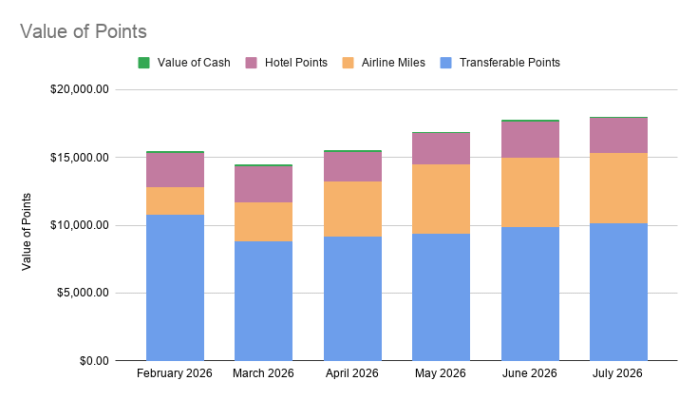
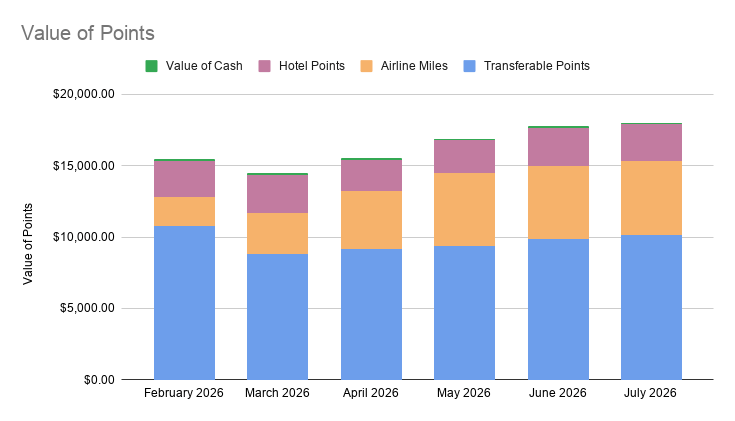
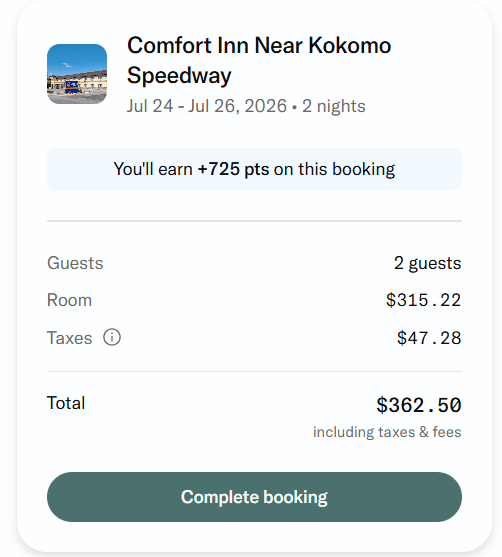
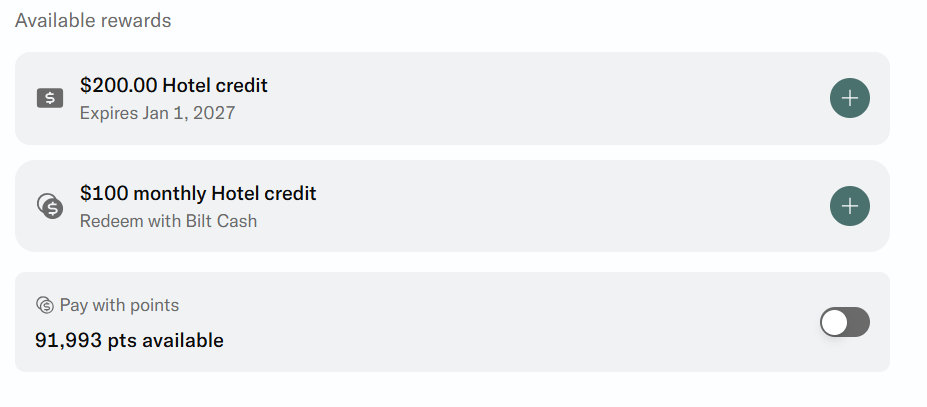


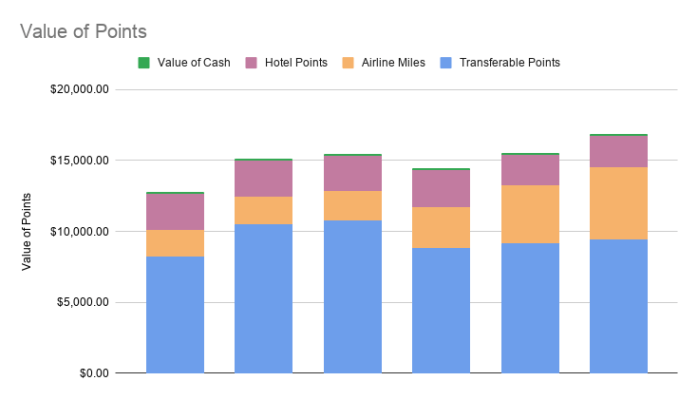
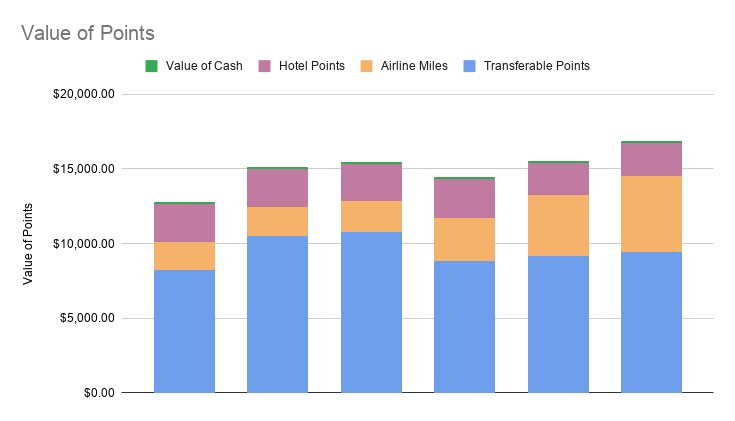
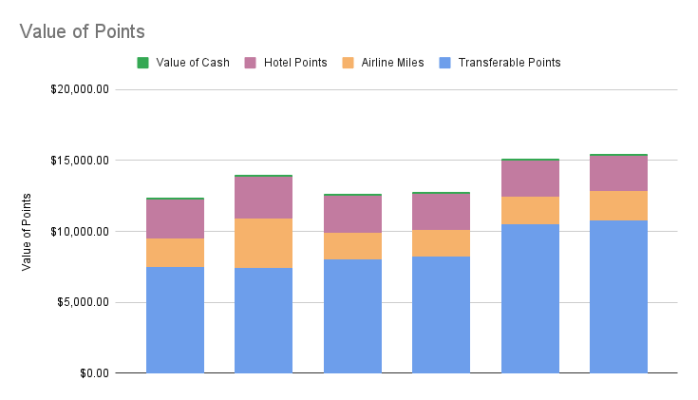
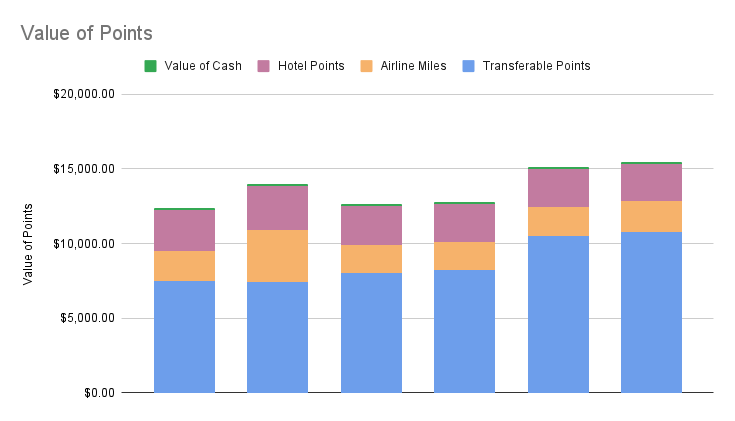
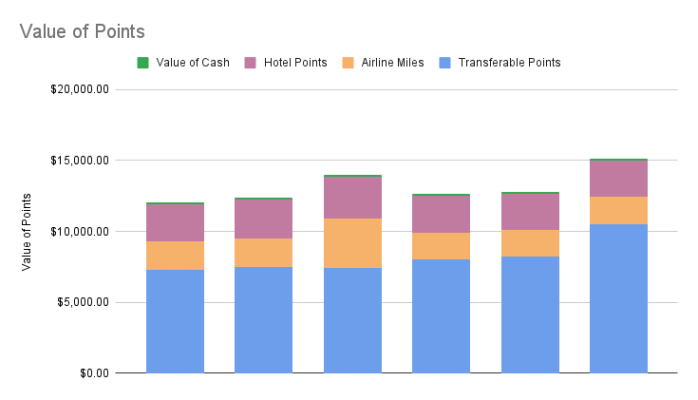
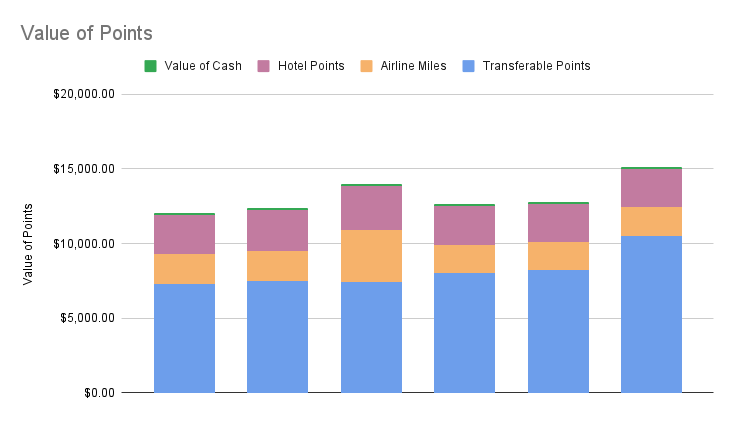
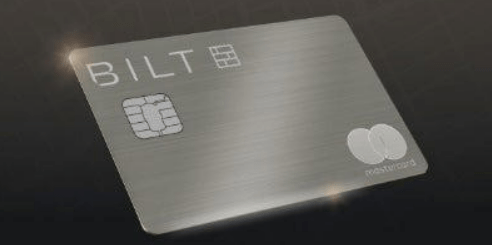


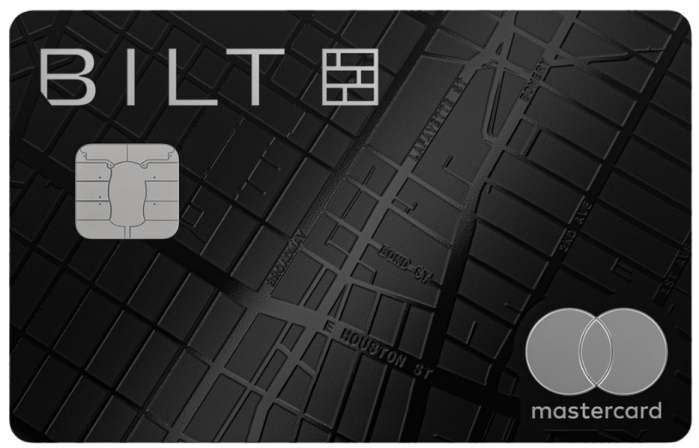
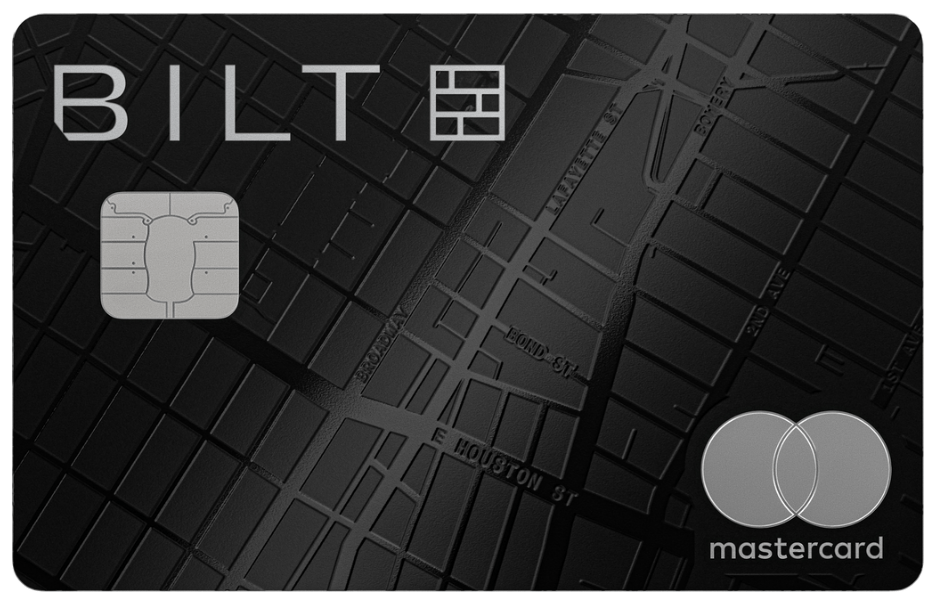
 Newby to Expert Traveler