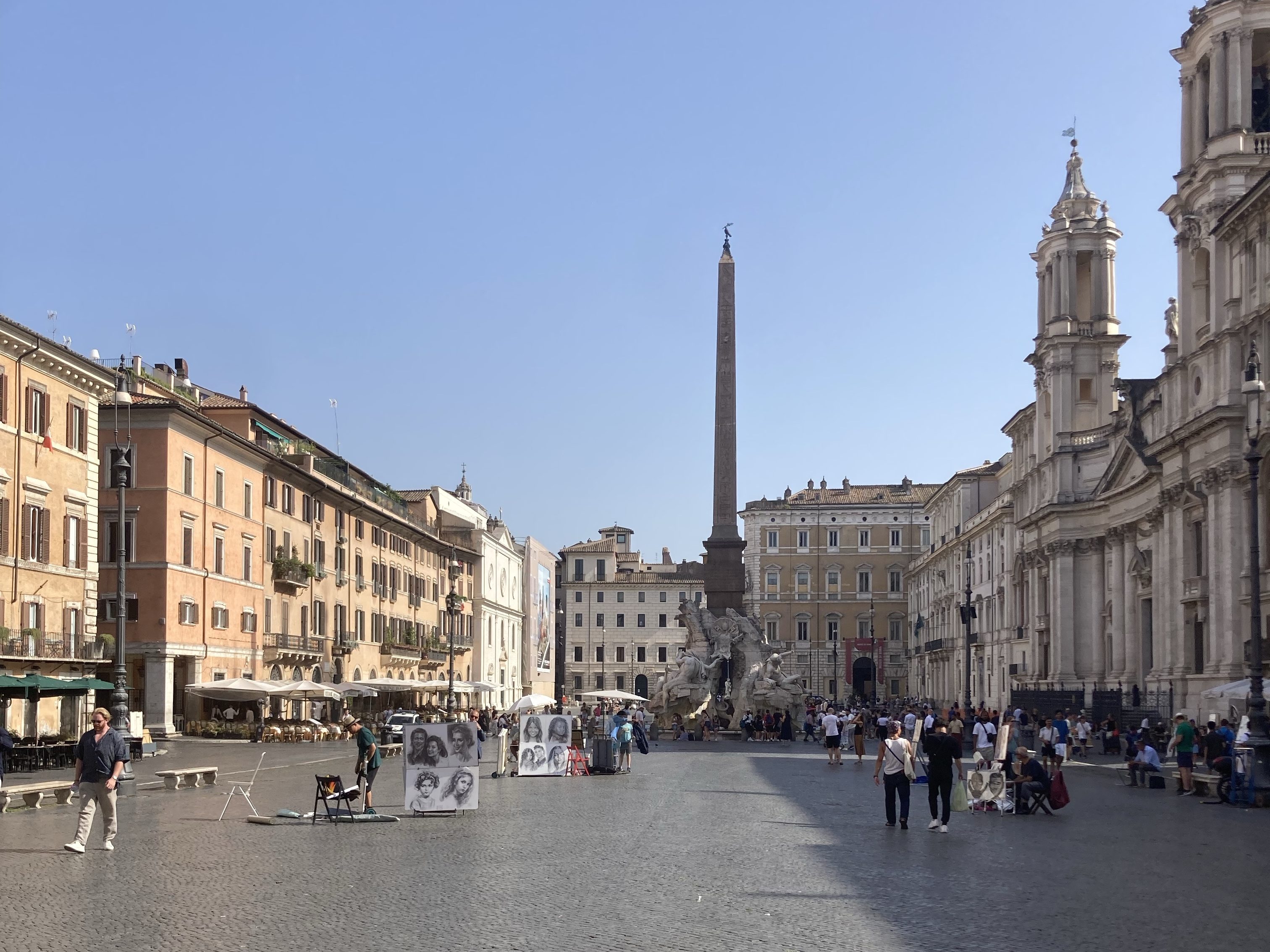
The amazing thing about Rome is the ability to just stumble into something historic while being completely oblivious. It was 106 degrees in Rome and we found ourselves looking for shade and a cold beverage. We wandered into the Piazza Navona where there was a lot of restaurants and found a spot to sit down under an umbrella at Bernini Ristorante for a drink. We were sat on the piazza directly adjacent to the Fountain of Neptune.
Enjoying a Peroni with a beautiful view of the Piazza Navona
Honestly, that’s pretty cool in its own right. You’re just wandering around in high tourist season and without a reservation you just sit down for a drink across from an amazing work of art? It’s just not a huge deal in Rome because there are fountains and ruins and statues everywhere.
Pro tip: Always wear swim trunks when swimming in the ocean. Its the best way to avoid having to peel a kraken off your junk with a trident.
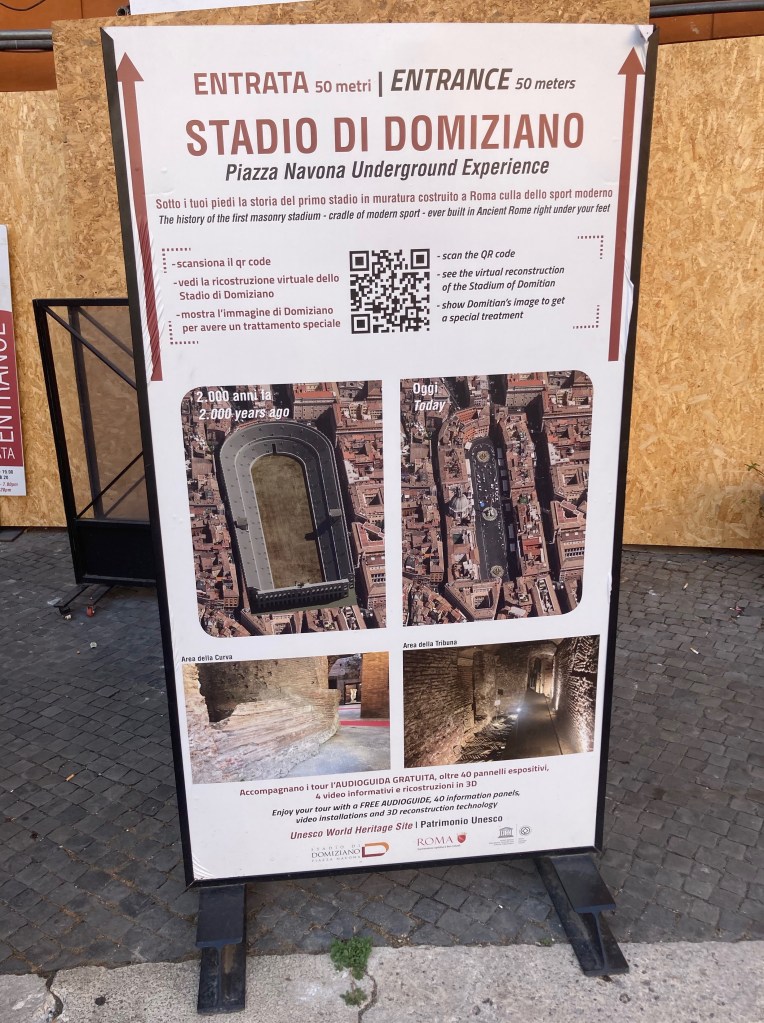
While we’re sitting, enjoying a Peroni and Aperol spritz, I look over and see a sign in front of a construction area. A quick google search and I learned that the Piazza Navona was built on the site of the Stadio Di Domiziano.
Sign outside of construction area directing people to the entrance of the museum
I compared the shape of the stadium on the poster to what I was seeing on the piazza and said “Hey guys, we’re sitting where they used to run chariot races!” (Which is completely false as I found out later, they never ran chariot races there). The kids looked at me like “So? Am I supposed to care about chariot races?”
The Stadio di Domiziano actually was a stadium built to house athletic events. It held around 30,000 Roman citizens and was built around 80 AD. It was built to house the Capitoline Games which was modeled after the original Greek Olympic Games. The Piazza di Navona is fairly long so I imagine that with only 30,000 seats this stadium probably didn’t need to be too tall. This probably meant that the stadium had great viewpoints from almost any seat.
The Fontana del Quattro Fiumi sits directly in front of the Church of Sant’Agnese in Agone, a beautiful 17th Century Baroque church
What is now the piazza is the size of the playing field and the buildings surrounding the piazza is where the stadium itself was. This stadium was built on the standard of Greek stadia which is 180 meters long which obviously is longer than a now standard 100 meter long track.
The fountain of Neptune was created by Giacomo della Porta in 1575.
You can actually take a tour of the ruins of the stadium, which is 15 feet under the piazza. Information about these tours can be found at https://stadiodomiziano.com/. Unless you speak Italian, you will need to have google translate that webpage into English for you.
The stadium fell into disrepair after the fall of the western Roman Empire and was gradually used for building materials. Eventually, the area was dedicated as a public space in the 15th century and developed into the Piazza Navona.
The Fontana del Quattro Fiumi (Fountain of the Four Rivers) was built in 1651 by Gian Lorenzo Bernini. It stands in the center of the Piazza.
After finishing our drinks, we walked around the piazza for a few minutes and continued on our way. We probably should have spent more time there but being in Rome for a short amount of time meant that we had places that we wanted to see and not a lot of time to waste. It is pretty amazing, however, that Rome is so filled with beautiful places like this with a rich history. So full of history, in fact, that you can’t even stop for a drink without stumbling into something like this.
Our point values actually when up this month for the first time since May. It feels good to go in the right direction for the first time in a while. We had a small hotel redemption this month and a signup bonus.
Thats a Lot of Work for a Free Banana
We had one small redemption this month. We scheduled a two day trip to Madison Wisconsin for the Madison Marathon. We used Jenn’s annual free night certificate that she gets from her Marriott Bonvoy Boundless card, and 23,000 Bonvoy points for the two nights. The plan is for Jenn to run 13.1 miles and for me to run 26.2 miles so that we can get a free banana and a Michelob Ultra. Hopefully, we can have a little fun in the two nights we’ll be in Madison, I’ve heard it’s a fun town to hang out in.
Our redemption came in at around .7 cents per point, which is a little low, but that’s okay. You can’t always maximize the value of your points. Sometimes you just need to be happy to get something you need.
Just Another Reason for her to Think She’s Better than Me
This will actually get Jenn over the 25 night threshold (15 nights were from just having a Marriott Credit Card) to make Marriott Gold Elite status. Apparently this gives us 25% more miles on Marriott stays and 2 PM late checkout. It also says it increases our chances of a room upgrade, but I doubt that will actually happen. The late checkout could really come in handy.
A New American Airlines Card
I applied and was accepted for the CitiBusiness AAdvantage Platinum Select. It has a $99 annual fee which is waived for the first year. It’s actually a pretty terrible way to earn points, in that it is 1x on most purchases, and 2x on American Airlines purchases, gas, telecommunications merchants, car rental services and cable and satellite providers. However, there is a 65,000 point sign up bonus for this card, and it does provide a free checked bag and priority boarding.
They do offer a $99 companion fare after you spend $30,000 on the card in a year. The companion certificate is only good within the continental US. Honestly, I can’t imagine that if you did this it would make mathematical sense. I would think that there are better options to spend $30K, where you would earn significantly more points, other than to get a companion certificate in this case.
You might be asking why I applied for a card that I’m badmouthing so much. Well, 65,000 miles is a pretty good haul for $4,000 in spend, and AAdvantage miles are a little hard to come by. American Airlines has no transfer partners outside of Bilt. Also, their cards don’t have great bonus categories, so it’s difficult to accumulate large amounts of miles. They do have a pretty good shopping portal, so there is some ability to accumulate AAdvantage miles that way, but the best way is through sign up bonuses. In addition, they fly out of my home airport (a small airport) which makes their miles more valuable to me.
American Airlines has 4 credit cards available through Citibank and 2 more through Barclays, meaning that they do allow a decent amount of chances to accumulate AA miles through sign up bonuses. Since spending on the cards earns such a small amount of points, and the only transfer partner is Bilt (a credit card company that doesn’t have signup bonuses), the only legitimate ways of accumulating points is through their sign up bonuses, flying American Airlines flights, or by using their shopping portal.
Relying Less on Sign Up Bonuses
A couple of months ago, we decided to start to slow down the number of credit cards that we were opening. There were some pretty good deals out there, and we weren’t able to take advantage of them because of our 5/24 status. 5/24 status is the number of personal credit cards opened in a 24 month period, a metric that Chase uses for determining you eligibility to open new credit cards. If you open more than 5 personal credit card accounts in a 24 month period you are generally considered ineligible to open a new one with Chase. It also seems that Capital One uses something similar, but maybe not as well defined.
Since we won’t need to devote as much of our spending toward meeting minimum spend requirements, we need to be trying our best to take advantage of spending bonus categories on the credit cards we already have. For example, last quarter I had a 5x on gas, groceries, and dining on my Marriott Bonvoy Boundless card on up to $1,500 of spend in the quarter for a maximum of 7,500 points. Also, we basically use the Chase Ink Cash card to pay for our streaming services and phone because we get 5x on those categories. The Ultimate Reward Points earned by spending on the Ink card are worth more than 2 cents per point. In addition, the Wyndham Business Earner card has a whopping 8x on gas.
Those are the types of things that we need to pay more attention to in order to maximize our return on spend when we don’t have to meet large spending requirements for sign up bonuses. I’ve created the chart below in order to keep track of the spending that is not dedicated to meeting sign up bonus requirements. Last month, we managed a 4.8% return, which seems pretty solid.
Anyway, on to the Points Check!
Card Used
Spend
Points Earned
Point Value
Points Per $
Return on Spend
Capital One Venture
$1,033
2,037
$37.68
2.0
4.0%
Citi Premier Card
$853
1,148
$20.66
1.3
2.4%
Chase Ink Cash
$707
3,518
$72.12
5.0
10.2%
Chase Ink Unlimited
$387
582
$11.93
1.5
3.1%
Marriott Bonvoy Boundless
$339
1,696
$14.25
5.0
4.2%
Wyndham Business Earner
$234
1,869
$20.56
8.0
8.8%
US Bank Leverage
$254
549
$5.49
2.2
2.2%
Totals
$3,807
11,399
$182.69
3.0
4.8%
In addition to the spending in the chart above, Jenn spent $1,900 on her US Bank Business Leverage Card and earned $29 in cash back and earned a $750 bonus for meeting the $7,500 spending requirement.
This left us with 282,200 Chase Ultimate Reward points, 85,300 Capital One Venture Miles, 48,400 Marriott Bonvoy points, 27,100 Citi points, 24,100 United miles, 15,000 Delta miles, 6,500 American Airlines miles, and 1,600 Hyatt points. According to the Points Guy Valuations, these points are valued at $9,900.
There is debate on this, but the general consensus is that around 600 AD, Italians who were fleeing attacks from Lombard invaders moved out onto the islands of Venice because they could defend themselves better on the islands. The islands were marshy and difficult to build on, but much easier to defend than being on the mainland. In order to prevent anything that was built on the marsh from predictably sinking, the Venetians drove millions of wooden posts into the marsh. These posts compacted the mud. The mud keeps the posts from decomposing and the combination of the mud and posts makes a solid foundation on which to build. Strip the City does a great job demonstrating how this worked in the video below.
Venice Becomes a Trade Empire
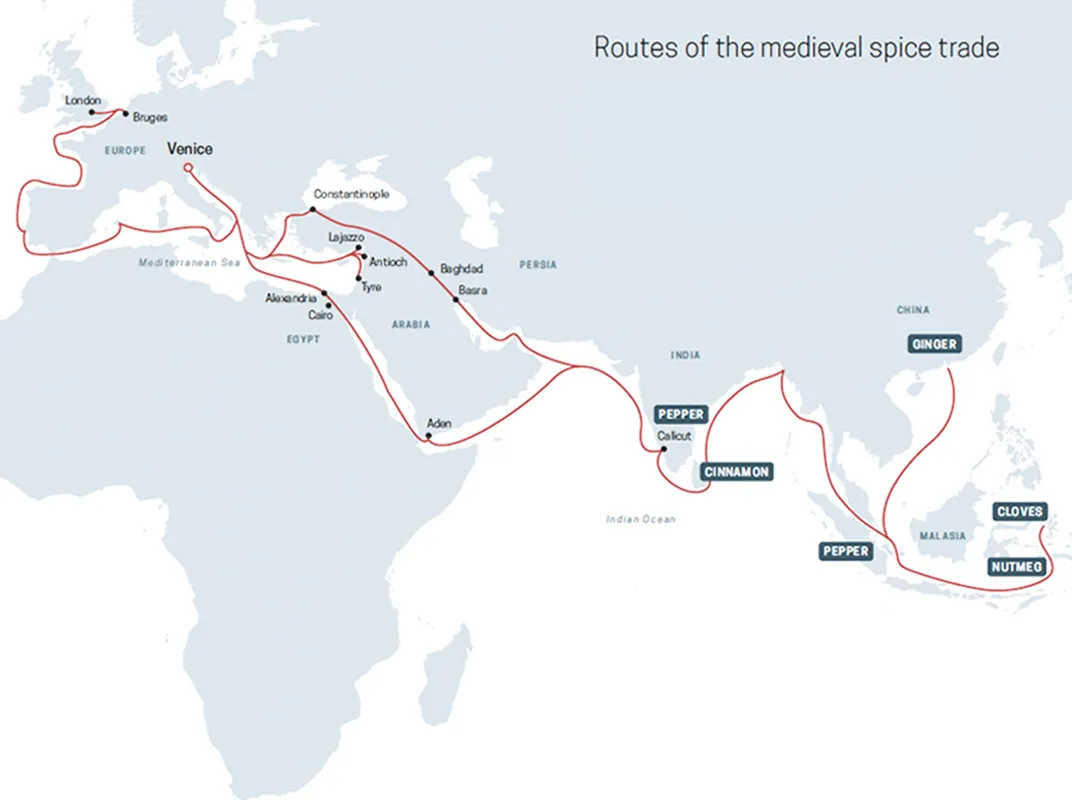
For much of the time between the 9th Century and the 16th Century, Venice was uniquely positioned to take advantage of trade routes. Venice had access to Constantinople as well as Alexandria by ship and was able to unload goods onto the European mainland. This allowed them to sell goods throughout Europe. Venice built a powerful navy in order to protect their merchants from pirates in the Mediterranean Sea. This turned Venice into a vital link between the spice and silk trade of Asia and Medieval Europe where those goods were so valuable. The Smithsonian Magazine has a great article which goes into greater depth on this subject.
Image provided by the Smithsonian Magazine
Wealth Produces Art
One thing that always seems to be the case throughout history, is that where there is great wealth, there is great art. The vast trading empire of Venice was creating an amazing amount of wealth amongst its merchants. That wealth created a market for artwork, since having great artwork is generally a way that many wealthy people demonstrate that they are wealthy and successful. There are a number of famous renaissance artists from Venice, including Giovanni Bellini, Vittore Carpaccio, Giorgione, and Titian.
Palazzo Cavalli-Franchetti
We typically think of painting when we think of art. But art is evident throughout Venice. You see it in the architecture, the stonework and the ironwork on buildings. You see it in the statues and even in the beauty of the gondolas that seem to glide through the canals.
Gondolas take around 6 months to build and cost around 40,000 Euro.
The Architecture of Venice
As was just about everything in Venice, the architecture of Venice was influenced by its trading partners. Because Venice was trading with people throughout Europe and into the Byzantine Empire, a new form of architecture emerged in Venice. It is known as Venetian Gothic and it is found throughout Venice and has elements of Gothic architecture such as pointed arches, rib vaults and tracery as well as elements of Byzantine architecture such as the use of domes and veneers. These elements created a unique style that can be seen throughout Venice.
The domes at St Mark’s Basilica are examples of Byzantine influence in Venetian architecture
The vast majority of buildings are obviously not as adorned as St. Mark’s Basilica, but even the typical homes in Venice have a certain flair to them. There are a number of Juliet balconies, windows featuring tracing and pointed arches, and a lot of lovely doors. There are also window boxes with flowers everywhere. It all leads to a style that is positively Venetian.
The Doors of Venice
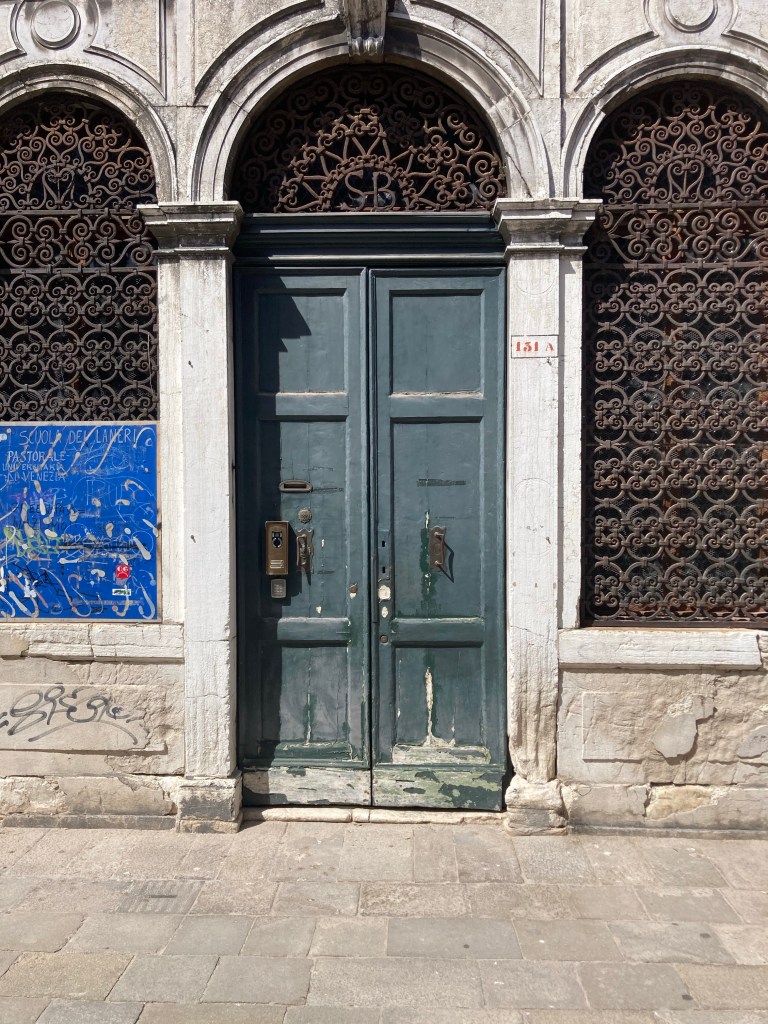
One of my favorite things about Venice is the doors. They all seem to be unique to the buildings. A lot of them are wooden and very worn with time. Often you see them like in the below picture, with beautiful stonework and ironwork surrounding the doorframe.
Other times, you see doors which are not quite as worn, but instead are truly unique pieces of art, like this beautiful metal door. This door also has beautiful stonework surrounding it as well as some really interesting brickwork.
Below is another example of great stonework and brickwork surrounding the door. Also, this door is a gorgeous piece of woodwork. Another thing I’ve noticed about Venetian doors is that not always is the lock and door pull where you would expect them which is interesting. Venetian doors also tend to all have letter slots.
Beautiful Door with Inscription over it meaning “Year of our Lord 1904″
Venetian Statues
If you walk around enough in Venice, you will undoubtably come across a few statues. Many of the campos in Venice feature a statue dedicated to a historical figure of Venice. From the limited amount of time I spent in Venice, it seemed that the majority of these statues were fairly recent, being from the 19th Century or newer. However, in my opinion, they fit in nicely to their surroundings, even if they are recent additions to the plazas they inhabit.
The Monument to Daniele Manin was erected in 1875 and was sculpted by Luigi Borro.
The above statue is a bronze statue of Daniele Manin, who was born in Venice and an important leader who helped to reunify Italy. It is the featured statue in Campo Manin, obviously named for the Daniele Manin.
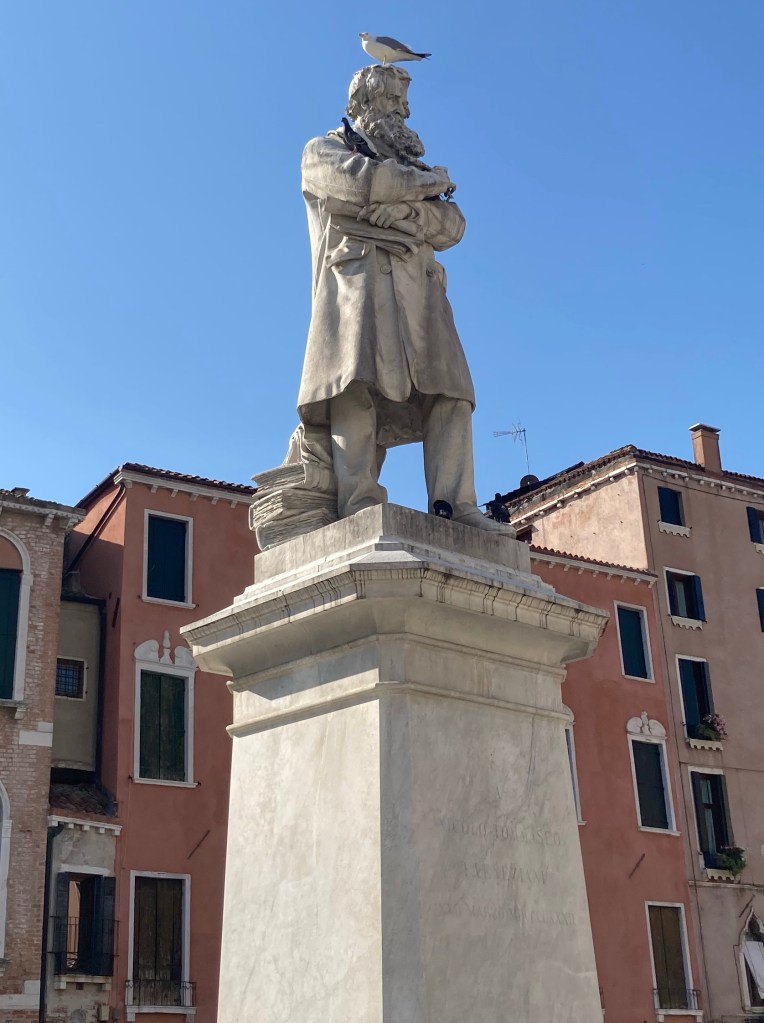
Monument to Niccoló Tommaseo built in 1882 by Francesco Barzaghi
The statue above, is a built out of Carrara marble. It was a monument built to Niccoló Tommaseo who was known as a scholar and an Italian patriot. This particular statue has a funny nickname, because as the sculptor was carving the statue, it began to have structural issues. In order to keep it from falling over, he carved a stack of books for Niccoló to lean on. The problem is that the stack of books looks like it’s flowing from under his overcoat, which has earned the statue the nickname “book shitter”.
The Bridges of Venice
Virtually all bridges in Venice are built with the same basic shape. The strength is created by an archway over the canal, while a walkway is a set of stairs up and a set of stairs down. Many of the bridges, especially the ones that are built over smaller canals are built with stone and brick.
Both of these bridges are typical of Venetian bridges. Arched at the bottom and stairs on top.
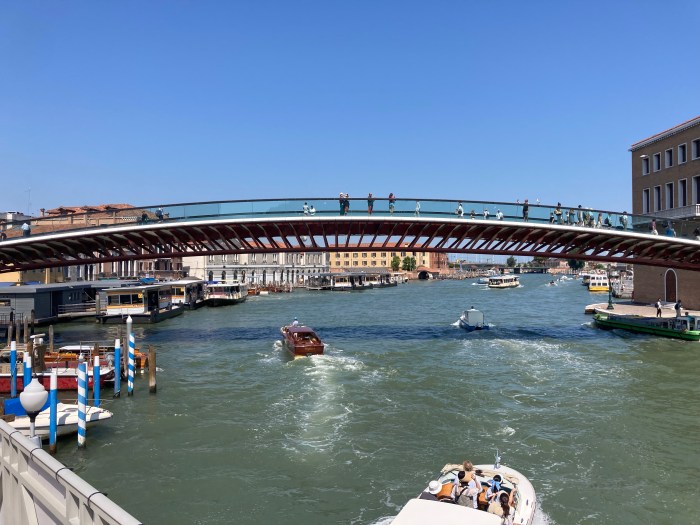
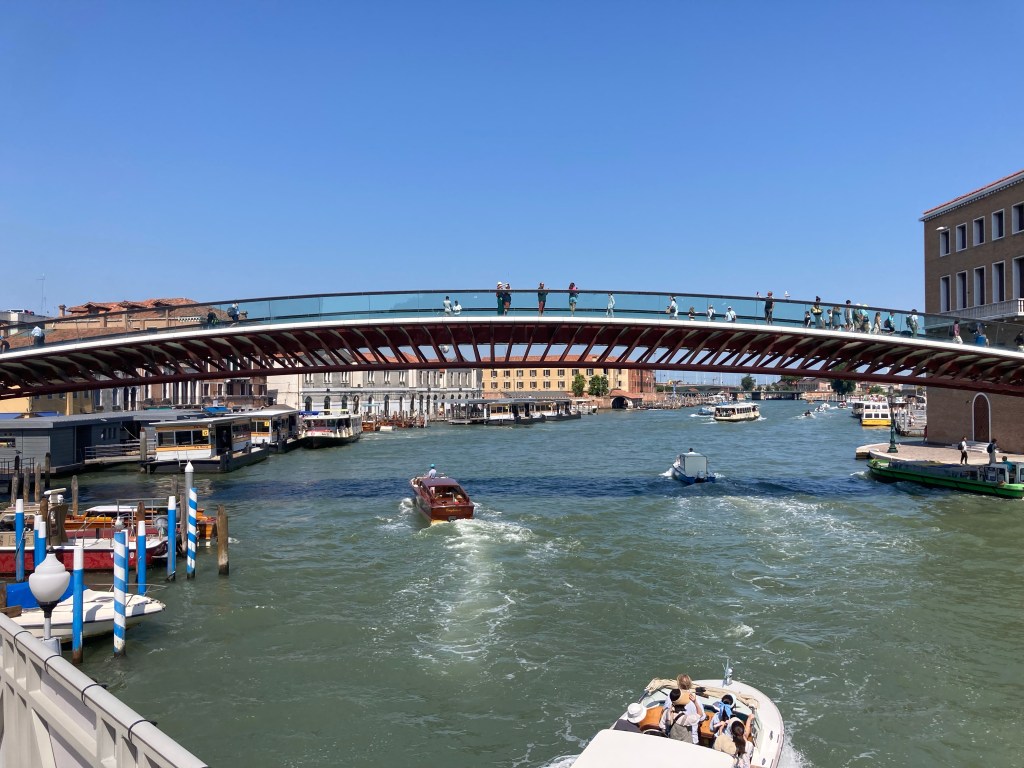
The bridges that are built over the Grand Canal are longer and require a more modern structural design. The most modern example is the Constitution Bridge that was opened in 2008 and is unique in Venice for it’s steel and glass construction and modern design.
Artistic Touches
There is a certain flair to much of what you run across in Venice, you’ll see it in door frames, window frames, as well as architectural sculptures. You’ll also see it in the detail of the three flagpoles in the Piazza San Marco. The bronze bases were sculpted by Alessandro Leopardi in 1505. The flagpoles are spaced out in front of the St. Marks Basilica and are strikingly beautiful.
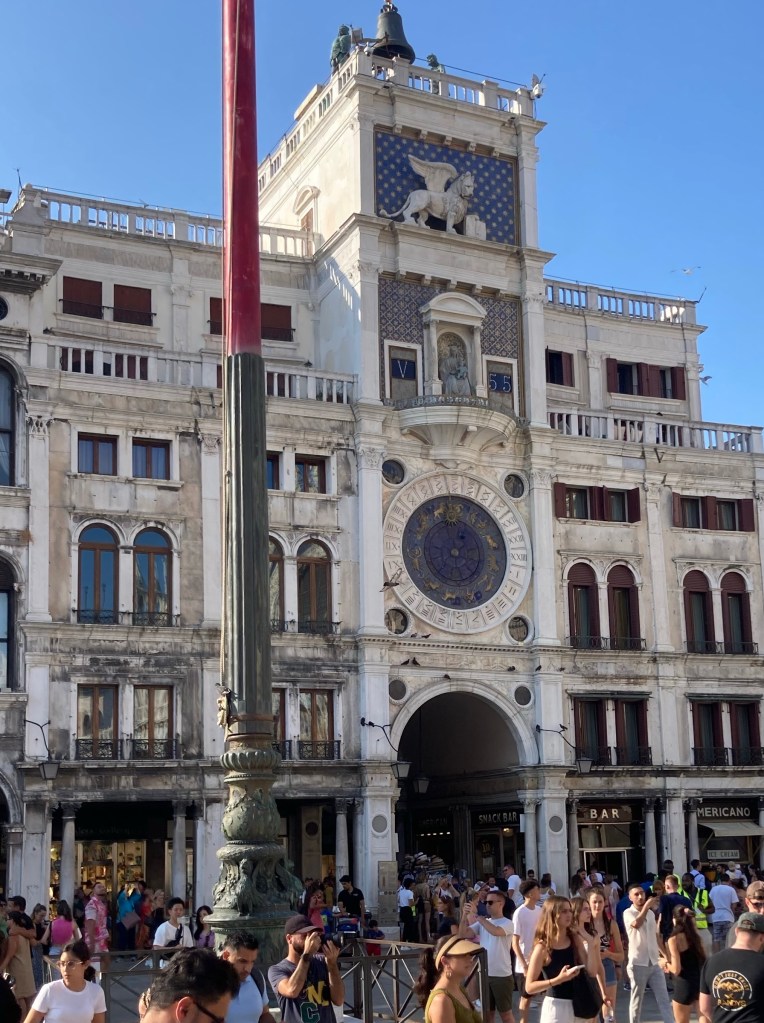
St Mark’s Clocktower is also a great example of the style of Venice. It’s an beautiful white stone structure, with the Lion of St Mark near the top. Below that is the Virgin with Child and then the clockface itself. This clocktower was built as a replacement for an older clocktower in the late 15th Century.
St Mark’s Clocktower
St. Mark’s Basilica itself takes the details to extremes. There are details everywhere. Just one small section of the basilica demonstrates the details. There are multiple columns and a stone archway. The door itself has intricate ironwork while the head of the doorframe is an intricate Byzantine design. The most stunning part, however is the mosaic half-dome which depicts the moment that St Mark’s body was carried into the Basilica. It is adorned in 24 carat gold leaf. Seemingly every inch of the Basilica is covered in detail like this.
This mosaic half dome over a door to St Mark’s Basilica is stunning.
Ironwork of Venice
Venice has some amazing Ironwork that can be found around the city. Mostly you will see it in gates, fences and balconies, but you will also see it on lamp posts.
Ironwork on the doors as well as on lamps are everywhere in Venice
The most typical places that you see this ironwork is as window grills or as door protections. I’m sure that the original purpose of this was for security, however they do tend to be very beautiful and add a certain flair to an already beautiful city.
Window Grille from our AirBnB looking out to a courtyard
The Canals of Venice
Canals aren’t necessarily art themselves, but in reality they are the parts of Venice that weren’t forced to become solid ground. They are, in a sense, the absence of development. But they are also the main thoroughfares that are the lifeblood of Venice. They are the roads that deliver the goods that feed the city as well as transport citizens and tourists alike around the city.
The canals are quintessentially Venice and are usually the first things that people think of when they picture the city. They are more a result of public works, much as any street in the world is, but there is just something uniquely beautiful about these canals. I believe that beauty is a result of how well the canals fit in with their surroundings.
Centuries of Artisans create a Single Masterpiece
In the end, what Venice has become is the result of centuries of hard work by thousands upon thousands of hard working Venetian citizens. Great cities take time to evolve. Venice was a city built in the marsh because of the need for security of its citizens. It developed slowly but steadily into a trading empire and it’s citizens became wealthy. As the city developed, they continued to make improvement after improvement, whether it be public works projects like bridges and canals, architectural and building projects, or artisan projects like statues, doors and ironwork.
In the end what is left is a single masterpiece that people from around the world visit and admire. It is one of the world’s great cities and should be experienced at least once in a lifetime.
The Manitou Springs Incline is a popular hiking trail and fitness challenge located near Colorado Springs. It is a 2,000 foot climb over the length of a mile up of 2,744 steps made of railroad ties. The Manitou Springs incline is really the remains of a funicular railway built to access water tanks at the top of the mountain which provided water pressure for Manitou Springs. The railway was built in 1907. I don’t know if the water tanks are still in operation but I can only imagine how much water pressure was generated from a more than 2000 foot fall. The railway itself was abandoned after a rock slide took out the tracks in 1990 and the cog railway company decided not to rebuild it. Since the railway shutdown it slowly grew in popularity as a fitness challenge.
Whose Idea Was This?
We had been sitting in the covered patio area at Cerberus Brewing in Colorado Springs and struck up a conversation with a local couple. After mentioning the fact that we are runners and like to hike, they said “I bet you guys would love to do the Incline.” Once they explained a little about it and Jenn became intrigued by the idea – a 2,000 foot climb on 2,744 steps in around a mile? “Yes, we should totally do that!” she said while I stared at her, puzzled, a little scared. “Are you serious? Because I’m game if you are.” She got online and made the reservation for the next morning – I guess we’re doing this. This is stupid, right?
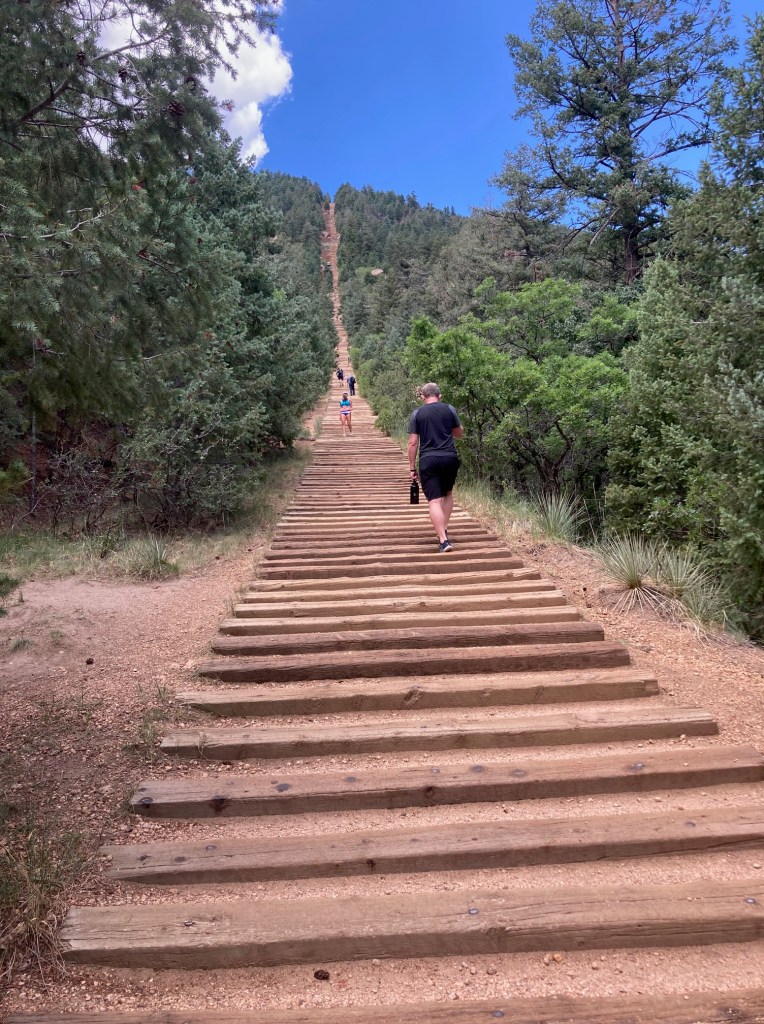
We left the kids at the camper because they had zero interest in torturing themselves that day. We checked in at the check in station (they only allow so many hikers per hour for safety reasons), and started the long walk up the stairs. The first thing you notice, is that the stairs are just railroad ties, as you get steeper on the hill, those railroad ties are held to each other by steel cables.
We started up the path, and we quickly noticed that there was a placard on step 100, well at least we’ll know how far we have to go. It was fairly obvious early that this was going to be more difficult than we expected. When we got there we were thinking it would take an hour to get to the top. By step 200, we were already taking fairly regular breaks, and an hour was out of the question.
Struggling with Thin Air
One of the problems was that the entire time we were in Colorado, Jenn and I seemed to be taking turns having issues with altitude. I was particularly surprised by my issues with the elevation, because I’d been higher before without any issues, and I was having breathing problems trying to sleep at 6,500 ft elevation, which was pretty unexpected for me. I mean I was training for a marathon at the time. On this day, however, I was having no issues and Jenn was struggling. She was light headed and breathing heavy. This was also unexpected, she had been training for a half marathon, and we had already been on some reasonably difficult hikes at higher elevations than this. This was really just bad luck that she was having elevation related issues that day.
We made it to step 500 at a little over a half hour and frankly I was pretty concerned, Jenn was really giving it everything she had, but was still struggling with the elevation, it honestly felt like we weren’t going to finish. I asked her if she wanted to bail out and she told me she was determined to finish. Alright, we’re doing this.
As steps started getting steeper in the middle, Jenn was actually speeding up. She was starting to hit her stride, and we began to care less about the difficulty and started to enjoy the hike. The views were more and more amazing as we were ascending. Our stops felt more like a way to get enjoy the view and less a desperate attempt to catch our breath.
The Friendly Ground Squirrels
On one of our stops, I opened up a Lärabar, and a ground squirrel came up to me. Apparently, these squirrels are super tame and have learned to beg for food. He grabbed it, and quickly gobbled it up. He was obviously very used to hikers and continued to hang around while we caught our breath, even posing for a couple of pictures.
Finishing the Incline
We kept up the path, which in spots were getting steep enough that I needed to use my hands. We went past step 1,500 then 2,000. By the time we were around 2,300 the summit was becoming visible. Just a little further.
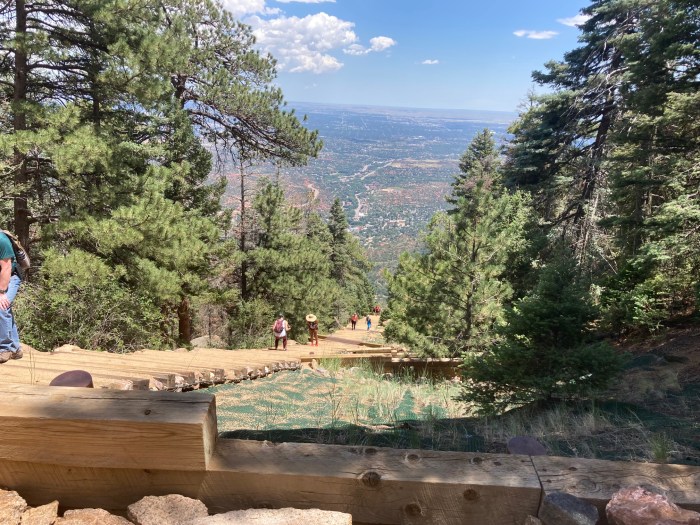
We made it all the way to the top, and the view is surreal. There is definitely a reason people are willing to torture themselves to do this. I’ve heard that on a clear day you can see Kansas, and while I don’t doubt that, it’s not like there’s some landmark to look for on the horizon. It was difficult to believe those tiny buildings down below us were from Manitou Springs where we started the hike.
I’m very proud of Jenn for finishing that hike. I knew she was having a bad day and she pushed through. On a different day, she probably would have enjoyed it more and honestly it probably would have taken half the time. She persisted through the light-headedness and shortness of breath.
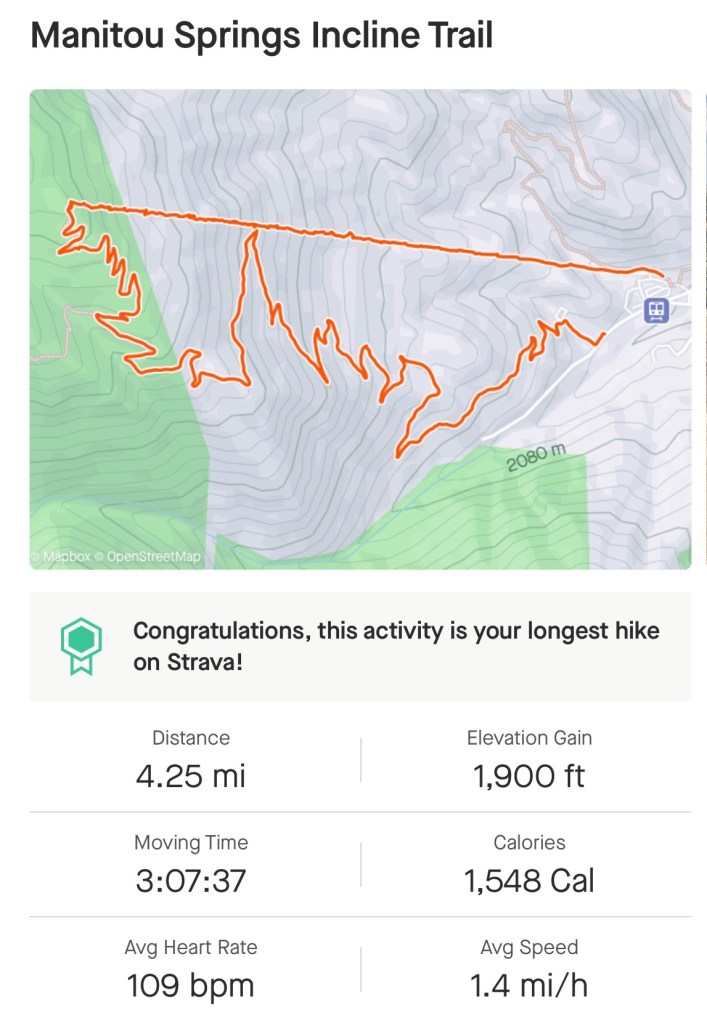
We proceeded down the 3 mile downhill trail to get back to the town and hopefully catch a drink since we had run out of water already. I believe the 4 mile hike took about 3 1/2 hours, which was definitely slower than the average hiker, but I’m okay with just finishing it. It’s a beast.
25 hikers every 30 minutes from 3:30 PM to 6:30 PM
Capacity from early November to mid March:
25 hikers every 30 minutes from 6 AM to 7 AM
45 hikers every 30 minutes from 7 AM to 8 AM
65 hikers every 30 minutes from 8 AM to 1 PM
45 hikers every 30 minutes from 1 PM to 2 PM
25 hikers every 30 minutes from 2 PM to 3 PM
I would recommend taking weather into account when making reservations. For example, during the summer, if the weather is likely to warm and sunny, you might want to start early in the morning when it’s a little cooler, because the heat might zap you of your energy.
How Long Does it Take to do the Manitou Incline?
The length of time it takes to do the Incline varies wildly. It took us around 2 hours and 30 minutes to reach the summit. That is definitely slower than average. The average is probably around 90 minutes. The record was set by Remi Bonnet in 2022. It took him a mindboggling 17 minutes 25 seconds. The record for a female was set by Allie McLaughlin in 2010 in a blistering 20 minutes 7 seconds. There are more Manitou Incline records here.
This is just to get to the top of the incline, there is a much easier 3 mile winding decline back to the parking lot that will probably take the average hiker just short of an hour.
In case you’re curious about how many calories you’ll burn on the Incline, according to Strava, I burned over 1,500. Keep in mind I weigh a little over 200 pounds, so if you weigh less than that, you will burn fewer calories and if you weigh more, you will predictably burn more. I’m sure there’s a good restaurant or two in Manitou Springs to replace those calories after burning them.
Can a Beginner do the Incline?
The Incline is a pretty serious hike. You need to be in pretty good shape to do the incline. Here are a few questions you should ask yourself before you attempt the Incline.
What overall cardiovascular shape am I in? This does require a decent, but not spectacular amount of cardiovascular health.
How flexible are I? These are not uniform steps, some are probably about 2 foot high, and while you don’t need to be a gymnast to be able to climb the steps, a decent amount of flexibility is important.
How acclimated to the elevation are you? If you are not very acclimated to the elevation, you might find yourself fighting for air. In that case, you will probably want to be in really good cardiovascular shape to attempt it. If you are acclimated to the elevation, cardiovascular health will be less important. In other words, a person who lives at elevation in Colorado Springs will probably not need to be in quite as good of cardiovascular health as someone who lives at much lower elevations, like Iowa, for example.
Where Do You Park for the Manitou Incline?
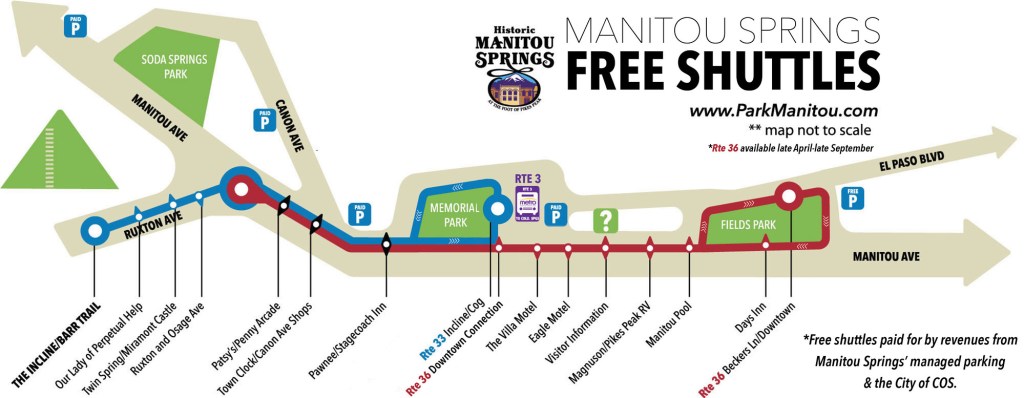
Paid parking is available at the Manitou Hiawatha Gardens parking lot. That shows up as the P icon located to the right of Memorial Park on the map below. As you can see, there is a free shuttle stop there that will take you to the base of the incline. Expect to pay around $2.50 per hour for parking in the Hiawatha Gardens lot.
Manitou Springs uses a kiosk system where you can pay with a credit card using a smart phone. This is really nice, because we were we found ourselves eating lunch after our hike when I received a text message telling me my time was expiring and asking me if I wanted to extend my time. I was able to pay for additional time right from my phone, without having to go back to the lot to extend the time. More information about parking in Manitou Springs can be found here.
What if I Can’t Finish the Incline?
There are plenty of people who don’t make it, so don’t feel too bad about not making it up the Incline, it’s a serious challenge. I saw a number of people who were walking down the stairs, which does get increasingly difficult as you move up the incline and it gets steeper. More importantly there are three bailout points along the path. The first bailout point is at step 395 and the second bailout is at step 1300. Each of these bailout points connects to the Ute Pass which is a gentle decline back to the base of the trail. The third and final bailout point is at step 1800 and ties back to Barr Trail.
There are no bailouts past step 1800, so you should do a real gut check at that point to decide if you can finish. That bailout a little more than halfway to the end and it gets increasingly steep from that point, so the further you get from step 1800 the harder it is to return to the bailout (and the closer you are to finishing).
What should I Wear on the Incline?
When dressing for the incline, you need to realize a few things.
Dress for the weather – you’ll be out there for a while and there isn’t going to be any air conditioning or heating along the way. You will be exposed to the wind and sun with no shade for most of it.
We wore running shoes, but it would have been useful to have some shoes with a little more grip. There is a lot of loose sand on the trail and falling is a distinct possibility. Trail shoes are probably more appropriate than running shoes.
You are going to be taking some big steps and you’re going to want to have clothes that give you freedom of movement. Tight jeans would probably be a poor choice, for example.
It is helpful for someone in your group to have a backpack so you can store extra water, snacks, and maybe some extra clothes. It also doesn’t hurt to have some a first aid kit and some sunscreen.
Are There Bathrooms on the Manitou Incline?
No, there are no bathrooms on the Incline, so you should take that into account before starting the hike. There are porta-potties near the entrance that you should use before starting the Incline.
So is The Incline Worth it?
Below is a great video made by The Twins Wolfe about the Incline. It gives you a great idea of just how hard but also rewarding this hike can be.
Not Challenging Enough? Keep Going on the Barr Trail to Pike’s Peak
Once you finish the Incline, you will meet up with the Barr Trail, which is the path that goes from Manitou Springs to the top of Pike’s Peak (elevation 14,115’). Most hikers exit the incline by going down the Barr Trail to the beginning but you can use the Incline as a “shortcut” and trade an extra 2 miles of hiking for an intense climb. From there, no big deal, it’s just a little more than 9 miles and 5500 of elevation to Pikes Peak. If you can do that, my hat’s off to you. You’re a certified badass.
We arrived in Venice later than we had expected. Our train was supposed to be in Venice around 6:30, but due to some downed power lines in the Alps, our train from Munich to Venice was delayed for about an hour and a half in Innsbruck. Then, for some reason, OBB refused to go to the destination on our ticket, Santa Lucia, and forced us to take a commuter train from the Venice Maeste station to the Santa Lucia station. I still don’t understand what was going on there, but I’m sure the explanation was lost in translation.
The church San Simeone Piccolo is unmistakable when exiting the train station
We finally arrived around 2 hours later than expected, around dusk. Looking for our AirBnB, we followed the waypoint on Apple Maps from the train station to a courtyard. The directions weren’t making sense, so I double-checked where we were and said “Uh, honey, we’re on the wrong side of the island.” Somehow, the waypoint on Apple Maps was set in the wrong location, and I’m still not sure why, but we were completely in the wrong place. We had walked about 15 minutes on an expected walk of 15 minutes and now according to the map we were now 25 minutes away from our AirBnB. We were thirsty, hot, a touch hangry and lost.
Narrow streets paved with setts lined with gorgeous centuries-old buildings is typical of most streets in Venice
Eventually, after around 45 minutes of wandering around Venice, dragging our suitcases with the clickity-clack of the suitcase wheels smacking every crevice of the stone streets, we arrived at our AirBnB. We took a quick look around the place, dropped our suitcases, and went out to get some food. There was a little pasta place about 50 steps from our door and we sat down for some authentic Italian pasta.
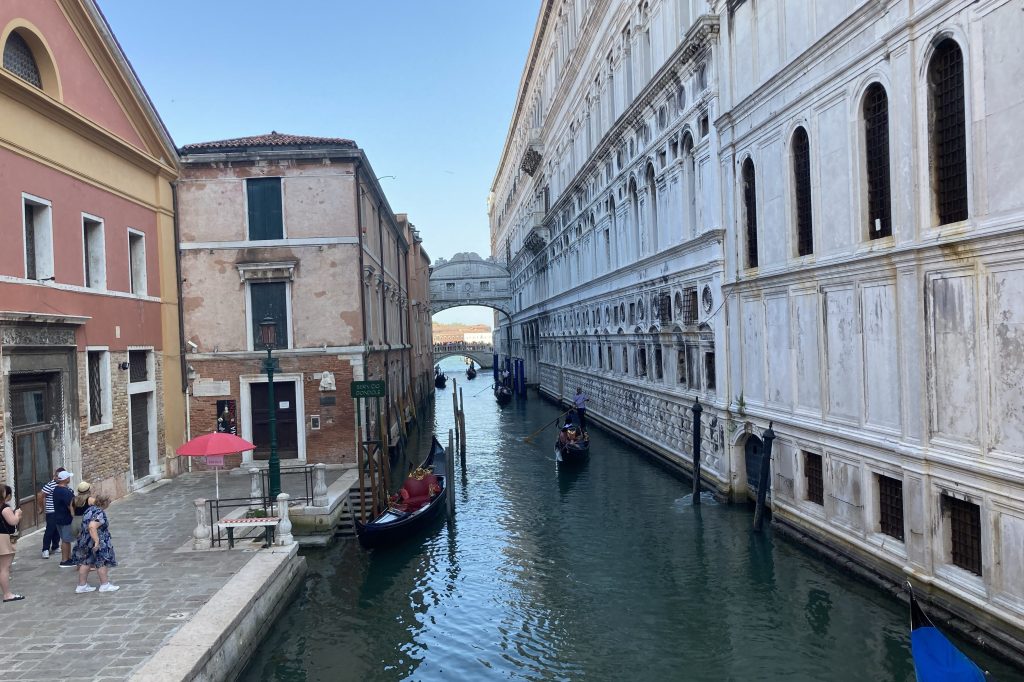
The Bridge of Sighs where convicts would cross and get their last view of Venice before being imprisoned.
Once we had sat down and some food hit our stomachs, we realized that here we were, wandering around one of most beautiful cities in the world, after dark, in the glow of the streetlights, and we hadn’t enjoyed it, because the day didn’t go the way we wanted. It was ridiculous, how in the world had we walked miles through Venice while being thoroughly cranky?
Brick and stone arched bridges, rooftop decks and Juliet balconies are typical features in Venice.
It certainly wasn’t the last time we were lost in Venice. We spent the next few days trying our best to navigate the streets, but it’s tough. We had GPS constantly going and we still would get lost. Venice is just a giant maze, which sounds horrible, but it’s a maze filled with gelato, pasta, cicchetti and aperol spritz.
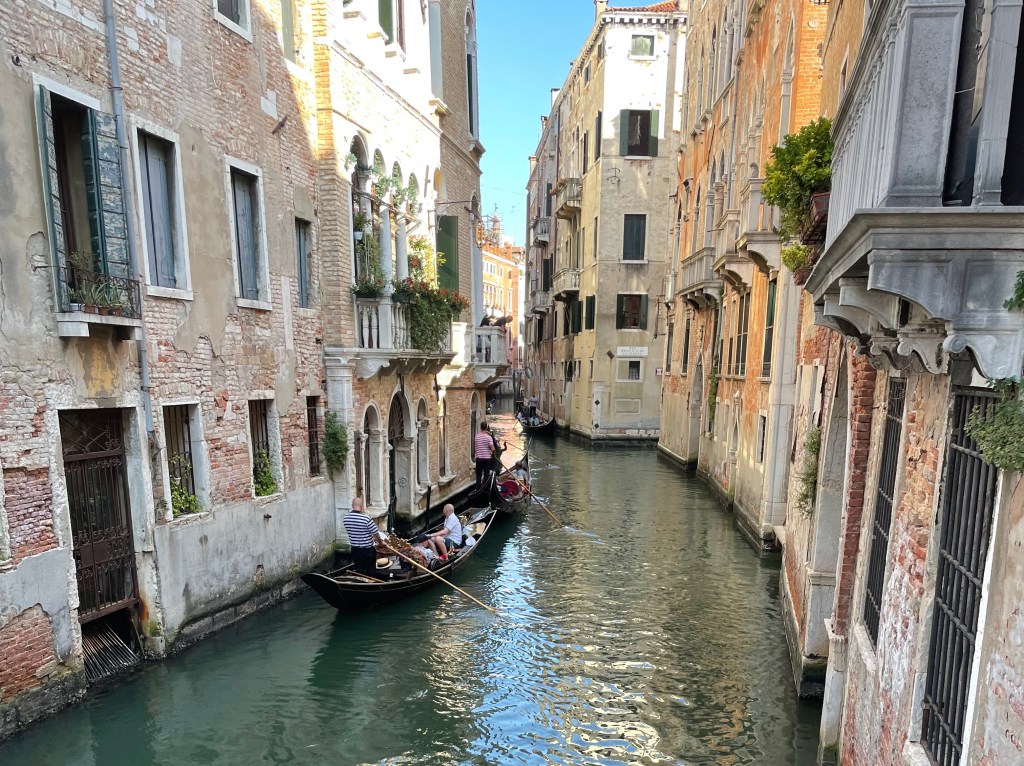
Gondoliers navigate a narrow canal.
Learning the lesson from our previous crabbiness, we took the other times we were lost in stride. The basic problem, of course, is that Venice is a haphazard collection of narrow, crooked streets and alleys. It’s almost as if the buildings of Venice were dropped wherever and they just built the streets around them. Sometimes the streets narrow down to just a few feet, sometimes they widen into a large piazza with statues and restaurants with outdoor seating.
The Ponte Della Constituzione Bridge is beautiful, but it’s modern design seems wildly out of place in Venice.
It’s chaos, undeniably beautiful chaos. When we made plans to go to Venice there was a lot I hoped to do, but honestly Venice has a way of slowing you down. There’s no real public transportation other than the vaporetto, a water bus, which we didn’t use because the routes didn’t seem useful to us. You pretty much have to walk everywhere. Getting places just takes a while, and once you figure in the time that you inevitably get lost, you end up spending a lot of the day just walking. To make matters worse, there are not as many bridges over the canals as you would think. Also as we found out, the bridges aren’t always on the “main” streets. Sometimes the bridge you need to take is down a narrow alley and around a blind corner.
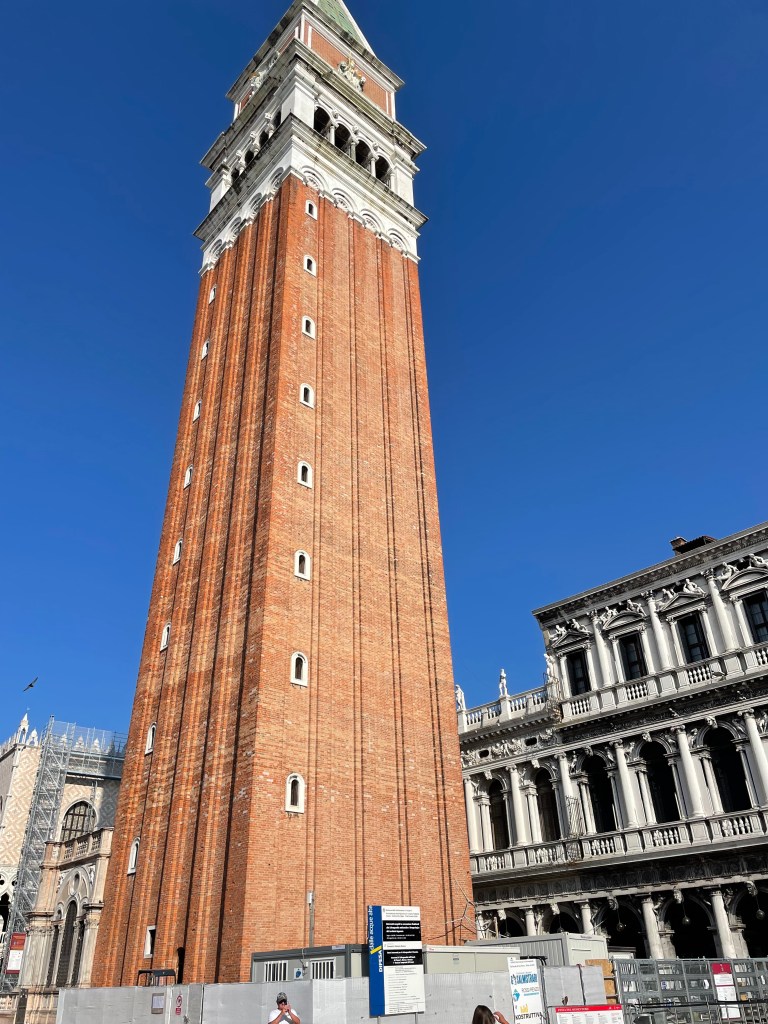
The Campanile Di San Marco is an impressive 323’ tall tower in located in the Piazza San Marco.
The addresses in Venice are also maddening. The AirBnB that we stayed at had an address something like 3343 Dorsoduro. Dorsoduro isn’t a street, it’s an area, a fairly large area in Venice. I legitimately have no idea how Venetian house numbers work. They seem to be grouped but just because you’re standing in front of 3341 doesn’t mean that 3343 is right next door. You’re probably close, but that doesn’t mean you’re really close. This is why you need solid directions, or Google Maps if you are going somewhere specific, those addresses are largely meaningless.
Statue of Daniele Manin, a 19th century statesman from Venice.
The problem isn’t really Venice. In the words of Taylor Swift, “It’s me, hi, I’m the problem.” I’m a middle-aged American who has spent his entire life with a unfinished checklist. Being task oriented is a way of life for Americans. Being in a hurry is so ingrained in us from childhood, that anything that stands in our way is unbelievably frustrating. I had things on my checklist that I needed to check off. I was so wrapped up in buying our groceries from Despar Teatro Italia, getting cicchetti at Arcicchetti Bakero, and finding a bar with a decent beer list that we didn’t wander the way someone really should when visiting Venice.
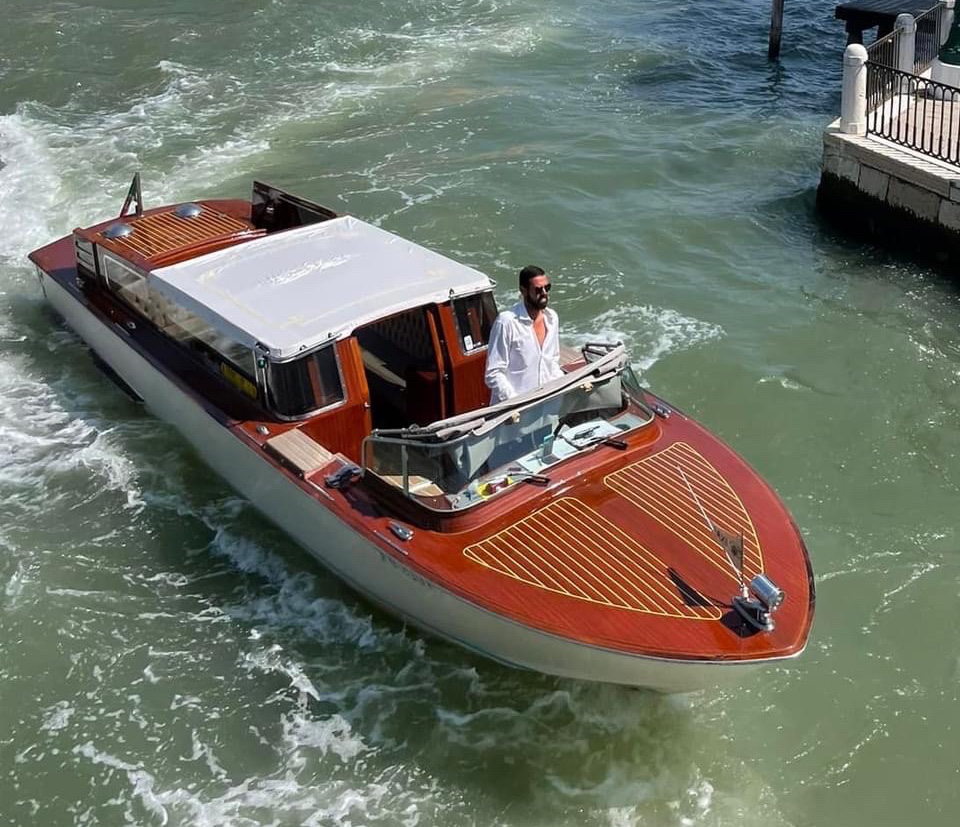
I’m not a big boat guy, but that’s a gorgeous boat.
I’m not saying you shouldn’t have an itinerary when visiting, however we were only there for a few days and it really wasn’t until our last day where we just let Venice tell us where to go. Because of that, when we were walking along the street next to the coast in the Dorsoduro District we saw a floating bridge to the Giudecca District across the Giudecca Canal. If we hadn’t been walking there, I wouldn’t have known that bridge even existed. The bridge doesn’t even show up on Google maps because it’s a pontoon bridge that is only assembled for the Festa del Redentor (Feast of the Redeemer) which takes place over two days in July. We went across the bridge and ended up having lunch there.
The Chiesa de San Barnaba was hosting a DiVinci exhibit.
In retrospect, I wish we had a few more days there. A week might have been perfect. I could have gotten used to the pace of life in Venice, taken our time and really properly wander the streets and alleys of Venice, while still managing to do some of those must-do things like visiting St. Mark’s Square, sunbathing on Lido Beach, or climbing the Campanile. After all, if you’re not randomly stopping for an aperol spritz, or a cannoli with a cappuccino or espresso, or even a cicchetti and a Birra Moretti are you even doing Venice correctly? Venice is practically begging you to come, relax, and toss out that itinerary. Maybe we’ll listen next time (there will be a next time).
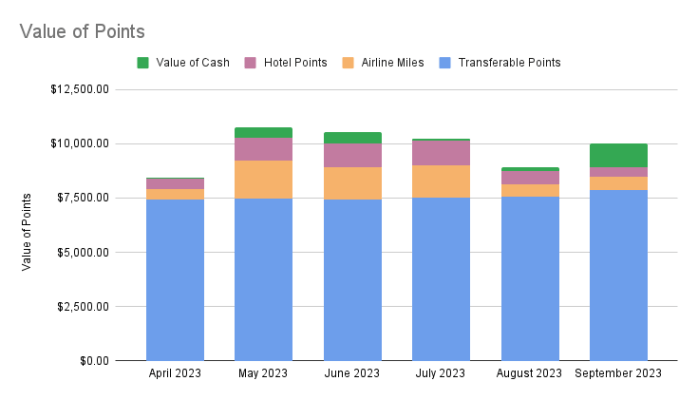
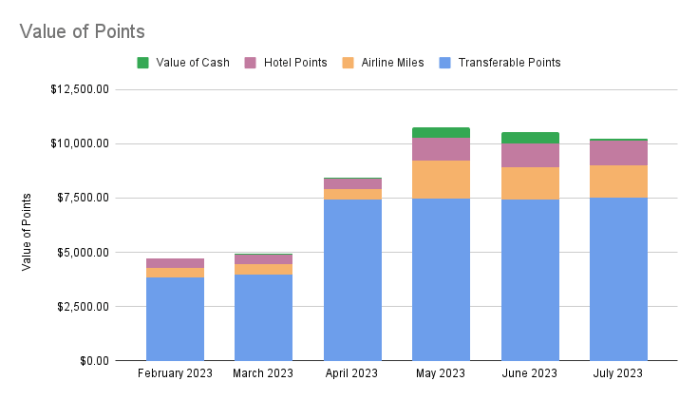
Looking at the chart above, it makes me a little nervous. My points are slipping away! No not really, we’ve been doing what we’re supposed to do with points, we’ve been spending them. Having basically used up all our cash back in Europe and new girls’ trip redemption, the total balance of our points is shrinking. That’s okay, that’s what they’re there for!
A Redemption
Jenn booked a girls’ trip to Mexico with her Sister and her Mom. She used 66,000 Delta Skymiles for a round trip flight to Cancun from the Moline Airport for the 3 round trip tickets. Each ticket had $116 in taxes that needed to be paid, and with cash prices for those flights running at $631/ticket, the redemption came out at 2.3 cents per point, which is great considering Skymiles are typically valued by the Points Guy at 1.41 cents per point. She was also able to book 4 nights in a Vacasa rental which costs $1,325 for 54,000 Wyndham points. That makes that redemption worth 2.4 cents per point, easily besting the Points Guy valuation of Wyndham points of 1.1 cents per point. More information about this redemption can be found here.
No New Cards and Shifting Strategies
With Jenn working on the $7,500 minimum spend on her US Bank Business Leverage Card, we haven’t been signing up for any cards. Also, I had Chase offers of 5 points per dollar on my United Explorer Card and my Marriott Bonvoy Boundless Card on categories like gas stations, and restaurants for 3 months, so I’m using those cards to boost my totals in Bonvoy points and United miles right now.
In general, I think we’re going to switch strategies right now. Because of Chase’s 5/24 rule (they won’t approve you for a personal credit card if you have been approved for 5 new personal cards in the last 24 months), as well as some other rules with Capital One, Citi, etc, we are getting to a point of diminishing returns on sign up bonuses. We are somewhat restricted for what we can sign up for because of all of our new personal cards in the last 2 years. This means that a lot of the sign up bonuses that we can get aren’t as good as the sign up bonuses we got in the past. It seems the solution to that will be to slow down on signing up for personal credit cards, until we get back under that magic Chase 5/24 number. That should open up the full variety of available credit cards from all banks and then we will try to stay under the 5/24 rule going forward.
That doesn’t mean that we won’t be signing up for cards. We essentially have a 4 entity household because Jenn and I obviously are two, but each of us have a business as well. She earns all of her money through her business and so far my business is mostly working for no money, which is fine as far as the banks are concerned, and fine for me, at least for now. Business cards typically don’t count against the 5/24 rule, but Chase will check your 5/24 status before issuing a business card, which is confusing. It basically means that if you want a Chase business card, you must be, as an individual, under 5/24 but the new account won’t end up counting against your 5/24 status. That being said, I’m not going to pass on a great offer from a different bank just because I’m trying to get under 5/24. If American Express puts out a huge sign up bonus on a personal card, I might just jump on it regardless of my 5/24 status.
We are also starting to get a bunch of cards with nice bonus categories. Jenn has her Chase Ink Cash card that gives her 5x on streaming services and phone. Because of that we’re sending our spending in that category to her Ink Cash card to boost her Ultimate Rewards balance. Also, she gets 8x on gas on her Wyndham Business Earner card and that’s a no-brainer on fuel fill-ups. The more that we start to push some spending on categories to other cards the less that is available to spend on meeting spend requirements on new accounts for sign up bonuses.
anyway, on to the point check!
Our spending was quite elevated this month, because much of the spending that we had from our trip to Europe finally hit our statements. It was also spread over quite a few accounts, where we could take advantage of bonus categories. Jenn spent $5,600 on her US Bank Business Leverage card, earning $93 in cash back. I spent around $200 on my Citi Premier Card and earned around 400 points. Jenn spent a little over $200 on her Wyndham Business Earner card and earned over 1,300 Wyndham points. I spent around $700 on my Marriott Bonvoy Boundless card and earned around 2,900 points thanks mostly to a 5x offer on restaurants. Jenn earned 500 Ultimate Reward points on a little over $300 spending on her Chase Ink Unlimited Card as well as 2000 Ultimate Reward points on $400 spending on her Chase Ink Cash Card. Jenn earned 1,300 points on a little over $200 on a hotel stay in Chicago on her Marriott Bonvoy Boundless card. She also earned 700 points on her Delta Gold Business card on $350 spending.
After all of those earnings, as well as the redemptions for the girls’ trip, we were left with 278,000 Chase Ultimate Reward points, 83,000 Capital One Venture miles, 69,000 Marriott Bonvoy points, 25,600 Citi Thank You points, 23,600 United Miles, 14,900 Delta Skymiles, 5,300 American Airlines miles, 1,600 Hyatt points and $160 in cash back. According to the valuations by the Points Guy, these points are worth a total of $8,820.
In addition to all of this, we have a category 1-4 free night certificate from Hyatt and Jenn and I each have a 35K point free night certificate from Marriott. These came from holding a credit card past the anniversary date and paying the annual fee. With each of these cards having a $95 annual fee and each of the certificates being worth probably double that, it feels a bit like prebuying a hotel room at a discount, so that’s why we didn’t cancel those cards.
All in all we still have quite a bit of flexibility in where we have our points and miles and we should be continuing to build on that moving forward.
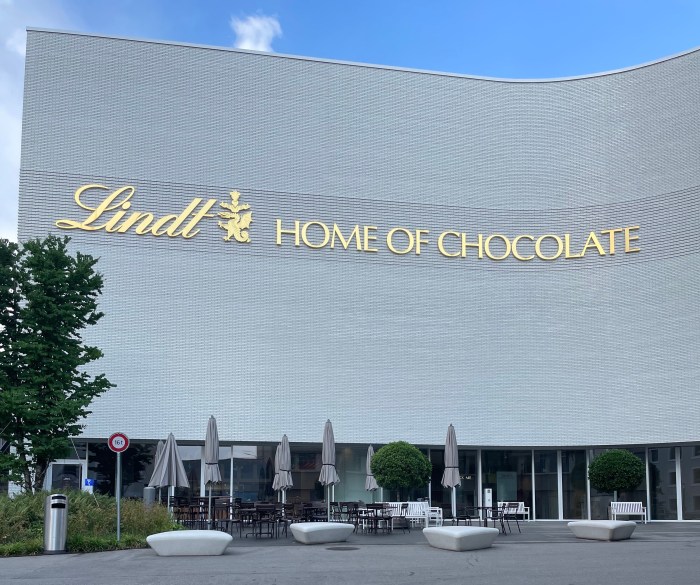
When we were deciding which countries we would visit, Emma was pretty enthusiastic about wanting to go to Switzerland. I asked her why, thinking that maybe she had learned something in school about Switzerland that she found interesting, but she just said “chocolate”. So of course, since that was a big reason we were in Zurich, we had to go to the Lindt Chocolate Factory.
There is no denying that the Lindt Factory is a tourist trap. Everyone knows about Swiss Chocolate and Lindt is probably the most well-known Swiss chocolate brand. This tour is very popular and planning ahead is definitely recommended. We purchased our tickets from the Lindt website and reserved our time months in advance since tours sell out frequently. They cost around $15 (depending on the current exchange rate).
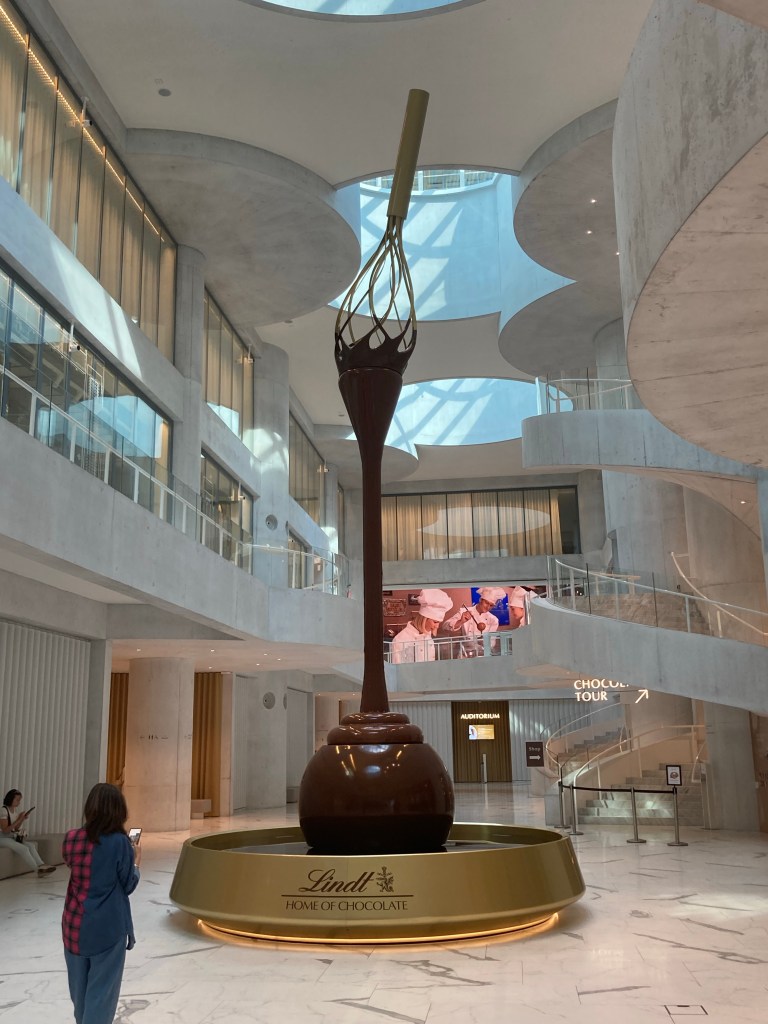
No, you are not allowed to jump in the chocolate fountain.
Entering into the building, there is a reception desk and a large chocolate fountain. The smell of chocolate is really intense almost to the point where it feels like you’re breathing chocolate. The lobby is very large and modern with white marble floors, concrete walls and glass. A spiral staircase leads you to the second floor where the tour begins.
The tour is actually much more interesting than I thought it would be. They start out covering the process of growing cacao pods as well as the various steps, like fermentation and roasting, that is required to turn those pods into chocolate.
A room devoted to the history of chocolate
Next there are a bunch of exhibits that cover the history of chocolate. Chocolate started as a bitter drink that had been enjoyed by the Maya and Aztecs. During colonization, of course, chocolate was brought to Europe where it slowly evolved from being a bitter drink to a sweet food.
Interactive exhibit that shows the evolution of the chocolate market in Switzerland
They also had quite a few exhibits specifically devoted to the Swiss chocolate economy. They cover everything from how the chocolate market evolved in Switzerland to how much of that chocolate is enjoyed in countries around the world.
A variety of hands on exhibits are designed to be kid friendly.
There are quite a few hands on interactive exhibits throughout the tour. They were really well-designed to provide a lot of great information about the subject, while giving children something to play with. One example of this was a map of Switzerland where as you move a dial which controls the decade. And for each decade it shows which Swiss chocolate producers were operating and where in Switzerland. It also provides some data about how much sales and exports occurred during that time.
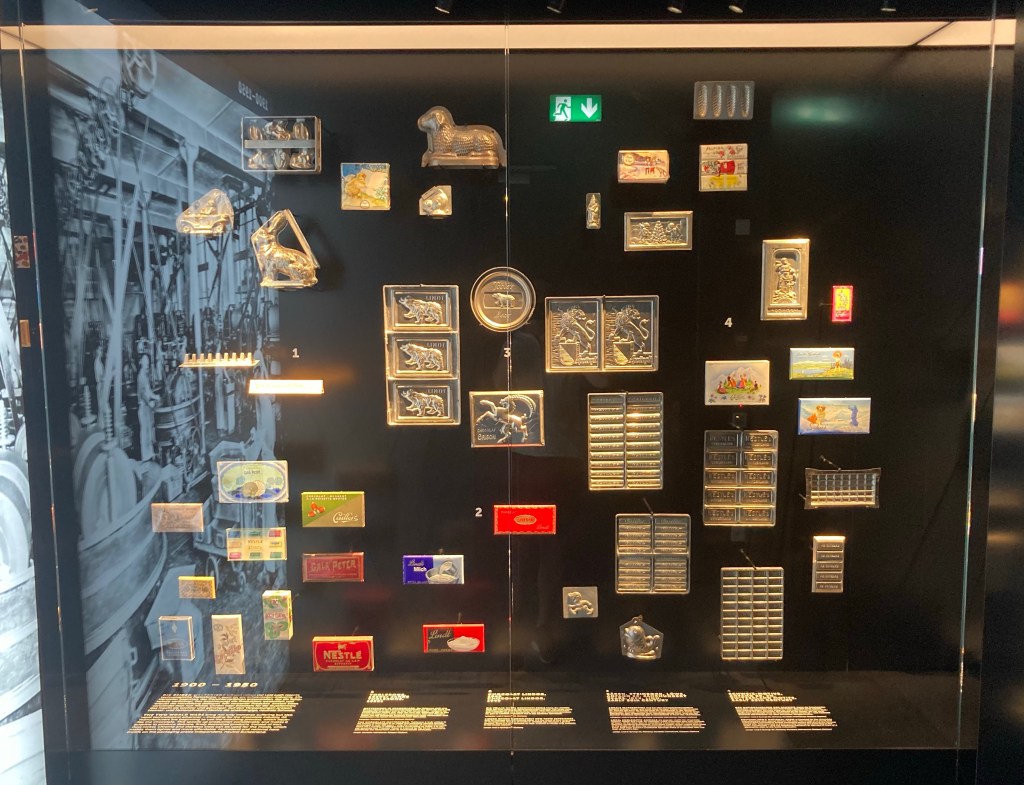
A display of chocolate molds and packaging from 1900-1950.
I was enjoying my time in the exhibits but the rest of the family was not as interested as I was. The main reason for that was that at the end of the tour, you can sample a bunch of chocolate.
Fountain for trying milk chocolate
They’re are three main tasting sections. The first is a series of chocolate fountains where there are a bunch of disposable spoons so that you can taste white chocolate, milk chocolate, and dark chocolate in liquid form.
chocolate square dispenser
The second tasting section is a bunch of over-engineered chocolate square dispensers that invite you to try the chocolate and then guess what the flavor was.
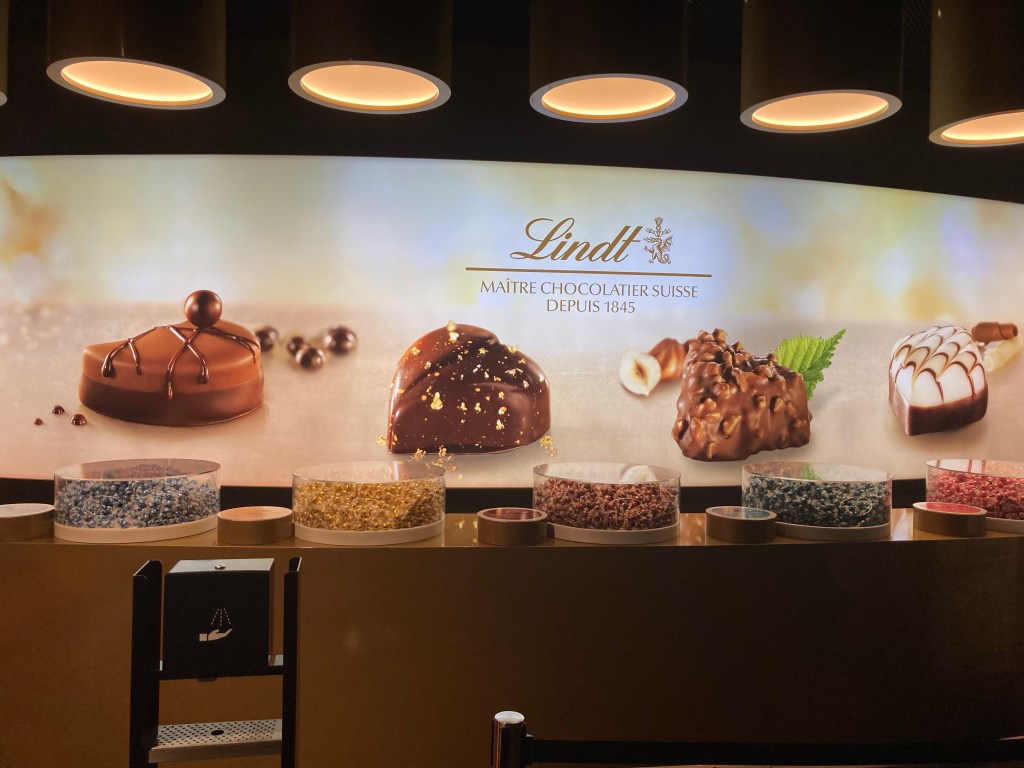
In the plastic cylinders, you are invited to grab as many Lindor truffles as you can eat.
The third section was the a bunch of flavors of the Lindt chocolate balls. This was the part Jenn was looking forward to. For some weird reason, I married someone who rarely eats sweets. When she snacks it’s normally chips or popcorn and only rarely eats chocolate. The Lindt chocolate truffle balls are one big exception and they are a requirement for her Christmas stocking every year.
An elaborate Rube Goldberg machine which distributes a special chocolate at the end of the tour.
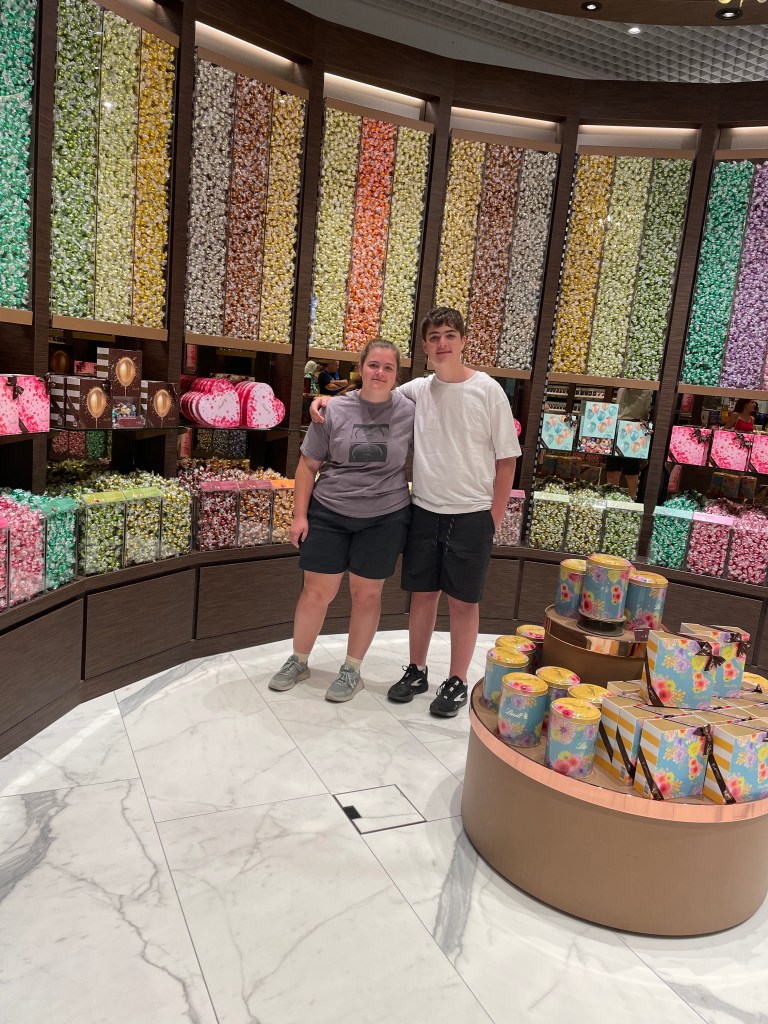
Once we were through the tasting section, of course, we had to go into the gift shop. It’s impressive. They have a ton of flavors that you will never find in a store. I came across a Lindor truffle ball made with matcha tea, for example. You can get slabs of chocolate decorated with a message. There was a dizzying array of chocolate bars and gift boxes. It’s a chocolate lovers dream.
You can get these chocolate slabs decoratoned with a message if you like.
In the end, we didn’t buy too much. We had a long trip set up and knowing that we were going to have to travel with chocolate during the summer we didn’t want to risk the chocolate melting. We were able to eat some of it on our next stop in Munich, but then the day we left Munich for Venice we accidentally left the bag in the fridge at the AirBnB. So our loss was probably a nice surprise for the person who had to clean the AirBnB.
This is a fairly insane wall of truffle balls.
I was surprised by how much I enjoyed the tour. The tour takes about 45 minutes (Unless your group wants to fly through the exhibits and get to the tastings). It was very well done and designed to be interesting to kids and adults. I also can’t imagine anyone not enjoying the chocolate tasting section and they seem to limit the number of people in the museum at a time to a reasonable amount so it never seemed too crowded. The gift shop is also excellent. This is definitely worth visiting if you are in Zurich.
Sometime this last winter, Jenn was talking about wanting to take a Girls’ trip (with her Mom and her Sister) to celebrate a milestone birthday for her Sister. We had basically just completed booking our European vacation just a couple of months earlier and we had learned a valuable lesson from that booking that we didn’t want to repeat – don’t be dependent on one way to book.
What I mean by that is that when we booked our flights to Europe, all we had was United miles, and that was our only option. If the flights weren’t cheap enough on United, we weren’t going or we were paying cash. So the solution to this issue was to find multiple ways of booking flights on points and make sure that we stockpile points in multiple areas.
The Power of Stockpiling Points
Jenn had already begun to accumulate Ultimate Reward points by taking advantage of two 90k bonuses for Chase Ink cards as well as a 60k Chase Sapphire bonus. Since they were thinking Mexico or the Caribbean, Chase Ultimate Reward points, having the ability to transfer to Southwest Airlines or United Airlines, might make sense.
We also added over 80k points by meeting the the minimum spend on a Capital One Venture card. That’s intriguing because Capital One miles transfers to the Turkish Airlines Miles & Smiles program where booking round trip United Airlines saver flights to Mexico and the Caribbean often costs only 20k points .
Jenn also jumped on a 75k point bonus offer on the Delta Business Gold Card. When she did it, I scoffed a little because a lot of people joke about Delta Skymiles as being “Sky Pesos”. It’s a bit of a joke because Delta is notoriously expensive to fly to Europe or in business class on points. That being said, I think people might find that Skymiles could be particularly valuable for domestic and North American international economy award tickets and Jenn found that out.
In this case, Jenn received an email from Delta about a flash sale, and went on to Delta’s website, where she was surprised to find a round trip flight out of Moline Airport to Cancun in January for 26k Skymiles each. Because of the 15% award discount afforded to Delta Gold Card holders, she was able to book it for 22k Skymiles and $116 in taxes each for a total of 66K and $348. Those flights were priced at that time at $631 each, which means that this redemption was more than 2.3 cents per point which is a really good value for airline miles and definitely not worthy of being derided as “Sky Pesos”. This is particularly great, because good award rates out of the Moline Airport are usually hard to find, and typically we fly out of Chicago because of it, which usually means booking a hotel and paying for pretty expensive parking.
Because of the fact that we had significant amounts of Chase Ultimate Rewards points, Capital One Venture miles and Delta Skymiles, we were able to keep our eyes open for special rates with Delta, United, and Southwest Airlines, as well as being able to book Sky Alliance flights through Turkish Miles and Smiles or Avianca Lifemiles. I’m sure that we could get more creative than that, but honestly, it wasn’t needed in this case. Having flexibility in multiple programs allowed Jenn to be patient and wait for a great deal, and then jump on it when she had the opportunity.
The nice thing about a vacation rental is having a working kitchen, and this one looks pretty nice.
Flexibility on Booking Lodging
We had some flexibility built into our points for lodging as well. We had accumulated a decent amount of Wyndham points, and a respectable but not huge amount of Marriott Bonvoy points. However, with Jenn having a nice stockpile of Chase Ultimate Reward points, which transfers 1:1 to World of Hyatt points, that also made Hyatt a good possibility as well. Because of a status match made possible by Jenn’s Wyndham Business Earner card to Ceasars Rewards (visit Upgraded Points for more details), we also had a 4 night “free” stay available at Atlantis in Nassau in the Bahamas. The Atlantis stay would have had a bunch of extra resort fees that would have added up to over $200 a night and was quickly eliminated. Chase and Marriott were definitely possibilities, but the Wyndham-Vacasa partnership is just too good to pass up. We booked a Vacasa with Wyndham points before and got great value for that redemption.
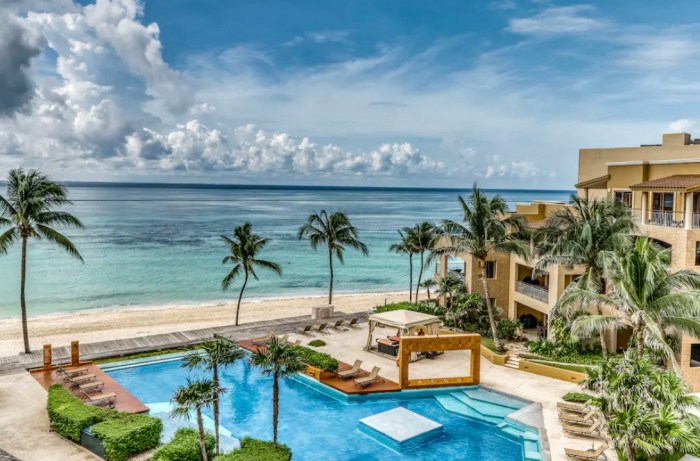
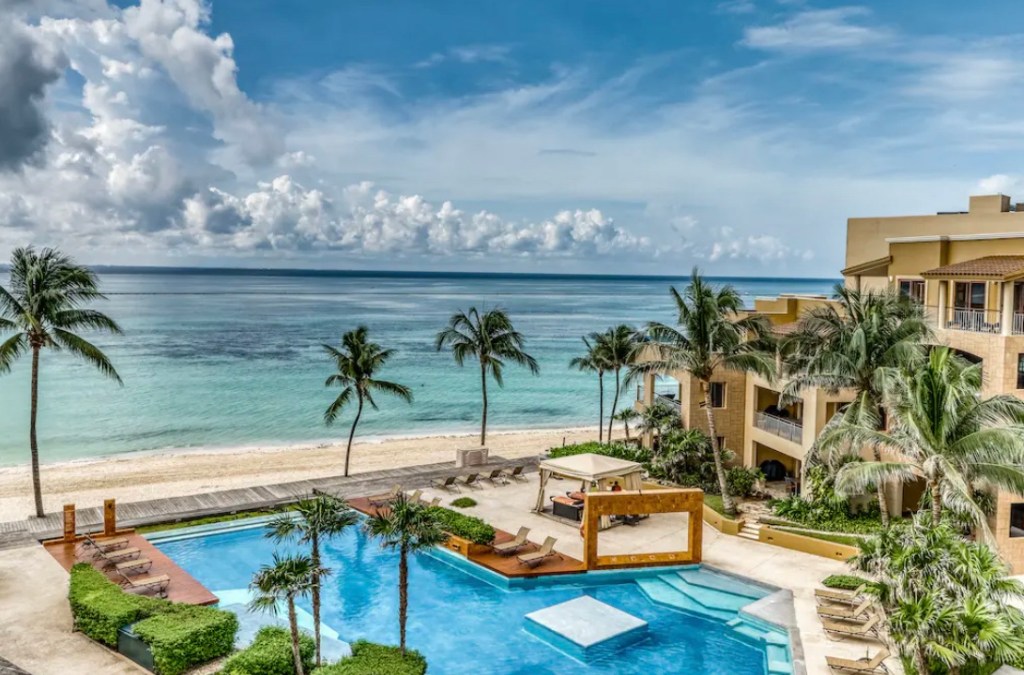
The rental is in a complex with a pool on the beach.
Jenn decided to book a 1 bedroom Vacasa in Playa Del Carmen for 54,000 Wyndham points total for a 4 night stay. That particular Vacasa typically would rent for $1,325 for a 4 night stay in January meaning that those points were redeemed at 2.4 cents per point. This is another ridiculous value considering Wyndham points are generally valued at 1.1 cents per point. Booking a Vacasa rental with Wyndham points is a little weird because you have to call a special line to do it, but the rules are simple. Vacasa rentals cost $15k points per night per bedroom and is bookable with points as long as the cash price is under $500 per night per bedroom. For example, a one bedroom is bookable for 15K points per night as long as it costs under $500 and a 2 bedroom is bookable for 30k points per night as long as the cash rate is under $1000. Having a Wyndham Business Earner card gives you a 10% point discount on those rates. (Update – the ability to book Vacasa vacation rentals with Wyndham points has ended as of December 2025)
Obviously we’ll have to wait until they get there to find out if the Vacasa rental is as nice as the photos, but it looks gorgeous. It looks like Jenn did a great job booking this trip and I really hope they all have a great time (I’m sure she’ll feel sorry for me shoveling mounds of snow out of our driveway while she’s sipping a Bohemia Oscura cerveza on the beach). In the end, this was made possible because Jenn had the ability to be flexible with dates, locations and points programs. It allowed them to book what looks like a great vacation for not a lot of points and cash.
I may Have Created a Monster
When we got started with points and miles, it was pretty much me doing all of the research, listening to podcasts, reading blogs, and doing as much internet research as I could. As we started to have some success, with booking trips to Cabo San Lucas as well as our trip to Europe this summer, Jenn really started to not only get interested in points and miles, but she actually really gets it now. I expected to have to guide her on planning this trip, but for the most part, other than a couple of suggestions, she did this on her own and it was undoubtedly the best trip in terms of redemption value that we’ve made. Going forward, I think with both of us having a solid understanding of points and miles, we should have some great trips ahead, as long as she decides to come back from Mexico, of course.
So we did it! We took our first trip outside of the continent. For the kids, it was the first time they had left the country. As I expected, it was difficult at times, travelling is never easy and travelling to places where English isn’t the primary language is even more difficult. We turned out to be fairly well prepared, however, and were able to get around pretty easily. We had a great time in Europe and we were already talking about how we would return before we even pulled into our driveway. Luckily for us, we’ve figured out enough hacks to do it affordably.
Since both Jenn and I were signed up with the US Bank Business Leverage Card which both required a $7,500 spend in 4 months there haven’t been credit card signups ($15,000 is a lot of spending to meet for us). I did manage to hit my required spend on the Leverage Card and received my $750 cash back sign up bonus and I also had accumulated another $125 or so of cash back on the normal spending. So for what was probably close to $8,000 in spending on the card, getting around $875 in cash back is around an 11% cash back rate and I’m not mad about it. Jenn should hit her bonus in the next couple of months and that should be about the same. We immediately used the cash back from the Leverage Card along with the $425 left from my US Bank Altitude Card for spending money in Europe. That $1,275 did take a nice chunk out of our expenses while we were there and it was great to be able to use the cash back that way.
On to the Point Check!
I spent around $3,600 on my US Bank Leverage Card and earned $54 in cash back and also finished up the $750 sign up bonus. I spent around $200 on my United card and earned 300 United Miles. Jenn Spent $300 on her Chase Ink Unlimited and $600 on her Chase Ink Cash and earned a total of 3,300 Ultimate Reward points. Jenn also spent a little over $200 on her Wyndham Business Earner Card and earned almost 1,800 Wyndham points (I love that 8x on gas!). Jenn spent around $700 on her US Bank Leverage card and earned $11 in cash back. The only redemption was the $1,275 of cash back we used.
We finished the month with around 276,000 Chase Ultimate Reward Points, 83,000 Capital One Miles, 80,000 Delta Miles, 65,000 Marriott Bonvoy points, 26,000 Citi points, 24,000 United Miles, 5,000 American Airlines Miles and 2,000 Hyatt Points. We also were left with an underwhelming $66 in cash back. All of this left us with a total points value, according to The Points Guy of $10,100.
I have a long-term goal to be multilingual. I would like to travel as much as I can and I don’t want to depend on people speaking English to me. In general, I think if you roll into a country and speak the native language you’re going to have a better experience than you will if you rely on people to speak English. The problem is I’m horrible at learning languages and I’m not exactly young. This is going to take a lot of work.
Why become Multilingual?
Certainly you can travel to countries without learning their language, people do it all the time. English is the most commonly spoken second language in the world. That’s great since I’m a native English speaker! However, just because someone can speak to you in English doesn’t mean they want to and I bet if you venture away from touristy cities, the likelihood you’ll find a person who speaks English decreases dramatically. So if you want to get off the beaten path a little, you might want to speak the native language, at least a little.
Why Duolingo?
My wife introduced me to Duolingo a couple of years ago. We were planning a trip to Germany and my idea to learn German was basically to watch German TV with English subtitles. Honestly, I’m not sure how long that would take, but I’m guessing it would have been a significant amount of time. It didn’t feel like I was getting anywhere at all.
She suggested it because she was using it to learn Spanish and she said it felt like a game. I tried it and I would definitely agree with her – they’ve gamified language learning in a way that keeps you learning, which is probably the most important part of learning a language.
Duolingo is Essentially a Game
Duolingo does a great job of tricking you into staying engaged with the app. With social media that’s a bad thing, but when you’re learning a language you need to stay engaged to actually learn it. Like a lot of games, there are hearts that you get on a time basis. In Duolingo, you earn 1 heart every 5 hours, capping at 5 hearts. When you make a mistake while you’re learning, you lose a heart. When you are out of hearts, you can practice to earn more hearts or you can quit and wait long enough that you’ve gained more hearts (the paid version of Duolingo doesn’t use hearts and you can do as many lessons as you want and make unlimited mistakes) There are gems that you earn for accomplishing certain goals, which can be used for buying additional hearts as well.
The top ribbon on the app contains the icon of the language you’re working on, a fire emoji for the length of your streak in days, the number of gems earned and number of hearts remaining.
They also use leagues to keep you engaged. You earn points when you complete lessons. Every week you are placed in a league with 30 other “players” and the top 7 move up a league and the bottom 5 move down. This tricks you into staying engaged because you want to win your league, right? I’m honestly embarrassed to admit how much this little trick works on me.
And then there are streaks. As you progress, the app will keep reminding you how many days in a row you’ve completed at least one lesson. This basically guilts you into logging in. – and Duo (the cute Owl mascot of Duolingo) will remind you in a notification on your phone that you don’t want to break your streak. You are granted freezes that will automatically pause your streak if you for some reason miss a day, but you only get so many of them.
If you don’t do your lesson every day Duo the owl will hunt you down.
This is all to say that what Duolingo absolutely excels at is keeping their users engaged which is probably the most important thing when learning a language because learning a language requires a lot of time and repetition.
How does Duolingo Work?
For the most part, Duolingo’s lessons are quizzes. Sometimes you will be asked to translate using blocks and sometimes you’ll have to actually write translations out (while using correct spelling). Other times you will be asked to speak something out loud into your phone or listen to someone else speaking and write it down. Duolingo does offer quite a few clues along the way, such as being allowed to tap on any underlined word to find the translation.
What are the advantages of Duolingo?
In my experience, Duolingo is very good at helping you learn grammar rules and building vocabulary. When learning new words the app uses that word over and over again to try to get it to stick in your memory, and then will return to remind you of that new word later on, just to make sure it stays with you. The same pattern is generally true for grammar rules, where Duolingo may introduce a concept like gendered adjectives and might spend a series of lessons working on that concept, and then return to it later.
In my experience, so far, what I think Duolingo excels at is teaching people how to translate from one language to another. That’s really important, of course, because as I’ve discovered when you’re standing in a subway station trying to figure out which word means arrivals and which means departures, translation ability does help.
What are the disadvantages of Duolingo?
What Duolingo seems to lack is the ability to get the user to feel comfortable speaking to others. But this makes sense, right? You don’t practice having conversations on the app, you are primarily practicing translation. From what I’ve seen, this is a common complaint about Duolingo and a number of other language learning products use that in their advertising. While I’ve never seen them use Duolingo’s name specifically, it’s pretty obvious who they are targeting with their criticism. It’s an entirely valid criticism, but I don’t think that should stop you from using the app.
Is Duolingo really worth it?
In my opinion, the most important thing you can do to learn a language is expose yourself to it. The best feature of Duolingo is that it keeps you engaged while you are learning the language. Also, by gamifying language learning, it seems like less of a chore. That is really important in keeping you engaged long enough to actually learn the language and not quit because it’s too hard. I really think the best strategy is to use Duolingo for what it’s good for – vocabulary and learning grammar and fill in the gaps with other methods. I have a couple of podcasts that I listen to in order to get more acquainted with the sound of language. I like Coffee Break language series as well as the Easy Languages series. Those you can find by going to your favorite podcast app and searching for Coffee Break German or Easy Spanish, etc. What I haven’t done yet, and I’ve considered it, is to use a language tutor to practice speaking a language with. Italki.com is one service that connects learners with tutors and I’m sure there are many others. Of course, the best method is to move somewhere for a while and immerse yourself in that language, but for obvious reasons that’s not an option for most people.
How much does Duolingo cost?
I’ve been doing the free version of Duolingo which limits the number of hearts you receive and you can do this, but you will be forced to watch a lot of ads. That doesn’t bother me, but if it bothers you then you might want to pay for the service. The paid service is Super Duolingo and it does offer additional features like personalized practice. It provides unlimited hearts and no ads. Super Duolingo costs $7 per month for individuals or $10 for a family of up to 6.
How is it working for me?
One thing that I had a hard time finding online is what I could expect if I got to a certain milestone in Duolingo. I could see I was making progress in the app and thought “I should be able to make it to Unit 75 by the time I go to Germany” but I didn’t know what that would do for me. Would I be able to order food at a restaurant or talk to the person at the hotel desk in German? Below I plan to update my language progress with my travel experiences to show what to expect when learning languages.
Cabo San Lucas – January 2023 (8 Spanish units and around 5000 XP)
I took a little Spanish in High School but that was many, many years ago. I think Americans in general get at least a little exposure to Spanish on a regular basis. Because of that Spanish feels more natural to me than German. I pretty much flew through the first 8 units of Spanish, it all felt like review to me. That being said, when we got to Mexico I really struggled trying to speak it. I wasn’t surprised at all, I was barely into the program – there is 230 units and I had completed 8. That being said, just having some basics at top of mind, like gracias, de nada, por favor, etc. was really important. One thing that I learned really quickly was that I wish I had learned more food vocabulary before we left. When you’re on vacation, food is a pretty big part of your concerns and you want to try the best foods while you’re in a different country. At restaurants in Cabo San Lucas, menus are typically in both English and Spanish but not necessarily at the grocery store, so we probably missed out on trying something really good by skipping over certain things that we couldn’t translate.
Stockholm – July 2023 (2 Units – 1500 XP)
Ok, I basically never used any Swedish while were in Sweden. In the short amount of time that I did spend on Swedish I did start to notice some similarities between German and Swedish as well as English and Swedish. That’s one of those reminders that as you learn languages, other languages get easier to learn.
Beware, Swedish food can be weird
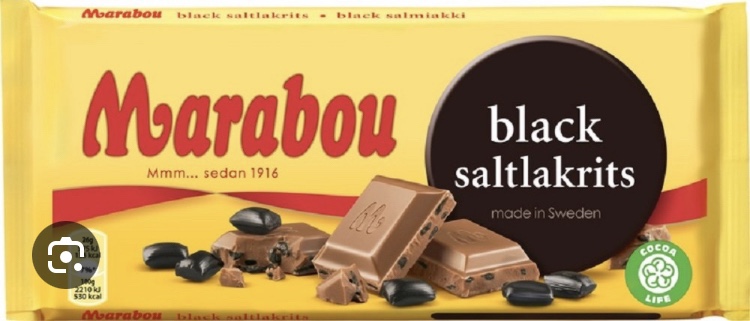
I’m probably not ever going to really learn Swedish for a couple of reasons. The first is that almost all Swedes are really proficient in English. The second is that I’ll probably never spend a significant amount of time there. The climate is not to my liking and frankly it’s a little pricey. It’s a beautiful country and I’m sure we’ll visit, but there is very little incentive for me to spend much energy on learning Swedish. That being said, it would have been helpful when shopping for chocolates as Jenn picked up what she thought was chocolate with coffee and bought black saltlakrits, which is chocolate with salty black licorice. She had saved this chocolate bar for at least a week after we got back from Sweden, she sat down to enjoy it and quickly learned it was black licorice and she was pissed.
Italy – July 2023 (5 Units – 3,000 XP)
I really thought Italian was easier to at least get the basics of. The pronunciation seems fairly predictable and I just love how Italian feels musical. It’s really a beautiful language and it’s definitely a place I would love to live and truly learn the language. That being said, I don’t think Duolingo will get you anywhere near fluent unless they expand this curriculum. There are only 57 units total. I got through only 5, but I did find myself saying some of the basics when we were in Italy, like per favore, grazie, and scuzzi. Much of the vocabulary overlaps Spanish so I had the ability to guess at some words. I hope Duolingo expands the Italian curriculum, because I’ll probably work through it.
German – Zurich and Munich (July 2023 – 77 Units – 65,000 points)
Ok, I put a ton of effort into learning German – to a point where it annoys Jenn. Honestly German is hard. It just doesn’t seem right to me. The word order is odd for an English speaker and it feels like I’m always one step behind when listening to German because of it.
Progress in July 2023
I had made it through 77 of the 137 available units with around 65,000 XP. I was really hoping that I would be able to have basic conversations with people in Germany but that didn’t really happen. The biggest issue was that I wasn’t prepared for how fast Germans speak. While my vocabulary isn’t terrible, it does take a while for my brain to translate what people are saying, not to mention the time it takes to formulate a response. I was able to speak in situations where I was able to anticipate the conversation, such as when ordering food at a restaurant.
Where I found my limited knowledge useful was translating signs, packaging, menus, etc. We visited grocery stores in every place we went in Europe and I definitely was more comfortable shopping in Munich and Zurich. Also, when we were in the Viktualienmarkt in Munich, being able to quickly scan the signs and pick out the butcher shops, cheese shops and bakeries by the signs made the visit easier.
I did notice that the lessons I did immediately after leaving Germany were way easier, which demonstrates to me how much you learn just from visiting a country on a short trip.
Overall Impression of Duolingo
I definitely think there are better ways of learning a language. The fact you’re not having real conversations while learning is a detriment. However, the convenience of being able to work on a lesson or two while waiting virtually anywhere is huge. It essentially allows a user to do some language learning while they’re wasting time and in the end, isn’t that better then doom scrolling Facebook or playing Candy Crush? Yes, you’ll probably need to do something else in conjunction with Duolingo in order to develop true fluency, but at least the knowledge you learn from the app will make it much easier. I’m planning to continue to use Duolingo and I know that it will further me along in my goal to be multilingual.



































 Newby to Expert Traveler
Leave a comment