We’ve been making preparations to go with our friends Bill and Theresa as well as Jenn’s parents to Italy. We will be visiting Florence, Cinque Terre, Venice and Rome on this trip. This is a little nerve-wracking, since we have made a lot of the plans and we don’t want to let them down. In the past, we’ve mostly just gone on trips with our kids and I’ve spent their entire lives trying to lower their expectations. But, we are going to Italy, how can you not have a great time there?
Signing up for the IHG One Rewards Card
Jenn applied for and was accepted for the IHG One Rewards card, issued by Chase. We wanted to jump on this because they had an elevated offer of 5 free night certificates worth up to 60,000 points per night. IHG points are worth around a half a cent each, so for the most part, these certificates can book you a room that would cost less than $300 per night. The card has an annual fee of $99 and each year on the anniversary date the cardholder receives a 40,000 point certificate.
It has a cool perk where you get a fourth night free if you book a 4 night award stay with points. That doesn’t count for free nights using certificates, so you would need to actually have 3 nights worth of points to take advantage of that perk.
The card earns 10x at IHG properties, 5x on travel dining and gas, and 3x on everything else, so you can earn quite a lot of points quickly. Unfortunately, with them being worth half a cent each, it does take quite a few points to book a hotel room.
A Couple of Bonuses
I finished the rest of my spend on the American Express Blue Business Plus card, earning me the 15,000 Membership Reward point bonus. Jenn also finished the required spend on her Spark Cash Select card which ended up earning her a $750 bonus and a total of $855 of cash back on just under $7,000 in spend over a few months which works out to a pretty impressive 12% cash back rate.
We used that cash back as well as other cash back that we had earned from other cards to cover the $1,500 in VRBO costs that we have for our trip to Italy this fall. We always like to have some cash back cards to cover VRBO charges or taxes and fuel surcharges on flights so cash back cards can be really helpful.
Anyway, on to the Points Check!
This month, we did fairly well focusing our spending on cards to earn signup bonuses. We do have our normal recurring payments set up to maximize the value of some of our cards. For instance, taking advantage of the 8x on gas and 5x on utilities on the Wyndham Earner Business card and using the Capital One Venture card’s 2x on everything to take care of our car insurance and Costco charges, neither of which are bonus categories anywhere that I know of.
The Citi Strata Premier charges are the only real exception, but that’s really because our daughter Emma is an authorized user and if we need her to buy groceries or something else for the family, she uses that. It is nice that she will run an errand once in a while for us, even though she treats a 15 minute trip to Aldi like a 2 month stretch on the Oregon Trail.
Card Used
Spend
Points Earned
Point Value
Points Per $
Return on Spend
Wyndham Business Earner
$805
4,961
$54.57
6.2
6.8%
Venture
$666
1,332
$24.64
2.0
3.7%
Ink Cash
$540
2,679
$54.92
5.0
10.2%
Citi Strata Premier
$152
262
$4.72
1.7
3.1%
Amex Gold
$101
404
$8.08
4.0
8.0%
Total
$2,264
9,638
$146.93
4.3
6.5%
This month’s spending not devoted to earning a signup bonus
Aside from the spend in the above chart, I also spent a little under $1,700 on my Amex Blue Business Plus card earning around 3,400 Membership Reward points as well as 15,000 bonus Membership Reward points. Jenn spent $4,800 on her Spark Cash Select which included a lot of those VRBO charges, earning her around $72 in cash back and finishing off her $750 signup bonus on that card.
At the end of the month we were left with 306,900 Amex Membership Reward points, 211,500 Chase Ultimate Reward points, 83,600 Capital One Venture miles, 74,700 American Airlines miles, 54,400 Marriott Bonvoy points, 41,200 Wyndham points, 29,700 Citi Thank You points, 11,300 Hyatt points, 5,000 Delta miles, 1,900 United miles, and around $160 in cash back. Using the Points Guy valuations, all of this is worth just over $15,000.
I got the US Bank Altitude Connect card about a year an a half ago and I viewed it as basically a cash back card. At the time, the card came with a $95 annual fee and required $2,000 in spending over 4 months to earn the $500 signup bonus. Technically, they advertise this as 50,000 points with each point being worth 1 cent each, but since there aren’t any transfer partners, that meant it was just 50,000 pennies. Recently, US Bank made some changes to this card that I think actually make it a better credit card.
Earning Rates For the Altitude Connect Card
Something that didn’t change with this credit card is the earning rates for its bonus categories. It actually has some pretty good earning categories, they include:
5x on hotels and car rentals booked through the Altitude Reward Center
4x on travel
4x on gas station and EV charging (up to $1,000 per quarter)
2x on dining, streaming services, and grocery stores
1x on everything else
I almost Canceled it Before it Renewed
When the annual fee was coming up for renewal, this was one I considered canceling. It had a $95 annual fee, and frankly I just wasn’t using it. Yes, it does have some pretty good earning potential in some categories, but typically outside of signup bonuses, I don’t get that excited about earning cash back.
However, there was one particular reason that I did keep it and that is because it comes with 4 annual passes to Priority Pass airport lounges. According to the Priority Pass website, there are over 1,600 Priority Pass lounges and experiences. In my experience, it’s not difficult to find a Priority Pass lounge when you need one, as long as you’re in a major airport.
My experiences with Priority Pass lounges haven’t been phenomenal, but its been pretty good. Typically I’ve managed to get basic buffet style food, a beer or two, as well as a place to charge a phone, and open my laptop. For the most part, I’ve enjoyed relaxing in their lounges. They haven’t been as good as my experiences in United Lounges, but it sure beats waiting in the airport terminal.
Recent Changes Made to the Altitude Connect Card
I think US Bank originally saw this card as being something that would compete with mid-level travel cards from major banks, like the Citi Strata Premier card or the Chase Sapphire Preferred card. Unfortunately, with US Bank lacking transfer partners for those points, I don’t think they really competed well in this space. Recently, US Bank made some changes to the Altitude Connect card that made it a more interesting card, in my opinion.
The first change is that they have dramatically reduced the signup bonus on this card. The typical signup bonus used to be 50,000 points ($500) after spending $2,000 in 4 months. However, this has now been dropped to a 20,000 point bonus ($200) after spending $1,000 in the first 3 months on the card. That’s not a great change, but the lower spending requirement does make it more accessible to people who don’t spend as much on credit cards.
The second change is that they eliminated the $95 annual fee. That’s a great change!
At first glance, that doesn’t make this card much more attractive than a lot of no annual fee cards. There are a lot of no annual fee cards that have some good bonus categories and a whole lot of them have signup bonuses of $200. That seems pretty typical. What isn’t typical of no annual fee cards is the benefits that are included.
Surprising benefits of the Altitude Connect Card
Since the US Bank Altitude Connect Card is a no annual fee card, it is surprising that it kept some pretty good benefits that typically come with cards that have at least $95 annual fees.
4 annual passes to Priority Pass Lounges
No Foreign Transaction Fees
$100 credit for TSA or Global Entry application fee
Trip Cancellation/ Interruption Protections
The $100 credit for TSA or Global Entry application is something that you can get once every four years, which is a nice benefit, but to me the big one here is the 4 annual passes to Priority Pass Lounges. Yes, it’s only 4 passes, and if you are flying with a family of 4, that means one trip. However, anyone who eaten at an airport restaurant knows how easy it is to drop well over $100 for a family of 4.
The fact that just having this credit card means that I can take the family into a Priority Pass lounge and relax rather than paying through the nose at an airport restaurant and then being uncomfortable in the terminal is a huge bonus to me. Its almost guaranteed to save me over $100 once a year.
Trip Cancellation coverage for this card will pay up to $2,000 for non-refundable common carrier tickets paid for with this credit card. This can be triggered by the death, injury or illness of a person or family member that causes a trip to be canceled.
Trip delay coverage covers up to $300 of expenses like meals or lodging when a trip is delayed, as long as that trip was paid with this credit card. This benefit kicks in if you paid for the ticket with the Altitude Connect card and the delay is more than 12 hours. It only covers what the airline does not cover.
Smart Delay coverage is a new concept I had never heard about. According the information at the Smart Delay webpage, if you register your flight on this website 2 hours prior to scheduled departure and your flight gets delayed by over 2 hours, you will be immediately issued up to 4 passes for Priority Pass lounges to use during the delay. Considering my luck with flight delays, I will definitely be using that.
Foreign transaction fees are annoying. Normally I’ve paid attention to what credit card I was using out of the country. Unfortunately, I forgot to check the credit card I was using in Canada and came home to a series of foreign transaction fees. It didn’t exactly bankrupt me, but who wants to pay those fees? This is a nice benefit if you plan to use this card outside of the US.
Who Should Get the Altitude Connect Card?
Honestly, I’m not sure if I hadn’t already signed up for this card when the bonus was $500, that I would now. A $200 signup bonus isn’t that interesting to me with so many huge bonuses out there. But a no annual fee card with 4 annual one-time Priority Passes? That’s pretty tempting.
The amount of spend required to earn the signup bonus is the only $1,000 over 3 months, so if you’re someone without a ton of credit card spend, this is intriguing.
Honestly, I think this is be perfect for my daughter. She doesn’t have the credit card spend necessary to chase the big bonuses, but a $200 cash back bonus would be pretty nice for her. Getting a good, no annual fee card, would allow her to keep this card for a long time and build her credit age which is a big part of her credit score. In addition, gas, EV charging, groceries and dining are bonus categories that should get used frequently by young adults.
Aside from that, this card would give her some pretty good benefits, such as the trip protections and Priority Passes that she wouldn’t have access to without going to a card with an annual fee.
Over the summer, she went with three of her friends on a trip to California. If she had this card at the time, she could have treated everyone to a trip to a Priority Pass lounge. That may not seem like a big deal to someone who is older, but if you’re 19, that’s a pretty baller move.
Also, I think if you are the type of person who flies once or twice a year, having a handful of Priority Passes really enhances those trips. Lounge access is one of those things that lowers the stress of being in an airport. With that access provided on a no annual fee card, even if you don’t use the passes, it’s not costing you anything.
Will US Bank Get Rid of These Benefits?
I think the benefits of this card is remarkable for a no annual fee credit card, so I do have to question whether US Bank will continue to offer the level of benefits this card provides at no annual fee. To be honest, I don’t know, it really all depends on whether this stays profitable for them. If at some point they realize that the amount of money that they are spending on these benefits isn’t worth the amount of revenue that the card generates, then it could easily disappear or get altered into something less valuable.
I do think it’s worth it to anyone who flies occasionally and wants to have a handful of Priority Pass lounge visits in their pockets to sign up for this card. It also makes a really nice starter card for someone who might struggle to meet the minimum spend requirements to earn the signup bonus on a mid-range travel card that has similar benefits.
What US Bank has done is create a different kind of product, it’s a entry level, no annual fee travel credit card with many of the benefits of a mid-tier travel credit card. I hope that it stays the way it is, because it turns out to be a really interesting product that I think a lot of customers will really enjoy.
The American Express Gold Card is a classic American credit card. It was one of the first credit cards ever issued when it was launched in 1966. Back in the early days it was seen as a status symbol, using it was a symbol to people around you that you were successful. Now I think people view credit cards as mostly utilitarian and I am definitely one of those people. I need to know that the card that I’m using is providing me with great value, and if that isn’t the case, then I want to use something else.
The annual fee for a credit card is part of the equation for me. There are definitely some good credit cards that have no annual fee, but most of the time, cards that have high earning rates and good benefits have at least a $95 annual fee. On the travel hacking side, a credit card that earns points that can be transferred to multiple hotel and airline programs is the most important benefit to me.
The American Express Gold Card earns Ultimate Reward points that can be transferred to a variety of airline and hotel programs, of which some of my favorites are KLM/Air France Flying Blue, Aer Lingus/British Airways/Iberia Avios, Air Canada Aeroplan and Delta. Being able to transfer to a variety of programs allows you to take advantage of flash sales and sweet spots so that you can get the most for the points that you earn.
Many premium credit cards also have statement credits which people can use to offset the cost of an elevated annual fee. This is definitely the case with the Amex Gold and Platinum cards which come with elevated annual fees but offer a lot of available statement credits that can offset the annual fee.
The Gold Card Annual Fee Raised to $325
In July of 2024, American Express announced that it would raise it’s annual fee to $325 from $250. That’s a fairly large increase for a card that already had an elevated annual fee. If you’re going to charge a $325 annual fee, it better damn well be worth it.
The main attraction to the Amex Gold card for me is the fact that it earns 4x on groceries and 4x on dining. Those are two categories in which the average American spends a considerable amount of their income. The fact that those 4x categories are awarded in Ultimate Reward points, that many people value at 2 cents a point, means that you can realistically get back 8 cents per dollar spent, assuming you use those points for travel.
That being said, there is no way that the ability to earn 4x on groceries and dining is worth a $325 annual fee. You absolutely would need to get back some of this elevated annual fee in the form of statement credits.
Statement Credits offered by Amex Gold
Before the Amex Gold refresh there were two main statement credits that could be used to get some value for the (at that time) $250 annual fee. They were:
$10 per month Uber credit – can be used with Uber Eats or Uber
$10 per month dining credit with dining partners (which now are Grubhub, Goldbelly, Cheesecake Factory, Five Guys and Wine.com)
We have used both of those credits each month by picking up carryout using both Uber Eats and Grubhub. That meant that we were paying essentially $10 per year for the card, although it can be a little bit of a pain to use those credits, so that irritation has to be considered.
New benefits have been added to the card now that the annual fee has been raised to $325. The new benefits are:
$50 statement credit every 6 months when dining at Resy.com restaurants
$7 per month statement credit at Dunkin’.
I like the Resy.com statement credit because it’s going to be fairly easy to use. There is only one Resy.com restaurant in my hometown, which I would definitely go to, but with it being every six months I could see using it when we are traveling as well. I don’t think it’s going to be too much of a challenge for me to use this credit and it won’t feel like as much of a chore as using the $10 per month dining and uber credits.
The $7 monthly Dunkin’ credit is probably going to annoy me, but I will try to use it. Frankly, I don’t get coffee often and if I did, it probably wouldn’t be Dunkin’. We don’t even have a Dunkin’ anywhere close to where I live so I’d have to go out of my way for mediocre coffee or a donut. I have heard that you should be able to get a statement credit for loading the Dunkin’ app every month. So I might just load $7 to the Dunkin’ app and then if we’re out of town and need to get a quick breakfast we can use that all at once.
At full value, these credits are worth $424, which is $99 more than the $325 annual fee. Honestly, because of the ability to earn 4x on dining and 4x on groceries as well as being able to transfer those points, I’d probably pay $150 per year for the Amex Gold if it didn’t have any credits. So as far as I’m concerned, If I feel like I can get $175 dollar value for the $424 dollars in statement credits, than the card is worth it – at least for me.
Why I Won’t Recommend it
I used to think that the Amex Gold card was a great card for people who were only going to use one credit card, because they would be able to amass a decent amount of points through those 4x categories. Unfortunately, at $325, someone who doesn’t spend that much time thinking about points and miles is probably going to be pretty repulsed by that price tag.
Sure, the card usually comes with a pretty impressive signup bonus and those 4x categories are great, but I don’t think it’s enough on their own to justify that $325 annual fee. What can make the card worthwhile is the statement credits, but if you aren’t going to use them then you’re just paying too much to accumulate points. If you’re not going to use those statement credits, you’d probably be better off with the Citi Strata Premier card which only has a $95 annual fee but earns 3x on gas, groceries and dining. Those come as Citi Thank You points which are also transferrable to a number of hotel and airline programs.
In other words, this is a card that frankly only really appeals to people who want to maximize the value of those cards. This is definitely not a card I would recommend to someone who casually wants to earn enough points to take one flight a year or get a couple of nights in a hotel for free. This is really just for the hardcore travel hacker who is going to squeeze every ounce of value out of these credits and maximize their point redemptions.
For me, the changes actually make me more likely to keep the card, since I’m pretty likely to use those credits. But, at the end of the day, I probably won’t be recommending the Amex Gold card to anyone going forward. The kind of people who can find good use for this credit card, probably already have it or already know about it. This to me feels like something that will eventually lose American Express business rather than gain them business. I just don’t think that a $325 annual fee credit card is going to have that kind of mass appeal and I’ll be interested to see if they end up regretting this decision.
Wow, another big month of accumulating points as we continue to collect Membership Reward points from the three American Express cards that we signed up for this year. Last month Jenn earned her 130,000 point bonus on her Amex Business Gold card. This month, I earned my 75,000 point signup bonus on my Amex Gold Card. These bonuses in the last two months were the main reason why our total points valuations jumped from over $10,500 two months ago to over $15,000 now.
Hoarding Points
There is a a generally agreed upon philosophy in the points and miles community of “Churn and Burn”. It’s actually a very solid philosophy. The reason for that is because over time, points tend to lose their value. They don’t go bad like milk, but they do have a tendency to be worth less over time. For example, when we were planning our first trip to Europe, we accumulated a bunch of United miles with the hope that 240,000 points would be enough to fly round trip for four people.
This was actually the case for us on that trip, because at the time, 30,000 points one-way was actually pretty commonly available. However, if you try to use United miles to fly to Europe now, chances are that it will cost you over 40,000 points each way in economy. So if you were holding a bunch of United miles, you just saw the value of your points drop pretty significantly.
We are, against the advice of so many people, deliberately hoarding points. Why? Well, partly because of the fact that we have two kids and we are at the stage of our lives where we are unable to travel as much as we want. The other reason is that because of the kids we spend a lot of money on things like groceries, clothes, cell phones and especially car insurance that will be significantly reduced once they move out on their own.
This will eventually reverse and we will travel more, while spending and earning less. That is when we will definitely need to lean heavily on points and miles to allow us to maximize our travels. My rough goal is to save about $5,000 worth of points and miles annually until I’m eligible for retirement. It seems aggressive, however in two and a half years in the points and miles hobby, we’ve managed to accumulate $15,000 in points and miles, while still taking some pretty great trips.
A minor Redemption
We have a trip to Italy planned in November, where we were able to leave a 25 hour stopover on our flight from Chicago to Rome. The stopover is in Amsterdam, and I am very much looking forward to it. When we planned for that, I knew we would need to book a hotel. I was hoping to use our category 1-4 Hyatt certificate for the stayover. The problem was that the hotel that I really wanted to stay at was a category 5, and the only other Hyatt that made sense was a category 2.
I’m not going to burn a free night certificate on a category 2 hotel, so we went ahead and used 8,000 Hyatt points to book a room at the Hyatt Place near the Amsterdam airport. We’re going to have to take the train into the the center of Amsterdam to enjoy it, but at least we’ll be close to the airport when it’s time to catch our flight.
Capital One Spark Card Select
Jenn applied for and was accepted for the Capital One Spark Card Select. The Spark Card Select is a business card that earns an unlimited 1.5% on all purchases. It doesn’t have an annual fee and it comes with a $750 signup bonus when you spend $6,000 in the first 3 months.
One interesting wrinkle in this is that you can transfer any cash rewards to a Venture card, if you have one, at a ratio of 1 cent to 1 point. This means that if you have a Venture card, which Jenn does have, you can transfer the $750 signup bonus to the Venture card as 75,000 venture miles. The nice thing about Venture miles is that they can be transferred to any of Capital One’s many transfer partners.
This is probably not going to be a card we spend on once we hit the signup bonus. We already have a couple of 2% anywhere cards that work as a good base for any spending in non-bonus categories, so 1.5% just isn’t going to excite me much after earning the signup bonus. That being said, it doesn’t have an annual fee, so there isn’t a huge incentive to run out and cancel it either.
On to the Points Check!
Card Used
Spend
Points Earned
Point Value
Points Per $
Return on Spend
Venture
$1,292
2,584
$47.80
2.0
3.7%
Ink Cash
$534
2,651
$54.35
5.0
10.2%
Wyndham Business Earner
$450
2,734
$30.07
6.1
6.8%
Citi Custom Cash
$94
318
$5.72
3.4
6.3%
Total
$2,370
8,287
$137.95
3.5
5.8%
This month’s spending not devoted to earning a signup bonus
Aside from the spending in the above chart, I spent under $300 on my Amex Gold card, and under $700 on my Amex Blue Business Plus card. That spending, as well as earning the signup bonus on my Amex Gold, increased my Membership Reward points by a little less than 80,000 points. Jenn spent a little over $2,700 on her Amex Business Gold card. Some of that spending was at 14x on dining, which was part of the referral bonus to get me to sign up for the Blue Business Plus. That $2,700 in spending earned over 15,000 points, so I would imagine a decent chunk of that was part of that bonus.
After all of that, we finished the month with 279,400 Membership Reward points, 233,000 Chase Ultimate Reward points, 81,200 Venture miles, 71,400 American Airlines miles, 39,300 Citi Thank You points, 34,900 Marriott Bonvoy points, 33,000 Wyndham points, 5,000 Delta miles, 2,300 Hyatt points, 1,800 United miles, and around $800 in cash back. Using the Points Guy’s valuations, these points are worth around $15,300 – not too shabby.
Once people learn that I save a lot of money on vacations by using miles and points, I often get asked “What credit card should I get?” The fact of the matter is that it depends on the type and location of the vacation. Where you want to go on vacation, when, and what style of vacation matters when deciding which card to choose.
Making a rational decision really matters when you’re making these plans because earning a bunch of points that are irrelevant to your plans can be extremely frustrating and counterproductive. Also, earning points in programs that require you to use more points than other programs means that you’re working harder than necessary to achieve your goals.
What about Spain?
Spain has been on our minds lately. Jenn and I have discussed going to Spain multiple times and we just haven’t pulled the trigger. We’ve discussed doing a beach vacation to the Canary Islands or a city trip to Madrid, but lately we’ve been discussing doing a week of a pilgrimage on the Camino de Santiago de Compostela. It hasn’t worked out for us yet, but those tapas are calling me and I’m going to make it happen at some point.
Economy Flights
I’m an economy flyer. It’s not that I don’t want to fly business or first class, it’s just not that important to me. I really treat flights as a means to an end – just get me there. Look, I’d love to be more comfortable, but right now I’m trying to get a family of four across an ocean, and I don’t really feel like draining my points balances to do it. I’m not saying I won’t fly business or first class in the future, but right now it’s just not something I’m thinking about.
17,000 point is the typical off-peak price. Iberia’s hub is Madrid.
Flying Blue
20,000 to 40,000 one-way
$100-$170
20,000 points is fairly normal, some sales go as low as 11,500 points. Hubs in Amsterdam and Paris.
Virgin Atlantic
12,000 to 40,000 one-way
$170-$180
High fees, but 12,000 points are fairly easy to find, flights are usually KLM, Air France or Delta flights
Avianca Lifemiles
20,000-30,000 one way
$20-$70 (+25 booking fee)
Low fees and reasonable redemption prices. Avianca is usually good for United flights. Not as frequently available as Flying Blue and Iberia.
American Airlines
20,000-35,000 one-way
$5-$25
Low fees and reasonable redemption prices. Some flights that route through London have high taxes.
United Airlines
30,000-40,000 one-way
$5-$15
Low fees and high redemption prices, always check Avianca first before booking a United flight.
Award availability and pricing varies wildly, these prices may not be available when you want to book a flight.
The biggest problem here is that just because pricing for award flights are good and available in certain programs right now doesn’t mean that they will be available and good later. That’s why it is best to have the ability to use points with a variety of programs. Using a credit card with the ability to transfer points to a multiple programs is a good way to help you have the most options when it’s time to redeem those points.
Airline Award Program Transfer Partners
Point Program
Citibank
Chase
Amex
Capital One
Wells Fargo
Bilt
Iberia (Avios)
1:1
1:1
1:1
1:1
1:1
1:1
Flying Blue
1:1
1:1
1:1
1:1
1:1
1:1
Virgin Atlantic
1:1
1:1
1:1
1:1
1:1
Avianca Lifemiles
1:1
1:1
1:1
1:1
1:1
American Airlines
United Airlines
1:1
1:1
Transferring points from Capital One to Iberia Avios requires another step of first transferring points from Capital One to British Airways Avios and then to Iberia Avios. Transferring Citi Thank You Points requires a transfer to Qatar Avios, then to British Airways Avios and then to Iberia Avios.
I prefer to fly non-stop, if at all possible, and Chicago is our closest major airport. Most of the non-stop flights from Chicago to Madrid are on Iberia. That’s going to be my first choice. All major programs transfer to Avios, but Citi and Capital One don’t transfer directly to Iberia Avios, they both require transferring to a different Avios program and then to Iberia. That could create other annoyances that I might not want to deal with.
KLM/Air France Flying Blue is another great option, because they have a lot of flights that leave Chicago and fly to Spain with layovers in either Amsterdam (on KLM) or through Paris (on Air France). Virgin Atlantic and Avianca Lifemiles are great, but for Spain they are mostly booking partner awards, so they won’t be operating any flights to Spain. Their availability is going to be dependent on whether another airline allows them to book their flights. In other words, I would check for availability, but I wouldn’t count on them.
American Airlines sometimes has some amazing prices, but they don’t have any transfer partners so you would need to have an American Airlines card to earn those points. United Airlines usually has fairly expensive award prices, but their taxes are low and availability is good. It’s nice to have United as a backup option.
Hotels in Spain
For most hotel groups, I typically don’t consider transfer partners. The reason for this is because the transfer rates don’t make up for the fact that the points aren’t worth much. Most programs with the exception of Hyatt just aren’t worth transferring points to from one of the major bank programs.
Hotel Loyalty Program Transfer Ratios
Citibank
Chase
Amex
Capital One
Wells Fargo
Bilt
Hyatt
1:1
1:1
IHG
1:1
1:1
Hilton
1:2
Choice
1:2
1:1
1:1
1:2
Marriott
1:1
1:1
1:1
Wyndham
1:1
1:1
Transfer ratios of points from major bank travel award programs to hotel loyalty programs. For example Citibank transfers 1:2 to Choice Privileges, meaning 1,000 Citi Thank You Points can be converted to 2,000 Choice Privileges points.
If you are looking at a program besides Hyatt, you’ll probably want to get a cobranded hotel credit card if you want to build up free nights and points. The list of those cards and the pros and cons of each of those cards is too exhaustive to get into in this post, but I do think its important to be thinking about those cobranded cards when considering programs other than Hyatt.
The reason why Hyatt is different, is because their points are worth more than other programs. According to the Points Guy, Hyatt points are worth 1.7 cents per point. By contrast, Wyndham is worth 1.1, Marriott Bonvoy is .85, Hilton is .6, Choice is .6 and IHG is .5 cents per point. For example, Chase Ultimate Rewards points transfer to Hyatt, Marriott and IHG at a 1:1 ratio. However, on average, you’ll spend more than three times as many Ultimate reward points booking an IHG hotel than a comparable Hyatt hotel when transferring Ultimate Reward points to those programs.
Hotels in Spanish Tourist Locations
Madrid
Balearic Islands
Barcelona
Canary Islands
Hyatt
6
35
3
11
IHG
14
5
9
8
Hilton
6
4
5
0
Choice
7
0
9
3
Marriott
23
11
17
6
Wyndham
2
0
0
3
Number of hotels in/near various locations in Spain. Counts are across all brands in a program’s portfolio.
When looking at Spain specifically, the good news is that Hyatt has a lot of hotels in Spain. They especially have a large all-inclusive hotel presence in the Balearic Islands, which is a huge hot spot for Europeans to enjoy a beach vacation. Marriott also has a large number of hotels in Spain. A lot of those are in Barcelona and Madrid, which would make them a good program to use if you were looking for a more urban trip.
Potential Strategies for Earning Points for a Trip to Spain
There are a million different ways to accomplish the goal of earning points and miles to go on a vacation to Spain. I think its helpful here to explain what I would do, and why I would do it in a certain way. It doesn’t necessarily mean that this would be the optimal strategy, but I think it’s indicative of how someone should approach it.
All-Inclusive couple’s beach vacation to Mallorca
There are numerous Hyatt All-Inclusive resorts in Mallorca. Of the ones that showed up on the search that I did, there are a number of Category A resorts (15,000 points normally, 12,000 for off-peak and 18,000 for peak) and the most expensive was the Secrets Mallorca which is a Category D resort (30,000 points normally, 25,000 for off-peak, 35,000 points peak).
The best bets for available flights to Mallorca for a low amount of points is probably going to be Iberia Airlines (Avios) or KLM/Air France (Flying Blue). You can move points from Citibank, Capital One, Chase, American Express, Wells Fargo or Bilt to Iberia or KLM/Air France. This means you have a lot of choices on which credit cards you might want to sign up for.
The good news here, is that there is overlap between acquiring points for Hyatt and acquiring points for those two airline programs. Both Bilt and Chase offer transfers to all of these programs. Bilt never really offers signup bonuses, which is a big negative in this case, but they do allow you to earn points paying for rent, which nobody else allows, so if you are a renter, the Bilt card is a no-brainer. However, regardless of whether the Bilt card makes sense in your case, you’ll still probably want to sign up for a Chase card that allows you to transfer Ultimate Reward points.
In order to unlock the ability to transfer any Ultimate Reward points to partner programs you will need one of these three cards:
Chase Sapphire Preferred ($95 annual fee, 3x on dining, 3x online groceries, 3x on streaming services, 2x on travel)
Ink Business Preferred ($95 annual fee, 3x on shipping, internet, phone, cable and travel)
The typical signup bonuses for these cards are 60,000 each for the Sapphire cards and 100,000 points for the Ink Business Preferred. Once you have signed up and earned the welcome offer bonus you can refer your spouse or significant other and earn a referral bonus while they also earn a signup bonus for themselves. Once you’ve done that, then it’s just a matter of filling in the gaps with either some other cards that earn Ultimate Reward points or by getting cobranded cards. Here are some examples:
Ink Business Cash ($0 annual fee, $750 cash back which can also be used as 75,000 Ultimate Reward points, 5x internet, cable, phone and office supply stores)
Ink Business Unlimited ($0 annual fee, $750 cash back which can be used as 75,000 Ultimate Reward points, 1.5x on everything)
Ink Business Premier ($195 annual fee, $1,000 cash back which can be used as 100,000 Ultimate Reward points, 2x on everything)
World of Hyatt ($95 annual fee, 30,000 Hyatt point bonus, category 1-4 free night certificate each year on anniversary date)
World of Hyatt Business ($199 annual fee, 60,000 Hyatt point bonus, up to $100 off stays each year)
Air France KLM World Elite Mastercard ($89 annual fee, 50,000 Flying Blue point bonus, 1.5x on everything)
I think it should be feasible to book a vacation like this for around 50,000 points round-trip per person in economy and if you wanted 6 nights in an all-inclusive, it could be another 90,000 to 180,000 points. That would mean the totals here would be 190,000 to 280,000 points. Just doing the minimum spend on two Chase Sapphire Preferred cards, with a referral bonus between spouses or significant others, would probably earn somewhere in the ballpark of 150,000 Ultimate Reward points, so it’s not too hard to pick a card or two that fills in the gaps here.
Family of four to Madrid for Spring Break
For this example, the information about the flights would basically be the same. You’ll probably find that Iberia or Air France/KLM will be the best programs to serve the Madrid Airport. From Chicago, you are likely to be able be able to book those round-trip economy flights for 50,000 points each (probably less if off peak). You would probably need to earn somewhere in the 200,000 point range just for the flights.
Instead of going with Chase as is in the first example, I would probably go with the Capital One Venture Card. Instead of a 60,000 point bonus, the Venture Card comes with a 75,000 point bonus. It also earns 2x on everything and has a 20,000 point referral bonus. Therefore, if you sign up for the Venture Card and refer your significant other and do the minimum spend, you will end up with a combined 186,000 points. An additional $7,000 in spending would get you to 200,000 points. If you need to transfer those points to Iberia, however, you will need to transfer them to British Airways Avios and then from British Airways Avios to Iberia Avios.
As far as lodging is concerned, European hotels typically don’t like to allow people to sleep four to a room so you would probably need to get two rooms. That’s not ideal, not only because it becomes twice the cost to get hotels, but also depending on the age of your kids, your sleeping arrangements might not be what your used to.
Personally, because of the two room problem, I would just get an Airbnb instead of a hotel. However, if you would like to stay at a hotel on points, I would probably be considering Marriott hotels. They have a lot of hotels in the Madrid area. In order to earn points/free nights for the stay I would go for the Marriott Bonvoy Boundless card. Most of the time they offer three free night certificates as a sign up bonus. However, it seems like about once a year they offer five free night certificates, so if you time it right and your significant other also signs up at the same time, you could end up with ten free night certificates, and that would get you five nights of two rooms per night.
Conclusion
For the most part, whenever you want to fly somewhere, looking first at an airline based in that area better is always a good choice. In this case Iberia is a perfect example. It’s hub is in Madrid and they have very good award prices to Madrid. Luckily for the points and miles hobbyist, you can pretty much transfer any of the major bank programs’ points and miles to Iberia Avios. The second best option is Air France/KLM Flying Blue which also transfers from every major program.
This gives an incredible amount of flexibility when deciding which credit cards to use, however, if you are also looking at Hyatt simultaneously, you probably want to go with a Chase credit card because it also transfers to Hyatt. I think Capital One is a better choice for the Family trip to Madrid, even with the extra headache of having to transfer the points through British Airways to Iberia. While I would do an Airbnb in Madrid, if you do actually want to split your family into two rooms at a hotel in Madrid, the Marriott Bonvoy Boundless card can be a great choice for racking up a lot of free nights quickly.
Whenever you are trying to determine the best credit card to sign up for to help out with the cost of vacation, it is always important to think about the desired destination first. Doing a little bit of analysis should help guide you to pick the right credit cards to help you get there. Once you’ve done that, it’s just a matter of executing your plan and enjoying your vacation.
I was having a conversation with some friends about travel when I made an off-handed comment “It’s probably cheaper to travel to Europe during Spring Break than to go to Florida.” As I started to defend my off-handed comment, I started to think, maybe I’m right. Okay, it’s probably not true if you’re paying full price for flights, but if you’re traveling on points, I think it might be absolutely true. As a matter of fact, I think it could be a tremendous savings, in addition to being a much more enjoyable experience.
I’m Kinda Done with Florida
We’ve taken multiple trips to the panhandle of Florida, as well as the coasts of Mississippi and Alabama. These trips were reachable by car in about 15 hours from our house in Iowa. These spots along the Gulf Coast weren’t necessarily my ideal vacation, but it was warm and the beaches are lovely. Frankly, we went there because we could do it in a week and it’s around 70 degrees in March along the Gulf Coast and it’s, I don’t know, negative 50 in Iowa, something like that?
However, everything that is located along the “Redneck Riviera” eventually just begins to look like a Waffle House and a t-shirt shop sitting on white sands. It’s true, Florida has some of the world’s most amazing beaches, but outside of that, I just don’t see the attraction. So whenever I would see the prices of an Airbnb, I would grimace and think, ‘but it’s just Florida’.
The main thing that was keeping us from doing something else was the cost of airfare. This is why we drove, and why we kept picking the Gulf Coast – because it was warm and close. Once we got into points and miles, the calculations changed, because we could fly cheaply. What I quickly realized, was that not only was Florida filled up during Spring Break, but so were vacation destinations in Mexico and the Caribbean.
What if we did something different, like Europe?
Destin Vs Barcelona
We’ve been to Destin, or at least near Destin a couple of times during spring break. It is probably one of the most sought after destinations for spring break and because of that the prices for vacation rentals are extremely high. Spring break is peak season for Destin, but for Barcelona it’s off-peak. Both of these locations are prized tourist destinations, but since Europe doesn’t really celebrate spring break like the US, prices are a bit lower than normal. The cost of the vacation rental makes a huge difference in the analysis here.
In the past, before we started to collect/use points and miles, we would’ve looked at the price of a flight to Barcelona in March and laughed. A quick check on Google Flights shows that we could get our family of four to Barcelona from Chicago for about $2,750 total, which is actually a really good price, but not really what we want to spend for spring break. Even with points and miles, the cost of just the fuel surcharges and taxes on round trip flights for four to Barcelona is over $1,000, but that savings does make it more palatable.
If we used our old method of spring breaking, we would just drive to Destin, which eliminates the need for a rental car, or public transportation pass. The cost, in the example below, is the cost of fuel for approximately 1,000 miles each way and 500 miles while in Destin. Assuming 25 miles per gallon and $3 per gallon for fuel, then the cost of transportation is $300. If we flew to Destin, we would have to rent a car which is $645 (midsized sedan for a week on Expedia), plus $60 for fuel.
I used a $200 budget in Davenport, Iowa (my hometown) as the basis for the cost of groceries in both Destin and Barcelona and compared them to Davenport using Numbeo. According to Numbeo.com, both are less expensive than Davenport for groceries, but Barcelona is considerably cheaper. The cost for meals was calculated as one inexpensive meal for four people daily, using the inexpensive meal price listed on Numbeo for each city. Barcelona was again cheaper for dining out.
The cost for public transportation was the cost of four public transportation passes for the amount of time that we would be in the city. The cost for the flights was determined by a search using Pointsyeah.com.
For the price of the Airbnbs, I picked the timeframe, zoomed the map into the area that I was looking at and filtered by minimum of 3 beds, 2 bathrooms. I then counted the number of available properties and chose the one that was priced at the 25 percentile. I picked the 25th percentile, because I think that accurately reflects “I’m cheap, but I have standards.”
Using this method shows how expensive Florida is during spring break. The 25th percentile property for a week during spring break in Destin was $4,388! Good lord. In Barcelona, which is notoriously expensive for Spain, it was $2,410. When all that gets added up, Barcelona ends up being more than $1,000 cheaper than driving to Destin. That’s kind of crazy, right?
Driving to Destin
Flying to Destin
Flying to Barcelona
Airfare (Using Points/Miles)
$0
$45 (and 84,000 American Airlines Miles)
$1064 (and 136,000 Avios)
Car Rental
$0
$645
$0
Fuel for Car
$300
$60
$0
Public Transportation
$0
$0
$183
Airbnb rental
$4,388
$4,388
$2,410
Dinners
$504
$504
$452
Groceries
$152
$152
$129
Total
$5,392
$5,842 (&88K AA Miles)
$4,279 (& 136K Avios)
Example is for a family of four renting an Airbnb at the 25th percentile in the area for 6 nights, with 3 bedrooms and 2 bathrooms. Car rental is cheapest midsized sedan using Expedia. Assuming 500 miles of driving while at location and 1,000 miles each way to drive to Destin for driving example. $3 per gallon assumed for price of fuel and 25 mpg fuel efficiency for car. Numbeo.com used for cost of dinners and groceries.
Miami Beach vs Tenerife
One of my complaints about going to the Destin area during spring break was that it’s just not hot enough, so lets pick warmer destinations then Destin and Barcelona and compare Playa de las Americas, on the Island of Tenerife in the Canary Islands, Spain with Miami Beach. Both are major beach destinations and both are pretty warm in March.
Using the same resources (Numbeo for Restaurants and groceries prices, Airbnb website for vacation rental prices and Expedia for midsized car rentals) we see that once again it’s cheaper to go to Europe (using points), in this case the Canary Islands. Again the biggest driver for this is the cost of the vacation rental. Once you are able to shrink the cost of the flights by using points, everything else just is cheaper in the Canary Islands, especially since it’s off-peak.
On top of that, since it is off-peak, you probably won’t be sitting on a crowded beach or struggling to get table at a restaurant for dinner. Considering how much cheaper it is to do a vacation rental in Tenerife, I would argue that it’s competitive even if you had to pay full fare for the flight, and you wouldn’t have to deal with drunk college students at the beach.
Driving to Miami
Flying to Miami
Flying to Tenerife
Airfare (Using Points/Miles)
$0
$44 (and 82K AA miles)
$1140 (and 196K Avios)
Car Rental
$0
$325
$408
Fuel for Car
$396
$60
$112
Public Transportation
$0
$0
$0
Airbnb rental
$4,276
$4,276
$1,307
Dinners
$700
$700
$336
Groceries
$206
$206
$36
Total
$5,578
$5,611 (& 82K AA Miles)
$3,339 (& 196K Avios)
Example is for a family of four renting an Airbnb at the 25th percentile in the area for 6 nights, with 3 bedrooms and 2 bathrooms. Car rental is cheapest midsized sedan using Expedia. Assuming 500 miles of driving while at location and 1,400 miles each way to drive to Miami Beach for driving example. $3 per gallon assumed for price of fuel and 25 mpg fuel efficiency for car for Florida and a little less than $6 per gallon for Tenerife. Numbeo.com used for cost of dinners and groceries.
Scottsdale Arizona Vs Split Croatia
What about a couple of places that are a little more quirky for spring break? Scottsdale Arizona is an interesting place to visit at that time of year, especially if you’re a baseball fan, because of Cactus League spring training that takes place every year. There is also some pretty good hiking within a reasonable drive.
Split Croatia is becoming a destination that people are starting to wake up to. It’s got great architecture, culture, and food, but it also has a mountainous coastline that dips into the crystal clear waters of the Adriatic sea. It’s an absolutely gorgeous city that I cannot wait to visit someday.
Using the same resources (Numbeo for Restaurants and groceries prices, Airbnb website for vacation rental prices and Expedia for midsized car rentals) it turns out to be much cheaper to go to Split than Scottsdale. Again the main driver is the cost of the Airbnb, with the vacation rental being about a third of the cost in Croatia than in Scottsdale.
Driving to Scottsdale
Flying to Scottsdale
Flying to Split
Airfare (Using Points/Miles)
$0
$44 (& 68K AA miles)
$899 (& 240,000 Avianca Lifemiles)
Car Rental
$0
$411
$300
Fuel for Car
$420
$60
$120
Public Transportation
$0
$0
$0
Airbnb rental
$4,513
$4,513
$1,556
Dinners
$553
$553
$345
Groceries
$172
$172
$60
Total
$5,658
$5,753 (& 68K AA Miles)
$3,280 (& 240K Lifemiles)
Example is for a family of four renting an Airbnb at the 25th percentile in the area for 6 nights, with 3 bedrooms and 2 bathrooms. Car rental is cheapest midsized sedan using Expedia. Assuming 500 miles of driving while at location and 1,500 miles each way to drive to Scottsdale for driving example. $3 per gallon assumed for price of fuel and 25 mpg fuel efficiency for car in Scottsdale and $6 per gallon in Split. Numbeo.com used for cost of dinners and groceries.
Reality vs Example
The reality is that I’d never pay $4,500 for a week in vacation rental. I probably would’ve looked for a less desirable beach along the coast and found a much simpler place to stay. One of our kids is definitely sleeping on the couch. However, with the examples in Barcelona, Tenerife, and Split Croatia, there wasn’t any compromising. I could literally choose a great location and get a great price for a week in a vacation rental. Why? Because it’s off-peak, Europe doesn’t have a big spring break tradition like the US, and Americans don’t spring break in Europe very often.
Rethinking Spring Break
Spring break is a very important ritual for a lot of Americans, especially those of us who live in the Midwest, where winters are oppressive and people don’t leave their houses for months on end. That’s probably the reason why Florida and other warm destinations in the US get overrun by people just looking to escape the miserable, miserable winter.
However, taking a little time to think outside of the box could result in a vacation that you will remember for a lifetime, and the cost could be surprisingly inexpensive, especially if you are using points and miles. I mean, if you’d rather fight for sand space with a bunch of drunk teenagers in Miami instead of being in the Canary Islands, that’s fine, it’s just not for me anymore.
May was a pretty big month for us as far as points are concerned. We booked our return trip home from Rome and had a huge bonus hit from American Express. I’m thinking the flights back from Rome might be the last big redemption we have for the rest of the year, so I’m curious to see how our overall points totals increase as the year goes on.
Getting What We Wanted
We have been unbelievably indecisive about coming home from Rome. We will be meeting our friends and Jenn’s parents at Leonardo di Vinci airport in Rome in November and while it was very important that we all arrive at nearly the same time, leaving at the same time was not as important. We kept changing our minds about when we would fly out, and even if we would take a short trip to a different city and then fly home from there.
We finally decided that we were going to fly out of Rome on Sunday, which meant that we are both going to have to work the next day, jetlagged. We didn’t want to complicate things too much by having layovers, so we found a direct flight from United for 37,100 points and $60 a piece. We were able to use United’s new point pooling feature to combine 51,000 of Jenn’s Ultimate Reward points (transferred 1:1 to United) and 23,200 of my United Miles to book the flight.
Keep in mind, there was a Flying Blue award flight available from Rome to Chicago for 22,000 points and about $160 a piece. That’s a lot less points but that flight had a layover and with us having to work the next day, it really seemed worth it to get the non-stop United flight. This is a change for us, because in the past we would take the inconvenience to save points, but as we become more comfortable with our ability to replace those points, it becomes easier to part with them, especially if it will make our trip better.
Big Amex Bonuses Hit
Jenn signed up for the American Express Business Gold card when the sign up bonus was 130,000 points for spending $10,000 in 3 months, which is a hefty spend for us, but it was tax time, and generally we have to send Uncle Sam about $4,000 when we settle up so that made it a little easier. Tax time has a little less sting to it now that we’ve decided to use it as an opportunity to land a big signup bonus. Last year, we signed up for the Capital One Venture card and with one charge to the IRS landed over 83,000 points (75,000 points for the signup and 8,000 for the charge).
Jenn also used her Amex Business Gold card to refer me to the American Express Blue Business Plus which landed her a 20,000 point referral bonus and an additional 10x for dining for 3 months. The additional 10x shows up on the Amex website as a bonus and that was an additional 9,500 points for the month. So for the month, Jenn earned a whopping 159,500 Membership Rewards points from bonuses.
Amex Blue Business Plus
I knew at some point I was going to want the American Express Blue Business plus card. It doesn’t come with a big sexy bonus, in my case it’s 15,000 Membership Rewards points when you spend $3,000 over 3 months. However it’s a no annual fee card that earns 2x on everything, which gives me a way to at least get 2x on purchases in categories that are not in bonus categories.
By timing this with a referral offer from Amex that gave Jenn 20,000 points and an additional 10x on dining, she’s managed to already earn 29,500 membership rewards on this offer, with a couple more months of 10x dining left.
Having a no annual fee American Express card is nice to have since it’s a good way to stash these huge bonuses they offer for cards with large sign up bonuses. I’ll probably talk myself into applying for a Platinum card someday when they offer some ridiculously high sign up bonus but with a $695 annual fee, it’s hard to imagine I’ll keep the card too long. Knowing I can keep the points and drop the card is a pretty nice luxury.
On to the Points Check!
Card Used
Spend
Points Earned
Point Value
Points Per $
Return on Spend
Wyndham Business Earner
$727
3,856
$42.42
5.3
5.8%
Ink Cash
$683
3,395
$69.60
5.0
10.2%
Venture
$520
1,040
$19.24
2.0
3.7%
Total
$1,930
8,291
$131.25
4.3
6.8%
This month’s spending not devoted to earning a signup bonus
Almost all of our spending not devoted to earning a signup bonus has been reduced to just 3 cards now. Wyndham Business Earner is just for utilities and gas because it’s 5x on utilities and 8x at gas stations. Ink Cash is 5x on streaming services, phone bills (don’t get me started on our phone bill), and internet. We use the Venture card for trips to Costco (they don’t like American Express) and for our insane auto insurance bill. Getting an average return on those purchases of almost 7%? I’ll take it.
Outside of those charges, I spent a little less than $1,400 on my American Express Gold card and earned a little over 4,900 Membership Rewards points. Jenn spent $7,900 on her American Express Gold card and earned around 9,800 Membership Rewards points. That $7,900 sounds like a lot, but we not only ran our taxes through that card, but also our daughter’s taxes. Those tax bills were the lion’s share of that spending. They helped push her over the top on the required $10,000 in spending in 3 months necessary to earn the massive 130,000 point bonus, add to that a 20,000 point referral bonus and the 9,500 points from the 10x dining referral bonus and she hauled in a massive 169,000 membership reward points last month.
This left us with 230,300 Chase Ultimate Rewards points, 184,500 Amex Membership Rewards points, 78,600 Capital One Venture miles, 71,400 American Airlines miles, 38,900 Citi Thank You points, 34,800 Marriott Bonvoy points, 30,300 Wyndham points,10,300 Hyatt points, 5,100 Delta Skymiles, and 1,900 United miles as well as $790 in cash back. If you use the Points Guy’s valuations, the total value of all of those points and miles is almost $13,500
For years, Wells Fargo has been a boring bank for travel hackers. However, in the last year or so, Wells Fargo has been put the travel rewards industry on notice that they intend to compete for business in the points and miles space.
The difference is that they have added some transfer partners for their credit cards. This allows for users to redeem their rewards for value that is better than the normal cash back rate. They are also adding new credit cards to their lineup.
Why Choose the Signify Business Cash Card
There are 3 good reasons to choose the Signify Business Cash card:
$0 Annual Fee
2% Cash Back
$500 Signup offer
These are all pretty boring reasons, but they are important if you are planning to maximize return on your spending. 2% cash back seems pretty boring in the points and miles world, but it’s important because it allows you to get at least 2% in categories where there are no bonus categories. This is especially true if you have a business that has to purchase supplies or parts.
Having a 2% base is especially nice if you can use a different card for purchases in other bonus categories. For example, if you also had the Wells Fargo Autograph card, you could earn 3% on gas, groceries, transit, streaming services, and phone plans. Simply pairing these two cards, could allow you to get 3% on a lot of your expenses while earning 2% on everything else.
Also, having no annual fee allows you to not use it when you want and not worry about getting the most out of the card. If you decide you want to put it aside while you work on a new credit card signup bonus, you’re not going to worry that you’re getting your money’s worth on an annual fee. In that way, a 2% card with no annual fee becomes a solid, dependable card that you can use when you want and shove it to the back of your wallet when you don’t need it.
$500 Signup Bonus
The Signify Business Cash card is currently offering a $500 signup bonus when you spend $5,000 in the first 3 months. That’s a very strong signup bonus for a card with no annual fee. The best comparison to this card, in my opinion is the American Express Blue Business Cash card that earns 2% cash back, has no annual fee and is offering a $250 statement credit on $3,000 in spending in 3 months.
It’s Not Just a Cash Back Card – There are Transfer Partners!
This is where things get a little in the weeds. By itself, the Signify Business Cash card is strictly a 2% cash back card. However, as Frequent Miler points out in their review of the Signify card, if you have either the Wells Fargo Autograph card or the Wells Fargo Autograph Journey card along with the Signify card, you can convert the cash back to Wells Fargo Reward points at 1 cent per point.
This allows you to access Wells Fargo Transfer partners, including:
Aer Lingus Avios
British Airways Avios
Iberia Avios
Qatar Privilege Avios
Air France Flying Blue
KLM Flying Blue
Avianca Lifemiles
Choice Privileges
Having these transfer partners means that you can take advantage of some of the great deals these programs have. For example, if you wanted to fly round trip from Chicago to Madrid in March 2025, the cost of that flight, in economy, using Avios, is 34,000 Avios and $228.70 (that’s not a flash sale – it’s normal off-peak pricing using Iberia Avios). In terms of the Signify card, that is essentially $340 in cash back transferred to Wells Fargo Rewards points then to Iberia Avios and $228.70. So essentially for $568.70 in cash back, you can fly to Madrid and back. That’s a really good deal, especially if you factor in the $500 signup bonus.
These transfer partners make the Wells Fargo Signify card much stronger than just a 2% cash back card. The Points Guy values Wells Fargo Reward points at 1.6 cents per point, meaning if you use the cash back from the Signify card as points, you are really earning 3.2% back as travel rewards. That’s pretty good.
Wells Fargo Active Cash is the Personal Version of Signify Cash
The Wells Fargo Active Cash card is essentially the same thing as the Signify Cash card, except that it’s a personal card. It is a 2% cash back everywhere card with no annual fee. Like the Signify card you can pool your rewards together with an Autograph or Autograph Journey Card and accumulate all of the rewards as Wells Fargo Reward points and transfer those points to their transfer partners.
The main differences here is that the Active Cash is a personal card and that the signup bonus is much lower ($200 for spending $500 in 3 months)
I expect this to Get Even Better Over Time
The transfer partners that Wells Fargo have chosen to work with initially are really good choices, but it’s a pretty limited list. Flying Blue, Avios, and Avianca Lifemiles are all really good programs that cover a lot of needs for travelers on points and miles. However, that’s a pretty short list and I imagine that Wells Fargo is trying to add more transfer partners.
There are a few, like Air Canada Aeroplan and Emirates Skyward, that I think would be pretty easy for them to add. Some others, such as Alaska Air or American Airlines, would be amazing but I wouldn’t count on it. I would also love to see them add Hyatt, but I don’t think they will, although I would expect them to add at least one more hotel chain.
Wells Fargo Rewards Keeps Getting Better
Anything that Wells Fargo can add to their transfer partner list at this point will make Wells Fargo Reward points more valuable, and by extension, Wells Fargo credit cards. The Wells Fargo Autograph and the Wells Fargo Autograph Journey are already cards that do a great job of earning points with some really strong bonus categories.
Wells Fargo seems intent on making some cards that really appeal to the points and miles community. It looks like they definitely want to start aggressively taking some business away from Chase, American Express, Capital One and Citibank. With that in mind, and the fact that they’ve been offering transfer partners for less than a year, I expect that Wells Fargo will add new credit card offerings, and new transfer partners over time. This is absolutely a bank to keep your eyes on.
March was a pretty exciting month. We took a spring break trip to Costa Rica and had the opportunity to see just how beautiful that country is. We stayed in an Airbnb in the Central Valley near Grecia, which meant we were staying amongst the locals. That really gave us a more authentic taste of Costa Rica and was definitely not the normal touristy vacation.
We had to drive quite a bit to get to the locations that we wanted to visit, but in a week we managed to do hikes in a mountain pine forest and another by gorgeous waterfalls. We visited the only coffee farm owned by Starbucks. We also visited Poas Volcano as well as Playa Hermosa. Hey, any week you manage to visit the mountains, the beach and waterfalls in the same week is pretty good.
Costa Rica is a beautiful country and I would recommend it to anyone who is willing to go a little off the beaten path.
American Express Business Gold
Jenn applied for and was accepted for the American Express Business Gold. This is a card that we normally would ignore because of the higher annual fee and the higher required spend to earn the bonus on the card.
I have some mixed feelings about this card. The first issue for me is the $375 annual fee. We have, for the most part, gotten used to annual fees when they hand you a nice welcome bonus, but normally they have been less than $100 for us. That being said, this was an enormous 130,000 Membership Reward point bonus which The Points Guy values at 2 cents per point, so the bonus itself is worth $2,600. That definitely takes the sting out of the annual fee, especially if you plan to cancel before it renews.
The other negative here is that in order to receive this massive bonus, you must spend $10,000 in the first 3 months. That’s not easy for us, but with tax time coming and a pretty large tax bill, this shouldn’t be too hard. Making the most out of paying our taxes is becoming a annual tradition for us, last year we managed to profit $1,350 from paying our taxes.
The Amex Business Gold card earns 4x on some pretty good categories such as dining, gas and transit. It also offers 4x in some business categories such as advertising, electronics retailers, cloud system providers and cell phone service providers. In addition, it earns 3x on purchases through amextravel.com and 1x on all other purchases.
They have some monthly and annual credits, such as $155 refund for Walmart Plus membership and $20 per month for purchases at office supply stores, Grubhub, or FedEx. While I don’t think we’ll be signing up for Walmart Plus, Jenn has figured out that she can use that $20 per month by ordering takeout through Grubhub for some of our favorite restaurants so we will definitely be using those $20 Grubhub credits.
Ok, on the Points Check
Card Used
Spend
Points Earned
Point Value
Points Per $
Return on Spend
Ink Cash
$534
2,651
$54.35
5.0
10.2%
Capital One Venture
$519
1,038
$19.20
2.0
3.6%
Marriott Bonvoy
$421
2,105
$17.68
5.0
4.2%
Citibusiness AAdvantage
$347
347
$5.38
1.0
1.6%
Wyndham Business Earner
$124
814
$8.95
6.6
7.2%
Custom Cash
$49
244
$4.39
5
9.2%
Total
$1,994
7,199
$109.96
3.6
5.5%
This month’s spending not devoted to earning a signup bonus
We actually have 3 open cards where we are working on signup bonuses, which is a little crazy so the spend on cards without signup bonuses is pretty low this month. Most of the stuff in the chart above are set up as autopay for things like insurance, cell phones, utilities, etc. The Marriott Bonvoy charges are because we were earning 5x on groceries as a promo, and once again, somehow, we accidentally spent on the Citibusiness card at 1x which is a little frustrating. All in all, though, getting 5.5% back on non-bonus spend is fine by me.
In addition to the non-bonus spend, I spent $735 on my American Express Gold card and earned a little over 1,900 Membership Reward points. Jenn spent about $2,250 on her US Bank Business Connect card and earned $46 in cash back.
We didn’t earn any bonuses this month but I would imagine that those should start to hit over the next few months and they are some pretty big ones, with a $500 cash back bonus, a 75,000 Membership Reward bonus on my Amex Gold card, and the 130,000 Membership Reward bonus on Jenn’s Amex Business Gold card. I’m looking forward to seeing our point valuations balloon as these start to hit.
The only real redemption this month was that I used the cash back that I had earned last year to pay for the rental car and some of the gas while we were in Costa Rica.
Because we used some of our cash back, and we didn’t have any bonuses hit, we ended the month with a lower total value than the previous month. We ended the month with 260,300 Chase Ultimate Reward points, 115,200 American Airlines miles, 76,300 Capital One Venture miles, 38,800 Citi Thank You points, 34,000 Marriott Bonvoy points, 25,000 United miles, 10,000 Wyndham points, 6,900 Hyatt points, 5,000 Delta Miles, 1,900 Amex Membership Reward points and $183 in cash back. All of that, according to the valuations from The Points Guy, is worth around $10,300.
** On November 30, 2025, vacasa will end ITS partnership with Wyndham and this will no longer be available.**
The Vacasa/Wyndham partnership devalued again, for the second time in just 6 months. This is pretty annoying, because this partnership went under the radar for a while, and as people became aware of what a tremendous deal this was, they had to start dialing it back. Now after a second devaluation, the partnership is still pretty good but it’s just not the same fantastic deal it was before.
The original redemption rates for Wyndham points on Vacasa rentals was simple – 15,000 Wyndham points per bedroom, per night on any rental up to $500 per bedroom per night. In October of last year, they kept the same basic structure, but lowered the maximum redemption from $500 per bedroom per night to $350 per bedroom per night.
With the change made in October, it effectively made any rental that cost more than $350 per bedroom per night unrentable on points. The newest devaluation makes those properties rentable again, but means that any property that cost between $250-$500 per night per bedroom just got twice as expensive as it was prior to October 2023.
The new Vacasa/Wyndham redemption rates are essentially this: for any Vacasa vacation rental, it costs 15,000 Wyndham points per bedroom per night for any property that costs up to $250 per bedroom per night. For any property that costs $250-$500 per bedroom per night, that will cost 30,000 Wyndham points per bedroom per night. Any property that costs more that $500 per bedroom per night will be unavailable on points.
Example
Before Oct 2023
Oct 2023 – March 2024
After March 2024
1 Bedroom $200/Night
15,000 Pts/Night
15,000 Pts/Night
15,000 Pts/Night
1 Bedroom $300/Night
15,000 Pts/Night
15,000 Pts/Night
30,000 Pts/Night
1 Bedroom $400/Night
15,000 Pts/Night
Unavailable on Points
30,000 Pts/ Night
2 Bedroom $450/Night
30,000 Pts/Night
30,000 Pts/Night
30,000 Pts/Night
2 Bedroom $600/Night
30,000 Pts/Night
30,000 Pts/Night
60,000 Pts/Night
2 Bedroom $900/Night
30,000 Pts/Night
Unavailable on Points
60,000 Pts/Night
Effect of last 2 Vacasa/Wyndham devaluation on redemptions
These are All-In Prices
The $250 per bedroom per night price is the all-in price not the headline price on Vacasa’s website. They might show a headline price of $200 per night, for example, but for 5 nights it’s not going to be $1,000, it’s probably going to be closer to $1,400. This is because they charge a number of taxes and fees, which can get pretty extensive.
These fees can be state and local taxes, amenity fees, booking fees, damage waivers, etc. In my experience, these will probably cost an extra 30 to 50 percent on top of the rent itself.
I think we can all agree that fees are getting out of control as you can see below. I mean, damn, I know you have expenses and all but do you need to itemize them and make me pay one by one? Just tell me what the price is! I mean, I get it, you got an HOA, but you can include that in the price instead of charging me for an ‘Amenity Fee’? And what the hell is a ‘destination surcharge’?
How Many Properties Does This Actually Affect?
One of the bright spots about this devaluation has been that if you had a rental that you liked that normally cost $200 per bedroom per night, you have gone completely unaffected by this. There are a lot of quality vacation rentals that are under that $250 per bedroom per night range and they are the same as they ever were.
That being said, if you had your eye on a more expensive unit, you might be reevaluating your plans now.
Let’s look at the Destin Florida area for a 5 day rental in June to see the real life results of the devaluation. Let’s say you’re a family of 4 and you would prefer a 2 bedroom vacation rental, but would settle for a 1 bedroom if it had room for everyone to sleep.
The below examples are taking into account a 40% upcharge for taxes and fees. These fees vary by property, so some are higher and some are lower but in order for me to use the filters on Vacasa’s website for this chart, I had to make some assumptions.
Up to $250 per bedroom per night
$250 -$350 per bedroom per night
$350- $500 per bedroom per night
More than $500 per bedroom per night
1 Bedroom
25 (15,000 pts)
119 (30,000 pts)
129 (30,000 pts)
120
2 Bedrooms
323 (30,000 pts)
298 (60,000 pts)
94 (60,000 pts)
12
3 Bedroom
204 (45,000 pts)
86 (90,000 pts)
29 (90,000 pts)
4
Example availability of Vacasa vacation rentals with room for 4 near Destin for a random summer extended weekend.
The unicorn rental is if you can find a 1 bedroom with enough sleeping space for 4, that can be rented for 15,000 Wyndham points. In this example, prior to October 2023, there would have been 273 total 1 bedroom properties rentable for under $500 per night. When the first devaluation occurred and dropped the maximum price for redemption to $350 per night, that number dropped to 144. After the March 2024 devaluation, there are only 25 such properties left at the 15,000 point level. That’s only 9% of the original available properties at that rate.
Two bedroom properties fared a little better in the devaluation than the one bedroom properties. 94 were affected by the devaluation in October and another 298 were affected by the March devaluation. In this case 45% of the two bedroom properties in this example were unaffected by these devaluations.
The three bedroom properties fared the best with 204 of the total 319 properties for a total of 64% unaffected by the devaluation.
In general, the next time that I rent a Vacasa on points I’ll most likely be renting something that is 30,000 points per night, because the unicorn 15,000 point redemption is just going to be very hard to find now. It probably means that we will be looking for a two bedroom which will probably be more comfortable for us than a one bedroom, but twice the number of points is still a bit of a kick to the gut.
Elevated Signup Bonuses as a Consolation Prize
I don’t know if Wyndham did this at the same time as the most recent devaluation to soften the blow a little bit, but current signup bonuses for Wyndham credit cards are massive right now.
Wyndham is currently offering 100,000 point bonuses on their Wyndham Reward Earner Business card and their Wyndham Reward Earner Plus (Consumer) card. They are also offering a 75,000 point bonus on their Wyndham Earner card. All of those bonuses are the largest bonuses ever offered according to Frequent Miler.
The Wyndham Reward Earner Business card is one that we hold and continue to use. Jenn signed up for this one when the bonus was only 45,000 points. The reason we continue to use it is that it has some great point earning rates. It is 8x at gas stations and 5x on utilities. I put all of our gas and utilities on it for this reason. The full 100,000 point bonus for this card is after spending $15,000 on the card within 12 months.
If you really like those Wyndham points (which we do), the Wyndham Reward Earner (Consumer version) Card has some great earning categories too. It is 6x at gas stations, 4x on groceries and 4x on dining. It is also currently offering a 100,000 point bonus after a much lower $2,000 in spending within 6 months.
If you spend a lot on gas and you like vacation rentals, these cards can rack up points for those rentals in a hurry. In addition, all 3 of the Wyndham cards offer a 10% discount on award redemptions if you are a cardholder. This means that the example of a 1 bedroom Vacasa under $250 per night isn’t actually 15,000 points per night, it’s really 13,500 points per night for cardholders. The 100,000 point bonus alone would pay for a week at those rates.
Keep in mind that if you were to maximize these redemptions at a full $250 per night per bedroom, and you had one of these credit cards to reduce the redemption to 13,500 points, you would be redeeming those points at 1.85 cents per point. If you are earning 8x on all of your gas spending, you are essentially earning 14.8% back at gas stations. That’s pretty ridiculous.
Vacasa Still Remains the Best Way to Book a Vacation Rental on Points
Even with the rapid fire devaluations, Vacasa still remains the best way to book a vacation rental on points. Marriott has it’s Homes and Villas collection which does allow for booking vacation rentals using Bonvoy points, but the rates are much higher, and I would argue the points are harder to earn.
Sure, if you are a business traveler, you might be able to earn quite a lot of Bonvoy points by staying in Marriott hotels, so Homes and Villas might be pretty attractive for your family vacation. But, if you’re not a business traveler, the ability to earn a lot of points through spending on gas and utilities on the Business Earner card or by gas, groceries, and dining on the consumer Earner card is huge.
I’m still hoping that Hyatt, IHG, or Hilton can someday begin to make their points usable at VRBO or Airbnb, but I wouldn’t count on it. That being said, as long as Wyndham keeps the amount of points needed to book a rental low as well as allow easy earning of Wyndham points, it’s going to remain a fantastic deal. There is no doubt in my mind that the Vacasa/Wyndham partnership remains the best way to use points on vacation rentals.


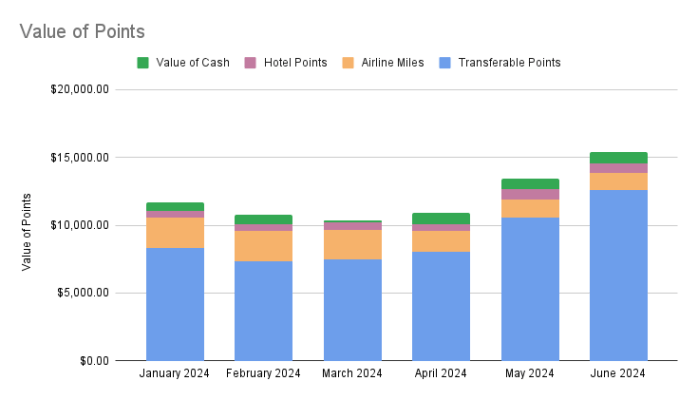


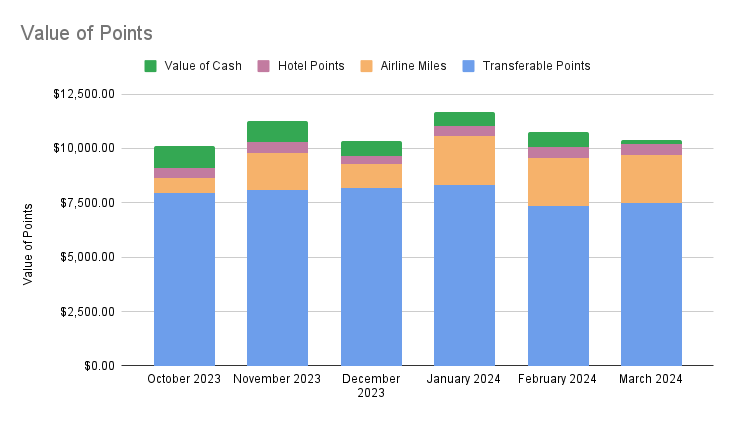

 Newby to Expert Traveler